Connect with us

News

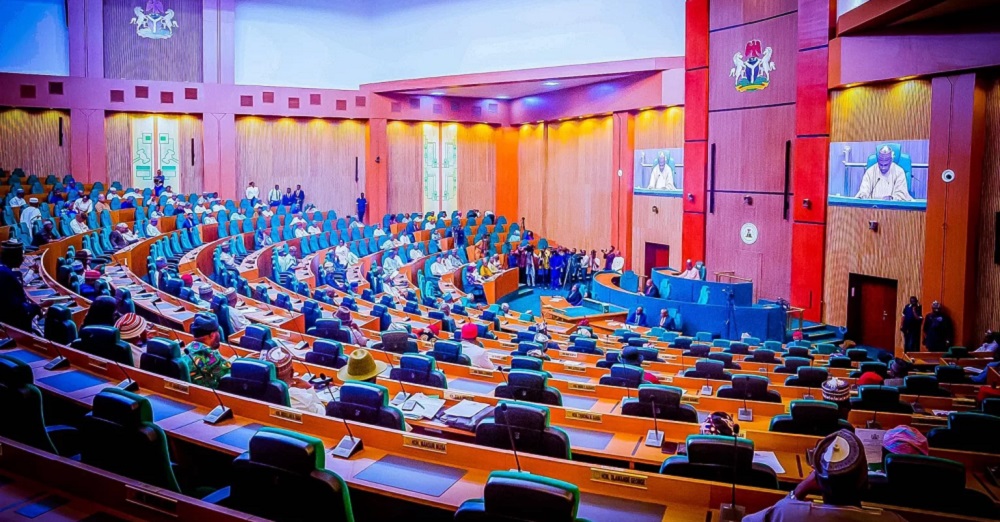
Reps Demand Special Courts, Urgent Action Against Homicide, Femicide

Published

on

ADVERTISEMENT
Zoom Ad
ADVERTISEMENT
Zoom Ad
By Gloria Ikibah

The House of Representatives has urged the National Judicial Council (NJC) to establish dedicated court divisions within existing judicial structures to fast-track the handling of homicide, femicide, and related cases.


The lawmakers also called on law enforcement agencies to prioritize homicide investigations and ensure the diligent prosecution of offenders.

The House further appealed to religious organizations, the National Orientation Agency (NOA), and advocacy groups to intensify public awareness campaigns promoting respect for human life and ethical values. They urged these groups to focus on educating youths about the dangers of ritual killings, murder, and manslaughter.

The resolutions followed the adoption of a motion titled “A National Call to Halt Homicidal and Femicidal Acts in Nigeria” sponsored by Reps Awaji-Inombek Abiante, Faleke James Abiodun, Ogah Amobi Godwin, and Manu Soro Mansur during Tuesday’s plenary session.

Advertisement

Leading the debate, Rep. Abiante emphasized that the right to life is a constitutional guarantee and fundamental human right. He expressed concern over the rising incidents of homicide—including murder and manslaughter—which have sparked public outcry for justice.

Abiante further noted the alarming increase in femicide cases, describing the gender-based killings of women and girls as a growing national crisis that demands urgent attention.
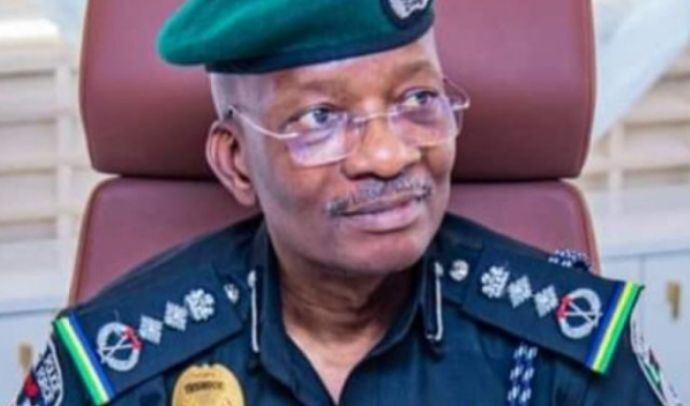

Abiante cited cases of homicide and femicide from 2020till date, saying:
“Disturbed by the following tragic cases:
(i) February 2020: Patience Adibe was killed by her boyfriend in Benin after a brief argument;
(ii) May 2020: Vera Uwaila Omozuwa, a 100 Level Microbiology Student of the University of Benin, was raped and murdered in a church, Collins Ujegbulem, one of the suspects, claimed that a woman paid them to kill her for ritual purposes;
(iii) June 2020: Barakat Bello, an 18 years old Student in Ibadan, was raped and stabbed to death;
(iv) September 2020: 11 years old Favour Okechukwu was gang-raped and killed by four men in Lagos;
(v) April 2021: Iniobong Umoren, a fresh graduate, was raped and murdered by a man posing as a job interviewer in Uyo;
“(vi) December 2021: Hanifa Abubakar, a 5 years old girl, was kidnapped, poisoned, and murdered by her school proprietor in Kano;
(vii) February 2022: Fashion designer Bamise Ayanwole was murdered after boarding a BRT Bus in Lagos;
(viii) April 2022: Ifeanyi Njoku killed his girlfriend for money rituals;
(ix) July 2022: Eunice Chioma Igweike was abducted, killed, and butchered by human parts dealers;
(x) July 2023: Benjamin Best murdered his girlfriend, Augusta Osedion, a 300 Level Student at the University of Port Harcourt;
“(xi) August 2023: Oghenefejiro Regha was killed by her boyfriend for ritual purposes;
(xii) October 2023: Okoligwe Damian Chinemere killed Justina Otuene Nkang, a fellow student at the University of Port Harcourt;
(xiii) May 2024: Elisha was arrested for killing his lover, Edima, in a ritual murder;
(xiv) June 2024: Glory Adekolure was raped and killed in Benin;
(xv) August 2024: Fatai Mogaji stabbed his ex-girlfriend to death, while Mojisola Awesu was murdered in a hotel;
“(xvi) September 2024: Jeremiah Samson killed Abigail Damilola, a University Student, and buried her body;
(xvii) January 2025: the recent killing of Salome Adaidu, a National Youth Corps Member, in Nasarawa State is a continuation of the trend; and
(xviii) alarmed by the killing of Chioma Nwana, who was set ablaze by her husband in Anambra after a heated argument”.
The lawmakers expressed worries by the delays in the prosecution of homicide cases, which have caused prolonged pre-trial detentions which is overcrowding the correctional facilities, and loss of crucial evidence, eroding public faith in the judicial system.
“Concerned that the slow and ineffective justice system allows perpetrators to gain media attention while trials for serious crimes like homicide are prolonged, an example is the case  of Chidinma Ojukwu, under trial for the murder of Usifo Ataga, continues to gain publicity, and the notorious kidnapper Evans, facing trial for murder, has been awarded scholarship;
“Aware that the National Judicial Council (NJC) is responsible for overseeing the Judiciary and improving the efficiency of the judicial process; Convinced that establishing Special Divisions within existing courts with exclusive jurisdiction over homicide and related cases will expedite justice, reduce backlogs, and restore public confidence in the legal system;
“Also convinced that ethical enlightenment through public awareness campaigns focusing on instilling ethical values and respect for human life and the integration of emotional intelligence programs to help young people develop non-violent problem solving skills, could help curb this menace”, the motion read.
Contributing to the motion, Rep. Abdul Kareem Ado-Kano stressed the growing frequency of violence against women, which has become a persistent menace. He therefore called for greater accountability from institutions responsible for investigating and enforcing laws to protect women.
He said: “Mr. Speaker, our women have become menacing machines, despite the constant occurrence of these tragedies, the response from relevant authorities has been inadequate.
“Many of such cases make headlines for only a few days before they fade into oblivion without meaningful outcomes or justice”.
Similarly, Rep. Yusuf Gagdi expressed frustration over the inaction towards protecting Nigerian women and girls.
 “This is a collective responsibility. I call on men, fathers, and brothers to take proactive roles in safeguarding the lives of women”, he said.
Rep. Gagdi criticized the growing culture of indifference, where bystanders record violent incidents on their phones rather than intervening to stop the crime. He called on law enforcement agencies to ensure perpetrators are brought to justice and face the consequences of their actions.
Rep. Billy Osawaru added his voice to the call for action, specifically addressing the role of religious leaders and called on the need for moral leadership.
He urged them to advocate for public conversations that condemn such violent acts and to promote morality. He lamented that religious leaders are often preoccupied with division instead of tackling societal ills. “What is good is good, and what is bad is bad,” he said.
The debate also took an emotional turn when Rep. Muktar Shagaya recounted a recent tragedy involving the brutal murder of Hafsa Lawaw Adifalu, the granddaughter of a prominent APC stakeholder, allegedly for ritual purposes.
He condemned such barbaric practices and called for stricter legislation and stronger law enforcement to protect the vulnerable.
“Our justice system must serve as both a deterrent and a beacon of hope for the vulnerable,” Shagaya added.
After a lenghty deliberation the House unanimously adopted the motion and mandate the Committees on Judiciary and Human Rights to liaise with the NJC and other relevant stakeholders to monitor the implementation of this resolution and report progress within a stipulated timeframe.

News

Benin-Sapele Road: Umahi Apologises, Orders Arrest of Contractors Over Asphalt Removal

Published

on

By

ADVERTISEMENT
Zoom Ad
ADVERTISEMENT
Zoom Ad

The Minister of Works, Senator David Umahi, has apologised to commuters, residents and businesses in Edo and Delta states over the deplorable condition of the Benin-Sapele Road, which has subjected motorists and other road users to severe hardship.

Umahi also ordered the immediate arrest of any contractor or concessionaire found removing asphalt from existing federal roads without proper authorisation, describing the practice as a destruction of public infrastructure.

The minister gave the directive on Tuesday during an inspection of major federal roads in Edo State, where he expressed deep disappointment over the condition of the Benin-Sapele and Benin-Agbor-Asaba corridors.

He said the Federal Government was concerned about the hardship being experienced by commuters and was determined to take urgent measures to restore the affected roads and ease traffic difficulties.

Advertisement

Umahi specifically apologised to the people of Edo and Delta states, as well as other Nigerians who use the highway.

He said: “I am very, very disappointed with this concessionaire. I offer apologies. I take full responsibility for the misdeed and for the destruction of public assets.”

The minister accused the concessionaire handling the project of lacking the technical competence, personnel and appropriate methodology required to execute the road rehabilitation effectively.

According to him, the road was in a better condition before it was handed over to the concessionaire.

Advertisement

Umahi disclosed that he had personally witnessed the removal of asphalt from the road during an earlier inspection conducted with the Edo State Governor, Monday Okpebholo, and had directed the contractor to stop the practice.

He said the Ministry of Works had repeatedly warned against the unauthorised removal of asphalt from federal roads, insisting that such action was contrary to government policy and amounted to the destruction of public assets.

The minister consequently directed Federal Controllers of Works across the country to ensure that any contractor or concessionaire found removing asphalt without approval was arrested.

“The Ministry of Works does not allow anybody to remove asphalt on the road. That is against the policies of the Ministry of Works,” Umahi said.

Advertisement

He further questioned the technical capacity and competence of the concessionaire handling the project, saying the Federal Government must ensure that companies awarded major road concessions possess the required expertise and integrity.

Umahi said the poor handling of the project had resulted in unnecessary suffering for commuters, residents and businesses along the corridor.

He, however, assured road users that the Federal Government would not allow the situation to continue indefinitely.

The minister said President Bola Tinubu was aware of the hardship caused by the condition of the road and had directed the Ministry of Works to do everything possible to restore the highway and provide relief to motorists.

Advertisement

He explained that although concession agreements were governed by legal and contractual provisions, the Federal Government could invoke overriding public interest where necessary to protect citizens and critical infrastructure.

Umahi also said the Federal Government would prioritise emergency intervention on the road while working towards a more permanent solution.

The minister commended youths in Edo State for remaining calm despite the prolonged hardship caused by the condition of the highway.

He said their restraint had helped prevent a possible breakdown of law and order, particularly given the frustration experienced by motorists and residents.

Advertisement

Umahi also praised Governor Monday Okpebholo for his intervention in the rehabilitation of federal roads across Edo State and for his commitment to infrastructure development.

Responding, Governor Okpebholo appealed to residents and youths in communities along the affected routes to remain patient and exercise restraint while the Federal Government works to address the situation.

The governor recalled the poor condition of the Benin-Ekpoma Road and said President Tinubu had responded to his appeal for the reconstruction of the road.

Okpebholo stressed the strategic importance of Edo State as a gateway linking several parts of the country, warning that prolonged disruption of movement could have wider economic and security consequences.
Concessionaire blames heavy rains

Advertisement

Meanwhile, the Chief Executive Officer of the concessionaire, Mr Samuel Daramola, attributed the slow pace of construction to heavy rainfall and other challenges associated with working on the busy highway.

Daramola said the company had embarked on palliative measures to keep traffic moving while construction continued.

He explained that one of the company’s initial interventions after taking over the Benin-Agbor Road was to expand sections of the highway and address the numerous potholes affecting motorists.

According to him, the company commenced palliative works because of the extent of deterioration on the road and the need to create temporary access for commuters.

Advertisement

The Federal Government’s latest intervention comes amid growing concerns over the condition of the Benin-Sapele-Warri corridor, a major transport route connecting communities and facilitating the movement of people and goods between Edo and Delta states.

The development has heightened calls for urgent action to prevent further economic losses and reduce the risks faced daily by motorists and commuters using the highway.

Niger Delta Herald reported that the Federal Government is also considering a review of concessioned roads across the country to ensure that concessionaires comply with contractual obligations and that road projects serve the public interest.

Advertisement
Continue Reading

News

2027: Vote For President Tinubu, Other APC Candidates Or Relocate From Our Local Govt, Kuje LG Chairman Tells Residents

Published

on

By

ADVERTISEMENT
Zoom Ad
ADVERTISEMENT
Zoom Ad

Chairman of Kuje Area Council, Federal Capital Territory (FCT), Mr Samuel Danjuma Shekwolo has been in the spotlight after a video surfaced on social media in which he issued a relocation directive to residents of the local government who are not ready to support and vote for APC candidates in the upcoming 2027 General Election.

Mr Shekwolo , who was seen in the video in question addressing people in a community, submitted that he will not tolerate opposition to the APC or President Bola Tinubu’s re-election bid in Kuje Area Council.

‘I have said in my area council that it’s either you are for the APC or you leave the area council. I am not mincing my words .

You know why? I cannot have the Minister and the President doing what they are doing, then on the Election Day, you will now say you want to match me. I will not agree. It’s either you are with us or you are against us’ he added.

Advertisement
Continue Reading

News

Federal Character: Tinubu, Omidiran, others task 774 LG chairmen on inclusive governance, accountability

Published

on

By

ADVERTISEMENT
Zoom Ad
ADVERTISEMENT
Zoom Ad

President Bola Ahmed Tinubu has tasked Local Government chairmen across the 774 councils to translate the principles of federal character into practical, inclusive and equitable governance at the grassroots.

President Tinubu, who spoke on Monday at a workshop for local government chairmen in Abuja, stressed that the effectiveness of national governance is ultimately measured by its impact on citizens at the community level.

The workshop, organised by the Federal Character Commission in collaboration with the Progressives Governors Forum, aimed at ensuring the principles of federal character are implemented diligently at the grassroots level.

The two-day workshop, themed “Translating Federal Character Principles into Local Governance: Bridging Policy and Practice,” brought together chairmen of the 774 Local Government Areas, government officials, security agencies and other stakeholders to deepen the implementation of federal character, inclusive governance and grassroots development.

Advertisement

In his keynote address delivered by the Secretary to the Government of the Federation, Senator George Akume, President Tinubu said Nigeria’s diversity remained one of its greatest assets, stressing that the country’s multiplicity of cultures, ethnicities and beliefs must be managed through fairness, justice and inclusion.

According to the President, Local Government Councils occupy a strategic position in Nigeria’s governance architecture because they constitute the closest interface between citizens and the state.

“Policies, no matter how well-crafted, achieve little unless they are effectively translated into action where it matters most, the grassroots,” Tinubu said.

“You must rise above sectional interests and embrace a broader national perspective that prioritises unity over division and inclusiveness over exclusion,” the President said.

Advertisement

Earlier in her welcome address titled “Diversity Must Become Our Strength” the Executive Chairman of the FCC, Hon. Hulayat Motunrayo Omidiran, said the workshop was designed to strengthen the connection between federal character, grassroots governance and national integration.

Omidiran described the gathering as a timely intervention aimed at reinforcing the foundations of unity, fairness, inclusion and peaceful coexistence across Nigeria.

“Our ethnic, linguistic, and religious diversities are not obstacles to nationhood; rather, they are valuable strengths capable of driving national growth when managed with equity, justice, and sincerity of purpose,” she said.

The FCC Chairman said Local Governments were uniquely positioned to manage diversity within communities through equitable distribution of opportunities, fair representation, inclusive leadership and meaningful engagement with citizens.

Advertisement

“The future of Nigeria depends greatly on our collective willingness to promote justice above prejudice, unity above division, and national interest above personal or sectional considerations,” Omidiran said.

Also speaking at the programme, the Minister of Defence, General Christopher Gwabin Musa called for a stronger partnership between Local Governments, communities, traditional and religious institutions, security agencies and the private sector to strengthen security at the grassroots.

In his message tagged “Strengthening Grassroots Security through Inclusive Local Leadership, Community Partnership and Inter-Agency Collaboration,” Musa said insecurity was experienced most directly at the community level, making local knowledge indispensable to effective prevention and early intervention.

“If we are serious about preventing insecurity rather than simply responding to it after it occurs, then the knowledge and experience of those closest to the people must become an integral part of our security effort,” he said.

Advertisement

The Defence Minister backed the proposal for the establishment of Local Government Security Coordination Committees across the 774 Local Government Areas, but stressed that the initiative would only succeed if the committees were functional rather than merely another layer of bureaucracy.

“The objective should be clear, to strengthen the connection between our communities and the security architecture of the country, improve early warning and, where possible, prevent incidents before they escalate,” Musa said.

“When we secure a farming community, we are protecting livelihoods and food production. When we secure a business district, we are protecting investment and employment,” he said.

“The objective is not to create parallel security structures, but to improve coordination, strengthen existing institutions and ensure that every stakeholder contributes effectively within his or her area of responsibility,” Musa said.

Advertisement

Representing the Chairman of the Progressive Governors Forum and Imo State Governor, Senator Hope Uzodimma, the Director-General of the Forum, Folorunso S. Aluko, commended the FCC for partnering with the PGF on the initiative.

Aluko described Local Government as the point where citizens encounter government most directly, noting that functioning primary healthcare centres, accessible community roads, improved sanitation and support for vulnerable citizens were tangible manifestations of government.

“When a primary healthcare centre functions, a community road becomes passable, sanitation improves or vulnerable citizens receive support, government ceases to be an abstract institution, it becomes a living source of dignity, confidence and hope,” Aluko said.

“Autonomy must always travel with responsibility. Greater authority must produce higher standards of transparent budgeting, prudent financial management, merit-based appointments, procurement integrity, audit compliance and meaningful citizen engagement,” he said.

Advertisement

“Local Government Chairmen are not merely administrators of councils; you are custodians of public trust and frontline builders of the Nigerian federation,” he said.

Also speaking at the workshop, the Director-General of the National Orientation Agency (NOA), Mallam Lanre Issa-Onilu, said federal character must be understood not merely as a formula for appointments, but as a principle of belonging, fairness and inclusion.

In his goodwill message at the workshop, Issa-Onilu said the central question of nation-building was how to make every Nigerian, regardless of origin or location, feel that Nigeria belonged to them.

Issa-Onilu linked the workshop to the work of the National Orientation Agency and the National Values Charter, saying national unity could only be sustained when citizens experienced fairness, justice, inclusion and opportunity alongside their responsibilities to the nation.

Advertisement

“Federal Character must therefore be understood as more than a formula for appointments. At its heart, it is a principle of belonging,” he said.

“When development is equitable, we are not merely distributing infrastructure; we are distributing belonging. When opportunities are fairly shared, we are not simply fulfilling constitutional requirements; we are strengthening citizens’ confidence in Nigeria,” he said,” the NOA Director-General said.

The workshop which ends on Tuesday August 25, 2026, is expected to equip the 774 Local Government chairmen with practical knowledge on applying federal character principles to governance, appointments, planning, resource allocation and development, while also strengthening community security, citizen engagement and inter-agency collaboration.

Also in attendance were the Director-General, National Primary Health Care Development Agency (NPHCDA), Dr. Muyi Aina; Director-General, National Bureau of Statistics (NBS), Adeyemi Adeniran; National President, Nigerian Institute of Town Planners Association (NTPIA), Dr. Ogbona Chime; President, Association of Local Governments of Nigeria (ALGON), Dr. Aminu Muazu-Maifata; Managing Director, Nigeria Bulk Electricity Trading Plc (NBET), Mr. Akinola Odeyemi; and Commissioner for Local Government, Kano State, Hon. Tajudeen Usman.

Advertisement
Continue Reading

Trending

Copyright © 2024 Naija Blitz News