
News
*A CASE FOR “AMOTEKUN CORPS” IN KOGI WEST*

- /home/naijuinz/public_html/wp-content/plugins/mvp-social-buttons/mvp-social-buttons.php on line 27
https://naijablitznews.com/wp-content/uploads/2025/02/IMG-20250219-WA0052-902x600.jpg&description=*A CASE FOR “AMOTEKUN CORPS” IN KOGI WEST*', 'pinterestShare', 'width=750,height=350'); return false;" title="Pin This Post">
- Share
- Tweet /home/naijuinz/public_html/wp-content/plugins/mvp-social-buttons/mvp-social-buttons.php on line 72
https://naijablitznews.com/wp-content/uploads/2025/02/IMG-20250219-WA0052-902x600.jpg&description=*A CASE FOR “AMOTEKUN CORPS” IN KOGI WEST*', 'pinterestShare', 'width=750,height=350'); return false;" title="Pin This Post">


*By Tunde Olusunle*
It had festered for long. The wanton trespass, the emboldened criminality, the mindless murders, the reckless disruption of the rhythm of day-to-day activities of several communities in Nigeria’s South West. Formal and informal intelligence, fingered voyaging Fulani herdsmen as prime perpetrators of the crimson regime upon the Yoruba hemisphere. The pastoralists herded their cattle from the nation’s north, down south. They fed and fattened their livestock on farmlands owned by landowners, with unbelievable impunity. Aboriginal dissenters to such roughshod rides through their sweat-grown farms, were often sent to early graves. Luckier escapees, most times left with scars to last a lifetime. To confirm that they were on a mission to destroy, maim and murder, they moved around with deadly machetes and sophisticated weapons, beyond regular arms admissible for self protection, as they rampaged through the zone.
Beyond farmlands in the recesses of the Yoruba country, kidnappers, armed robbers and killers took over and terrorised roads and expressways in the South West, with uncommon boldness. They routinely caused gridlocks on roads like the all-important Sagamu-Ore-Benin highway, in the discharge of their criminal ventures. They would move from vehicle to vehicle dispossessing commuters of their belongings and shooting at random, killing the hapless. They abducted travellers and would subsequently request for ransoms from the families of their victims. At other times, they just murdered their victims like they did to Olufunke Olakunrin, daughter of the respected Yoruba leader, Reuben Fasoranti, on the same road under reference, in June 2019. Fortuitously, her killers were found, prosecuted and sentenced to death three years later.
Governors of the South West states, unanimously afflicted by this scourge, agreed in January 2020, to establish in their various states, a security outfit to be known as *Amotekun.* A Yoruba word, *Amotekun* means “cheetah.” The animal is a member of the global “big cat” family in the animal kingdom, which are apex predators. Creatures in this bracket which include lions, tigers, leopards, jaguars, are famous for stealth, speed and precision in preying on their targets. All six states in the region: Lagos, Ogun, Oyo, Osun, Ondo and Ekiti, signed up for this initiative, which was driven from the very top by the governors of each state. The South West states are famous for their historical collaboration on issues of the socioeconomic wellbeing of their states and people. The *Amotekun* concept is emplaced as a homegrown complement to the endeavours of existing intelligence and security organisations, in securing lives and property. It is not a rival, but a partner with preexisting agencies in the intelligence and security ecosystem. This typically consists of the military, the police, the Nigerian Security and Civil Defence Corps, (NSCDC) and the Department of State Services, (DSS).
Across the six South West states, *Amotekun* is charged primarily to protect persons, property and carry out emergency response services. The Corps systematically gathers, documents, evaluates and analyses data and information to convert to actionable intelligence for tactical, operational and strategic goals. It shares intelligence about crime in progress; suspicious activities, criminal suspects and other criminal activities. *Amotekun* collaborates with similar security agencies including but not limited to Lagos, Ogun, Oyo, Osun, Ondo and Ekiti states in deterring kidnapping, terrorism, disruption of livelihood, criminal damage to property, cultism, highway robbery and other criminal activities. It ensures that all persons travelling along highways, major roads, remote areas, hinterlands and forests are free to engage in their normal activities without fear or hindrance. *Amotekun* also assists the police in carrying out any other lawful activity aimed at maintaining law and order within their areas of jurisdiction. The operational ambit of the Corps could indeed be broader.
Since the enthronement of *Amotekun* in the six core Yoruba states five years ago, the organisation has complement the enterprise of statutory security outfits in notable measure. It has foiled robberies, disrupted kidnappings, stemmed open-ended trespass and destruction of farms by marauding herdsmen, and rescued potential victims and casualties of criminal schemes. As recently as Sunday February 15, 2025, *Amotekun* foiled a robbery on the notorious Sagamu- Odogbolu- Ijebu Ode, on the Lagos-Sagamu-Ore-Benin expressway. One of the suspects was neutralised, while a second one was arrested during a gun duel. The suspect arrested led *Amotekun* operatives to the hideout of the gang, where another suspect who had earlier fled during the gun duel, took refuge. Just last week, February 10, 2025, the Ondo State Command of the Corps rescued five victims of a kidnapping episode on the ever recurring Benin- Owo road. Such is the serially documented efficacy of *Amotekun* in its various theatres of operation.
Worthy of note is the fact that the topmost echelons of *Amotekun* leadership across the South West, are very senior retired military and police officers, not below the ranks of retired Brigadier-General or Assistant Inspector General of Police, (AIG). The Oyo State outfit for instance is headed by Brigadier-General Kunle Togun, while the Ogun State formation is led by Brigadier-General Alade Adedigba. The Chairman of the Osun State variant is AIG Wale Abbas, while Brigadier-General Olu Adewa leads the Ekiti State *Amotekun* command. This underscores the seriousness with which the outfit is organised and deployed. Our reservoir of ex-servicemen in our communities, local hunters, vigilantes and youths can constitute the core of the operatives.
Recent criminal incidents in the the Okun country in Kogi State and Kogi West senatorial district at large, compels a proposition for the establishment of an *Amotekun* detachment in the zone. Like its kith and kin in core Western Nigeria, Okunland has been the butt of several violations by a broad canvas of criminals. Daredevil armed robbers have invaded Okun communities, targeting banks and murdering regular folk. Kidnappers perennially lay siege on lonely stretches of the dilapidated road networks in Okunland, killing innocents and taking hostages in kidnap- for- ransom incidents. On May 2, 2021, Solomon Adegbayo a Commissioner in the Kogi State Pensions Board was killed in the same incident in which the Chairman of Yagba West local government area at the time, Pius Kolawole, was kidnapped.
Last December, Alaba Ope, the Councillor representing Odo-Ape Ward in Kabba-Bunu local government area, and eight others, were kidnapped in a midnight operation by brigands. An Abuja-bound commuter bus from Lagos, carrying 18 passengers, was also in December 2024, intercepted around Obajana in Okunland and all the occupants abducted. The kidnappers placed a N100 million ransom on their victims. Should we mention the travails of subsistence farmers in Okunland and Kogi West who in several instances have literally been barred from their farmlands in their homelands by scurrilous criminal elements masquerading as herders? This has been the collective experience of the genetically peace-loving people of Kogi West District.
The people of the geopolitical span under interrogation, have not exactly thrown up their hands in despair in their worrying circumstances. Hunters and vigilantes despite their constrained training and arming, are usually on the front foot combing the forests and thickets. Following attacks on three commercial banks located in Egbe and Odo-Ere in Yagba West just before Christmas in 2021, for instance, Okun hunters and vigilantes entered the forests and indeed arrested a few of the culprits who missed their ways after the dastardly operation. Indeed, early June 2024, Okun vigilantes and hunters joined the army, police, DSS and NSCDC, in raiding the camps of kidnappers in the forest of Yagba West, in an operation which lasted for several days. Yagba West shares boundaries with Kwara, Niger and Ekiti states which makes it specifically vulnerable to criminal incursions.
Several other communities and councils in Kogi West, share abutments with neighbouring states which makes them vulnerable. Disturbed by the unabating recurrence of multifaceted criminality in Okunland which dominates six of the seven local government areas in Kogi West, Sunday Karimi, the Senator representing the District, singularly undertook the construction of a *Forward Operating Base,* (FOB) in Egbe, last year. The fully furnished mini-barracks which is capable of hosting two units of military personnel, was commissioned last October. It has since been taken over and operationalised by the Nigerian Army. To underscore his concurrence with Karimi’s bold initiative, the Member Representing Yagba federal constituency in the House of Representatives, Leke Joseph Abejide, participated at the inauguration and handing over event.
Given the dynamism of crime and criminality, containment and mitigation strategies must also of necessity be proactive. As an essential component of the global Yoruba country, as a people and senatorial district which share boundaries with two geopolitical subscribers to the *Amotekun* concept, notably Ondo and Ekiti states, there is no better time to adapt the prototype in Kogi West and in Okunland. The template may be available on the internet or can be obtained from one of the present six participating states. While it is true that whole states, and not sections or parts of states are subscribers to the philosophy elsewhere, there must be a way to adapt the template for Kogi West. As a people, we know where our shoes presently pinch us.
At the recent maiden annual lecture of the National Institute for Security Studies, (NISS), the Director-General of the Department of State Services, (DSS), Oluwatosin Ajayi, noted that “communities should be empowered to serve as the first line of defence in tackling criminality.” According to him, they must lead the way “before the intervention of the police, the military and other security agencies.” Ajayi noted that “some level of armament must be allowed at the level of communities, so they can serve as the first layer of defence.” He cited examples from *Tafawa Balewa* and *Bogoro communities* in Bauchi State where he previously served, as places where the antics of marauders were successfully repelled. He indeed alluded to his community back home in Ogun State as one which he is guiding to stand up for itself in the face of adversity. This gifts us a perfect window to explore, for the setting up of a *Kogi West/Okunland Amotekun Corps.*
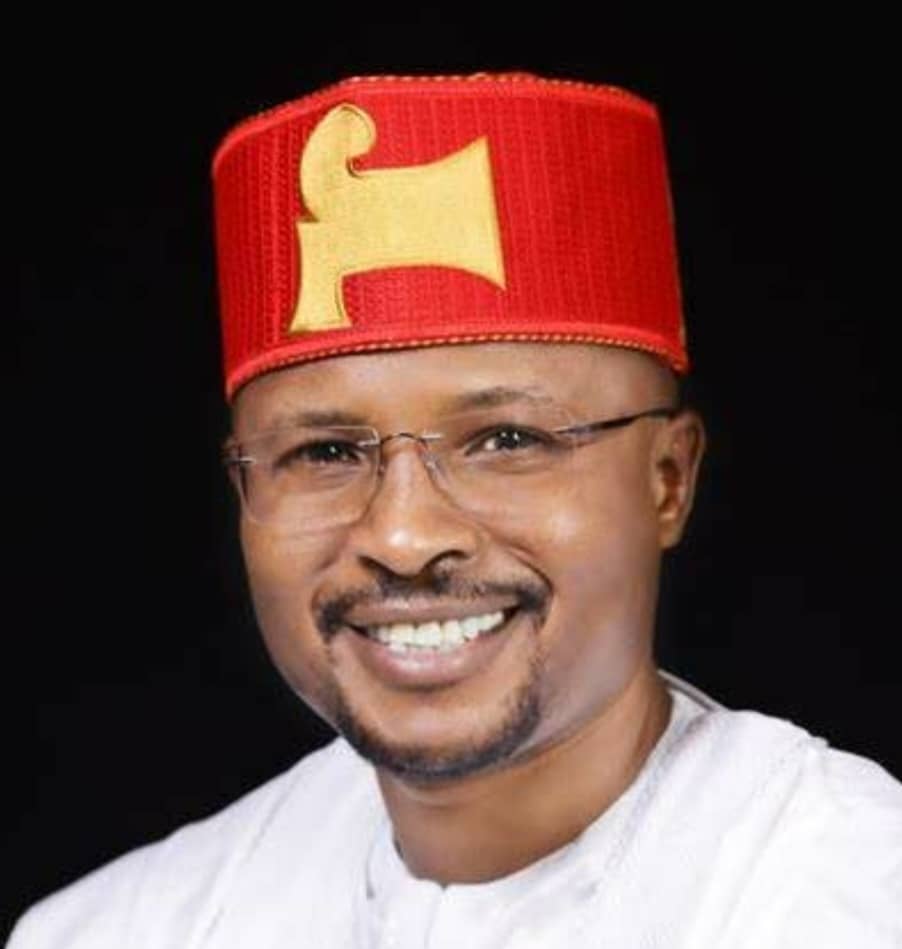
The people of Kogi West trust their Senator, Sunday Karimi, to pick up the gauntlet and rally his colleagues, namely Leke Abejide, Idris Salman and Danladi Suleiman Aguye, representing Yagba, Kabba-Bunu/Ijumu and Lokoja/Kotonkarfe, respectively, to articulate this proposal.
Representatives of state constituencies in Kogi West in the Kogi State House of Assembly, (KGHA), and Chairmen of local government areas in the district, must of necessity be an integral part of this concept. Very happily, the federal government now directly credits the accounts of local government authorities with their dues which allows room for targeted fiscal flexibility. Budgets have to be drawn up to accommodate the needs and remuneration of *Amotekun* operatives. Elsewhere, they are properly kitted with uniforms, footwears and bulletproof vests. They are well armed and enabled with ample quantities of ammunition, and are duly remunerated and provided with serviceable patrol and operational vehicles. They undergo drills to keep in shape and ready. Let’s imagine just how better improved the security situation in Kogi West will be if 100 *Amotekun* corps members are added to the existing security capacity of each LGA. This comes to a total of 700 additional crime fighters in the zone. Criminals will definitely have a rethink before daring their potential Waterloo.
*Tunde Olusunle, PhD, Fellow of the Association of Nigerian Authors, (FANA), is an Adjunct Professor of Creative Writing at the University of Abuja*








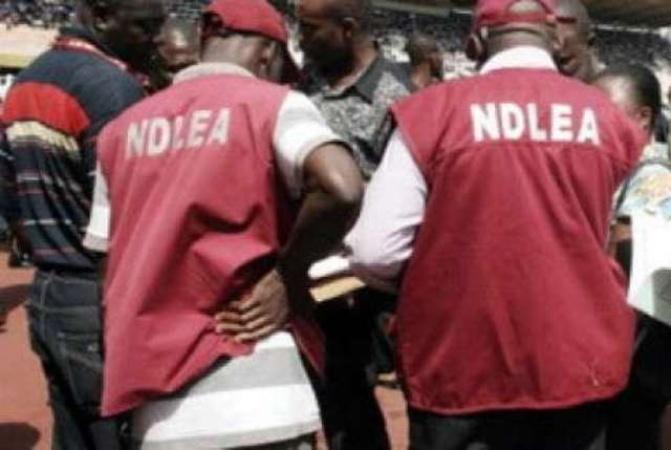
ABUJA — The National Drug Law Enforcement Agency (NDLEA) has arrested a suspected Mexican drug kingpin attempting to flee Nigeria through the Lagos airport and dismantled an industrial-scale methamphetamine laboratory in Ebonyi State.
The development, according to the agency, is part of an expanding investigation into a transnational drug network allegedly recruiting foreign methamphetamine experts and establishing clandestine laboratories in Nigeria’s forests and rural communities.
NDLEA Chairman and Chief Executive Officer, Brig. Gen. Mohamed Marwa (retd.), said the latest operation demonstrated the agency’s determination to prevent Nigeria from becoming a hub for international drug cartels.
Marwa, who spoke through the Director of Media and Advocacy, Femi Babafemi, at a media briefing in Lagos on Tuesday, said the breakthrough followed months of intelligence gathering and forensic investigations into a network linked to several clandestine laboratories uncovered in Ogun, Oyo and Ebonyi states.
He recalled that NDLEA operatives on May 16, 2026, arrested three Mexican nationals and seven Nigerian collaborators at a forest hideout in Ogun State.
A month later, on June 17, the agency arrested another Mexican national and four Nigerian collaborators at a clandestine methamphetamine laboratory concealed in a forested area of Tapa village, Ibarapa North Local Government Area of Oyo State.
Large quantities of methamphetamine and precursor chemicals were reportedly recovered from the Oyo laboratory.
According to Marwa, investigations by the agency’s Special Operations Unit revealed that the 56-year-old Mexican methamphetamine expert arrested in Oyo had been recruited into Nigeria by a Mexican drug kingpin.
Working with international partners, investigators obtained a photograph of the suspected kingpin, which the arrested Mexican national reportedly identified as the man who recruited and transported him to Nigeria.
The suspect was subsequently identified as Arturo Carrera Loaiza, who, according to the agency, entered Nigeria on June 10 alongside another Mexican national.
NDLEA operatives eventually tracked and arrested Carrera Loaiza on August 19 while he was allegedly attempting to leave the country through the Lagos airport.
During interrogation, the suspect reportedly claimed that he had been invited to Nigeria by a Nigerian contact identified only as “Henry” under the guise of a restaurant business venture. He also denied knowledge of methamphetamine production or involvement with the Tapa village laboratory.
However, investigators said they recovered photographs showing Carrera Loaiza wearing a blue laboratory coat and standing among equipment consistent with methamphetamine production.
Analysis of location metadata embedded in the photographs allegedly led investigators to a property under construction at Isiata Ugoni Okposi in Ebonyi State.
On August 30, NDLEA operatives raided the property, which was linked to John Samuel Ivo Okike.
Interviews with people found at the site, including the site engineer and a caretaker, reportedly revealed the presence of a suspicious temporary structure over a septic tank area behind the building, as well as persistent strong chemical odours.
Investigators also recovered a CCTV memory card from the property.
According to NDLEA, forensic examination of the footage showed a foreign national wearing a blue laboratory coat who matched Carrera Loaiza, as well as repeated appearances by Okike.
The footage allegedly captured the movement of chemicals and laboratory equipment from the property at about 9 p.m. on August 21, with Okike reportedly directing the operation alongside other individuals.
Acting on further intelligence, NDLEA operatives traced the relocated materials to an isolated house in a neighbouring community allegedly under the custody of Nwanja Obasi.
A subsequent raid led to the recovery of a large cache of chemicals, equipment and paraphernalia associated with methamphetamin


The minister of the Federal Capital Territory FCT will tonight by 8pm appear on Arise tv as special guest.

The Lagos State High Court has nullified the installation and coronation of Ibrahim Adebowale Saliu as the Onise of Ise Kingdom in the Lekki Local Council Development Area of Epe Local Government Area.
The court also ordered the Lagos State Government to withdraw the appointment letter, staff of office and official recognition granted to Saliu following his installation on August 21, 2026.
Justice Yetunde Adesola Adesanya of the Lagos State High Court, Igbosere, gave the orders on Friday, September 11, 2026, in a ruling on an application filed by Alhaji Adeniyi Atere and Mrs Idowu Adebisi Lana in Suit No. LD/0022PRA/2026.
The applicants had approached the court to challenge the process that produced Saliu as the Oba-elect and his subsequent appointment and installation as the Onise of Ise.
In her ruling, Justice Adesanya directed Saliu to surrender the appointment letter, staff of office and other official materials issued to him in connection with the disputed installation.
The judge also restrained him from parading or presenting himself as the Onise of Ise pending the hearing and determination of the substantive suit.
The legal battle followed an earlier interim order issued by Justice S. I. Sonaike on August 13, 2026, restraining the Lagos State Government and other defendants from taking further steps to appoint Saliu based on a March 30, 2026 letter forwarding his name as the Oba-elect.
The earlier order was made against allegations that the selection process failed to comply with the Obas and Chiefs of Lagos State Law, 2015, and the Registered Declaration governing the selection of the Onise of Ise.
Although the interim injunction was expected to remain in force for seven days, the parties were scheduled to return to court on August 20 to report compliance and continue proceedings.
The court found that the relevant respondents had been duly served with the order and were aware of the pending case. It noted that some of the respondents had even filed a motion dated August 18 seeking to discharge or set aside the injunction.
Despite the pending proceedings, the installation and coronation of Saliu took place on August 21 at the Ministry of Local Government, Chieftaincy Affairs and Rural Development in Alausa, Ikeja.
The applicants subsequently told the court that the state government proceeded with the ceremony in defiance of the subsisting court order. Photographs from the installation and coronation were among the evidence presented before the court.
After considering the affidavits, documents and submissions of the parties, Justice Adesanya held that the earlier injunction had been breached.
The judge further considered whether the court had the power to reverse an act that had already been carried out despite an injunction.
She held that although injunctions are ordinarily issued to prevent an action from taking place, the court can, in exceptional circumstances, grant a mandatory injunction requiring parties to undo an act already carried out.
The court relied on previous judicial authorities, including cases involving the Central Bank of Nigeria and a separate chieftaincy dispute, in reaching its decision.
Justice Adesanya consequently ordered the Lagos State Governor, the Attorney-General and Commissioner for Local Government, Chieftaincy Affairs and Rural Development, as well as the ministry, to withdraw the appointment letter, staff of office and official recognition granted to Saliu.
The court also ordered Saliu to surrender the documents and materials connected to his appointment and to cease presenting himself as the traditional ruler of Ise.
It further set aside and nullified the installation and coronation held on August 21.
However, the judge stressed that the latest ruling does not constitute a final determination of who is legally entitled to occupy the Onise of Ise stool.
The orders are to remain in force pending the hearing and determination of the substantive suit, which will address the wider dispute over the selection and appointment of the traditional ruler.

NDLEA Arrests Mexican Drug Kingpin, Uncovers Fresh Meth Lab in Ebonyi

Watch out as FCT minister Nyesom Wike appears on Arise tv today as special guest

Court Nullifies Onise of Ise’s Installation, Orders Lagos Govt To Withdraw Staff Of Office




-
 News14 hours ago
I’Ve Nothing To Hide, Nothing To Fear – Senator Buba On Banditry Allegations
-

 Business24 hours ago
JP Morgan Returns Nigeria to Global Bond Index After 11 Years
-

 Politics24 hours ago
“Lecturers pledging loyalty to TInubu cannot supervise elections”-Atiku tells INEC
-

 News14 hours ago
I Don’t Want To Be Called The Richest Man In Africa — Dangote
-

 Economy13 hours ago
Dangote Refinery IPO Rush Overwhelms Two Investment Sites
-

 News23 hours ago
ALERT! Terrorists planning attacks on worship centres, schools, NYSC camps – Police issue alert
-

 News13 hours ago
UCH Ibadan Emerges As Nigeria’s Top Health Institution In 2026
-
 Metro13 hours ago
Kidnappers Abandon Victim, Flee At Police Checkpoint In Anambra
Warning: Undefined variable $user_ID in /home/naijuinz/public_html/wp-content/themes/zox-news/comments.php on line 49
You must be logged in to post a comment Login