News
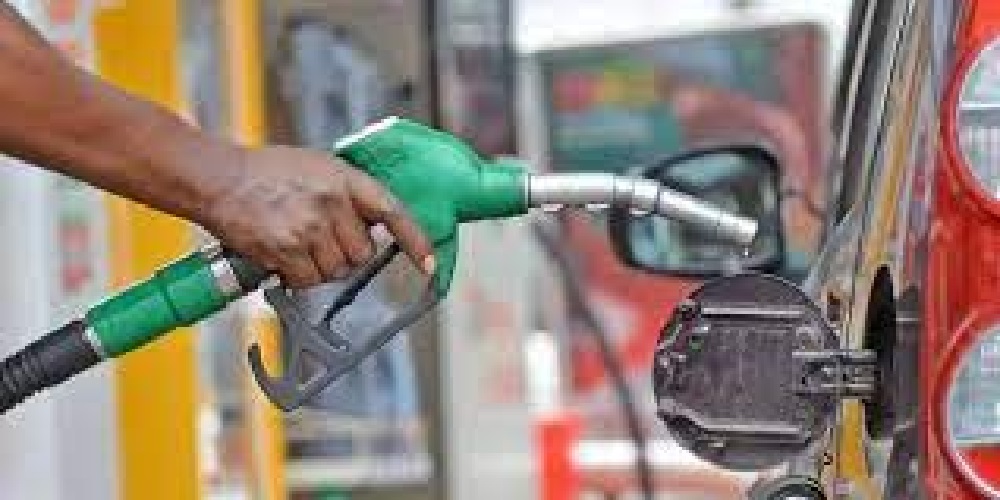
Petrol price to rise as naira-for-crude exchange face challenges
- /home/naijuinz/public_html/wp-content/plugins/mvp-social-buttons/mvp-social-buttons.php on line 27
https://naijablitznews.com/wp-content/uploads/2024/03/fuel.jpg&description=Petrol price to rise as naira-for-crude exchange face challenges', 'pinterestShare', 'width=750,height=350'); return false;" title="Pin This Post">
- Share
- Tweet /home/naijuinz/public_html/wp-content/plugins/mvp-social-buttons/mvp-social-buttons.php on line 72
https://naijablitznews.com/wp-content/uploads/2024/03/fuel.jpg&description=Petrol price to rise as naira-for-crude exchange face challenges', 'pinterestShare', 'width=750,height=350'); return false;" title="Pin This Post">
There is anxiety in the downstream arm of the oil and gas sector as operators await the decision of the Federal Government on the naira-for-crude deal between the Nigerian National Petroleum Company Limited and the Dangote Petroleum Refinery.

The six-month deal, which started in October 2024, officially ends today, Monday, March 31, 2024. The deal’s extension or complete halt is still being discussed by the parties involved.
However, it was gathered on Sunday that the committee responsible for the negotiations has yet to resolve on the matter. As this lingers, the effect is now felt in the pump prices of refined petroleum products.

Petrol has increased from about N860/litre to over N930/litre within one week. Dealers blamed this on the failure of the Federal Government to extend the naira-for-crude deal between the NNPCL and the Dangote refinery.
Our marketers also projected further hike in petrol price. They said the cost may hit N1,000/litre in weeks if nothing is done about the naira-for-crude deal that earlier helped in checking the rise in petrol prices.
Meanwhile, barring any last-minute change, the 650,000 barrels per day Dangote refinery is expected to shut down its petrol-producing unit for maintenance. According to Reuters, the maintenance, which may occur in June, will last for 30 days.
On the naira-for-crude deal, an insider at the finance ministry familiar with the ongoing negotiations revealed that no significant progress has been made. The source said both parties could not engage in any meeting throughout the past week.
“Nothing new has happened. Probably after the holidays, the committee will sit and meet,” the senior government official stated.
Recall that on October 1, 2024, the government commenced the sales of crude oil in naira to the Dangote refinery to improve supply, save the country millions of dollars in petroleum product imports, and ultimately reduce the pump prices of fuel.
NNPC recently stated that the Dangote refinery had received 48 million barrels of crude oil in naira under the deal. It also said a total of 84 million barrels of crude had been supplied to the refinery since it commenced operations in 2023.
NNPC’s Chief Corporate Communications Officer, Olufemi Soneye, in a statement, explained that the initial deal was for six months and discussions for the renewal of the agreement were currently ongoing, with the aim of establishing a new contract.
However, events took a drastic turn when the Dangote refinery, on March 19, announced a temporary suspension of the sale of petroleum products in naira.
The Lekki-based refinery lamented that there was a mismatch between its sales proceeds and its crude oil purchase obligations, which it said were currently denominated in US dollars.
“Dear valued customers, we wish to inform you that the Dangote Petroleum Refinery has temporarily halted the sale of petroleum products in naira. This decision is necessary to avoid a mismatch between our sales proceeds and our crude oil purchase obligations, which are currently denominated in US dollars.
“To date, our sales of petroleum products in naira have exceeded the value of naira-denominated crude we have received. As a result, we must temporarily adjust our sales currency to align with our crude procurement currency,” the firm announced.
Immediately after the announcement, the cost of loading petrol at private depots in Lagos jumped to about N900/litre. It was less than N850/litre before the announcement.
Industry sources said the deal failed because the national oil company had used large volumes of its yet-to-be-produced crude oil to acquire loans from various international financial institutions, making it tough for the oil firm to have enough crude to supply the domestic market.
Retail stations also increased their pump prices between N930 in Lagos, N950 in Abuja and N960 in the far north.
While industry stakeholders have expressed optimism that a deal would be sealed between both parties, the intense uncertainty concerning the discussions points to a different direction.
Reacting to this, the National Publicity Secretary of the Independent Petroleum Marketers Association of Nigeria, Chinedu Ukadike, decried the current situation, noting that it was the sole reason for the upward movement in petrol prices by depot owners and retailers.
He said a stakeholders meeting has been called by relevant bodies to chart a way forward.
Ukadike said, “Because of this issue, we’ve called for a stakeholders meeting. We are going to meet to discuss it and come out with a way forward. We clamoured that crude oil should be sold in naira and any deviation would affect us. Our stakeholders’ meeting is very imminent.
“We had initially planned to meet this week, but it was postponed to May 1, 2025, because of the Sallah break and the upcoming Easter break.”
The national officer said the industry stakeholders expected at the meeting include the IPMAN National Working Committee and the executive and members of the Petroleum Products Retail Outlets Owners Association of Nigeria.
He further disclosed that marketers have lost over N200bn to price fluctuations in the last six months, which has, in turn, discouraged bulk buyers.
“We have lost over N200bn because of the price fluctuations in the last six months. What happens is that when we buy at a price, and vessels load, by the time they get to the depots and point of discharge, Dangote has reduced the price again. That little difference is borne by the marketer, and this makes it difficult to go back again and buy, after selling at a loss.
“This is because they don’t have any buffer to cushion the loss. Bulk traders have also reduced due to these risks,” Ukadike stated.
Dealers blamed the Federal Government for orchestrating the current hike in the price of petroleum products, especially petrol.
They said the reluctance of the Federal Government to renew the naira-for-crude deal with the Dangote refinery led to the hike in petrol, warning that citizens should not be suffocated because of dollars.
The Vice President of IPMAN, Hammed Fashola, regretted that Nigerians might go back to buying a litre of petrol at N1,000/litre if the sale of crude in naira is not reconsidered with the Dangote Group.
The Dangote refinery had announced that it would no longer sell fuel in naira to local marketers because it no longer gets crude oil in naira from the Nigerian National Petroleum Company Limited.
During the weekend when Nigerians were celebrating Eid-el-Fitri, The PUNCH observed that the Dangote refinery, which had crashed petrol prices multiple times between December and March, bowed to pressure, as its partners like MRS, Heyden, and Ardova raised petrol prices from N860 to N930/litre in Lagos and neighbouring states. These prices were higher in the north.
As it is, Nigerians may once again grapple with the consequences of rising fuel prices, which have triggered an increase in transport fares. The abrupt change in government policy appears to have undermined the relief many had anticipated, fueling worries about the escalating cost of living.
The IPMAN VP described the price hike as unfortunate, calling on members of the Depot and Petroleum Products Marketers Association of Nigeria to pity the poor masses.
Fashola said that though the price of crude oil and the exchange rate are the major factors determining the prices of petroleum products, he argued that the naira-for-crude arrangement would help to tame the local price of fuel.
“It’s unfortunate the price of PMS is going up again. Although if you look at the crude oil, it is rising, the cause of this matter is Dangote and the naira-for-crude issue. Because we noticed that when Dangote announced the stoppage of the contract, there was an immediate reaction, especially from DAPPMAN members. They increased their prices, which is unfortunate,” he said.
While appealing to the Federal Government to renew the deal with the Dangote refinery, Fashola called on fellow businessmen to be more patriotic.
He declared that there was no justification for the price hike by depot owners, the same day Dangote announced the suspension of the sale of petrol in naira.
“I think we need to plead with the government to look at the agreement again, maybe that will drive the price down. I will equally appeal to our people to be more patriotic too, because I don’t see any justification for that initial increment. At least, they should have waited for the new consignment or so.
“But being what we are in Nigeria, it’s just a pity. But, I think that everything should not be about profit all the time. We should consider our citizens before we do anything. We hope that if the government goes back to the naira-for-crude arrangement, it will help reduce the price,” Fashola stated.
Asked if the NNPC and the Dangote refinery had announced an official price to marketers, he replied that the NNPC might name a new price after the Sallah break, saying whatever MRS says is from the Dangote refinery.
“NNPC is yet to react to the price hike. But we know that when MRS talks, it’s Dangote who is talking. MRS has announced new prices. And, I am very sure that after the holiday, NNPC will react too. MRS has informed marketers of its new prices. The prices depend on your location. For Lagos, I think it’s around N905 per litre. Outside Lagos, like Ogun State, it’s around N911. The pump price in Lagos is N930,” Fashola explained.
He stressed that prices may hit N1,000 in the coming days, saying, however, that the naira deal could have been a game changer.
“N1,000/litre is expected, but we just have to be patriotic and sincere with one another. In this era of deregulation, the price will go up and down. It depends on what is happening in the international market and the exchange rate. Those two factors are key to determining the prices of petroleum products.
“However, the local arrangement between Dangote and the Federal Government, that is, the naira-for-crude deal, would have been a game changer. We all witnessed that. It was working well before the agreement was terminated. But I think they can still renew it. At least, that would help to stabilise the prices. It would also help the Nigerian citizens, at least,” he maintained,
On the call by depot owners that the Federal Government should stop the naira-for-crude agreement because of its ‘negative effects’ on the economy, the IPMAN leader stressed that DAPPMAN members were only trying to protect their territory.
Credit: PUNCH
News
How I delivered ten pregnant women while in captivity, nurse reveals
A nurse who recently regained her freedom after nearly six months in captivity has narratted the severe conditions endured by the abducted women and children, saying she helped 10 pregnant women give birth without gloves or proper medical equipment.
Amirah Salihu was among the victims abducted during the February 3 attack on Woro and Nuku communities in Kaiama Local Government Area of Kwara State.
Salihu, who is the daughter of the chief of Woro community, disclosed her experience during an interview on Channels Television’s Politics Today.
She said the captives faced acute food shortages and were forced to sleep in exposed locations, including near a river, where they were frequently drenched by rainfall.
According to her, the abductors often gave them little food, with guinea corn, salt and seasoning sometimes serving as their only meal.
The nurse said her professional training became crucial when some of the women went into labour during their captivity.
She explained that she assisted about 10 pregnant women to deliver their babies despite the absence of gloves and other essential medical supplies.
She said, “When the pregnant women started going into labour, I had to assist them. I helped about 10 women deliver their babies, even though I had no gloves or proper equipment.
“It was difficult, but I had to do what I could to help them survive and deliver safely.”
Salihu added that the abductors eventually discovered she was a nurse and attempted to persuade her to remain with them because of her medical knowledge.
She said she rejected the proposal because her priority was to regain her freedom and return to her family.
The rescued victim also recalled the killing of two of her brothers during the attack, alleging that the assailants targeted her family because of her father’s opposition to their activities in the community.
She said her father had previously resisted attempts by the attackers to gain access to Woro and had sought military intervention to protect the residents.
According to her, the attackers struck when the soldiers were no longer present in the community.
She said her father had previously resisted attempts by the attackers to gain access to Woro and had sought military intervention to protect the residents.
According to her, the attackers struck when the soldiers were no longer present in the community.
Salihu further said the abductors justified their actions by claiming they wanted residents to abandon Nigeria’s democratic system and follow their interpretation of religious laws.
However, when asked about sexual violence during the period, she said she was not aware of any rape or sexual assault among the captives.
The victims were part of the 176 women and children abducted during the February 3 attack on Woro and neighbouring Nuku.
They were released on Wednesday after spending almost six months with their abductors. The Kwara State Government later disclosed that 13 children had died in captivity, while 12 others were yet to return.
Kwara State Governor, AbdulRahman AbdulRazaq, received the freed victims in Ilorin and commiserated with families who lost loved ones.
He subsequently visited a hospital where 14 rescued victims were undergoing treatment, including three women who delivered babies while in captivity.
Foreign
STRATEGIC AUTONOMY: NIGERIA’S DOCTRINE FOR SELF-DETERMINATION IN A MULTIPOLAR WORLD
In an era defined by geopolitical competition, trade wars, sanctions regimes, and shifting alliances, one phrase has migrated from European policy papers to the heart of African diplomacy: “Strategic Autonomy”.
For Nigeria, this is not a new experiment in isolation, nor is it a nostalgic return to Cold War non-alignment. As I outlined in a recent address from the Ministry of Foreign Affairs in Abuja, it is something far more direct and more urgent.
Strategic autonomy is alignment to Nigerian national interest. Once you are clear in what constitutes your national interest, you align with those interests regardless of which party is at the receiving end. That is the foundation. I am aware of scholarly publications that was recently put together by the Nigerian Institute of International Affairs on the subject.
While the Ministry prepares the full concept note charting new fronts in a multi polar world, let me share the preliminary framework guiding Nigeria’s foreign policy under President Bola Ahmed Tinubu.
Our goal is simple: to ensure that Nigeria, and by extension Africa, is not an object of geopolitics, but a subject that defines its own future.
What Strategic Autonomy means for Nigeria and Africa
Strategic autonomy is often misunderstood as withdrawal. It is the opposite. It is engagement on our terms. Today, Nigerian Foreign Policy has shifted. Gone is the era of reactive alignment. The Tinubu 4Ds agenda is anchored on strategies that are clearly designed to bring succor to Nigerians. The deliberate pursuit of Nigeria’s national interest across economic, security, technological, and diplomatic domains, without being locked into any single bloc. Nigeria’s strategic autonomy rests on 5 pillars in a world of continuous alignment. Together, they form the blueprint for how Nigeria engages a world that is no longer unipolar, but contested, transactional, and opportunity-rich.
NATIONAL INTEREST, NIGERIA FIRST
Alignment to Nigerian national interest is the guiding rule. For Nigeria, Foreign Policy begins at home. Every treaty, partnership, and diplomatic gesture is measured against one question: does it deliver jobs, infrastructure, security, defence and dignity for Nigerians?
This principle was tested in the enforcement of the One China Policy. When diplomatic lines were blurred, the Ministry acted decisively: relocating trade missions from Abuja to Lagos, Nigeria’s commercial hub, and reaffirming that Nigeria speaks with one voice. There is no room for diplomatic blunder in Nigeria. The message is clear: Nigeria will be a partner, not a pawn. Strategic autonomy means clarity of position first, and flexibility in tactics second.
ECONOMIC DIVERSIFICATION
AfCFTA + global partnerships like China’s zero-tariff access. Nigeria is done with aid-for-diplomacy. The new model is trade-for-growth. Under President Bola Ahmed Tinubu’s Renewed Hope Agenda, Nigeria is leveraging two levers simultaneously:
1. Continental integration through the African Continental Free Trade Area, to build regional value chains.
2. Global partnerships that open markets. China’s zero-tariff policy for eligible Nigerian exports is a case in point, creating new pathways for agriculture, manufacturing, and solid minerals to reach 1.4 billion consumers.
From the Lagos-Calabar coastal transport system to industrial parks in Ogun and Lekki, Chinese, European, and Gulf investments are being steered toward productive sectors. The goal is not dependency, but diversification: more partners, more markets, more Nigerian-made exports.
SECURITY SOVEREIGNTY
African-led, but open to any partner that delivers results. Nigeria’s security doctrine is rooted in the principle that Africans must lead African solutions. ECOWAS, the AU, and regional counter-terrorism frameworks remain central.
But strategic autonomy also means pragmatism. On terrorism, maritime security in the Gulf of Guinea, and cyber threats, Nigeria is open to cooperation with any partner, East or West that brings intelligence, technology, and capacity without conditions that undermine sovereignty. The benchmark is simple: results for Nigerian communities. Partnerships are judged not by ideology, but by impact on the ground.
TECHNOLOGICAL AGENCY
Build, don’t just buy. Lead in AI and digital infrastructure. The 21st century will be won on data, chips, and talent. Nigeria refuses to be only a consumer. This is the essence of Minister Bosun Tijjani’s reforms in our digital ecosystem. Through partnerships in 5G, fiber optics, and smart cities, Nigeria is negotiating technology transfer, not just procurement. Engagement with the World Artificial Intelligence Organization and related partnerships signal intent: to move from adoption to authorship.
The aim is to build domestic capacity in AI, fintech, and digital governance, so that Nigerian developers, not just foreign vendors, shape the platforms used daily by 200 million Nigerians. Technological agency is sovereignty in the digital age.
DIPLOMATIC FLEXIBILITY
Engage all major powers without being locked into one camp. In a multipolar world, alignment is a choice made per issue, not per decade. Nigeria maintains a Comprehensive Strategic Partnership with China on infrastructure and more. It deepens trade and security ties with the US and EU. It expands South-South cooperation with India, Brazil, and the Gulf. It leads on the continent through AfCFTA and AU reform.
This is not non-alignment. It is multi-alignment: engaging all, belonging to none, and extracting maximum value for Nigeria from each relationship. Strategic autonomy is alignment to Nigerian national interests. Nigeria’s 5 Pillars offer more than a foreign policy. They offer a template for mid-sized and emerging powers navigating great power competition. It is a policy of conviction without rigidity. Of partnership without dependence. Of ambition without illusion.
Nigeria will continue to deepen partnerships that deliver infrastructure, jobs, and technology, but always on Nigerian terms. In 2026, the measure of sovereignty is not who you oppose. It is what you are able to build.
We can no longer afford an economy built only on exporting raw materials to one market and importing finished goods from another. The African Continental Free Trade Area gives us the platform to build regional value chains. At the same time, we must diversify globally. This is why we welcome China’s decision to grant zero-tariff treatment to 53 African countries, while we simultaneously deepen trade with the EU, the US, the Gulf, and our neighbors in ECOWAS. No single partner can meet all our development needs, and we will not be dependent on any one.
The primary duty of any government is the protection of its citizens. That principle must guide our security partnerships. African-led solutions through the AU and ECOWAS remain our first choice. But we will not outsource our judgment. We greatly appreciate the US but if any country says he can help me to wipe out terrorism in Nigeria in the next two weeks, will I say because I’m friend to the US I will not agree? No,”. The safety of Nigerians comes first. Strategic autonomy means we evaluate every security offer by one metric: does it deliver peace, security and stability for our people?
In a multipolar world, we must talk to everyone and be forced to choose no one. This is not duplicity. It is maturity. We have demonstrated this in recent weeks. We condemned Afrophobic attacks in South Africa because the dignity of Nigerians abroad is non-negotiable. We pushed the agenda at the recent ECOWAS Summit in Freetown Sierra Leone where President Tinubu’s voice was clear and unambiguous. At the same time, we are preserving and strengthening the Nigeria-South Africa strategic partnership because both countries benefit from trade, investment, and regional leadership. That is strategic autonomy in practice.
The 4D Agenda meets a fragmenting World
The global shifts make this doctrine necessary today. Today, we have multipolarity. The unipolar moment has passed. Power is diffused across Washington, Beijing, Brussels, New Delhi, Riyadh, and other capitals. Under President Tinubu’s 4D Foreign Policy Agenda: Demography, Development, Diaspora and Democracy — Nigeria’s diplomacy is calibrated to one question: what does this mean for Nigerian citizens? Ideological blocs are secondary to results.
Africa has 60% of the world’s youngest population. By 2050, one in four people on earth will be African. Nigeria will be the third most populated country in the world by 2050. We cannot allow our future to be scripted by others. We must define our own development model, centered on jobs, skills, and innovation. In this context, some analysts have described our approach as “pragmatism devoid of doctrine.” I disagree.
“I don’t agree with that kind of characterization. Everything foreign policy is about national interest,”. What we are doing is giving that age-old principle a modern name and structure. We are drawing from our own history. As one of my lecturers at the University used to say, “ non-alignment is alignment to your national interest.” That remains true. Doctrine without delivery is rhetoric. For strategic autonomy to produce tangible benefits, Africa must take deliberate steps.
We must fully implement AfCFTA to unlock a $3.4 trillion single market. That means reducing tariffs, harmonizing standards, and building cross-border infrastructure. We must invest heavily in energy and infrastructure. No factory runs without power. No trade happens without roads, rail, and ports. Strategic autonomy requires industrial power.
Africa must speak with one voice in global forums — at the UN, G20, and WTO. Africa’s 54 countries carry more weight together than separately. It is time to protect and deepen democratic institutions. Autonomy should never be confused with authoritarianism. The legitimacy of our choices comes from the consent of our people.
Let me be clear. Strategic autonomy is not about turning our backs on partners. It is about choosing partners freely. It is the right to trade with anyone, learn from everyone, and be dominated by no one. The world is fragmenting into blocs. Africa’s best option is not to join a bloc, but to become a bloc ourselves — economically integrated, politically coherent, and diplomatically confident.
Written by Ambassador Sola Enikanolaiye,
Minister of State for Foreign Affairs, Federal Republic of Nigeria
News
Bode George Still Angry Over His Failed PDP National Chairmanship Bid, No Regret Stopping Him – Wike
The Federal Capital Territory (FCT) Minister, Nyesom Wike, has said that he had no regret Stopping Peoples Democratic Party (PDP) former Deputy National Chairman, Chief Bode George, from becoming the party National Chairman, saying; “his anger is because we didn’t allow him to be PDP National Chairman and no regret doing so.”
In a statement on Saturday, by his Senior Special Assistant on Public Communications and Social Media, Lere Olayinka, the FCT Minister said the political frustration of Bode George has further been compounded by the emergence of Deji Doherty, a personality he does not want to see as the one in charge of the party in Lagos State.
“He wanted to be PDP National Chairman, and was carrying on like the position was his birthright. We stopped him because it was the turn of the South-South. Since then, he has not stopped being angry.
“As a sitting governor, I visited his house in Maitama, Abuja, to appease him after the national convention, his wife attempted to walk me out, but for the intervention of former governor of Ondo state, Olusegun Mimiko,” the minister said.
He described Bode George as a failed politician, who despite all the privileges and power has not won anything for the PDP in Lagos State since 1999, adding that “We have managed him even though we know that he has no value. But as it is, since he wants to keep dancing naked in the market place of politics, we can’t but allow him.”
The Minister reiterated that leadership of a political party is not by name, title or being a founding father. Rather, it is about what you are able to bring to the table in terms of winning elections, and in this regard, Bode George is a complete disaster.
“Even his Unit 001 in Ward E2, Evans Street, Lagos Island, he has never won for the PDP. In 2019 Presidential election, APC had 84 votes while PDP had 40. In the 2023 elections, he transferred his voter’s card to Eti Osa, PDP had four votes in his polling unit,” Wike said.
Wike said since it appeared that he (Bode George) is not busy, he will continue to make his likes busy by creating reason for them to jump from one television station to the other.
-
Politics17 hours agoGuber Election: Osun APC Accuses Davido of Distributing Money to Residents
-
Metro17 hours agoCourt jails four over $5.2 million money laundering scheme in Lagos
-
Economy17 hours agoEquities market records N235bn gain
-
Economy17 hours agoRMAFC gives NUPRC 48 hours to dissolve host community trust
-
News17 hours agoWhy FCT can’t have state police — Senate
-
News17 hours agoGov Abiodun Commends Army, Police, DSS, Others for Intelligence-led Rescue of 5 Kidnapped Poly Students, 2 Others
-
News17 hours agoI Will Involve Trump Over Osun Election If… – Davido Warns
-
Metro17 hours ago28-Year-Old Nigerian Man Deported From Ireland After Conviction for Terror Offences and Mass Murder Threats in UK

Warning: Undefined variable $user_ID in /home/naijuinz/public_html/wp-content/themes/zox-news/comments.php on line 49
You must be logged in to post a comment Login