Economy
Local refineries importing substandard crude, PETROAN alleges
- /home/naijuinz/public_html/wp-content/plugins/mvp-social-buttons/mvp-social-buttons.php on line 27
https://naijablitznews.com/wp-content/uploads/2024/03/crude-oil-production.jpg&description=Local refineries importing substandard crude, PETROAN alleges', 'pinterestShare', 'width=750,height=350'); return false;" title="Pin This Post">
- Share
- Tweet /home/naijuinz/public_html/wp-content/plugins/mvp-social-buttons/mvp-social-buttons.php on line 72
https://naijablitznews.com/wp-content/uploads/2024/03/crude-oil-production.jpg&description=Local refineries importing substandard crude, PETROAN alleges', 'pinterestShare', 'width=750,height=350'); return false;" title="Pin This Post">
The Petroleum Products Retail Outlet Owners Association of Nigeria says some local refineries are importing substandard crude into Nigeria to cut costs.

Speaking with our correspondent on Thursday, PETROAN National Publicity Secretary Joseph Obele said the refineries have been importing crude oil with high sulphur content into Nigeria.
Asked to mention some of the refineries, Obele declined, saying the concerned refineries know themselves, hoping they will adjust.

According to him, the importation of low-quality crude oil into Nigeria started following the suspension of the naira-for-crude deal by the Federal Government.
He said, “Some refineries are importing substandard crude into the country. They do this to cut costs following the stoppage of the naira-for-crude deal. We are not going to mention any particular refinery, but when those concerned see the report, they will make corrections.
“Many may not know there is substandard crude. Any crude oil with high sulphur content does not meet the global standard.”
Earlier in a statement, PETROAN cautioned refinery operators to prioritise the importation of high-quality crude oil as the naira-for-crude tenure ends.
“We urge the refinery operators to ensure that the crude oil imported meets global standards to guarantee the production of high-quality petroleum products,” Obele noted.
He explained that Nigerian Sweet Crude is among the best in the world, saying imported crude should not be lower in quality.
“It is noteworthy that Nigerian crude oil, classified as sweet crude (with less than 0.5 per cent sulphur content), is among the best in the world, and we see no reason why imported crude oil should be of lower standards.
“The association is concerned that the importation of substandard crude oil will compromise the quality of petroleum products, undermine the growth and development of the Nigerian oil and gas industry, and ultimately harm Nigerian consumers,” he argued.
He called on the Federal Government and the regulatory agencies to be on high alert and “conduct thorough laboratory analysis on all crude oil imports to ensure they meet the required standards.
“We also urge the relevant authorities to ensure that refinery operators adhere to the highest standards in their operations, including the importation of high-quality crude oil,” he said.
PETROAN also called on the Minister of State for Petroleum Resources (Oil), Heineken Lokpobiri, to conduct an appraisal of the first phase of the naira-for-crude initiative to ascertain the next line of action in the best interest of Nigerians.
Furthermore, he stressed that the permutation that the price of petroleum products will keep increasing as the naira-for-crude deal comes to an end is a serious concern to PETROAN.
“In order to avoid this scenario and ensure price stability and energy sufficiency, PETROAN advocates that the window for importation of refined petroleum products should remain open.
“Meanwhile, PETROAN is optimistic that the recent increment in the price of PMS is temporary. The reforms occasioned by the Petroleum Industry Act encourage competition in the downstream sector. Competition is a catalyst for price reduction in any sector. We believe that as the market adjusts to the new realities, prices will stabilise and eventually decrease.
“To further protect the interests of our members and the Nigerian consumers, PETROAN will be vigilant and proactive. We will conduct laboratory testing on refined petroleum products to determine which refinery or depot to mobilise our members to purchase from. This is to ensure that our members and the Nigerian public are not sold substandard products,” Obele threatened, even as he refused to mention the refineries importing substandard crude.
Economy
NCC unveils incentives for local smartphone production
The Nigerian Communications Commission (NCC) has unveiled a package of incentives aimed at encouraging the local manufacture of smartphones, tablets and other telecommunications equipment as part of efforts to make digital devices more affordable and expand access to technology across the country.
Chairman of the NCC Governing Board, Chief Idris Ibikunle Olorunnimbe, said the Commission was taking a more active role in driving industrial growth by creating an enabling environment for investors to establish device manufacturing plants in Nigeria.
He said the initiative would be backed by policy measures, including tax holidays and streamlined customs processes, to lower production costs and boost local manufacturing capacity.
According to Olorunnimbe, effective regulation remains essential to ensuring consumers have access to quality and affordable digital devices.
“Regulation and market integrity are what make a market affordable in the first place. They are the precondition for it. A phone is only truly cheap if it is real, if it is safe, if it connects properly, and if it carries a warranty the buyer can rely on,” he said.
He observed that while Nigeria has recorded significant improvements in telecommunications coverage, the high cost of smartphones continues to limit digital participation for many citizens.
The NCC chairman said reducing the cost of devices would complement ongoing investments in network infrastructure and help bridge the country’s digital divide.
He also called for a shift from the traditional model of outright phone purchases, saying more flexible financing arrangements would make devices accessible to a larger segment of the population.
“Retire the assumption that a Nigerian must buy a phone outright, in one payment, on the day. That is not how it works anywhere else in the world,” he added.
As part of the broader strategy, Olorunnimbe said locally manufactured smartphones, routers and MiFi devices would be integrated into the Commission’s digital inclusion initiatives.
He explained that the devices are expected to come with built-in links to educational platforms under the NCC’s zero-rated education programme, allowing students and other users to access learning materials without incurring data charges.
The devices will also feature direct access to key government digital services, including civic registration, tax administration and e-health platforms, to improve citizens’ access to essential public services.
According to him, the initiative is designed not only to expand internet access but also to ensure that digital connectivity translates into better educational opportunities, improved public service delivery and greater economic participation.
The NCC said the policy reflects its commitment to promoting indigenous technology development while supporting Nigeria’s drive towards a more inclusive and self-reliant digital economy.
Economy
SEE Black Market Dollar To Naira Exchange Rate Today 24th June 2026
See Exchange Rate As Naira Gains 0.07%
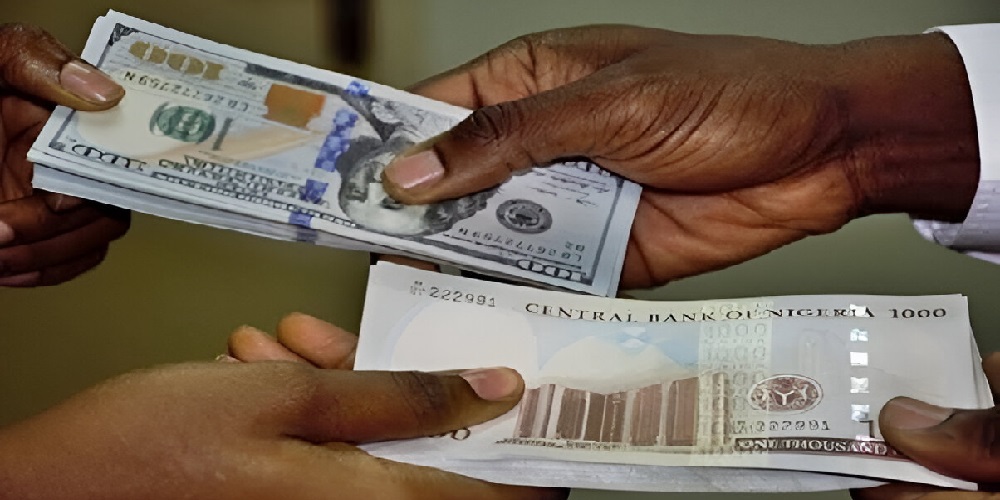
The Black Market Dollar-to-Naira Exchange Rate for 24th June 2026 Can Be Accessed Below.
NOTE: The exchange rate changes hourly. It depends on the volume of dollars available and the Demand. This means…you can buy or sell 1 dollar at a certain rate, and the price can change (high or low) within hours.
The official naira black market exchange rate in Nigeria today, including the Black Market rates, Bureau De Change (BDC), and CBN rates.
Note that the exchange rate is subject to hourly fluctuations influenced by the supply and demand of dollars in the market.
What’s the dollar to naira black market today, 24th June 2026?
The exchange rate for a dollar to naira at Lagos Parallel Market (Black Market) players sell a dollar for ₦1395 and buy at ₦1385 on Wednesday, 24th June, 2026, according to sources at Bureau De Change (BDC).
Please note that the Central Bank of Nigeria (CBN) does not recognize the parallel market (black market), as it has directed individuals who want to engage in Forex to approach their respective banks.
Dollar to Naira Black Market Rate Today
Dollar to Naira (USD to NGN) Black Market Exchange Rate Today
Selling Rate ₦1395
Buying Rate ₦1385
Dollar to Naira CBN Rate Today
Dollar to Naira (USD to NGN) CBN Rate Today
Highest Rate ₦1375
Lowest Rate ₦1365
Economy
SEE Dollar to Naira exchange rate today, June 23, 2026
The Nigerian naira traded at relatively stable levels against the United States dollar on Tuesday, June 23, 2026, across both the official and parallel foreign exchange markets, as market participants continued to monitor liquidity conditions and foreign exchange demand.
Latest data from the Nigerian Foreign Exchange Market (NFEM) showed that the naira exchanged at approximately ₦1,366.41 per dollar at the official market. The NFEM rate, which is published by the Central Bank of Nigeria, represents the volume-weighted average exchange rate for the day.
The official exchange rate has remained within the ₦1,350-₦1,370 range in recent weeks, supported by improved liquidity and sustained foreign portfolio inflows into local assets.
In the parallel market, also known as the black market, the dollar traded at around ₦1,400 for buying and between ₦1,410 and ₦1,420 for selling, depending on location and dealer quotations.
The spread between the official and parallel market rates remained relatively narrow compared with previous years, reflecting ongoing reforms aimed at improving transparency and efficiency in Nigeria’s foreign exchange market.
Currency traders said demand for dollars from importers, travellers and businesses remained steady, although the naira has benefited from increased confidence in the foreign exchange market and improved dollar supply.
Analysts noted that exchange rates could continue to fluctuate in response to changes in foreign exchange inflows, global oil prices and domestic economic conditions.
As of the prevailing rates, $100 would exchange for about ₦136,641 at the official NFEM window, while the same amount could fetch between ₦141,000 and ₦142,000 in the parallel market.
Foreign exchange rates remain subject to intraday movements and may vary across banks, bureaux de change operators and other market participants.
-
News10 hours agoLagos Begins Unique ID Registration For Public, Private School Students
-
Foreign10 hours agoVenezuela’s earthquake death toll hits 1,430, ‘worst in 123 years’
-
News11 hours agoNDC Vice Chairman, Assembly Candidate, Others Defect to APC After Court Nullifies Party Registration
-
News2 hours agoNDLEA operatives pin down N12.3bn Loud at Lagos port (Photos)
-
News10 hours ago‘My Wife Sent Love Messages To Her Lover, Threatened Me With Knife For Dating Two Of My Church Members’
-
News22 hours agoIreland Opens Fully Funded Master’s Scholarship For Nigerians
-
News21 hours agoJust in: Police rescue five abductees in Ogun
-
News2 hours agoFinally, Oyo Govt Lifts Curfew In 10 LGAs

Warning: Undefined variable $user_ID in /home/naijuinz/public_html/wp-content/themes/zox-news/comments.php on line 49
You must be logged in to post a comment Login