News
Bandits have seized control of 64 communities in Plateau – Gov Muftwang
- /home/naijuinz/public_html/wp-content/plugins/mvp-social-buttons/mvp-social-buttons.php on line 27
https://naijablitznews.com/wp-content/uploads/2024/03/Caleb-Mutfwang-1000x600.jpg&description=Bandits have seized control of 64 communities in Plateau – Gov Muftwang', 'pinterestShare', 'width=750,height=350'); return false;" title="Pin This Post">
- Share
- Tweet /home/naijuinz/public_html/wp-content/plugins/mvp-social-buttons/mvp-social-buttons.php on line 72
https://naijablitznews.com/wp-content/uploads/2024/03/Caleb-Mutfwang-1000x600.jpg&description=Bandits have seized control of 64 communities in Plateau – Gov Muftwang', 'pinterestShare', 'width=750,height=350'); return false;" title="Pin This Post">
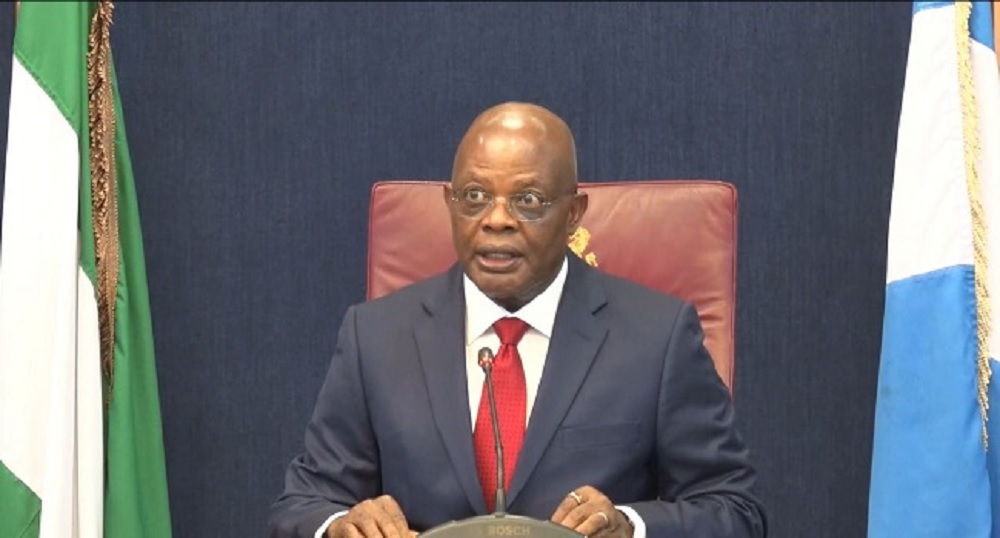
Plateau State Governor, Caleb Muftwang, has decried the attacks in some communities in his state, saying bandits have taken over 64 communities.

The governor stated this on Tuesday during an interview on Channels Television’s Politics Today.
“These communities that have been recently attacked were part of the communities that were attacked in 2023 but they survived it and rebuilt themselves. The Ruwi community that was first attacked lost about 17 people in 2023 but they bounced back to show you the resilience of the people,” the governor said.

Over fifty persons were killed within a week in attacks over five communities that left over three hundred houses burnt by suspected herdsmen.
The Plateau State Government, through the Secretary to the Government Samuel Jatau, also visited some of the affected communities to ascertain the extent of damages and also donate relief materials to affected victims.
Adu expressed the Federal Government’s determination in finding solutions to the incessant attacks and killings.
But the governor said the attacks that have ravaged the North-Central state is not new. He specifically said the state has been experiencing similar incidents for over 10 years but have not gathered national attention
“If these attacks have been going on for close to 10 years, it tells you that there is a deliberate, conscious attempt to clean out populations and to reopen.
“As I am talking to you, there are not less than 64 communities that have been taken over by bandits on the Plateau between Bokkos, Barkin Ladi and Riyom Local Governments. They have been taken over, renamed and people are living there conveniently on lands they pushed people away to occupy,” the governor said.

News
Photos: DAY 14 of Projects Commissioning in the FCT: See Karu road during construction by Nigerian contractor
The Karu Roads during construction by Abdul Val Construction Company, a 100 percent local contractor.
#FCTRenewedHope


#FCTProjectsCommissioning


News
CJN declares war on delayed Justice, orders Judges to embrace active case management
By Francesca Hangeior, Abuja
The Chief Justice of Nigeria, Hon. Justice Kudirat Motonmori Olatokunbo Kekere-Ekun, has called on judges across the country to adopt proactive case management strategies to tackle delays in the administration of justice and strengthen public confidence in the judiciary.
Speaking at the opening of the National Workshop on Case Management for Judges of the Superior Courts of Record, organised by the National Judicial Institute in Abuja on Monday, the CJN said the effectiveness of the judiciary is measured not only by the quality of its judgments but also by the speed and efficiency with which cases are concluded.
She stressed that prolonged litigation, repeated adjournments, procedural abuse and poor scheduling practices continue to undermine access to justice, increase the cost of litigation and weaken public trust in the courts.
“To the ordinary litigant, justice delayed often translates into justice denied,” she said, adding that delays also create uncertainty for businesses and investors while eroding confidence in the rule of law.
Justice Kekere-Ekun noted that effective case management has become a defining indicator of judicial performance worldwide, urging judges to exercise greater control over proceedings, enforce timelines and make effective use of pre-trial procedures to reduce case backlogs.
The Chief Justice also encouraged judicial officers to embrace technology, including electronic filing, virtual hearings, digital case-tracking systems and automated scheduling tools, describing them as essential instruments for improving efficiency while maintaining fairness and due process.
Drawing lessons from jurisdictions such as the United Kingdom, Singapore and South Africa, she said active judicial leadership and structured case management have significantly improved court efficiency and reduced delays.
She acknowledged that increasing commercial activities, constitutional litigation and rising public expectations have placed greater demands on Nigeria’s judicial system, making continuous reforms and procedural discipline imperative.
The workshop, she explained, is designed to equip judges with practical strategies on docket control, electronic case management, scheduling practices, judgment delivery timelines and other measures aimed at enhancing justice delivery.
Justice Kekere-Ekun urged participants to reflect on existing practices, identify procedural bottlenecks and embrace reforms that promote efficiency without compromising fairness.
She expressed confidence that the workshop would provide practical solutions for reducing delays, improving judicial productivity and building a judiciary that is efficient, technologically responsive and worthy of public trust.
The Chief Justice thereafter declared the workshop open and wished participants fruitful deliberations.
Earlier, The National Judicial Institute (NJI) Justice Babatunde Adejumu in his welcome address called on judges of the Superior Courts of Record to adopt proactive case management practices as a key strategy for improving judicial efficiency and ensuring timely justice delivery across Nigeria.
According to Justice Adejumo, effective case management is essential to reducing case backlogs, eliminating administrative bottlenecks, and preventing unnecessary delays in court proceedings.
The NJI administrator explained that modern case management requires judges to move beyond their traditional adjudicative role by actively supervising cases from filing to conclusion.
He explained that this approach enhances access to justice, promotes fairness, and strengthens public confidence in the judicial system.
While emphasising that judicial education and leadership training remains a critical tools for equipping judges with contemporary case management skills, he added that the workshop provides an important platform for participants to exchange ideas, share best practices, and develop practical solutions to challenges affecting court administration.
The NJI Administrator encouraged participants to engage actively in the sessions and contribute meaningfully to discussions that would improve the administration of justice in their respective courts.
Justice Adejumo also commended the Chief Justice of Nigeria and Chairman of the NJI Board of Governors, Hon. Justice Kudirat M. O. Kekere-Ekun, GCON, FNJI, for her steadfast commitment to judicial capacity building.
He further acknowledged the contributions of the Chairman of the NJI Education Committee, Hon. Justice John Inyang Okoro, CFR, JSC, Heads of Courts, facilitators, and session managers for their continued support in advancing judicial excellence.
The workshop is expected to strengthen the capacity of judges to manage cases more efficiently, ultimately contributing to a faster, more responsive, and more effective justice system in Nigeria.
News
CJN declares war on delayed Justice, orders Judges to embrace active case management
By Francesca Hangeior, Abuja.
The Chief Justice of Nigeria, Hon. Justice Kudirat Motonmori Olatokunbo Kekere-Ekun, has called on judges across the country to adopt proactive case management strategies to tackle delays in the administration of justice and strengthen public confidence in the judiciary.
Speaking at the opening of the National Workshop on Case Management for Judges of the Superior Courts of Record, organised by the National Judicial Institute in Abuja on Monday, the CJN said the effectiveness of the judiciary is measured not only by the quality of its judgments but also by the speed and efficiency with which cases are concluded.
She stressed that prolonged litigation, repeated adjournments, procedural abuse and poor scheduling practices continue to undermine access to justice, increase the cost of litigation and weaken public trust in the courts.
“To the ordinary litigant, justice delayed often translates into justice denied,” she said, adding that delays also create uncertainty for businesses and investors while eroding confidence in the rule of law.
Justice Kekere-Ekun noted that effective case management has become a defining indicator of judicial performance worldwide, urging judges to exercise greater control over proceedings, enforce timelines and make effective use of pre-trial procedures to reduce case backlogs.
The Chief Justice also encouraged judicial officers to embrace technology, including electronic filing, virtual hearings, digital case-tracking systems and automated scheduling tools, describing them as essential instruments for improving efficiency while maintaining fairness and due process.
Drawing lessons from jurisdictions such as the United Kingdom, Singapore and South Africa, she said active judicial leadership and structured case management have significantly improved court efficiency and reduced delays.
She acknowledged that increasing commercial activities, constitutional litigation and rising public expectations have placed greater demands on Nigeria’s judicial system, making continuous reforms and procedural discipline imperative.
The workshop, she explained, is designed to equip judges with practical strategies on docket control, electronic case management, scheduling practices, judgment delivery timelines and other measures aimed at enhancing justice delivery.
Justice Kekere-Ekun urged participants to reflect on existing practices, identify procedural bottlenecks and embrace reforms that promote efficiency without compromising fairness.
She expressed confidence that the workshop would provide practical solutions for reducing delays, improving judicial productivity and building a judiciary that is efficient, technologically responsive and worthy of public trust.
The Chief Justice thereafter declared the workshop open and wished participants fruitful deliberations.
Earlier, The National Judicial Institute (NJI) Justice Babatunde Adejumu in his welcome address called on judges of the Superior Courts of Record to adopt proactive case management practices as a key strategy for improving judicial efficiency and ensuring timely justice delivery across Nigeria.
According to Justice Adejumo, effective case management is essential to reducing case backlogs, eliminating administrative bottlenecks, and preventing unnecessary delays in court proceedings.
The NJI administrator explained that modern case management requires judges to move beyond their traditional adjudicative role by actively supervising cases from filing to conclusion.
He explained that this approach enhances access to justice, promotes fairness, and strengthens public confidence in the judicial system.
While emphasising that judicial education and leadership training remains a critical tools for equipping judges with contemporary case management skills, he added that the workshop provides an important platform for participants to exchange ideas, share best practices, and develop practical solutions to challenges affecting court administration.
The NJI Administrator encouraged participants to engage actively in the sessions and contribute meaningfully to discussions that would improve the administration of justice in their respective courts.
Justice Adejumo also commended the Chief Justice of Nigeria and Chairman of the NJI Board of Governors, Hon. Justice Kudirat M. O. Kekere-Ekun, GCON, FNJI, for her steadfast commitment to judicial capacity building.
He further acknowledged the contributions of the Chairman of the NJI Education Committee, Hon. Justice John Inyang Okoro, CFR, JSC, Heads of Courts, facilitators, and session managers for their continued support in advancing judicial excellence.
The workshop is expected to strengthen the capacity of judges to manage cases more efficiently, ultimately contributing to a faster, more responsive, and more effective justice system in Nigeria.
-
News23 hours agoNDLEA operatives pin down N12.3bn Loud at Lagos port (Photos)
-
News23 hours agoFinally, Oyo Govt Lifts Curfew In 10 LGAs
-
News23 hours agoLady attempts Guinness Record with 144-Hour Bible reading in Port Harcourt
-
Sports23 hours agoSee fixtures as nine African nations make FIFA World Cup knockout stage
-
Politics23 hours agoAtiku to TInubu on NDC: Buhari, Jonathan never deregistered opposition parties
-
News23 hours agoXenophobia: FG processing new flight to evacuate Nigerians in S’Africa before June 30 deadline
-
News23 hours agoTension as ISIS releases video of top military grade weapons captured in Niger
-
News23 hours agoNSCDC Intercepts 45,000L Of Suspected Illegal Ethanol, Nabs Three In Akwa Ibom

Warning: Undefined variable $user_ID in /home/naijuinz/public_html/wp-content/themes/zox-news/comments.php on line 49
You must be logged in to post a comment Login