Connect with us

News

10 countries where slavery still exists

Published

on

ADVERTISEMENT
Zoom Ad
ADVERTISEMENT
Zoom Ad

Despite the fact that slavery is illegal in most parts of the world, modern slavery is still a major trend in some countries due to various reasons like weak laws, corruption and even unwillingness of the security agencies to execute their jobs right.


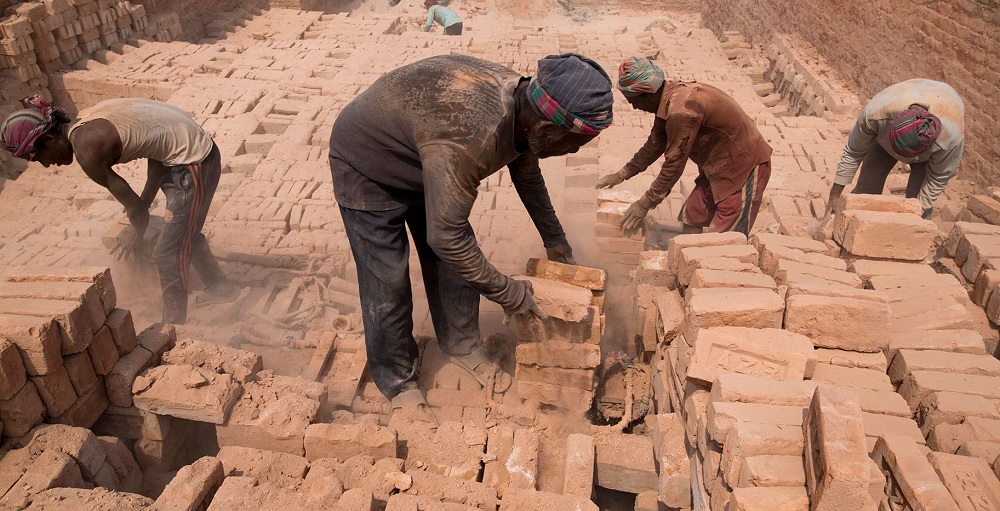
These inhumane acts of modern slavery happen in various ways, such as forced labor, human trafficking, forced marriage, debt bondage and child slavery.

There has been a move to eradicate modern slavery by 2030 all over the world by the International Labour Organization.

These are 10 countries that slavery or modern slavery practices are still reported to be a significant issue according to ‘Global Slavery Index’:

Advertisement

India

India is a country with diverse cultures unique to the indigenous people of India some of these cultures support forced marriages and often leads to the law turning a blind eye. India is the nation with the highest number of modern slaves in the world. These acts of slavery occur through forced marriages, bonded labour due to the high rate of poverty and also child trafficking.

China

China is known as an industrious country and the use of exploitative job opportunities for migrants is not scarce. China also has the issue of forced labour, woman and children trafficking for sexual exploitation.

Advertisement

North Korea

North Korea has the highest percentage of enslaved people relative to it population with 2,696,000 slaves and approximately 26 million people as at 2024. North Korea practices compulsory military service, and state-imposed slave labour ranking third on the list.

Pakistan

Pakistan’s major issue is the outbreak of bonded labour. People are forced to pay off small loans through hard labour for a prolonged period of time. Poor families in Pakistan are often unable to pay back debts and this leads to women being forced into prostitution while children are used as domestic workers or beggars.

Advertisement

Russia

The use of Asian migrants for forced labour is a major issue in Russia and this has resulted in the skyrocketing of forced labour in Russia. Migrants could sometimes lose their passports to Russian officials to prevent them from escaping.

Indonesia

Indonesia battles with a high rate of child labour. Farming and fishing are the two major areas that are of high demand for child and forced labour.

Advertisement

Nigeria

Forced marriages is not uncommon in Nigeria, same applies to human trafficking and child labour. Women and children are trafficked out of the country to become sex workers.

Turkey

Turkey has the issue of child labour, sexual exploitation and even migrant worker exploitation. The nation is a hotspot for refugee migrants who could fall into the hands of predators looking to exploit them

Advertisement

Bangladesh

The garment industry in Bangladesh is a major source of revenue and the rigorous nature of production entails workers and sometimes children toiling for hours in sweatshops

United States

The United States has a major issue with human trafficking, Migrant workers exploitation and even sex trafficking, migrants especially those without legal status, are often exploited in the agricultural and construction sectors.

Advertisement
Continue Reading
Advertisement
Click to comment

Warning: Undefined variable $user_ID in /home/naijuinz/public_html/wp-content/themes/zox-news/comments.php on line 49

You must be logged in to post a comment Login

Leave a Reply

News

BUA Cement distributes N108m farm inputs to 211 Sokoto farmers

Published

on

By

ADVERTISEMENT
Zoom Ad
ADVERTISEMENT
Zoom Ad

BUA Cement Plc has distributed agricultural inputs valued at over N108 million to 211 farmers from its host and resettled communities in Sokoto State under its Resettlement and Sustainable Livelihood Restoration Programme.

The initiative is targeted at farmers affected by the company’s quarry operations and is aimed at restoring livelihoods, improving agricultural productivity and supporting food production.

Speaking at the distribution ceremony, the Managing Director of BUA Cement Plc, Engr. Yusuf Binji, said the programme reflects the company’s commitment to sustainable community development and economic empowerment.

Represented by the Assistant Director of Corporate Services, Alhaji Sada Suleiman, Binji said the intervention was designed to help resettled community members rebuild their livelihoods through agriculture.

Advertisement

“We believe that supporting agriculture is one of the most effective ways of empowering rural households and improving their economic well-being,” he said.

According to him, the company is focused on creating sustainable opportunities for affected communities beyond compensation and resettlement.

He added that the intervention would help improve beneficiaries’ incomes while contributing to increased food production in Sokoto State and across the country.

The company’s Director of Health, Community, Safety and Environment, Engr. Ali Gumel, urged beneficiaries to make effective use of the farm inputs, noting that they had received training on their proper application.

Advertisement

He said the company expects the inputs to translate into higher crop yields, improved household incomes and sustainable agricultural development.

Also speaking, the Programme Manager of the Sokoto State Agricultural Development Programme (SADP), Alhaji Abubakar Danmaliki, described the initiative as an example of effective collaboration between the private and public sectors in promoting rural development.

He said the programme would support farmers in recovering from the challenges associated with resettlement while boosting agricultural output.

Danmaliki added that beneficiaries would continue to receive extension services and technical support to encourage the adoption of improved farming practices.

Advertisement

The company’s Social Performance Specialist, Alhaji Rabiu Maska, said the package included NPK, urea and liquid fertilisers, improved maize, sorghum, cowpea and groundnut seeds, as well as pesticides, herbicides and other farm inputs.

According to him, the intervention was tailored to meet the farming needs of the beneficiaries and improve their harvests.

Some of the beneficiaries commended BUA Cement for the support, describing it as timely in view of rising production costs.

They pledged to utilise the inputs for the intended agricultural purposes to maximise the benefits of the programme.

Advertisement
Continue Reading

News

Gombe LG Polls: APC Sweeps All Seats

Published

on

By

ADVERTISEMENT
Zoom Ad
ADVERTISEMENT
Zoom Ad

The All Progressives Congress (APC) has emerged victorious in all the 24 chairmanship seats and 240 councillorship positions contested in Saturday’s local government elections in Gombe State.

Chairman of the Gombe State Independent Electoral Commission (GOSIEC), Abdullahi Garba Talasse, who announced the results on Saturday in Gombe, declared that the ruling party won in all the local government councils and Local Council Development Areas (LCDAs) where elections were conducted.

Talasse described the successful conduct of elections in the newly created LCDAs as a milestone in the state’s democratic development, noting that Gombe had expanded from 11 local government councils with 114 councillors to 24 councils and LCDAs with 240 councillors.

He said the commission worked closely with the State House of Assembly to secure the legal backing required for elections to be held in the LCDAs.

Advertisement

“We did not struggle for the enabling law in vain. Today, we have successfully conducted elections across the 24 councils and LCDAs, which is a significant achievement for the state,” he said.

The GOSIEC chairman attributed the poor showing of opposition parties to their limited participation in the polls.

According to him, the African Congress (AC) fielded candidates in only three chairmanship contests, while the Democratic Liberation Alliance (DLA) contested in six councils.

He added that the New Nigeria People’s Movement (NRM), Youth Party (YP) and Zenith Labour Party (ZLP) each sponsored candidates in three chairmanship elections.

Advertisement

For councillorship positions, Talasse said AC contested in eight wards, while DLA, NRM, YP and ZLP each fielded candidates in 11 wards.

“That explains why some parties recorded zero votes in several areas because they did not participate across all the councils and wards,” he said.

Talasse explained that although chairmanship results were declared at the various local government collation centres, the commission considered it necessary to present a statewide summary to journalists, observers and the public.

“From the results before the commission, APC has won all the 24 chairmanship seats and all the 240 councillorship positions,” he declared.

Advertisement

He commended political parties, election observers, civil society organisations, security agencies and other stakeholders for contributing to the peaceful conduct of the elections.

The GOSIEC chairman also appreciated party leaders, government officials, non-governmental organisations and other guests from across the country who monitored the exercise, describing their participation as crucial to the success of the electoral process.

Continue Reading

News

Ex-President Obasanjo Blames Greed, Carelessness For Global Warming

Published

on

By

ADVERTISEMENT
Zoom Ad
ADVERTISEMENT
Zoom Ad

Former President of Nigeria, Olusegun Obasanjo, has attributed global warming to human greed, selfishness, and reckless exploitation of the environment, warning that such actions continue to disrupt the natural balance of the ecosystem.

Obasanjo made the remarks in Kano during an event organised in honour of former President of the Nigerian Bar Association, Abubakar Mahmoud, and his Environment and Sustainability Initiative and Trust Fund.

Speaking at the event, Obasanjo acknowledged the reality and growing impact of climate change, stressing that human activities remain a major driver of global warming.

“God created our world in balance, but we, as human beings, out of selfishness and carelessness, have done more harm than good to our environment, and we need to do more in the safekeeping of our environment,” the former president said.

Advertisement

Obasanjo also revealed that he has personally planted more than 3.5 million trees as part of efforts to combat climate change, stressing that protecting the environment is a collective responsibility and a global public good.

The Kano State Government commended the initiative and pledged its support to ensure its sustainability.

The Commissioner for Environment and Water Resources, Dahiru Hashim, described the initiative as a significant step towards environmental protection and sustainable development.

“In recognition of this laudable initiative, the Kano State Government has approved the donation of 10,000 seedlings for the Mahmoud Environmental and Sustainable Trust,” Hashim said.

Advertisement

In his remarks, Abubakar Mahmoud said the initiative seeks to promote environmental sustainability and preserve the ecosystem for the benefit of both present and future generations.

“I started a small project that has grown into something quite formidable, providing protection to villages around and to preserving various species of plants,so what we are trying to do is to continue with this legacy,” he said.

The event attracted several dignitaries, including the vice presidential candidate of the Nigeria Democratic Congress (NDC), Rabiu Kwankwaso, former chairman of the Independent National Electoral Commission (INEC), Attahiru Jega, officials of the Kano State Government, and other stakeholders.

Participants at the event called for deliberate and collective action to address climate change and environmental degradation.

Advertisement
Continue Reading

Trending

Copyright © 2024 Naija Blitz News