News
Youth Conference To Begin Grassroots Sessions In June – Minister
- /home/naijuinz/public_html/wp-content/plugins/mvp-social-buttons/mvp-social-buttons.php on line 27
https://naijablitznews.com/wp-content/uploads/2025/04/Ayodele-Olawand.jpg&description=Youth Conference To Begin Grassroots Sessions In June – Minister', 'pinterestShare', 'width=750,height=350'); return false;" title="Pin This Post">
- Share
- Tweet /home/naijuinz/public_html/wp-content/plugins/mvp-social-buttons/mvp-social-buttons.php on line 72
https://naijablitznews.com/wp-content/uploads/2025/04/Ayodele-Olawand.jpg&description=Youth Conference To Begin Grassroots Sessions In June – Minister', 'pinterestShare', 'width=750,height=350'); return false;" title="Pin This Post">
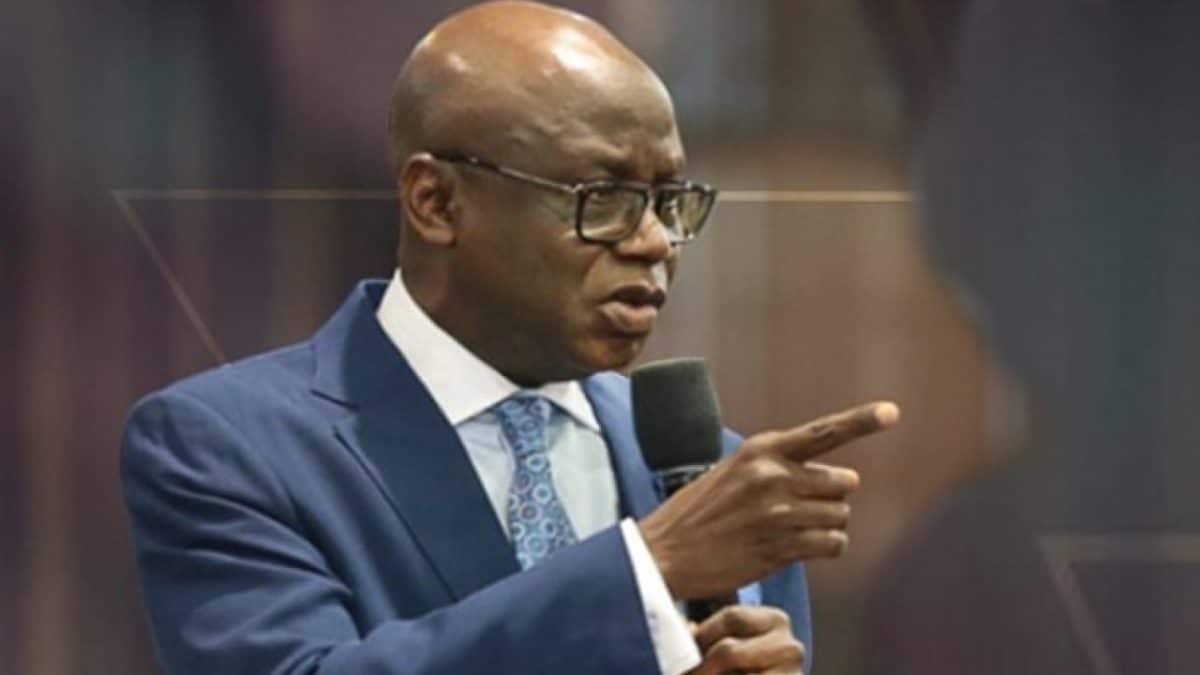
The much-anticipated National Youth Conference will kick off its grassroots physical engagements in the first week of June, according to the Minister of Youth Development, Ayodele Olawande.

The conference, which was initiated by President Bola Ahmed Tinubu on March 10, with the inauguration of a national planning committee, is progressing steadily through its preparatory phases.
Speaking on the modalities being adopted, Olawande revealed that the next phase of the engagement—which includes consultations with Nigerian youths in the diaspora and through online platforms—will commence by the end of May.

“By next month, the Diaspora and online engagements will start. When I return to Abuja, we’ll look at the next report and we’ll get to build a big website for that purpose that can engage as many as possible.
“I can tell you that before May 29, the Diaspora and social platform engagements will start, and that one will go on so that they can collate all those ideas together”, the minister stated.
According to Olawande, the grassroots engagements will follow immediately, beginning in early June.
These sessions are to be held across all 36 states and the Federal Capital Territory (FCT), a deliberate move to decentralize the process and include voices from every part of the country.
“Work is ongoing. I think they are currently at sub-committee levels because since it’s not going to be concentrated in Abuja, we’ll be going to the grassroots, so there’ll be local organising committees in all the 36 states and the FCT, whereby the process will be managed by both government and the private sector”, he said.
The minister clarified that each state’s local committee will include youth commissioners and representatives from the private sector operating within the state.
The process, he emphasized, is not politically driven, although it includes nominal representation from youth wings of political parties.
“It is not a political thing, but there’s no way we won’t still consider politics because like in the committee we have representatives of all national youth leaders of all political parties.
We will also ensure that the representation of the political parties’ youth forums, all of them put together, will be just 1%. We’ll allow the process to be driven by the NGOs and all such organisations that will participate”, he explained.
Olawande also addressed concerns regarding funding and logistics, noting that the conference would be modestly funded through donations and support from development partners, rather than from elaborate government funding or fundraising.
“We’re being mindful of our current financial state. We’re not doing any fundraising. It is a confab, but it is not a confab where we’ll be sharing money, no. If you really want to join us to discuss, please come, but don’t expect that we will be sharing money there. Nobody will give you millions in the name of confab”, he said.
He pointed out that during the inauguration of the planning committee, diplomatic missions such as the U.S. and Qatar embassies were present, and their interest forms part of the expected support base.
The minister explained that the decentralised structure of the conference was not only due to financial prudence but also to reflect the diversity of youth needs across Nigeria.
Drawing from his extensive travels to 28 out of the 36 states, many of them rural and underserved areas, Olawande emphasized that the challenges and priorities of young Nigerians vary significantly across regions.
“In my travels, I have discovered that the demands and desires are varying. What youths from one state or district or constituency or local government want are different from others.
For instance, demands and desires of youths from two different senatorial districts within the same state are different; they have their peculiarities”, he said.
He added that centralizing the event in Abuja could risk undue political interference, as selecting youth delegates on a national scale is far more complex than choosing elders for a similar reason.
“To select delegates for an elders’ confab is easier because every community or nationality knows its elder statesman. But for youths, just a political party can have over 101,000 youth groups. Youth groups are uncountable. So is it possible to accommodate all youth organisations? No”, Olawande noted.
In response to these complexities, the conference will adopt a senatorial district-level format, balancing inclusivity with logistical and budgetary realities.
“So why not take it to the people that really need this conversation? Why not say okay, if because we can’t do 360 federal constituencies because of financial constraints, why not do 109 senatorial districts?”, he asked.
The National Youth Conference, when it fully launches, is expected to provide a structured platform for Nigerian youth to voice their concerns, contribute ideas for national development, and foster inclusive dialogue across political, regional, and socio-economic divides.

News
Borno Commissioner Vows To Cut Off Fingers Of Those Who Vote Against APC
Saina Buba, the Borno State Commissioner for Youth and Sports Development, has threatened political opponents with physical harm if they fail to support the ruling All Progressives Congress (APC).
Buba made the remark during a campaign inauguration event organised by the Tinubu City Boy Movement, a political support organisation campaigning for President Bola Tinubu’s administration and his anticipated 2027 re-election bid.
Addressing the crowd, the commissioner warned that anyone who opposed the APC by raising a finger against the party would have the same finger cut off.
He said those who challenged the party would have their fingers broken, stressing that the warning was part of the political contest.
Buba also warned that government benefits would be used to favour supporters of the administration while those who refused to support it could face punitive treatment.
The commissioner said those who supported the government would enjoy its benefits, while those who rejected it would face the consequences.
Buba’s comments have sparked outrage.
News
APM, ADC Group Demand Release Of FBI Record On Tinubu
The Grassroots Mobilisation Network (GMN), a support group of the African Democratic Congress (ADC), on Sunday called on President Bola Tinubu to break his silence over alleged references to him in narcotics-related documents reportedly submitted by the United States FBI before the District Court for the District of Columbia, or resign from office.
The group, in a statement by its spokesperson, Mr Peter Emeka, expressed concern over what it described as the continued silence of the Presidency, arguing that Nigerians deserve clarity on an issue that, in its view, has implications for the country’s international reputation.
Pressing for a US response, the APM National Publicity Secretary, Abubakar, said the sustained efforts by the Tinubu Presidency to block the release of the report to the public heightened suspicion of guilt and desperation for a cover-up.
“The APM urges the United States authorities to note that withholding such information is of enormous harm to Nigeria’s security, national integrity and democratic growth.
“The United States, being a leading democracy in the world, should at all times be seen to facilitate the consolidation of democracy and transparency in the international fight against drug trafficking and corruption.
“The drug and other ancillary allegations against President Tinubu, who is a major contender in the 2027 presidential election, constitute a global issue which continues to harm Nigeria’s reputation among the comity of nations.
“This is especially as the public is already aware of the 1993 $460,000 forfeiture judgment against accounts traced to Tinubu by the US District Court for the Northern District of Illinois following an investigation into drug-related transactions.
“The effect of the $460,000 forfeiture judgment is that, by virtue of Section 137 of the Constitution of the Federal Republic of Nigeria, 1999 (as amended), President Tinubu remains ineligible for election in Nigeria. Moreover, Nigeria is a signatory to international conventions on drugs and money laundering.”
The APM urged the “United States authorities to assist Nigerians in their decision to elect a leader with clean records and not an individual encumbered by drug-related allegations and corruption cases.”
On its part, the spokesman for the Grassroots Mobilisation Network (GMN), Mr Peter Emeka, said, “We call on President Tinubu to come out clean and speak to the nation over the ongoing litigation in America.”
He also criticised Nigeria’s law enforcement and intelligence agencies, accusing them of failing to adequately investigate or respond to the allegations and documents circulating in the public domain.
“Our system has failed for the fact that they were unable to detect all these embarrassing documents being paraded against the President, which are now the subject of litigation in a far-away country,” Emeka stated.
“Our intelligence agencies saddled with the responsibility of investigation and various checks have all failed,” he added.
According to the group, the continued silence from the Presidency is becoming increasingly disturbing and has the potential to deepen public suspicion.
“If the President continues to remain mute, he should quietly resign to save the nation from the ongoing global embarrassment,” Emeka said.
In a related development, the GMN has demanded greater transparency regarding President Tinubu’s reported three-week vacation in Europe.
The group said that, given the prevailing mood in the country and the controversy surrounding the narcotics-related allegations, the Presidency should provide Nigerians with adequate information about the President’s itinerary and engagements while away.
“The prevailing mood of the country requires the Presidency to make a full disclosure of President Tinubu’s movements,” the group said.
The GMN maintained that greater transparency would help dispel speculation, reassure Nigerians and protect the country’s image and standing in the international community.
The group urged the Presidency to address the issues directly rather than allow speculation and unanswered questions to dominate public discourse.
News
FG set to blacklist schools, publishers using unapproved textbooks from September
The Federal Government will begin blacklisting schools, authors, and publishing houses that use or distribute unapproved instructional materials starting this September.
This harsh sanction coincides with the resumption of the 2026/2027 academic session in two weeks, marking the official enforcement of an aggressive new national textbook ranking policy.
Under the new directive, standard licensing from the Nigerian Educational Research and Development Council (NERDC) no longer guarantees a textbook’s entry into classrooms.
Every instructional resource from primary to senior secondary school must now pass a rigorous national evaluation, securing a minimum score of 70% to qualify for the official national ranking.
Speaking recently with education stakeholders—including state commissioners, private school owners, and administrators—the Minister of Education, Dr. Tunji Alausa, emphasized that the policy is central to making Nigeria’s education sector globally competitive.
According to the policy statement obtained by Nigerian Tribune, the government is capping the final approved list to a maximum of six to 10 titles per subject to prevent an overcrowded market.
Once a textbook makes this elite list, it will remain standard for a minimum lifespan of three years to ensure educational stability.
While unranked textbooks are strictly banned in all public primary and secondary schools nationwide, the Federal Government strongly recommends that private institutions adopt these exact standards to maintain uniform educational quality.
-
Economy16 hours agoRecord $947m July Remittances Bring Cardoso’s $1bn Monthly Target Within Sight
-
Metro16 hours agoTwo ladies arrested for stealing their neighbors’ 3 kids 2 weeks after moving in as tenants
-
News24 hours agoOPay Rubbishes Viral Shutdown Rumour, Warns Against Fake Publication
-
News16 hours agoBorno Commissioner Threatens Opponents: ‘Follow Us And Enjoy Honey, Refuse And Be Flogged’
-
Politics16 hours agoNDC Accuses INEC of Replacing Its 2027 Candidates With ‘Strange Names’
-
News16 hours agoPreaching Hell Won’t Make Nigerians Born Again Because They Are Already in Hell — Pastor Ibiyeomie
-
News16 hours agoNewborn baby found abandoned in Benue forest
-
Metro16 hours agoTruck Hijacking Ring Crushed in Oyo, Police Recover Stolen Sino Howo

Warning: Undefined variable $user_ID in /home/naijuinz/public_html/wp-content/themes/zox-news/comments.php on line 49
You must be logged in to post a comment Login