

News
ECOWAS Parliament Meets in Banjul to Tackle Impact of Sahel States’ Withdrawal
- /home/naijuinz/public_html/wp-content/plugins/mvp-social-buttons/mvp-social-buttons.php on line 27
https://naijablitznews.com/wp-content/uploads/2025/04/IMG-20250428-WA0027-1000x600.jpg&description=ECOWAS Parliament Meets in Banjul to Tackle Impact of Sahel States’ Withdrawal', 'pinterestShare', 'width=750,height=350'); return false;" title="Pin This Post">
- Share
- Tweet /home/naijuinz/public_html/wp-content/plugins/mvp-social-buttons/mvp-social-buttons.php on line 72
https://naijablitznews.com/wp-content/uploads/2025/04/IMG-20250428-WA0027-1000x600.jpg&description=ECOWAS Parliament Meets in Banjul to Tackle Impact of Sahel States’ Withdrawal', 'pinterestShare', 'width=750,height=350'); return false;" title="Pin This Post">
By Gloria Ikibah
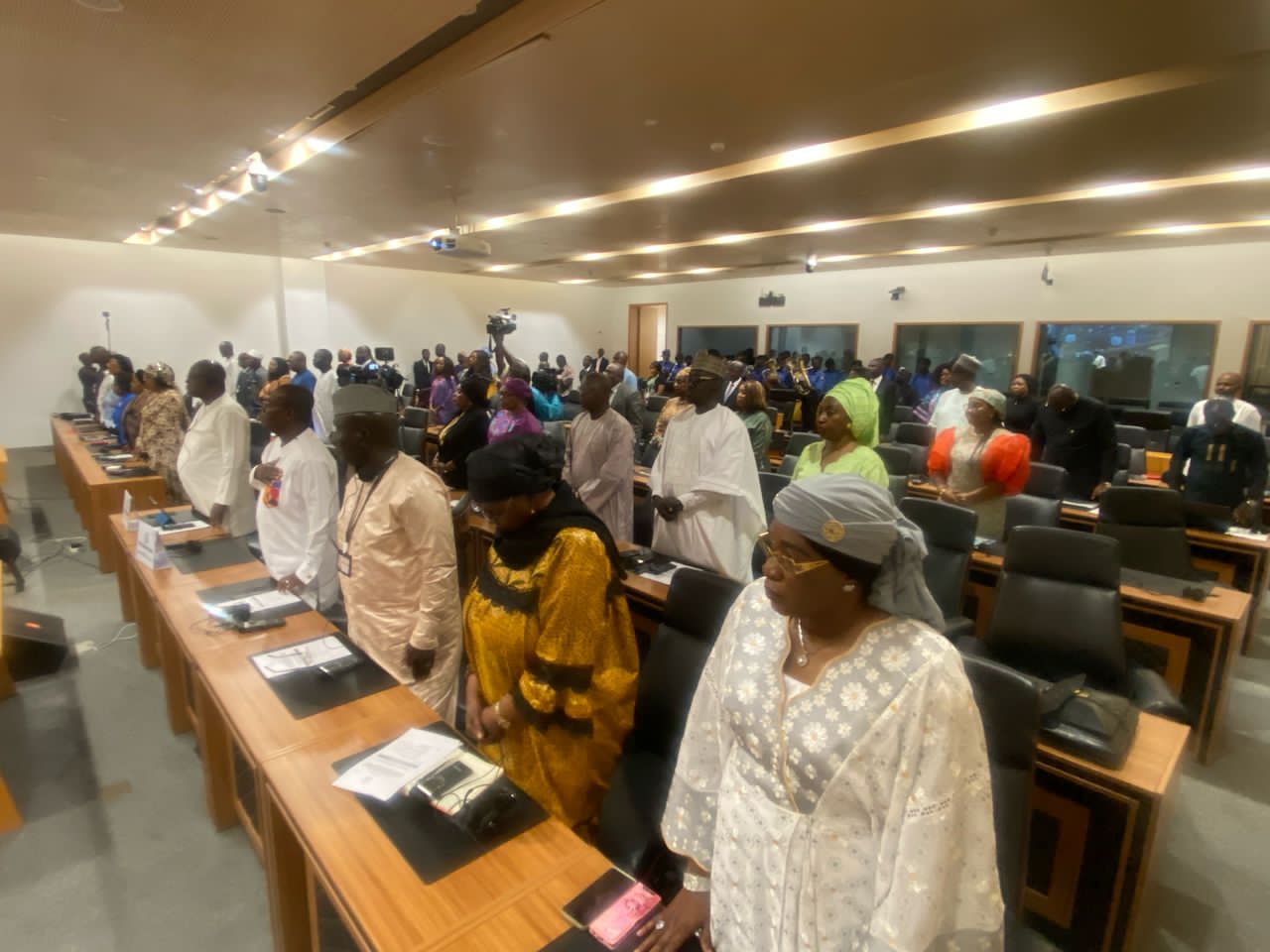
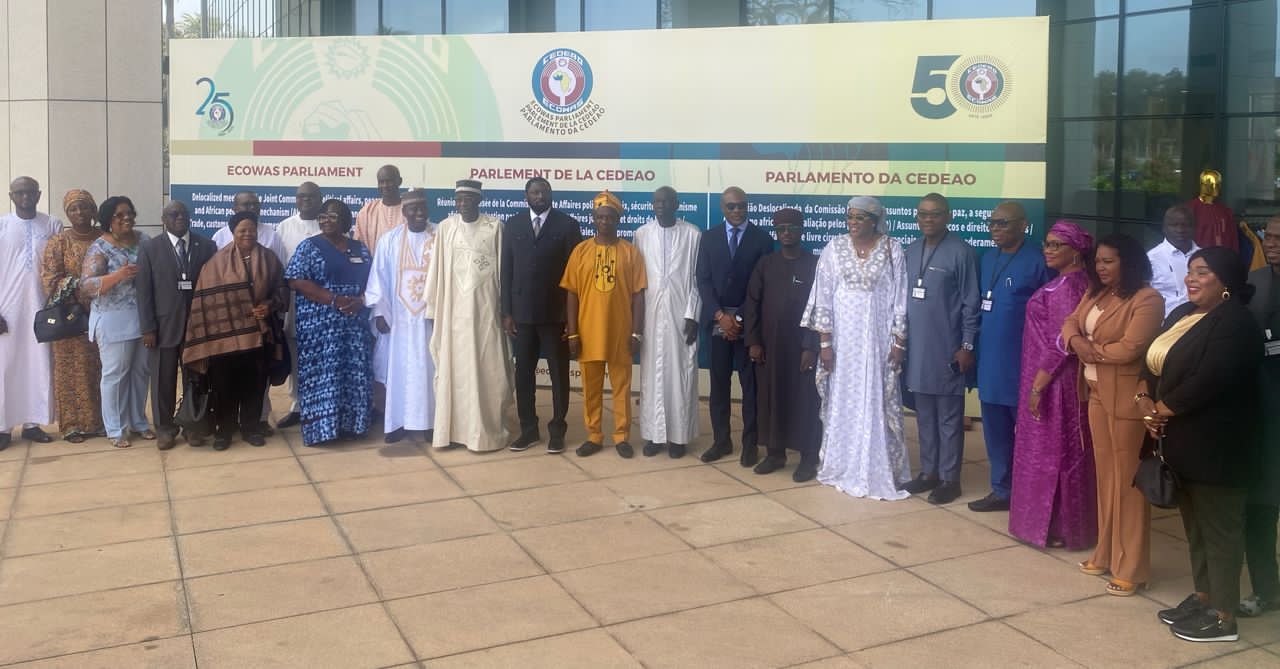
The ECOWAS Parliament has commenced a critical series of meetings in Banjul, The Gambia, to address the political, security, socio-economic and humanitarian consequences of the recent withdrawal of Burkina Faso, Mali, and Niger from the regional body.
Speaking at the opening ceremony of the Delocalised Meeting, 4th Deputy Speaker of the ECOWAS Parliament, Hon. Billy Tunkara, said that two key meetings were underway: the Committee of Administration, Finance and Budget, reviewing the Parliament’s 2024 End-Year Budget Performance Report, and the Joint Committee on Political Affairs, Security, African Peer Review Mechanism, Legal Affairs and Human Rights, Trade, Customs and Free Movement, Social Affairs, Gender, Women Empowerment and Persons with Disabilities, focusing on the impact of the Sahel states’ withdrawal.

He said: “Given the evolving challenges in the region, including economic fluctuations, health crises, and social instability, it is essential for the Parliament’s financial strategies to align with the core principles of sustainability, accountability, and transparency”.
Tunkara lauded the leadership of President Adama Barrow of The Gambia for his commitment to regional integration and thanked the Right Honourable Speaker of the Gambian National Assembly and the Gambian delegation to the ECOWAS Parliament for their support.
“The Gambian people have always taken pleasure in welcoming their brothers and sisters from the Community, an attribution of my homeland that I take great pride in,” he added.
Reflecting on ECOWAS’ history, Tunkara however, he warned that this legacy is now under serious threat.
“ECOWAS, born in 1975 from the Lagos Treaty, has for five decades embodied the shared aspiration for a common destiny.
“The withdrawal of Burkina Faso, the Republic of Mali, and the Republic of Niger marks an unprecedented fracture. These countries, strategic and demographic pillars, have chosen to leave the common ship. This choice, effective since January, threatens not only our achievements but also the future of 400 million citizens,” he said.
The 4th Deputy Speaker outlined the far-reaching impacts of the withdrawal.
- Politically, ECOWAS has lost 20% of its members, weakening its voice on the international stage.
- Security-wise, the withdrawal of key players from the fight against terrorism in the Sahel poses serious risks.
- Socioeconomically, the reinstatement of strict border controls threatens trade, cross-border projects, and humanitarian aid.
- Humanitarian-wise, the isolation could worsen the plight of vulnerable populations.
“Our meeting goes beyond a mere diagnostic exercise,. It aims to rigorously assess the multidimensional impacts, imagine bridges where others see walls, and strengthen our resilience by identifying reforms”, Tunkara emphasized.
He therefore Parliament to produce concrete proposals including bold recommendations for maintaining dialogue with the Sahel states and reforms to consolidate ECOWAS.
The Deputy Speaker stressed the need for introspection and called for a renewed approach based on inclusion, transparent governance, and projects that improve citizens’ lives.
“The simultaneous withdrawal of three Member States is a wake-up call. It compels us to ask: why did the Member States choose to leave? Have we listened enough to their concerns? Have we been able to adapt our model to their realities?
“Let our debates be frank, but always guided by the spirit of fraternity that founded our Community.
“Today, it is up to us to write the next chapter. Despite the challenges, I remain convinced that ECOWAS remains the best bulwark against fragmentation. Although ECOWAS may now be fifteen minus three, nevertheless, our vision remains whole.”
Hon. Tunkara reminded the lawmakers of the founding spirit of ECOWAS in 1975, even as he expressed hope that the meeting in Banjul would mark the beginning of a renaissance.
“A renaissance where each state, each citizen, recognizes themselves in this common project. A renaissance where cooperation triumphs over selfishness, and where hope prevails over pessimism”, he asserted.
News
ECOWAS Parliament Pushes Renewable Energy as Key to Unlocking Rural Prosperity
…as lawmakers, experts, development partners seek practical solutions to West Africa’s electricity deficit
By Gloria Ikibah
The ECOWAS Parliament has opened a five-day high-level meeting in Dakar with a renewed call for greater investment in renewable energy, positioning rural electrification as a critical tool for economic growth, job creation and sustainable development across West Africa.
The Delocalised Joint Committee Meeting brings together parliamentarians, government officials, energy specialists, development partners and private sector stakeholders to examine ways of expanding electricity access in rural communities, where millions of residents remain disconnected from reliable power despite the region’s vast renewable energy resources.
The gathering is expected to focus on policy reforms, financing mechanisms and legislative frameworks needed to accelerate the deployment of clean energy solutions throughout the sub-region, under the theme, “Harnessing Renewable Energy for Rural Electrification and Empowerment of Rural Economies in the ECOWAS Region: The Role of the ECOWAS Parliament” .
Declaring the meeting open on behalf of the Speaker of the ECOWAS Parliament, Rt. Hon. Hadja Memounatou Ibrahima, the Fourth Deputy Speaker, Hon. Billay Tunkara, emphasised that renewable energy must be viewed not only as a means of supplying electricity but also as a powerful instrument for transforming rural economies.
“Renewable energy is not merely a technical response to electricity demand. It is a key driver in transforming economic activities, particularly in rural areas,” he said.
Tunkara commended Senegal for its commitment to energy transition efforts and acknowledged the country’s drive towards greater energy independence. He noted that investments in solar power and diversification of energy sources had contributed significantly to improving electricity access in rural communities.
He also called on member states to intensify efforts to ensure that renewable energy becomes a vehicle for inclusive growth and social development across the region.
“Together, let us make rural electrification through renewable energy a catalyst for the economic empowerment of women, young people and farmers. Access to clean energy is a fundamental right, a factor in social peace and a driver of sustainable development”, he added.
The Deputy Speaker further urged governments across the ECOWAS region to strengthen support for renewable energy programmes through innovative financing arrangements, technology transfer initiatives, local manufacturing and stronger parliamentary oversight of regional energy policies.
In his welcome remarks, Head of the Senegalese Delegation to the ECOWAS Parliament, Hon. Guy Marius Sagna, described the conference as a crucial opportunity for West Africa to advance its quest for energy sovereignty and sustainable development.
He expressed concern that electricity access in many rural areas remains critically low despite the region’s abundant renewable energy potential.
“Our country, the Republic of Senegal, is deeply honored and truly enthusiastic to host this meeting, whose theme resonates particularly strongly as a call to action. A call to make the development of renewable energy a key component of our energy sovereignty.
“The figures speak for themselves. In our ECOWAS region, access to electricity for rural households is still capped at around 12 percent, while our region boasts exceptional solar potential. This gap between our resources and their exploitation is a challenge that we must collectively and urgently address”, he added.
According to Sagna, achieving energy independence is essential to addressing broader socio-economic challenges such as poverty, unemployment, food insecurity and underdevelopment.
Earlier, Chairperson of the Joint Committee on Energy and Mines, Agriculture, Environment and Natural Resources, and Infrastructure, Hon. Fanta Conte, highlighted the urgency of tackling the widening gap between energy demand and supply across the region.
“Less than 40 percent of the rural population has access to electricity. In some of our Member States, this rate falls below 10 percent in the most remote areas,” she said.
Conte noted that inadequate electricity access continues to undermine healthcare services, agricultural productivity, educational opportunities and income generation, particularly for women and young people living in rural communities.
She also emphasised the responsibility of lawmakers in ensuring that regional energy policies are translated into effective national legislation and implemented successfully.
“Our role is to ensure that commitments made at the regional level, particularly the ECOWAS Renewable Energy Policy and the Energy Efficiency Action Plan, are effectively transposed into national legislation and, above all, implemented on the ground,” she stated.
The committee chair expressed optimism that the deliberations, which include technical sessions and a field visit to renewable energy projects in Mboursine village, would yield practical recommendations capable of accelerating rural electrification and driving sustainable economic growth throughout the ECOWAS region.
The meeting is expected to continue until June 19, culminating in recommendations aimed at strengthening regional energy cooperation and expanding access to clean, affordable and reliable electricity across West Africa.
News
Nigerian Ports Record Global Leap as Apapa, Tin Can Gain World Bank Recognition
By Gloria Ikibah
Nigeria’s maritime sector has received a major boost after the World Bank named the Apapa Port Complex and Tin Can Island Port Complex among the world’s 20 most improved ports, reflecting significant progress in operational efficiency and service delivery.
The recognition was contained in the 2025 Container Port Performance Index (CPPI), released by the World Bank in June 2026, which highlighted both Lagos ports for their notable improvements in vessel turnaround times and overall port performance.
The ranking is widely regarded as one of the most authoritative global assessments of port efficiency, measuring how quickly ships are serviced and cleared through ports. It provides a standardised, data-driven framework for comparing the performance of ports across different countries and regions.
The latest recognition comes amid ongoing reforms and modernisation efforts at Nigeria’s seaports, spearheaded by the Nigerian Ports Authority (NPA) under the leadership of its Managing Director, Dr Abubakar Dantsoho.
Industry observers say the improved ranking reflects sustained efforts to streamline port operations, reduce delays and enhance the competitiveness of Nigeria’s maritime gateways in the global shipping industry.
The latest recognition comes on the heels of the Nigerian Ports Authority’s pivotal role in sustaining Nigeria’s trade surplus. Through enhanced efficiency and improved port operations, the NPA has continued to provide the platform for Nigeria’s successive attainment of trade surpluses since 2024. Most recently, the National Bureau of Statistics (NBS) reported a trade surplus of ₦7.54 trillion in the first quarter (Q1) of 2026, highlighting the strategic importance of the nation’s ports to economic growth and international trade.
Reacting to the World Bank report, the Managing Director of the NPA, Dr. Abubakar Dantsoho, attributed the achievement to the investor-friendly policies of President Bola Ahmed Tinubu and the support of the Minister of Marine and Blue Economy, Adegboyega Oyetola.
“With the investor-friendly policies of President Bola Ahmed Tinubu providing the impetus for increased investment to drive our port infrastructure and equipment modernization programme, coupled with the unflinching support of the Honourable Minister of Marine and Blue Economy, Adegboyega Oyetola, we have all it takes to further enhance trade facilitation, improve competitiveness and boost the national economy.”
The inclusion of Apapa and Tin Can Island ports in the global Top 20 for improvement marks a significant milestone for the country’s maritime sector, which has in recent years pursued measures aimed at boosting efficiency, attracting investment and strengthening Nigeria’s position as a regional trade hub.
The Container Port Performance Index serves as an important benchmark for governments, port operators and investors by identifying ports that are making measurable progress while also highlighting areas requiring further operational improvement.
For Nigeria, the latest ranking is expected to reinforce confidence in ongoing port reforms and support efforts to improve trade facilitation, logistics performance and economic competitiveness.
News
Tinubu Commissions Abuja Court of Appeal Complex, Says Rule of Law Must Operate From A Befitting Home (Photos)
By Ojomah Austin.
President Bola Ahmed Tinubu on Monday reaffirmed his administration’s commitment to strengthening Nigeria’s judiciary, declaring that the rule of law must be supported by modern infrastructure, improved welfare and institutional reforms capable of deepening democracy and enhancing access to justice.
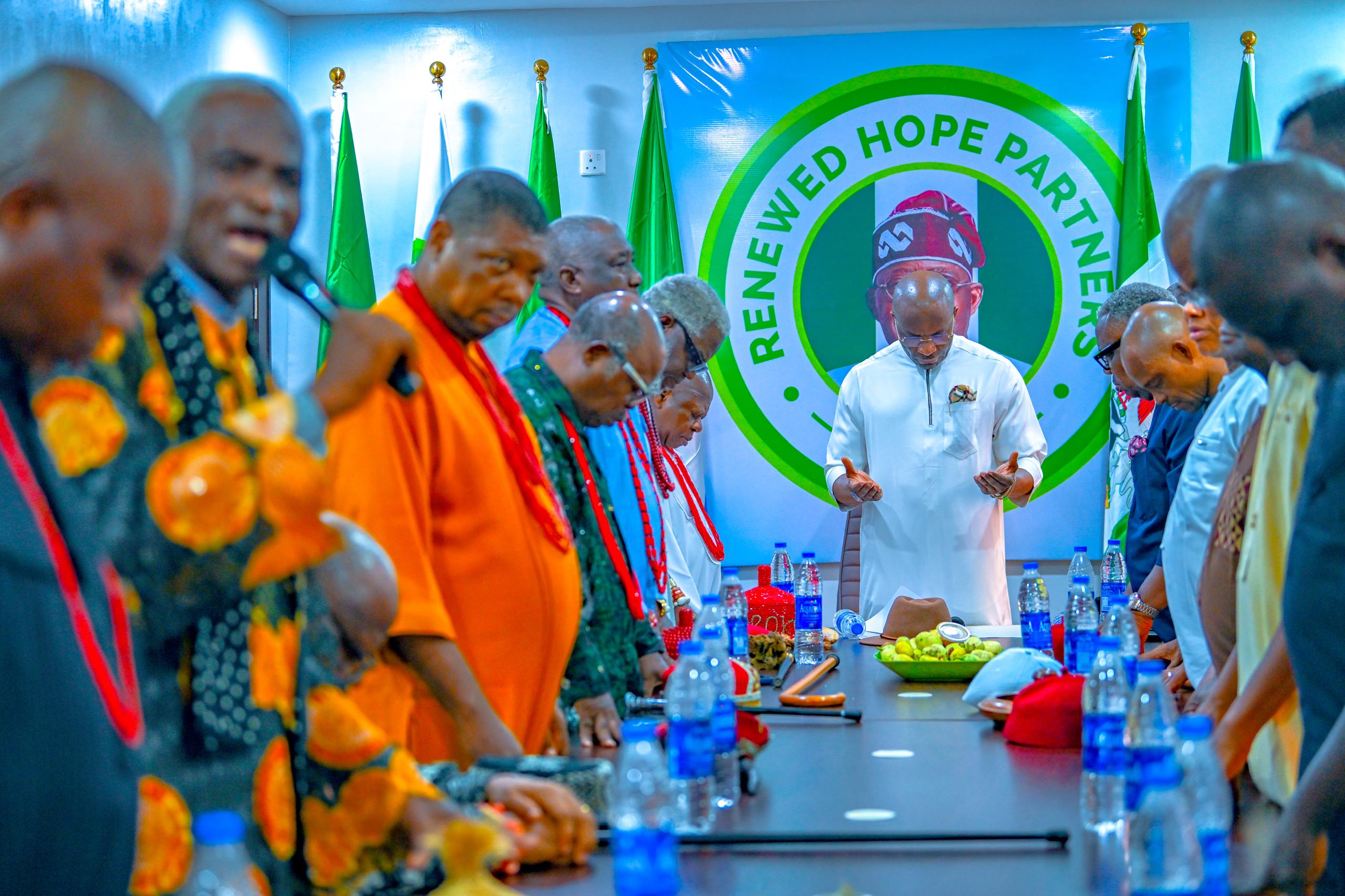
Represented by Vice President Kashim Shettima at the commissioning of the Court of Appeal Abuja Division Building Complex in Dakibiyu, Abuja, Tinubu described the new edifice as a landmark achievement under the Renewed Hope Agenda and a clear demonstration of government’s determination to restore the dignity of key democratic institutions.

The building has two big courtrooms, eight small courtrooms, library, 10 judges suites, three conference halls, administrative offices with ancillary facilities, among others.
“This is not just a building. This is a statement. A statement that under the Renewed Hope Agenda, the rule of law will have a befitting home,” the President said.
He recalled that the Abuja Division of the Court of Appeal had for years operated from a cramped temporary facility, a situation he described as unacceptable for an institution entrusted with dispensing justice.
“A nation that seeks justice must respect the temple of justice. When I visited and saw the condition, I gave a simple instruction: fix it. Today, we have fixed it,” he stated.
Tinubu praised the Minister of the Federal Capital Territory (FCT), Barr. Nyesom Wike, for delivering the project within record time, describing him as “Mr. Project.”
“When I appointed you as Minister of the FCT, I knew you would not sleep. You promised 16 months. You delivered in record time. No excuses. No variation. Just results. Nigerians can see the difference,” he said.
According to the President, the world-class complex, which comprises two large courtrooms, eight smaller courtrooms and modern support facilities, would accelerate the administration of justice, reduce congestion in correctional centres and strengthen democratic governance.
“This is how you honour the judiciary. This is how you strengthen democracy,” he added.
Tinubu noted that the project aligns with the administration’s commitment to judicial reforms, increased funding for the judiciary and the promotion of a just, rule-based society. He also commended the FCT Administration for building additional courts, constructing residences for judicial officers, digitising judicial processes and supporting legal education.
Addressing judicial officers, the President acknowledged the enormous responsibilities borne by the Court of Appeal, particularly in election petitions and constitutional matters.
“You deserve an environment that matches the weight of your responsibility. This complex is not a favour. It is your right. And we will do more,” he assured.
He further commended Visible Construction Limited for delivering the project, saying the accomplishment demonstrated the capacity of indigenous firms to execute world-class infrastructure projects.
“This magnificent edifice shows that local companies have the capacity to deliver high-quality projects on time. This is the Nigeria we are building,” he said.
The President urged judges and justices to ensure justice remains swift, fair and blind to status, ethnicity or wealth.
“Let justice be swift. Let it be fair. Let it be blind to status, tribe or purse. Let the common man feel that this court is truly his last hope,” he stated.
Earlier, the Attorney-General of the Federation and Minister of Justice, Prince Lateef Fagbemi (SAN), described the commissioning as a historic moment for Nigeria’s judiciary and democracy, noting that it coincided with the 50th anniversary of the Court of Appeal.
“This is not merely the unveiling of a significant judicial edifice. It is a powerful statement of this administration’s unwavering commitment to the rule of law, judicial independence and the strengthening of institutions that safeguard our constitutional democracy,” he said.
Fagbemi said President Tinubu had demonstrated unprecedented support for the judiciary through concrete reforms, investments and welfare improvements.
“Indeed, no administration in Nigeria’s recent history has provided the level of support to the judiciary that we have witnessed under the leadership of President Bola Ahmed Tinubu,” he stated.
According to him, one of the administration’s most notable achievements was the historic review of judicial officers’ remuneration, resulting in an increase of more than 300 per cent.
“This was the first major upward review in decades and represented a bold response to long-standing concerns regarding the welfare and dignity of judicial officers,” he said.
The AGF added that beyond welfare reforms, the administration had embarked on one of the most ambitious judicial infrastructure development programmes in Nigeria’s history, including the construction of residences for Court of Appeal justices, Federal High Court judges and FCT High Court judges.
He further highlighted efforts to strengthen judicial capacity through the appointment and confirmation of qualified judicial officers, ensuring the Supreme Court attained its full constitutional complement of justices.
“The critical intervention has enhanced the apex court’s capacity, improved its ability to manage its caseload and significantly reduced delays in adjudicating matters of national importance,” he said.
In his remarks, FCT Minister, Nyesom Wike revealed that the project was conceived after concerns were raised about the poor state of the Abuja Division and the inadequate accommodation available to judicial officers.
“When I informed Mr. President of the condition of the Court of Appeal, he immediately directed that we should not only provide a befitting complex but also decent accommodation for judges and justices,” Wike said.
He disclosed that the FCT Administration had completed or was nearing completion of housing projects for judicial officers across several courts.
“Tomorrow, we are going to hand over the residences for the Court of Appeal judges, on Wednesday, we will hand over those of the Federal High Court judges, and on July 17, we will hand over those for the FCT High Court. We are also flagging off housing projects for the Industrial Court and the Code of Conduct Tribunal,” he announced.
The minister argued that judicial independence could not be achieved without adequate infrastructure and conducive working conditions.
“You cannot talk about the independence of the judiciary when the judiciary does not have a befitting environment where they can carry out their functions,” he said.
Wike also used the occasion to call on residents to fulfil their civic obligations, particularly the payment of ground rents and tenement rates.
“Development means funding. You cannot have development when there is no money. We are celebrating today, but we must ask where the money comes from. Citizens must also play their part,” he said.
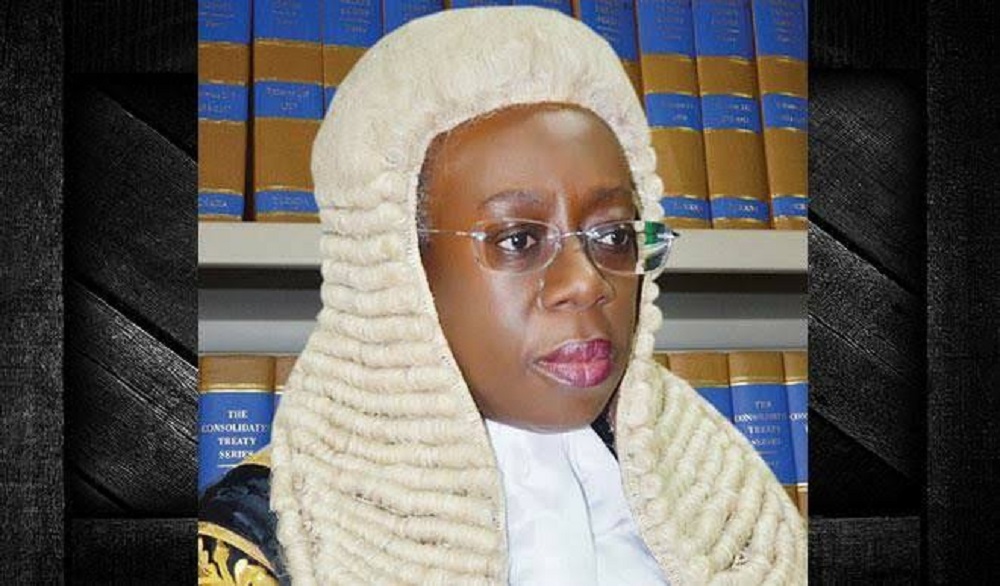
President of the Court of Appeal, Justice Monica Dongban-Mensem, described the new complex as a transformative intervention that would significantly improve the administration of justice.
“The impact of the newly constructed court complex on the administration of justice cannot be overstated. The physical environment in which justice is delivered is a decisive factor that affects the quality, speed and public confidence in judicial outcomes,” she said.
Justice Dongban-Mensem explained that the Abuja Division had long struggled with only two courtrooms and limited administrative space despite handling one of the heaviest caseloads in the country.
“The lack of infrastructure has continuously slowed down the timely administration of justice. Even when multiple panels are constituted to reduce backlog, we often have to rely on courtrooms provided by sister courts,” she noted.
She expressed appreciation to the Federal High Court, National Industrial Court, FCT High Court and Customary Court of Appeal for accommodating the Court of Appeal over the years.
“Sometimes they suspended their own sittings to accommodate us. I am happy to say that from today, they are relieved of that burden,” she said.
In a vote of thanks, the Minister of State for the FCT expressed appreciation to President Tinubu for his visionary leadership and commitment to strengthening the judiciary through strategic infrastructure investments. She also commended Barr. Nyesom Wike for delivering transformative projects across the Federal Capital Territory and thanked members of the judiciary, legislature, media and other stakeholders for their support.
Also speaking, the Managing Director of Visible Construction Limited, Mr. Olalekan Adebiyi, said the project underscored the capacity of indigenous firms to deliver critical national infrastructure. He described the complex as a significant contribution to improving the working environment of judicial officers and commended President Tinubu and Barr. Nyesom Wike for their leadership and support in ensuring the successful completion of the project.
The commissioning of the Court of Appeal Abuja Division Building Complex formed part of activities marking the third anniversary of the Tinubu administration and the golden jubilee of the Court of Appeal, highlighting what officials described as a renewed commitment to judicial reform, institutional strengthening and improved access to justice for Nigerians.
-
News17 hours agoNot Diabetes And hypertension, Son Reveals Shocking Details About General Rabe’s death
-
News17 hours agoI risked Abacha’s wrath to push for Abiola’s release, says Abubakar
-
Metro17 hours agoPolice Launch Massive Manhunt As Gunmen Abduct Ondo Community Leader
-
News17 hours agoAt least 30 Yoruba Monarchs Flee Palaces After Bandits Abduct 11th Oba
-
Sports17 hours agoDebutants Curaçao Score First-Ever World Cup Goal In 8-goal Thriller Against Germany
-
News10 hours ago2025 Capital Budget Gets New Lease of Life as Reps Push Deadline to September
-
Foreign17 hours agoIran Agrees US Peace Deal, To Reopen Strait Of Hormuz
-
News17 hours agoFamily Reveals How General Abubakar Died, Says Wife Still In Bandits’ Custody

Warning: Undefined variable $user_ID in /home/naijuinz/public_html/wp-content/themes/zox-news/comments.php on line 49
You must be logged in to post a comment Login