News
Nigeria’s Security Architecture: Progress Amidst Complex Challenges, Not Incompetence
- /home/naijuinz/public_html/wp-content/plugins/mvp-social-buttons/mvp-social-buttons.php on line 27
https://naijablitznews.com/wp-content/uploads/2025/05/IMG-20250502-WA0000_1.jpg&description=Nigeria’s Security Architecture: Progress Amidst Complex Challenges, Not Incompetence', 'pinterestShare', 'width=750,height=350'); return false;" title="Pin This Post">
- Share
- Tweet /home/naijuinz/public_html/wp-content/plugins/mvp-social-buttons/mvp-social-buttons.php on line 72
https://naijablitznews.com/wp-content/uploads/2025/05/IMG-20250502-WA0000_1.jpg&description=Nigeria’s Security Architecture: Progress Amidst Complex Challenges, Not Incompetence', 'pinterestShare', 'width=750,height=350'); return false;" title="Pin This Post">
The PUNCH editorial of April 27, 2025, titled “Insecurity and Incompetence of Security Chiefs”* , while understandably driven by patriotic fervour, falls into the classic pitfall of oversimplifying a profoundly complex national security crisis. *To characterise the Nigerian security chiefs as “clueless” or “grossly incompetent” is not only unfair, it dangerously underestimates the multidimensional challenges they confront daily, often at great personal risk and sacrifice.*

The editorial paints a grim, heartbreaking picture of Nigeria’s insecurity—and rightly so. *However, the portrayal of the Service Chiefs and heads of intelligence agencies as idle bureaucrats waiting for presidential instructions is misleading.* What it conveniently ignores is that Nigeria’s security challenges are neither isolated nor simplistic. *They are deeply rooted in decades-long socio-political fractures, economic dislocations, porous transnational borders, foreign insurgent influences, and a global terrorism matrix that continues to mutate beyond classical military doctrines.*
*The tragedy unfolding across Benue, Plateau, Kwara, and other states is not a sudden phenomenon.* It is the culmination of years of weak communal relations, the collapse of rural economies, foreign fighter infiltration, climate-driven migration pressures, and the trans-border proliferation of sophisticated arms from failed North African states. These are strategic and complex problems—far beyond the reach of simple military deployment or spontaneous reaction.

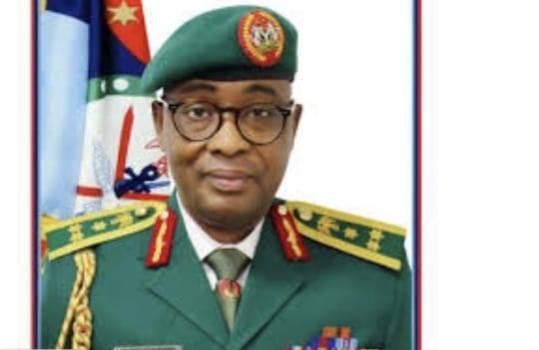
*Far from idling, Nigeria’s security chiefs—General Chris Musa (CDS), Lt. General Olufemi Oluyede (COAS), Air Marshal Hassan Abubakar (CAS), Vice Admiral Emmanuel Ogalla (CNS), IGP Kayode Egbetokun, DG DSS Adeola Ajayi, and DG NIA Ambassador Mohammed Mohammed—are engaged in continuous strategic, kinetic, and intelligence operations across the federation.*
*In fact, under their leadership, we have seen:*
Intensified aerial bombardments and decapitation strikes against insurgent camps.
Increased recovery of captured territories and ungoverned spaces.
Strategic alliances with regional forces under MNJTF to push back terrorist expansionism.
Deployment of joint task forces, mobile police squadrons, and proactive intelligence operations leading to the dismantling of several terrorist cells.
Enhanced collaboration with local security initiatives like Amotekun and Community Vigilantes to bolster internal security frameworks.
*Are these efforts flawless?* Absolutely not. But to dismiss them entirely is to be dangerously disconnected from the operational realities of national defence.
The editorial ridicules security chiefs for allegedly awaiting the President’s directive before acting. Such a portrayal reveals a fundamental misunderstanding of military command ethos. In every serious democracy, military and security operations must align with civilian authority. They do not—and should not—operate on whimsical impulses independent of constitutional control. President Tinubu’s firm directive, “Enough is enough,” signals reinforcement of political will—not an indictment of security operations.
It is true that Nigeria’s borders are porous. But has PUNCH forgotten that Nigeria shares over 4,477 kilometres of land borders with multiple states, many of which are politically unstable or in outright chaos? Even the wealthiest and most technologically advanced nations struggle with illegal immigration and infiltration. The inflow of armed elements from Mali, Burkina Faso, and Niger following the Sahelian upheavals exacerbates an already volatile security ecosystem. No security chief, no matter how competent, can seal such expansive borders overnight.
Expecting instant victories against insurgencies and banditry betrays ignorance of counter-insurgency realities. History shows that defeating asymmetric threats requires not just bullets and bombs, but winning hearts and minds, stabilising local economies, deradicalising ideologies, and rebuilding governance structures—none of which yield instant results.
Is the frustration of Nigerians justified? Without a doubt. But frustration must not be allowed to blind reason. Nigeria’s security chiefs are fighting an extraordinarily complex and long war—one complicated by decades of governmental neglect, international complicity in arms smuggling, and rapid socio-economic decline.
Instead of emotional denunciations, the media, civil society, and citizens should focus on:
*Institutional strengthening:* Advocating for police reforms, military modernisation, and enhanced intelligence architecture.
*Border security reinforcement:* Supporting diplomatic, military, and technological measures to better monitor Nigeria’s extensive frontiers.
*Community-based security initiatives:* Encouraging grassroots security partnerships between security agencies and communities.
*Balanced reportage:* Highlighting security successes alongside failures to boost morale among the troops risking their lives daily.
Rather than call for the resignation of the security chiefs who continue to bleed and toil for Nigeria’s stability, what the nation needs is a collective surge of constructive patriotism: citizen vigilance, local cooperation, responsible media advocacy, and political unity.
The path to securing Nigeria is not paved with simplistic outrage. It is carved painstakingly through cooperation, resilience, reform, and realism. Our security chiefs deserve fair critique—not sweeping condemnation.
As Nigeria navigates one of the most turbulent chapters of its history, let us choose the path of reasoned engagement over the temptation of emotionalism. Nigeria needs all hands on deck—not the cynical tearing down of those at the helm of a most difficult battle.
Signed:
TUKUR GUSAU
Brigadier General
Director Defence Information
28 April, 2025
News
Police arrest Osun commissioner, Adeleke campaign council kicks
The Osun State Police Command has arrested the state Commissioner for Environment and Sanitation, Mayowa Adejoorin, over the shooting that occurred during an All Progressives Congress rally in Ilesa on Saturday.
The arrest, however, has triggered a reaction from the Imole Campaign Council, the campaign organisation of Governor Ademola Adeleke, which accused the police of bias and alleged that the commissioner was being politically targeted.
The police spokesperson, Abiodun Ojelabi, said Adejoorin was arrested after tactical officers intercepted a white Lexus 350 in connection with the incident.
Ojelabi told our correspondent that the shooting occurred after a vehicle bearing registration number OSHAO4 was parked near the APC rally and persons identified as Amotekun personnel allegedly emerged from it and opened fire.
He said some APC supporters chased the fleeing personnel, adding that one of those caught allegedly pulled out a knife and attempted to stab people before escaping.
Ojelabi said the matter was reported to the police, prompting tactical teams deployed to different locations in the area to respond.
He said, “There was a rally by APC in some parts of Ilesa. The rally was on when they discovered a vehicle parked beside them bearing a particular plate number, OSHAO4, and some people identified as Amotekun Personnel came out of the car and shot sporadically, and everybody ran for safety.
“So some brave men among those that were doing the rally chased those Amotekun personnel passengers.
The one they were able to catch drew out a knife and tried to stab anyone who came close to him, and he used that technique to escape.”
According to the police spokesperson, officers later intercepted the Lexus and arrested an Amotekun operative and another occupant, who were taken to the command headquarters.
He said interrogation established that the second occupant was Adejoorin.
Ojelabi said, “The matter was reported to the police, and based on our own, we already have our tactical teams on the ground. We have over four IRT tactical teams on the ground posted to different locations.
“So the IRT that was closer to that place responded to that incident. On getting to the scene, they saw a vehicle that was approaching them, a white Lexus 350.
“On intercepting the vehicle, they saw an Amotekun personnel in the vehicle. So they apprehended the vehicle, the personnel and one other person in the vehicle. They brought them straight to the headquarters here. On interrogation, it was discovered that the other occupant is Honourable Mayowa Adejoorin.”
The police said investigation had commenced to determine Adejoorin’s level of involvement in the incident.
Reacting to the arrest, the Imole Campaign Council accused the police command of indiscriminate arrests, intimidation and alleged abduction of Accord Party leaders and supporters across Ijesaland.
The council’s spokesperson, Pelumi Olajengbesi, addressing journalists in Osogbo alleged that Adejoorin was arrested outside Ilesa while travelling to Osogbo and claimed the police were acting on the instruction of a federal lawmaker.
Olajengbesi said the commissioner had earlier received a call from the lawmaker, during which he was allegedly threatened with arrest.
He said, “The latest victim of this alarming pattern is the Honourable Commissioner for Environment and Sanitation, Hon Mayowa Adejoorin, a prominent native of Ikiyinwa in Obokun Local Government Area of the state.
“The manner of his arrest is particularly disturbing. We consider what happened to Hon Adejoorin nothing short of a bandit-line abduction carried out under the cover of police authority.
“For some time now, we have witnessed a disturbing pattern in which prominent Accord leaders and supporters in Ijesaland are picked up by the Police on allegations that are apparently motivated by sinister political calculations, kept away from their families, communities and campaign activities, and thereby removed from circulation at a critical period of the electoral process.”
The campaign council called on the Inspector-General of Police, Tunji Disu, to intervene and rein in the Osun State Police Command.
Questioning the basis for the arrest, Olajengbesi said, “On what basis was Hon Mayowa Adejoorin arrested? What offence has he committed?
What evidence exists against him?
“Why was his arrest carried out in such a manner? And why does the Police appear increasingly willing to deploy its powers only against Accord political leaders at this critical moment in our democratic process?
“We demand the immediate release of Hon Mayowa Adejoorin, as we believe, there is no lawful and credible basis for his abduction and detention.
“Let me also make this clear to the Police command and to the frustrated APC leaders who are sponsoring these actions: The Accord will not be intimidated. You may arrest our leaders. But you cannot arrest the will of the people.”
News
INEC extends candidate submission deadline to Tuesday
The Independent National Electoral Commission has extended the deadline for political parties to submit the list of candidates for the 2027 governorship and state Houses of Assembly elections from Saturday, August 8, to Tuesday, August 11, 2026.
The commission announced the extension in a statement issued on Saturday and signed by the National Commissioner and Chairman of its Information and Voter Education Committee, Mohammed Haruna.
According to INEC, the decision followed appeals by political parties for additional time to complete the submission process through the dedicated online portal.
“The submission window, which according to the revised Timetable and Schedule of Activities for the General Election was originally scheduled to close on Saturday, 8th August, 2026, has been extended to Tuesday, 11th August, 2026,” the commission said.
In a related development, INEC announced the suspension of PVC collection in Osun State ahead of the August 15 governorship election.
The commission said voters who applied for replacement of lost, damaged or defaced Permanent Voter Cards would have until midnight on Sunday, August 9, to print downloadable copies of their cards.
The electoral body explained that the deadline was necessary to enable it compile data on downloaded PVCs and produce final statistics on the total number of cards collected ahead of the election.
INEC said PVC collection in Osun commenced at the Registration Area level from July 22 to 28, 2026, but was extended to July 31 following complaints about large crowds and difficulties experienced by voters at collection centres.
The exercise subsequently moved to the local government level and ran from August 1 to 7.
The commission also disclosed that replacement downloadable PVCs had been made available to voters in Odo-Otin and Ife Central Local Government Areas following the theft of cards during attacks on the two collection centres.
It stressed that the stolen cards could not be used to vote.
INEC reassured Osun residents of its preparedness for the August 15 governorship election.
“The commission reiterates that the stolen cards cannot be used to vote.
“INEC reassures the people of Osun State of its readiness to conduct a free, fair, credible and inclusive governorship election on 15th August, 2026,” the statement said.
News
Why I criticised Tinubu’s tax reform openly — Nasarawa gov
Nasarawa State Governor, Abdullahi Sule, on Saturday disclosed that he openly criticised the original Value Added Tax component of President Bola Tinubu’s tax reform, warning that pushing the proposed increase through at a time of high inflation would have hurt ordinary Nigerians.
Sule made the disclosure while receiving the Special Adviser to the President on Information and Strategy, Bayo Onanuga, and the Renewed Hope Ambassadors National Media Tour team at the Nasarawa State Government House in Lafia, on the second leg of a nationwide inspection of federal and state infrastructure projects that had earlier taken the delegation through Benue State.
Sule said the President listened to the concerns of governors like him and ultimately revised the changes to the Tax Bill.
He stated, “I don’t praise-sing. When the president was misled about taxes, I criticised the matter openly. People misunderstood the matter, and when we visited the President, he said, ‘Sule, go and meet Zacch Adedeji and the current Minister of Finance [Taiwo Oyedele]. If you make the changes, if they agree, it’s okay.
“I said, ‘Mr President, that’s what we wanted from you.’ Governors were pushing me that I was the one to talk, and I spoke. And when we went, we made the changes.”
Sule explained the reasons behind his objection, tying it to the inflationary environment at the time the reform was first proposed.
“We made the changes because as at January 1, 2025, VAT would have been 10 per cent at the time. Inflation was about 30 per cent. Today, inflation is now getting to single-digit numbers. So now you can afford to charge more.
“I come from the business angle; I cannot allow our party to make a mistake. And luckily for us, we have a president who listens. He listened.
“We made the changes. They are positive, and it is bringing money to states; this has made the President look good,” he said.
Sule said he was willing to challenge the President publicly as consistent with a broader philosophy of honest engagement rather than blind loyalty.
“There is a way that you have to be able to find a way to commend your leaders when they do right. But it goes both ways,” he told the Presidential Communications Team, urging them to also scrutinise governors whose infrastructure did not match the resources they were receiving.
“The governors should be concerned about these trips that you are making, because it is time now to be accountable,” he added.
Sule also disclosed that the state’s monthly federal allocation surged from an average of N3.8bn to N4.5bn before the removal of fuel subsidy, to between N14bn and N16bn today.
He credited President Tinubu’s economic reforms for freeing up resources previously consumed by subsidy payments across all tiers of government.
The ex-Dangote Sugar Refinery executive explained, “In the first four years, everybody knows Nigeria was sharing anywhere between N590bn to about N620bn monthly as total FAAC allocation.”
“For Nasarawa State, what we were getting was anywhere between N3.8bn and N4.5bn for the state. With the removal of subsidy today, Nasarawa State is receiving an average of N14bn to N16bn every month,” he added, saying Tinubu “took the bullet” for state governments by freeing up resources previously consumed by subsidy payments.
Sule further stated, “Today, I can tell you we have spent about N90bn on infrastructure without borrowing one naira from the bank, and most of it has already been paid off.
He listed state projects executed, including a combined overhead and underground flyover built for N16.7bn, the dualisation of Akwanga Township at N7.1bn, an Akwanga underpass at N6.6bn, the dualisation of Shendam Road at N5.6bn, a stormwater channel at Amba Bridge at N3.3bn, and the Keffi flyover built for N11.4bn.
On lithium, Sule said Nasarawa now hosts what he described as Africa’s largest lithium mining and processing facility.
He attributed this to a federal policy requiring miners to process minerals locally rather than export them raw.
“You cannot take away the credit from this administration,” he said, highlighting the state’s vocational skills centres which offer training in 12 trades and a post-retirement skills programme, alongside new tertiary healthcare facilities established across all three senatorial zones of the state, including a specialist hospital under construction in Akwanga.
Responding, Onanuga said the tour was designed to independently verify claims of development rather than rely solely on official reports.
“We want to verify federal projects, verify state projects, so that people can know that the reports are not just a waste of time, but were done in good faith to really develop our country,” he said.
-
Opinion4 hours agoHOW RELEVANT IS B.P.P TO TINUBU’S “RENEWED HOPE AGENDA”?
-
Metro4 hours agoNsukka Activist Beaten, Detained By The Police After Raising Alarm Over Bad Roads
-
News4 hours agoPeter Dunia, Chimamanda Adichie Emerge LEEX 2026 Man, Woman of the Year
-
News4 hours agoNigeria Risks Losing Out On Fresh $1.4bn US Aid Over ‘Christian Persecution’
-
News19 hours agoBode George Still Angry Over His Failed PDP National Chairmanship Bid, No Regret Stopping Him – Wike
-
News4 hours agoSenator Ede Dafinone Celebrates Ighoyota Amori at 74, Hails His Contributions to Delta Politics
-
Sports4 hours agoPolice Report Reveals Threats On Lionel Messi, Ronaldo Lives
-
Foreign4 hours agoFormer US President Joe Biden’s Prostate Cancer Spread To Other Parts Of His Body

Warning: Undefined variable $user_ID in /home/naijuinz/public_html/wp-content/themes/zox-news/comments.php on line 49
You must be logged in to post a comment Login