Connect with us

News

85% of Nigerian foreign scholarship students don’t return, says Alausa

Published

on

ADVERTISEMENT
Zoom Ad
ADVERTISEMENT
Zoom Ad

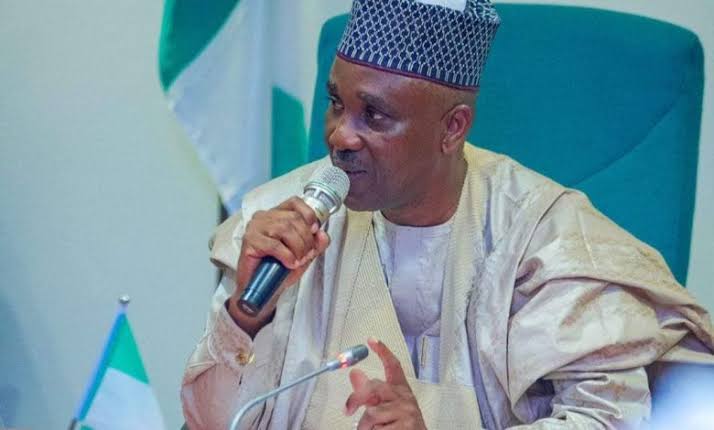
The Minister of Education, Mr. Tunji Alausa, has lamented that 85 per cent of Nigerian students sent abroad on government scholarships never returned to contribute to national development.


This came as he announced that tertiary institutions with fewer than 2,000 students will no longer be eligible for funding from the Tertiary Education Trust Fund.

Speaking on Friday at a one-day engagement with heads of institutions, bursars, and procurement directors in Lagos, Alausa said the Federal Government was repositioning the funding framework to ensure public resources are used efficiently.

On foreign scholarships, Alausa revealed a shift in policy, explaining that more funds would now be invested in building local capacity.

Advertisement

He continued, “Our evidence-based analysis showed that 85 per cent of Nigerian students sent abroad on government scholarships never returned to contribute to national development.

“Many of the programmes they studied could have been handled effectively within our own institutions.”

To address this, he said 28 Centres of Excellence have been established across public and private institutions to offer postgraduate programmes, enhance research and create jobs.

“We are re-evaluating how institutions benefit from TETFund. We can no longer incentivise poor performance or underutilisation,” the minister said.

Advertisement

He noted the inefficiency of allocating equal resources to underpopulated schools as those with significantly higher student numbers.

He stated, “Several polytechnics established as far back as 2019 have only between 350 to 550 students enrolled yet receive the same level of funding as institutions with over 18,000 students.

“This is inefficient and unsustainable. Therefore, we have set a new benchmark: any institution that, after five years of operation, still has fewer than 2,000 students may be deemed ineligible for TETFund support until they scale up their capacity.”

Alausa said the engagement with institutions from the southern zone was aimed at reviewing the 2024/2025 intervention guidelines and fostering transparency.

Advertisement

“There’s no doubt that TETFund has greatly benefited our tertiary institutions through numerous interventions and improvements.

“However, under the directive of President Bola Ahmed Tinubu, our focus now is to ensure maximum value from every naira spent in our institutions,” he further stated.

He also raised concerns about the unchecked proliferation of satellite campuses, calling it “unsustainable and counterproductive.”

In his remarks, the Executive Secretary of TETFund, Sonny Echono, said the agency is moving towards a more sustainable and performance-driven funding model.

Advertisement

Echono stated, “The Fund has been moving toward a more sustainable model of funding. This is in line with the broader objective to reduce institutions’ reliance on government subvention and to encourage Public-Private Partnerships, particularly in areas such as hostel development, innovation parks and service facilities.”

Echono warned that underperforming institutions risk being removed from the list of TETFund beneficiaries.

“Institutional expansion must be checked, and we must avoid unnecessary duplication of mandates.

“Institutions that consistently fail to access, utilise, or retire funds appropriately, or that fall short of enrolment and academic performance thresholds, risk being delisted,” he warned.

Advertisement

He added that the goal of these new measures was not to punish, but to enhance the credibility and impact of TETFund.

He declared, “This policy is not meant to punish but to safeguard the credibility and impact of TETFund interventions. We want to ensure that the Fund’s resources are directed toward institutions committed to high standards of governance, transparency and accountability.”

He concluded by calling for deeper accountability and reform across the tertiary education sector.

“This engagement is a call to action. It is a platform to learn, reflect and commit to best practices in governance, project management and compliance,” he concluded.

Advertisement
Continue Reading
Advertisement
Click to comment

Warning: Undefined variable $user_ID in /home/naijuinz/public_html/wp-content/themes/zox-news/comments.php on line 49

You must be logged in to post a comment Login

Leave a Reply

News

Enikanolaiye Appoints Elesho, Oni As Media Aides to Drive Strategic Communications, Digital and Public Diplomacy

Published

on

ADVERTISEMENT
Zoom Ad
ADVERTISEMENT
Zoom Ad

By Gloria Ikibah

The Minister of State for Foreign Affairs, Ambassador Sola Enikanolaiye, has approved the appointment of two media professionals to strengthen the communication of the ministry’s mandate and the Federal Government’s Renewed Hope Agenda.

The appointments, announced by the Spokesperson of theMinistry, Kimiebi Imomotimi Ebienfa, are Mr Richard Elesho as Special Assistant on Media and Strategic Communications and Mr Raphael Oni as Special Assistant on Digital and Public Diplomacy.

According to the ministry, the two appointees bring decades of combined experience in journalism, public affairs, government communication and media management.
Elesho is a graduate of Delta State University, Abraka, and Kogi State University, Anyigba. He previously served as Chief Press Secretary and Director-General, Media Affairs, to two former Governors of Kogi State, Alhaji Ibrahim Idris and Capt. Idris Wada.
Until his latest appointment, Elesho was the North Central Bureau Chief of The News/PM News.

Advertisement

Oni, described by the ministry as a specialist in diplomatic reporting, has more than 15 years’ experience spanning government communication, public diplomacy and international relations.

An award-winning photojournalist and diplomatic correspondent, he holds a Master’s Degree in International Relations and Diplomacy from the University of Abuja.

He has been the publisher of Diplomats Extra Magazine since 2013, a publication focused on diplomacy and international affairs and read by ministries, departments and agencies, embassies and other stakeholders.

Oni has also served two terms as Secretary-General of the Diplomatic Correspondents Association of Nigeria (DICAN), as well as Secretary-General of the NUJ Correspondents Chapel, Abuja.

Advertisement

The ministry said the appointments were aimed at improving its communication efforts and ensuring more effective engagement with the media and the public on Nigeria’s foreign policy and diplomatic activities.

Ebienfa urged stakeholders to support the new media team and foster a cordial working relationship with the appointees.

“Let us give them the necessary support and looks forward to cordial working relationship with them,” he said.

Advertisement
Continue Reading

News

Aviation labour bodies give airline operators 72hrs deadline over unionization, TSC

Published

on

ADVERTISEMENT
Zoom Ad
ADVERTISEMENT
Zoom Ad


The National Union of Air Transport Employees (NUATE) and the Air Transport Services Senior Staff Association of Nigeria (ATSSSAN) have issued a three-day notice of strike to Nigeria’s domestic airlines, accusing the operators of blocking workers from unionising and non-remittance of ticket sales charges owed to the Nigerian Civil Aviation Authority (NCAA).

‎In a statement issued at the weekend, the unions said they were escalating the issue after the warning they gave on August 4, when the unions announced a notice of picketing and declared they were prepared to strike “at any time without further notice.”

Describing the latest move as a gesture of restraint, the unions said they were giving the airlines a further three days to address their grievances before industrial action begins. In the statement, the unions accused airlines of two major infractions.

They alleged that airlines have made it impossible for members of staff to join unions freely, despite repeated efforts by the aviation unions to secure that right.

Advertisement

They said workers are too afraid to even express interest in union membership for fear of discrimination.

The unions also accused the airlines of withholding a 5% charge on ticket sales that is meant to fund the operations of aviation agencies. According to the statement, the non-remittance of these funds has stalled the implementation of collective bargaining agreements already negotiated on behalf of union members.

The statement read: “In relaxing the notice of picketing, dated 4th August 2026 by our unions, with a statement that we were ready to strike at anytime without further notice, we hereby magnanimously issued a 3-day Notice of Strike upon the defaulting domestic airlines principally for the following infractions:

‎”Making unfettered unionization of staff in their organisation impossible after several efforts by the aviation unions. Their workers dare not even express the intention to belong to unions of their choices.

Advertisement

‎”Non-remittance of the already collected, but withheld 5% ticket sales charge, which is the operational fund of the aviation agencies, thereby rendering our members negotiated collective bargaining agreements at the aviation agencies nugatory so far. This continues to breed disgruntled air transport workers; the implication of which is an accident in the waiting!

“We want unequivocal declarations through circulars and other direct means of communication to their staff that they are free to join unions of their choices without fear of victimisation.

We want an immediate remittance of the seized operational funds of the aviation agencies to allow for the implementation of the conditions of service of our members in the various aviation agencies.”

Advertisement
Continue Reading

News

NERC dissolves Kaduna Disco’s board over N456bn debt

Published

on

By

ADVERTISEMENT
Zoom Ad
ADVERTISEMENT
Zoom Ad

The Nigerian Electricity Regulatory Commission (NERC) has assumed direct control of Kaduna Electricity Distribution Plc (Kaduna DisCo), dissolving the utility’s board and stripping its core investor of management authority over a N456 billion debt.

NERC said in an order dated August 10 that Kaduna Electricity, known as Kaduna DisCo, is in a “grave situation” marked by prolonged default, weak commercial performance and a balance sheet where liabilities have outrun assets.

The regulator invoked its intervention powers under sections 75 to 79 of the Electricity Act 2023, the strongest tool available to it short of revoking the company’s license outright.

“The commission therefore is obliged to act in the public interest and to safeguard continuity of distribution services in KAEDC’s network area,” the order states, citing the risk that further delay could trigger an unplanned collapse of service and expose Nigeria’s electricity market to systemic risk.

Advertisement

Kaduna DisCo’s cumulative market debt had climbed to roughly N456.5 billion as of May, split between N415.5 billion owed to the Nigerian Bulk Electricity Trading Plc and N41 billion owed to the system operator, according to the order.

The utility has also built up N14.26 billion in other statutory and third-party obligations, and has racked up more than N118.6 billion in additional market debt since ASI Engineering Limited took over operations in June 2024.

Kaduna DisCo paid just 41.93 percent of its adjusted market invoices in the year through December, leaving a shortfall of about N46.71 billion, the regulator’s data show.

That underperformance tracked losses across the network; aggregate technical, commercial and collection losses averaged 71.88 percent for the year, meaning the utility billed for barely more than a quarter of the power it received.

Advertisement

Capital investment lagged even further behind commitments. Actual spending in 2025 came to about N2.48 billion against a required minimum of N24.51 billion, a shortfall the regulator pinned largely on the commission’s own forbearance rather than any acceleration by the investor.

Meter coverage, meanwhile, stayed below 36 percent of customers throughout the year despite repeated industry-wide pushes to close the metering gap.

NERC had conditionally cleared ASI’s plan to acquire 60 percent of Kaduna DisCo in January 2024, working alongside a technical partner, Akanksha Power and Infrastructure Limited.

That approval carried a list of conditions, proof of the partner’s operating capacity, a compliance roadmap, bank guarantees to the market operator and trading company, and management vetting, among others, that the regulator said were never fully satisfied even after ASI assumed day-to-day control.

Advertisement

In a letter dated August 25, 2025, ASI told the commission it had met and was sustaining the approval conditions, pointing to restructured technical teams, loss-reduction and metering projects, and efforts to arrange equity and debt financing. Regulators found the supporting evidence insufficient. “The supporting submissions… did not provide adequate evidence of compliance with the conditions,” the order says, adding that documentation for planned infrastructure and technical-advisory work was missing.

Talks came to a head after the commission warned Kaduna DisCo’s shareholders and the Africa Export-Import Bank in a formal notice that an intervention was imminent unless a credible financial rescue plan materialised.

Representatives of the investor group met regulators, the Bureau of Public Enterprises, Afrexim and Fidelity Bank at Afrexim’s offices on June 11. All parties agreed at that meeting that ASI had not met the original takeover conditions or separate requirements set by the Bureau of Public Enterprises for finalising the share sale.

ASI asked for as much as 24 months more to stabilise cash flow and reach full market remittance. The commission, working with the Bureau of Public Enterprises and Afrexim, rejected the request, concluding that a further extension of similar length was not justified given the continuing risk to customers and the market, and that ASI had failed to back the request with a credible plan.

Advertisement

Under the order, KAEDC’s board is dissolved and its directors removed, with a seven-member interim board of special directors, chaired by Abdullahi Garba and including a representative from the Bureau of Public Enterprises, installed for an initial six-month term.

The utility’s incumbent managing director, Abubakar Umar Hashidu, has been retained as administrator to run day-to-day operations, while background-clearance approvals for the wider management team have been withdrawn pending revalidation.

Afrexim will lead a competitive process, coordinated with the regulator, to find a replacement core investor within 12 months, with interim milestones for transaction documents, bidder shortlists and financing terms due at 60, 180 and 270 days. Prospective bidders will need to show working capital, a five-year turnaround plan and bank guarantees covering at least three months of market invoices.

Advertisement
Continue Reading

Trending

Copyright © 2024 Naija Blitz News