

News
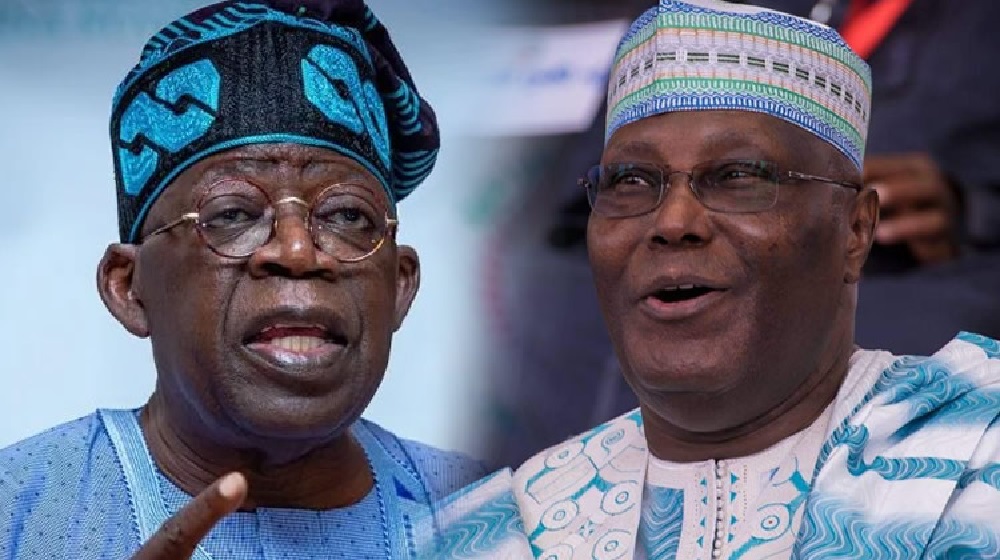
OBASANJO, ATIKU AND TINUBU AT A TIME LIKE THIS
- /home/naijuinz/public_html/wp-content/plugins/mvp-social-buttons/mvp-social-buttons.php on line 27
https://naijablitznews.com/wp-content/uploads/2024/11/tinubu-atiku.jpg&description=OBASANJO, ATIKU AND TINUBU AT A TIME LIKE THIS', 'pinterestShare', 'width=750,height=350'); return false;" title="Pin This Post">
- Share
- Tweet /home/naijuinz/public_html/wp-content/plugins/mvp-social-buttons/mvp-social-buttons.php on line 72
https://naijablitznews.com/wp-content/uploads/2024/11/tinubu-atiku.jpg&description=OBASANJO, ATIKU AND TINUBU AT A TIME LIKE THIS', 'pinterestShare', 'width=750,height=350'); return false;" title="Pin This Post">
By Tunde Olusunle
Former President Olusegun Obasanjo was in his farmhouse address in Otta, Ogun State during the last weekend of January 2002. It was supposed to be a short get-away from work in Abuja where he was routinely out of bed before 6am and rarely retired before 2am the next morning. But work followed him to Otta, salient files from his Abuja office shipped over. Some of his senior aides and public officers also stopped by. From Otta, he was scheduled to undertake a two-day official visit to Katsina State. It was part of his countrywide tours, appraising the permeation of tangible dividends of democracy to Nigerians at all levels. I was on Obasanjo’s staff and had proceeded from Abuja on the advance team to tidy up preparations and to receive him. Sunday January 27, 2002, the evening before his scheduled departure from Otta en route Lagos to Katsina, however, unprecedented, massive explosions occurred in Lagos. The air was thick with uncertainty. Where could this earth-quaking “bombings” have taken place? Was it precedent to a coup to topple the nascent Obasanjo government?
The security ring around the President decided to be proactive. With the pervading confusion, the wisest probable thing to do was to move the President to safety, just in case it was a putsch. Should he be flown back to Abuja through Lagos? Should he drive to neighbouring Benin Republic as guest of his Beninoise counterpart? The genetically strong-willed Obasanjo would rather await security briefing. He wasn’t going anywhere, he said. Reports came in to the effect that the mishap occurred at the *Abalti Barracks, Ikeja Cantonment,* in Lagos. It occurred at the armoury of the military facility, where high calibre explosives were improperly stored. The tragedy claimed well over 1000 casualties, military and civilian. It displaced over 20,000, as it spread rapidly to adjoining districts and communities. Obasanjo had to be persuaded by his personal physician to get some sleep because of his loaded schedule ahead the following day. He stayed up, eyes wide open late into the night.

Obasanjo began his day on Monday January 28, 2002, at the Ikeja Cantonment. He toured the site of the occurrence and the adjoining areas which were flattened by the detonations and held a meeting with the military commanders. He considered rescheduling the Katsina trip in sympathy with the casualties. He was reminded by his protocol officials, however, that the Katsina visited had earlier been scheduled and cancelled because of the unavailability of the Governor of the state at the time, Umaru Musa Yar’Adua. Yar’Adua who succeeded Obasanjo in 2007, was abroad for a long spell, on cogent medical grounds. Before a sullen-faced Obasanjo addressed his hosts in Katsina when he eventually arrived, he called for two minutes of silence in memory of those that died in the Ikeja incident, and to empathise with the injured and displaced.
Ehigie Edobor Uzamere who represented Edo South Senatorial District in the seventh and eighth national assemblies, is 70 today. An elaborate event has been laid out to commemorate the landmark in Benin City, the Edo State capital. Former Vice President, Atiku Abubakar, GCON, is one of the very high profile dignitaries who was expected to grace the high profile programme. Reports indicate that members of Atiku’s entourage received reminders last night, detailing his itinerary. Earlier today, however, the Office of the Former Vice President put out the following statement:
*Cancellation of Benin Trip Due to Recent National Tragedies:*
*I write to inform you that His Excellency Atiku Abubakar, GCON, Waziri Adamawa, Vice President of Nigeria, (1999-2007), has reflected on the twin national tragedies in Niger and Kano States, where flooding and road traffic accidents have respectively claimed the lives of several Nigerians. In the light of this, he has decided to CANCEL his planned trip to Benin City, Edo State, this afternoon, June 1, 2025. This is to enable him mourn and pay his respects to the victims and their families.*
The statement was signed by Yahaya Ibrahim Zango, Principal Private Secretary to the former Vice President.
It is important to provide this background as counterpoint to the momentary retirement of President Bola Tinubu to Lagos for some official engagements, and the observance of the forthcoming *Eid-el-Kabir* festival. Tinubu left Abuja on Tuesday May 27, 2025, to attend a string of programmes. According to the press statement which announced his movements, he will remain in Nigeria’s old capital city until the conclusion of the *ileya* event on Monday June 9, 2025. To this extent, he will be away from Abuja for two weeks. Thus far, the President has attended ceremonies commemorating the 50th anniversary of the setting up of the Economic Community of West African States, (ECOWAS). He is equally commissioning and inspecting projects completed or initiated by his administration, to mark the second year anniversary of his presidency.
Before Tinubu’s departure from Abuja, he had been duly briefed about recent heightened attacks and incursions into parts of the North East, especially Borno State, which has been troubled by insurgents, for several years. He was acquainted about renewed, genocidal-scale killings in parts of the North Central, especially Benue and Plateau states. Bandits and miscreants have equally recently unsettled the peace and quiet of the Yoruba-speaking section of Kogi State, Okunland, across its six local government areas. Flooding in Niger State, also in the Middle Belt region, has claimed over 100 lives and disconnected parts of Nigeria’s North and South West, by the collapse of the all-important North-South bridge in Mokwa, in Niger State. Just yesterday, 22 members of the Kano State contingent to the recently concluded National Sports Festival in Ogun State, were consumed in an automobile mishap. The President’s prototype message of commiseration, and his directives to relevant departments of government to step in and provide succour in these various instances, is in the public space.
While spontaneous press releases and phone calls have their places in state administration, nothing compensates for that essential human touch, that conscientious empathy, in circumstances and periods of grave nationwide anguish such as we are in. The nation’s streets are lacquered by the blood of innocents, across our luminous geographical perimeters. The belly of the earth chokes and suffers reflux beneath the tonnages of unceasing and ill-timed cadavers it daily receives. *Death, to borrow from the evergreen lyrics of the revered, veteran Yoruba music artist, Ebenezer Obey, has become “two for half a penny.* Communities are displaced by the intolerable activities of rampagers and marauders, echoing memories of the 30-month bitter civil war which our country survived between 1967 and 1970. The living and medical conditions of internally displaced persons, (IDPs) in Benue State for example, are better not discussed. Yet, one generation of Nigerian toddlers bred and raised in those hovels, have never glimpsed another home, another community.
Times like this call for true, sincere leadership. Times like this demand way beyond the commandist outsourcing of responsibilities to scheduled appointees. They demand beyond monarchy-style overlordship as Nigerians perceive their leaders. They call for proactive and compassionate leadership. The Nigerian President is easily one of the most pampered across the world. He possesses every equipment and facility to enable his locomotion around the country, even the world, by the snap of his fingers. In a season such as this when gloom and despair pervade the nation, Tinubu should intentionally extricate himself from fawning aides and grovelling courtiers and demonstrate physical identification and genuine concern and humanity for his beleaguered constituents.
Very clearly, the campaign for the 2027 presidential election has been flagged off. President Tinubu is receiving endorsements and adoptions in places. His morale about the continuation of his job beyond his subsisting mandate which ends on May 29, 2027, is high. Tinubu, however, has pressing, present obligations to Nigerians, well ahead of 2027. The way he redeems these commitments by way of good governance of some sort, will largely determine the direction the hand of the clock ticks, come 2027. Except if the polls have been predetermined as has notoriously become the vogue with *Naija-style* democracy and electoral system.
*Tunde Olusunle, PhD, Fellow of the Association of Nigerian Authors, (FANA), is an Adjunct Professor of Creative Writing at the University of Abuja
News
Why FCT can’t have state police — Senate
The Senate has explained why the Federal Capital Territory will not be included in the proposed state police structure, saying Abuja lacks the constitutional institutions required to operate one.
Chairman of the Senate Committee on Media and Publicity, Yemi Adaramodu, said the FCT has no governor or State House of Assembly and remains directly under the control of the Federal Government.
Adaramodu said the territory is administered by a minister who takes directives from the Federal Executive Council, while the National Assembly performs legislative functions for the FCT.
“I have heard many people raise a lot of questions on why the Federal Capital Territory is not among the plan for state police. The FCT issue is different. It is under the Federal Government,” he said.
He added that because Abuja does not have a governor or state legislature, it cannot operate under the same policing arrangement being proposed for the 36 states.
“The federal capital does not have an assembly. It is the National Assembly that legislates for the FCT. This is why it can’t be different from what the Federal Government does. Therefore, the federal police are in charge,” Adaramodu said.
The clarification comes as the Federal Government pushes ahead with plans for a new policing structure amid mounting calls for decentralised security across the country.
President Bola Tinubu is expected to receive the draft Executive National Policing Bill on September 3 as part of efforts to provide an operational framework for the proposed system.
Chief of Staff to the President and Chairman of the Presidential Working Group on the National Policing Bill, Femi Gbajabiamila, had also unveiled a public information portal through which Nigerians can submit memoranda and position papers on the proposal.
Under the constitutional amendments being considered, state Houses of Assembly would have powers to legislate on the establishment, administration, funding and oversight of state police.
States would bear the primary responsibility for funding their police formations, although the Federal Government could provide grants or assistance on the recommendation of the National Police Council and subject to approval by the National Assembly.
The FCT, however, would remain under the federal policing structure because of its unique constitutional status and direct administration by the Federal Government.
News
Gov Abiodun Commends Army, Police, DSS, Others for Intelligence-led Rescue of 5 Kidnapped Poly Students, 2 Others
Governor Dapo Abiodun of Ogun State has lauded the Department of State Services (DSS), the Nigerian Army, the Nigerian Police, as well as Civil Defence Corps (NSCDC), for rescuing five kidnapped students of Gateway ICT Polytechnic, Saapade, in Remo North Local Government Area of the state.
The students, who were abducted by suspected kidnappers earlier this week, were rescued in the early hours of Friday, in an intelligence-led operation around Alamala community, off Ayetoro Road Roundabout, of the state capital. Also rescued were two non-students.
The governor described the rescue as a major breakthrough in its fight against kidnapping, even as he reaffirmed his administration’s unwavering commitment to ensuring that kidnappers and other criminal elements have no hiding place in the state.
He described the operation, which included members of the State Security Network Agency (Amotekun Corps), local vigilantes and hunters, as a demonstration of the success that can be achieved when security agencies work together.
“One of the victims sustained a gunshot injury during the incident and was immediately evacuated for medical attention. The student has since been stabilised.
“This operation is still ongoing, and I wish to assure the good people of Ogun State that our security agencies remain on the trail of every individual connected with this criminal enterprise,” said the governor.
“Our resolve is very clear. Ogun State will remain hostile to criminality and safe for every law-abiding citizen, resident and investor,” the Governor declared, stressing that
According to him, recent joint security initiatives, particularly Operation Kò S’Áyé, have demonstrated the effectiveness of intelligence sharing, inter-agency collaboration and sustained operational pressure against criminal elements.
The governor also commended President Bola Ahmed Tinubu for his administration’s commitment to combating banditry, terrorism and kidnapping across the country, noting that the recent rescue of 308 abducted victims by Nigerian security forces underscores the growing effectiveness of coordinated security operations nationwide. (Reuters)
“At this juncture, I must acknowledge the purposeful leadership of President Bola Ahmed Tinubu, whose administration has placed the restoration of peace and security at the centre of Nigeria’s development agenda through sustained investment in the operational capacity of the Armed Forces and other security agencies.
“The strengthening of intelligence coordination, the acquisition of modern security assets and his deliberate reforms have continued to deepen inter-agency collaboration,” he said.
The governor further noted that the Federal Government has continued to strengthen the nation’s security architecture, adding that the recent approval of a substantial salary increase for officers and men of the Armed Forces would further boost personnel welfare and morale.
“One of the kidnapped victims sustained a gunshot injuries during the operation and was immediately evacuated for medical attention and has since been stabilised.” disclosed a security source.
News
Fresh Court Document Reveals EFCC Secured Order Freezing Three Osun Govt Accounts, Not One
A fresh court document obtained has revealed that the Economic and Financial Crimes Commission (EFCC) secured a Federal High Court order freezing not one but three bank accounts belonging to the Osun State Government over allegations of diversion of public funds and money laundering.
The newly obtained document shows that the anti-graft agency sought and obtained an ex parte order authorising the freezing of three allocation-related accounts pending the conclusion of its investigation and any subsequent prosecution.
The revelation comes amid mounting controversy over the commission’s action and a day after President Bola Tinubu directed the EFCC to immediately return to court to vacate the freezing order, describing its timing, coming days before the Osun governorship election, as “embarrassing” and capable of creating the impression of federal interference in the electoral process.
The order was granted on Tuesday, August 5, 2026, by Justice M. G. Umar of the Federal High Court, Abuja, in Suit No. FHC/ABJ/CS/1750/2026, titled In the Matter of an Application by the Executive Chairman of the Economic and Financial Crimes Commission.
According to the court document obtained, the EFCC asked the court to empower its Chairman, “or any officer authorised by him,” to direct the managing directors of the affected banks to freeze accounts listed in the schedule to the application.
The commission told the court the accounts were “currently being investigated in a case of Diversion of public funds and Money Laundering pending conclusion of investigation and prosecution.”
Justice Umar granted the application after counsel to the EFCC, M. A. Babatunde, moved the motion ex parte.
The court order covers the following accounts: Osun State Government Federal Allocation Account, domiciled with First Bank Plc, Account No. 2017170947; Osun State Joint Allocation Account, domiciled with Zenith Bank Plc, Account No. 1013374191; and Osun State Joint Allocation Account, domiciled with Zenith Bank Plc, Account No. 1014374909.
The application was supported by an affidavit sworn to by EFCC investigator Ikenna Chukwueze and an exhibit marked “EFCC 1.”
Justice Umar ordered that the freezing of the accounts should remain in force pending the conclusion of investigation and prosecution.
The court record was issued under the hand of the presiding judge, with Muazu Kasimu signing as Registrar.
The newly obtained document indicates that the scope of the court order is broader than previously known.
On Thursday, it was reported that President Tinubu directed the EFCC to immediately approach the court to vacate the freezing order and discontinue all related actions after expressing concern over the timing of the move ahead of the Osun governorship election.
The President said he was “deeply embarrassed” by the timing of the action, stressing that although the commission acted pursuant to a court order and within its statutory powers, the public would inevitably attribute the development to his administration.
Before Tinubu’s intervention, the EFCC had defended its action, saying it had been investigating the Osun State Government since March 2026 over the alleged fraudulent handling of Ecology Funds, Intervention Funds and Federation Account Allocation Committee (FAAC) allocations amounting to about ₦11 billion.
The commission said it sought the freezing order only after allegedly discovering what it described as “precipitate and unwarranted” movement of public funds into several corporate entities beginning on August 2, insisting the action was intended to prevent the alleged looting of public funds and was not politically motivated.
SaharaReporters also reported that the Osun State Government subsequently sued the EFCC, its Executive Chairman and First Bank of Nigeria, accusing the anti-graft agency of unlawfully freezing the state’s accounts for political reasons just days before the governorship election.
Court filings seen show the state argued that the Federal Statutory Allocation Account is used to pay salaries, pensions, contractors, healthcare, education, security and other essential government obligations.
The government contended that the EFCC’s action was designed to cripple its finances at a politically sensitive period and sought, among other reliefs, an order unfreezing the accounts and ₦2 billion in damages.
-
News21 hours agoIgbale community petitions police over alleged harassment, land dispute involving Lere Oni
-
Politics16 hours agoAccord party demands removal of EFCC chairman immediately
-
News23 hours agoBREAKING: Abuja in panic mode as explosion hits Apo bridge axis
-
News21 hours agoYemi Amodu Accepts Role as TAMPAN National Secretary, Reaffirms Commitment to Industry Reform*
-
News16 hours agoReps Minority Caucus Fault Tinubu Over Osun Accounts, Allege Plot to Intimidate Opposition
-
Crime16 hours agoSAD: Teenager kills grandparents, six others in Thailand
-
Metro2 hours agoCourt jails four over $5.2 million money laundering scheme in Lagos
-
Politics2 hours agoGuber Election: Osun APC Accuses Davido of Distributing Money to Residents

Warning: Undefined variable $user_ID in /home/naijuinz/public_html/wp-content/themes/zox-news/comments.php on line 49
You must be logged in to post a comment Login