The devastating floods in Mokwa, Niger State, have sent jitters across the country, especially in states predicted to be hit by floods in the coming days and months. Farmers are already in a panic because of the potential impact this development may have on their businesses, if it is allowed to unfold as it did in Mokwa.


The farmers, who spoke with Sunday Vanguard, warned that food insecurity may worsen unless something pragmatic was done to mitigate the impact, as they recalled past experiences of similar disasters.
In 2024, reports say over 90 per cent of crop-farming households and 76 per cent of livestock farmers were affected by floods. Additionally, 2.5 million people were impacted, with around 200,000 displaced. 
Rains poured heavily, rivers, streams, lakes and dams overflowed their banks and over 16, 000 hectares of farmland destroyed, impacting 29 states and 154 local government areas.
Mostly affected were Bauchi State where over 50,000 hectares of farmland were destroyed; Taraba had over 22, 000 hectares affected, Jigawa’s 9,919 hectares of farmland inundated, and farmers suffered terrible losses.
Farmers in some states reported losses of over N1 billion in farm produce and crops.
According to the Food and Agriculture Organisation, FAO, an estimated loss of 855,629 metric tonnes of food, which was enough food to feed 8.5 million people for six months, was recorded, and the floods negatively impacted on food insecurity across the country, hence high cost of food prices in markets.
Meanwhile, the Minister of Water Resources and Sanitation, Joseph Utsev, at a press conference on the heels of the Mokwa floods, warned that more rains are coming, saying states, local governments, and communities need to prepare ahead to avoid the fury of waters likely to sweep across states and local government areas mentioned in the Annual Flood Outlook, AFO, predictions released on April 10, 2025 by the Nigeria Hydrological Services Agency, NIHSA.
According to the Minister, the AFO identified 1,249 communities across 176 local government areas in 33 states and the Federal Capital Territory (FCT) as high flood-risk zones.
An additional 2,187 communities in 293 LGAs were listed as moderate risk.
He said: “The high-risk states include Abia, Adamawa, Akwa Ibom, Anambra, Bauchi, Bayelsa, Benue, Borno, Cross River, Delta, Ebonyi, Edo, FCT, Gombe, Imo, Jigawa, Kebbi, Kogi, Kwara, Lagos, Nasarawa, Niger, Ogun, Ondo, Osun, Oyo, Rivers, Sokoto, Taraba, Yobe, and Zamfara.”
2025 floods may destroy farmlands, worsen food insecurity – Yam farmers
The National President, Yam Farmers Association of Nigeria, YFAN, Prof Simon Irtwange, speaking from Makurdi, Benue State, said the predictions are clear, saying: “Therefore, the 2025 floods will definitely destroy more farmlands and worsen the current status of food insecurity already affected by activities of herdsmen and bandits’ attacks in parts of the major food producing states.
“Nigerians are already food insecure as a result of banditry and herdsmen attacks. “Flooding will just add to the equation by destroying more farmlands and worsening food security situation in the country.”
However, he counseled, “Government at all levels must take steps to provide drainage channels, clear obstructions along waterways, and mobilise the communities to take responsibility for ensuring maintenance of drainage infrastructure in their communities.
“Farmers must desist from practices that compact the soil, reduce rainfall infiltration, and create runoff along steep and sloppy terrains.”
Table of Contents
Attainment of food security in jeopardy —AFAN
We demand solutions to root causes of floods, not reactions — EA, Daniel Farms
We’re worried over loss of farmers’ investments, produce imminent – POFAN
If nothing’s done about flooding, farmers’ efforts will be eroded – Gologolo Views
Suggestions
We’re at tipping point, if nothing is done – JetFarmsNG Chief Farmer
The National President, All Farmers Association of Nigeria, Kabir Ibrahim, expressed concerns that if more of the magnitude of Mokwa floods persist in coming months, the dream of attaining food security will be in jeopardy.
Ibrahim said: “The devastating floods in Mokwa have affected a large number of people, both farmers and non-farmers.
“The floods came before cultivation started in earnest, so there is no significant effect on crops as such, but some erosion of cultivable land has occurred which could invariably cause stresses in the food system.
“If flooding of this magnitude persists, there will be serious effect on the productivity of our farmers which will obviously affect the attainment of the much awaited or desired food security in Nigeria.”
Meanwhile, the AFAN boss suggested that to mitigate impact of the predicted floods on food production and farmers in order to avert hunger crisis, saying, “To avert the effect of flooding, we must sensitize Nigerians to the consequences of impeding drainages, waterways and all actions that exacerbate the effect of climate change.
“Government should also encourage or support farmers to utilize the dammed waters and ground waters to produce all-year-round instead of relying on wet season production as well as deploy good engineering solutions to mitigate the effect of flooding.
“The suggestion that government should step in to stop flooding is forgetting that the issue of incessant flooding is the result of many factors including the act of God and climate change, which is actually a global phenomenon.
“The sensitization and advice that the farmers get through NiMeT and the hydrological agency is quite commendable and should be strictly adhered to by all farmers to avoid losses from both flooding and drought.”
We’re worried, coming months pose serious threats to farming communities – Debranch Farmers
Speaking from Kaduna on the flood disaster in Mokwa as it concerns food production, the Co-founder and Chief Executive Officer, DeBranch Farmers, Sandra Victor-Gwafan, said, “The flood disaster in Mokwa is a stark reminder of how vulnerable our food systems are to climate-related shocks.
“As predicted by relevant authorities, including NiMet and NIHSA, the coming months pose serious threats to farming communities, especially in flood-prone regions like Niger, Kogi, Benue, and parts of the North-West.
“As the CEO of Debranch Farmers, I am deeply concerned. Many of our members in affected areas have already lost planted crops, seedlings, and even farmland infrastructure.
“This not only reduces yield this season but discourages replanting and further investment. Given the already high food prices and limited supply chains, any disruption now could drive food scarcity to alarming levels.
“On whether more Nigerians could be pushed into hunger if large food-producing states are flooded, absolutely, if the government and stakeholders do not urgently intervene, millions of Nigerians—especially low-income earners—will bear the brunt of the flood’s impact. States like Niger, Kebbi, Nasarawa, and Taraba are not only agricultural hubs but also supply food to other parts of the country.
“A widespread flood in these areas would affect staple crops like rice, maize, yam, and vegetables.
“We are not just talking about loss of harvest, we are also talking about a potential collapse in supply chains, price spikes, and worsening malnutrition.
“The risk is not hypothetical, it is very real and imminent”.
Meanwhile, she (Victor-Gwafan) recommended: “To avert a hunger crisis, the time for reactive measures is over. Here are immediate and medium-term steps I recommend: Early warning and communication; strengthen local dissemination of flood warnings, not just at national levels. Farmers need information in local languages through radio, SMS, and community leaders.
“Emergency Support Funds for farmers: Government and private sector partners must activate relief grants or insurance pay-outs for smallholder farmers already affected. Access to finance for replanting or transitioning to short-cycle crops can help reduce total loss.
“Drainage and water management infrastructure: Immediate work is needed on clearing and expanding drainage systems, especially in food production belts. Riverbank reinforcement in high-risk areas should be a priority.
“Decentralized food storage: To prevent post-harvest loss and preserve what is already harvested, we need improved, localized food storage systems, especially for grains.
“Climate-smart agriculture: Finally, long-term resilience will depend on transitioning to more flood-resilient practices—such as raised-bed farming, flood-tolerant crop varieties, and proper land zoning to avoid cultivation in high-risk flood plains.”
We demand solutions to root causes of floods, not reactions — EA, Daniel Farms
Speaking from Sapele, Delta State, the Chief Executive Officer, EA Daniel Farms, Daniel Ijeh, said the demand of farmers is that government and relevant partners should find solutions to the root causes of persistent flooding in order for food production to continue.
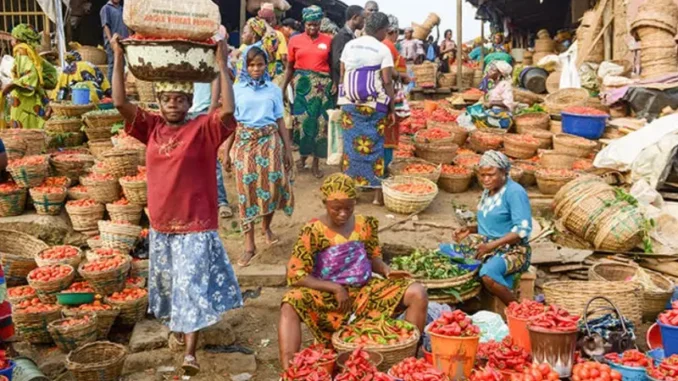
Ijeh said: “So far, food prices in 2025 have been more stable compared to this time last year. For example, tomatoes, which sold for ¦ 70,000–¦ 80,000 per basket in 2024, are now going for ¦ 25,000–¦ 35,000.
“This indicates that production and supply have improved in many areas. Therefore, while vigilance is needed, the narrative should not be one of alarm but rather one that probes the real causes of the floods and seeks lasting solutions.
“If the floods materialize as predicted and no preventive action is taken, it could lead to disruptions, especially in floodplain farming communities. However, it’s important to note that not all major food-producing areas are vulnerable to flooding.
“Also, some of the flood-related fears may be amplified beyond proportion—possibly as a means for institutions to attract emergency funding.
“A more grounded approach should look at the distribution of flood risk, the actual scale of potential impact, and how to localize response rather than projecting nationwide doom.”
However, he recommended, “Our focus should shift toward addressing the root causes of flooding, such as blocked waterways, poor infrastructure, and mismanaged irrigation systems, rather than only reacting to its consequences.
“Government and relevant agencies should prioritize: Timely desilting of rivers and dams; improved weather and flood forecasting systems for farmer; support for upland and greenhouse farming that are less flood-prone; insurance schemes and recovery plans for farmers in high-risk zones.
“If we invest more in early preparation and long-term mitigation strategies, we can greatly reduce the impact of seasonal flooding on food production. It’s not just about predicting floods, it is about building resilience into our agricultural systems.”
We’re worried over loss of farmers’ investments, produce imminent – POFAN
The National President, Potato Farmers Association of Nigeria, POFAN, Chief Daniel Okafor, who spoke from Abuja, said the loss of farmers’ investments and produce is worrisome as more floods are likely to sweep away their farms.
Okafor said: “Mokwa is an agrarian community. No doubt the effect of floods will bear heavily on food production this year.
“The full impact will be felt next year when there will be nothing to harvest.
“The clouds are clear that the prediction is not just for predictions sake but will come to pass in the sense that farmers and transporters movement is always affected each time this ugly incident occurs.
“Flooding can also sweep away some crops and animals in the farmers or cause death or mortality in some poultry farms.
“Some farmers farming close to riverine areas also will encounter heavy losses most especially those farming tomatoes, peppers, Okro and so on.
“In different ways, flooding will affect food production.
“Like in Nigeria, most people acting along value chain development based mainly on natural weather, those in the milling industry cannot dry and mill anything due to the dull atmosphere, and taking goods to the market comes with a lot of challenges.
“More Nigerians would be thrown into hunger as large food producing states will experience flooding because this year flooding started earlier than previous years, which flooding occurred mostly around September and October but experiencing flooding by May where rain is just starting is a very bad signal for the year.
“It is not only Mokwa that floods will affect food production this year.
“Mokwa floods affected lives much, that is why they are pronounced much. There are several agrarian communities that their farmlands have been eroded or taken over by floods”.
He also added, “Climate change or climate variability is a natural phenomenon that cannot be easily prevented, but, as human beings, we have to ensure appropriate drainage and avoid using waste to cause blockage of the drainage channels provided and, where there is none, government, as a matter of urgency, should ensure appropriate water channels are provided.
“Farmers in the hinterland should be helped to produce more food. Those at the corridors of floods and erosion should move away from there and explore safer places.
“Let modern technology play a significant role in our food production.
“We only employ this at workshops, pages of newspapers and few experimentation fields.
“Let technology get to the rural farmers so that enough food can be produced.”
If nothing’s done about flooding, farmers’ efforts will be eroded – Gologolo Views
In another reaction, the Chief Executive Officer, CEO, Gologolo Global Views Enterprise, Bayelsa State, Abareowei Benaembele, said, as farmers, he was really sad concerning what happened to farmers in Mokwa, and warned that, if nothing was done about flooding, farmers’ efforts will continue to be eroded.
He said: “The devastating floods that struck Mokwa, Niger State, in late May 2025, have intensified concerns about Nigeria’s food security.
“This disaster, which claimed over 200 lives and displaced more than 3,000 people, also destroyed critical infrastructure and agricultural lands in a key food-producing region.
“The Mokwa floods, and the broader climate pattern, will likely impact food production, disrupt wet season farming; Mokwa sits within the Middle-Belt, one of Nigeria’s food baskets.
“Flooding at this time of year, just as the wet season planting is underway, likely wiped out young crops or prevented planting altogether.
“This will create a gap in the food supply that would have been harvested between July and October.
“Loss of seed stocks and livelihoods. Floods don’t just destroy crops, they wash away stored seeds, farm tools, fertilizers, and irrigation infrastructure.
“This means many smallholder farmers who form the backbone of Nigeria’s food supply will not be able to replant in the short term. “This could delay recovery until next year unless large-scale intervention occurs.
“Transportation and supply chain disruption; Washed-out roads and damaged bridges, a major issue in Niger State and much of rural Nigeria, will slow down the movement of food from farms to urban centres.
“Even if other regions produce crops, supply bottlenecks will inflate food prices, and reduce availability in markets,
“Compounding national food insecurity; before this flood, 33.1 million Nigerians were already projected to face acute food insecurity this rainy season (June–August 2025). These floods further tip the scale.
“It is reasonable to expect: Higher food inflation; reduced dietary diversity (less availability of vegetables, grains, and legumes); increased dependence on emergency food assistance; long-term soil and climate damage.
Suggestions
“The outlook is grim without aggressive intervention. Unless government and international bodies scale up dry-season farming, seed distribution, and infrastructure repair urgently, Nigeria will likely face: A significant shortfall in staple crops by late 2025; soaring food prices; a deepening of the current hunger crisis absolutely.
“If the Nigerian government does nothing to mitigate the looming floods predicted, millions more Nigerians will be pushed into hunger, potentially tipping parts of the country toward famine-like conditions.
“Here’s why I strongly believe that floods are predictable and preventable. The Nigerian Meteorological Agency, NiMet, and other agencies have already forecast above-normal rainfall and high flood risks in key agricultural states like Niger, Benue, Kogi, and Kebbi.
“These regions are not just flood-prone, they are food hubs for grains, legumes, rice, and vegetables.
“If government fails to build or reinforce dams and drainage systems, clear blocked waterways, relocate vulnerable farmers, or provide early warning systems, then a repeat of Mokwa’s disaster will happen elsewhere, likely worse and on a larger scale.
“This is happening just as the rainy season begins the prime planting window. Floods now will wash away seedlings, prevent land preparation, drown livestock and fish farms, disrupt labour markets and farm operations
“It is not just about lost food, it is about lost time in an already strained growing calendar. That loss has a cascading effect into 2026.
“Nigeria is already on the brink, even before this flood season: 33.1 million Nigerians were projected to face hunger (June–August 2025). Inflation has made food unaffordable for many. The Naira’s value has collapsed, worsening import dependency.
“If multiple major food-producing states are hit by floods, supply will drop even further while demand stays high, triggering food price spikes, hoarding, and civil unrest.
“If government does nothing, if it treats early flood warnings with the same passivity as in previous years, then yes, many more Nigerians will be thrown into hunger in the coming months.
“This could mean widespread malnutrition in children, migration from rural to urban centres, higher crime and instability, a national humanitarian emergency
“Preventing hunger now is cheaper, safer, and more humane than dealing with famine later.
“But that requires proactive, not reactive governance. In my opinion, if Nigeria wants to mitigate the predicted floods and protect food production, a multi-tiered strategy is essential, combining short-term emergency actions with longer-term structural reforms.
“Immediate flood preparedness; issue early flood warnings to farmers. Clear drainage systems and reinforce vulnerable areas. Pre-position emergency supplies and relocate seed stocks and tools.
“Emergency support for farmers; distribute fast-growing seeds and farm inputs after flooding. Provide cash support to displaced farmers. Subsidize mechanized replanting in safe zones.
“Expand dry season farming; invest in irrigation and boreholes in flood-free zones. Scale up the National Dry Season Farming Programme. Guarantee market access through public-private partnerships.
“Strengthen rural infrastructure; repair rural roads, culverts, and bridges. Build community flood barriers and water retention systems. Digitize flood-risk maps to guide future planting.
“Improve policy and coordination; declare a food security emergency. Establish a national flood-food taskforce. Mobilize funding from international climate adaptation.