Connect with us

News

Nigeria Pushes for Enhanced China-Africa Trade Cooperation at Changsha Ministerial Talks

Published

on

ADVERTISEMENT
Zoom Ad
ADVERTISEMENT
Zoom Ad
 
By Patricia Esami-Lubba, Changsha, Hunan Province, China
 
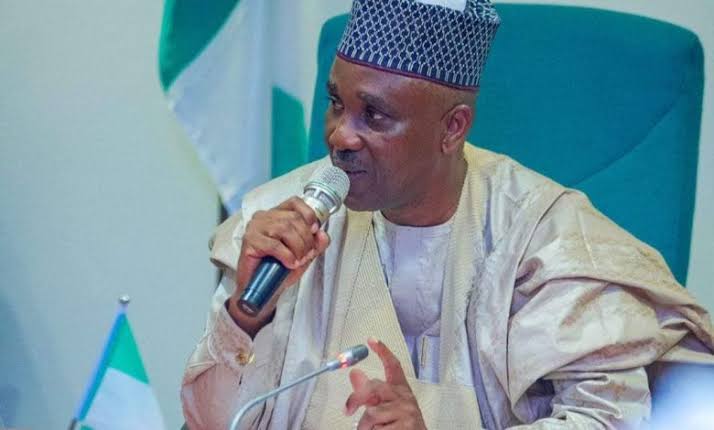
Nigeria’s Minister of Foreign Affairs, Ambassador Yusuf Tuggar, has reaffirmed the country’s commitment to deepening cooperation under the Belt and Road Initiative, while calling for expanded trade reciprocity and stronger domestication of China-Africa development initiatives.
 
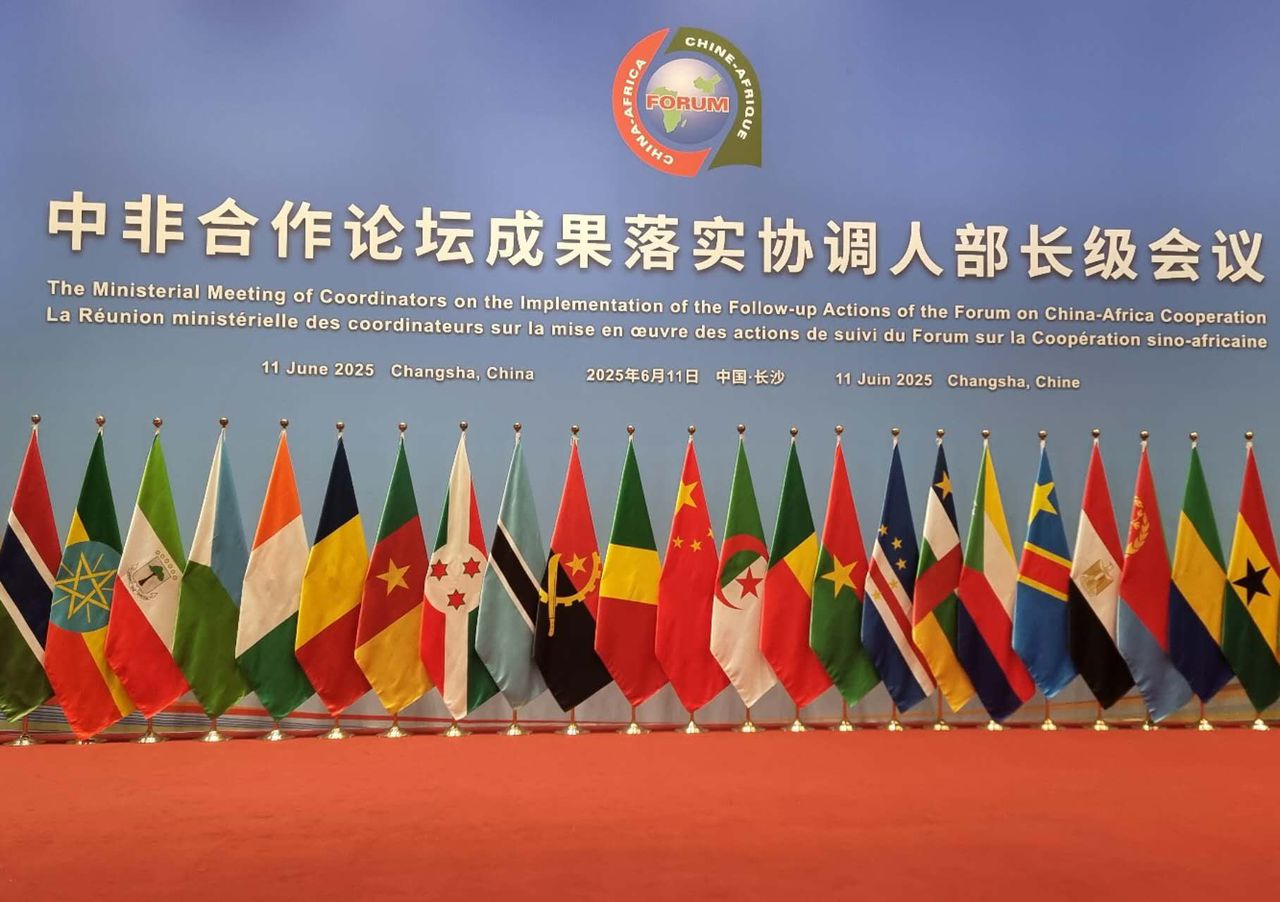
The Minister stated this in an exclusive, on the sidelines of the Ministerial Meeting of Coordinators on the Implementation of FOCAC Outcomes in Changsha, on Wednesday.
 
Ambassador Tuggar highlighted the tangible impact of President Xi Jinping’s “Ten Cooperation Initiatives” announced at the 2023 FOCAC summit, pointing to major projects like the Zungeru Hydropower Plant and the Lagos-Ibadan Railway as concrete outcomes already advancing Nigeria’s development goals.
 
“FOCAC and the partnership between China and Africa, particularly Nigeria is about putting words into action, he noted.
 
He stressed that beyond infrastructure, the focus is now on agriculture, critical minerals and refining processes.
 
Accordingtohim, Nigeria wants to see more on domestication of value addition across the entire supply chain, while underscored Nigeria’s desire to move beyond resource exportation toward local processing, refining, and beneficiation, particularly in sectors such as mining and agriculture, as this is what it’s all about, developing internal capacity and ensuring the people benefit directly.
 
 
Push for Broader Tariff-Free Access
 
The Foreign Affairs Minister identified trade access as a key issue on Nigeria’s agenda.
 
While China currently offers zero-tariff treatment to least developed countries in Africa, Nigeria as a middle-income economy he said  is not yet included.
 
Tuggar revealed that discussions to broaden the scope of zero-tariff privileges to include major African economies tops the agenda as well, “We’ve successfully negotiated tariff removals on cashew and groundnut exports from Nigeria to China.
 
“But we want to see that expanded across sectors as it must be reciprocal, diplomacy and trade work Tuggar said is best attained when both sides benefit”, he stated.
 
His comments followed a keynote address by Chinese Foreign Minister Wang Yi, who announced Beijing’s intent to pursue zero-tariff policies for all 53 African nations.
 
Wang Yi said the proposal is currently under review and will mark a new chapter in China-Africa economic integration.
 
 
Strengthening Access and Understanding
 
Earlier though, Tuggar also addressed visa concerns, especially recent confusion surrounding China’s new e-visa system.
 
While diplomats and officials currently enjoy visa-free access, Tuggar called for more balanced mobility and transparency in bilateral arrangements, “there was a scare in the Nigerian media around possible visa restrictions,” he said., as such We had to clarify that message.
 
What we need is a symbiotic relationship where when China wants access to Nigeria, Nigerians must also have predictable and fair access to China.
 
 
Emerging Technologies, Shared Futures
 
As Africa positions itself within the evolving global tech landscape, Tuggar warned against historical exclusions repeating themselves, particularly with artificial intelligence.
 
He called for inclusive innovation and fair access to AI infrastructure, satellite technology, and digital partnerships with China, his words as he cautioned,  “We don’t want to repeat the story of the Industrial Revolution, where Africa bore the cost of pollution without reaping the benefits, the same must not happen with AI. We must share in the benefits, not just the burdens.”
 
Beyond government-to-government agreements, several commercial partnerships are underway, particularly in space tech and digital solutions.
 
The Minister confirmed that private sector players are actively negotiating with Chinese counterparts on satellite development and artificial intelligence applications tailored to Africa’s needs.
 
The Changsha Ministerial Meeting is a key step in preparing for the next Forum on China-Africa Cooperation (FOCAC) summit. Delegates from across the continent are gathered to evaluate progress and align priorities, with a particular emphasis on trade expansion, industrialization, and digital development.
 
 
Patricia Esami-Lubba is a Nigerian journalist and diplomatic correspondent, currently reporting from Changsha, Hunan Province. She covers high-level China-Africa engagements, including ministerial dialogues shaping the future of the Forum on China-Africa Cooperation (FOCAC).

Continue Reading
Advertisement
Click to comment

Warning: Undefined variable $user_ID in /home/naijuinz/public_html/wp-content/themes/zox-news/comments.php on line 49

You must be logged in to post a comment Login

Leave a Reply

News

Military junta claims to be back in control as soldiers’ mutiny rocks Niger’s capital

Published

on

ADVERTISEMENT
Zoom Ad
ADVERTISEMENT
Zoom Ad

Mutinying soldiers led armed clashes in Niamey, Niger’s capital, on Saturday, shocking residents, but the junta said it had largely wrested back control after hours of heavy exchanges around some of its most sensitive sites.

But while the fighting had subsided later Saturday, the rebel troops were said by a regional security source and an African diplomatic source to still be holding two barracks around Niamey, including one at a large air base near the capital’s airport.

When the fighting broke out, shortly after midnight, soldiers blocked access to the presidential palace and to the national television station, Tele Sahel, which went off the air for just over an hour, before being restored around 10:00 am (0900 GMT).

Niger’s junta later declared, in a statement read on state television, that it “gradually took back control” after hours of clashes.

Advertisement

“There was an attempt by insurgents from the Nigerien armed forces to enter the presidential palace,” a security source said, adding that “they were pushed back by the presidential guard”.

Niger’s defence minister, General Salifou Mody, said in the statement on state television that a group of soldiers held some troops hostage at a barracks in Niamey and opened fire at “certain sensitive sites” in the city, without specifying which ones.

“The prompt reaction of the defence and security forces made it possible to contain this heated moment, and they gradually took back control of these sites,” he added.

Mody’s statement called on the population to “remain calm and freely go about their business”.

Advertisement

Niger has been ruled for three years by a military junta led by General Abdourahamane Tiani that has struggled to contain jihadist violence flaring in the west African country for around a decade.

“Everything is calm again, we can’t hear any more shooting,” a resident of the Yantala district close to the presidential palace said late Saturday morning.

The gunfire began in the early hours of Saturday morning, prompting the military to issue a statement on its social media pages urging people to stay calm and “avoid sharing unverified information”.

“Our defence and security forces have been mobilised for the defence of the homeland,” the statement said.

Advertisement

One resident said that there was “heavy gunfire and explosions” at Base 101 in Niamey, a claim confirmed by several other witnesses.

Junta supporters called for “sincere patriots” to demonstrate in support of the authorities at a major Niamey square.

By late afternoon, a few dozen people had converged on the square, where military music praising General Tiani was playing while a platform intended for speeches was being set up.

Neighbouring Algeria condemned Saturday’s events and pledged support for the Niamey government.

Advertisement

The first shots were heard at about 1 a.m. local time and continued until daybreak, according to a video published by a local journalist filming the area around the airport.

Another resident said he heard “bursts of gunfire” at about 7:00 am local time, adding that the weapons heard “are not the kind that terrorists on motorbikes can carry”.

“I went to get credit for my phone. I saw a military vehicle heading towards the base that had to turn back,” he said.

Another resident in the west of Niamey said he heard sporadic small-arms fire at about 5:00 am.

Advertisement

Videos online showed armoured vehicles deployed to reinforce the neighbourhood near the airport.

Rival Jihadist Groups

Niamey airport has been targeted twice this year by jihadists, first by the Islamic State in the Sahel (EIS) in January, then in late June by its rival, the Group for the Support of Islam and Muslims (JNIM), the Sahel branch of Al-Qaeda.

The jihadist groups not only target civilians and the military but are also struggling for dominance over each other in the Sahel, and especially in Niger.

Advertisement

Twenty assailants were killed and four soldiers wounded in the January assault, authorities said at the time.

In June, at least 11 soldiers and two civilians were killed, as well as 22 attackers, according to the defence ministry. Both attacks were repelled by the army.

The EIS and JNIM are also active in neighbouring allies Burkina Faso and Mali, which are also ruled by military juntas that seized power in coups.

The three countries quit the Economic Community of West African States (ECOWAS) bloc, turned their backs on traditional Western partners in the fight against jihadist violence, especially France, and sought closer ties with Russia.

Advertisement

Air Force Base 101, located within the international airport complex, is home to the headquarters of Russia’s Africa Corps in Niamey and the command of the unified force of the Alliance of Sahel States, of which Niger is a member with Burkina Faso and Mali.

The site is sensitive. Between December and January, it hosted a large shipment of uranium concentrate, which was held up while awaiting export. No movement of the shipment has been identified since.

AFP

Advertisement
Continue Reading

News

Rep Chinda, others make INEC list as gubernatorial candidates for Rivers

Published

on

ADVERTISEMENT
Zoom Ad
ADVERTISEMENT
Zoom Ad

The Independent National Electoral Commission (INEC) has published the credentials and other particulars of all the governorship and House of Assembly candidates submitted to the commission by their various political parties for the forthcoming general elections.

A scrutiny of the Form EC-9 containing the credentials and pasted at the commission’s office along Aba Road, Port Harcourt, showed that 19 governorship candidates had been accepted by INEC to contest the Rivers election.

The names of the candidates, their ages, political parties, their educational backgrounds and other credentials were displayed at the commission’s office.

Also published in the forms were the deputy governorship candidates of each party apart from those of the Nigerian Democratic Congress (NDC) and the Boot Party (BP) whose forms EC-9 could not be seen where others were displayed.

Advertisement

Rep Ogundu Kingsley Chinda, the APC flag bearer, Lulu-Briggs Dumo Owukor, the candidate of the NDC while the African Democratic Congress (ADC) and his running mate were listed as Gabriel Pidomson and Okumgba David Amapakaye.

Other governorship candidates and their running mates are the PDP, Ejekwu Samuel Soni and Ehuwa Kabaka; Accord, Chibuzor Rani and Davies Ikubogh; APP, Tata Kenneth and Dappa Kelvin; ADP, Lawson Angel and Azunwena Regina; BP, Benjamin Oli, no deputy; DLA, Warighani Zebulum and Joseph Udo; NRM, Minaibim Harry and Iwedi Ogonda Ada; SDP, Azimiku Gidiom and Ogochukwu Hekerem; PRP, Kiegha Nature Dumale and Membere Deborah.

Others are ZLP, Harry Victor Godwin and Agumba Nnamdi; APGA, Obu Omangima and John-Woke Geraldine; AAC, West Ivy and Eletuo Ijendu; AA, Eke Benjamin Israel and Awortu Charles; NNPP, Abiye Georgewell and Gbimadee Raymond; YPP, Johnbull Obrasu and Taagaloobari Celestine; APM, Whyte Churchill and Bardom Zaavalo.

INEC also displayed the forms EC-9 of the House of Assembly candidates for the 2027 general elections with few parties fielding candidates for all 32 state constituencies in Rivers.

Advertisement

While the PDP, the NDC and ADC produced candidates for all the constituencies, other parties such as AA had 29; APP, 29; NRM, 15; ZLP, 20; BP, 3; AAC, 1; LP, 13; YPP, 26; PRP, 13; DLA, 20; SDP, 31; ADP, 14 among others. (The Nation)

Continue Reading

News

Shettima arrives in Luanda for AU summit

Published

on

By

ADVERTISEMENT
Zoom Ad
ADVERTISEMENT
Zoom Ad

Vice President Kashim Shettima on Saturday evening arrived in Luanda, the capital of Angola, for the 21st Ordinary Session of the Assembly of Heads of State and Government of the African Union.

The summit is taking place between August 29 and 30, 2026.

Senator Shettima, who arrived at 4th February International Airport, Luanda, at about 4: 45 pm local time, was received by the country’s Deputy Minister of Foreign Affairs, Esmeralda Medonca and other senior government officials.

The Nigerian officials who welcomed the Vice President were the Minister of Foreign Affairs, Amb. Bianca Odumegwu Ojukwu, Minister of Defence, Gen. Christopher Musa (retd), the Nigerian Charge d’Affaires, Amb. Mazy Ogbede, Minister of Interior, Mr. Tunji Ojo, Minister of Regional Development, Abubakar Momoh, Attorney General of the Federation and Minister of Justice, Lateef Fag emi, SAN, Chairman and CEO, Nigeria Diaspora Commission, Mrs Abike Dabrri-Erewa, among other government officials.

Advertisement

The 21st Ordinary Session of the Assembly of Heads of State and Government of the African Union with the theme: “Strengthening Mechanisms for Conflict Prevention and Resolution in Africa,” is aimed at deepening dialogue among member states and reinforcing African responses to peace and security challenges.

Upon arrival, Vice President Shettima, who is representing President Bola Tinubu at the Summit, received a briefing from the Minister of Foreign Affairs, Ambassador Bianca Ojukwu and other experts from the Nigerian Embassy.

As part of the preparations of the 26th Extraordinary Session of the African Union Executive Council, foreign ministers and experts in foreign relations held a meeting earlier on Saturday.

The Executive Council provides a platform for political consultations among AU member states on conflict prevention and the promotion of peace and stability.

Advertisement

The Angolan Summit is expected to provide an opportunity to assess the effectiveness of existing instruments and to discuss more coordinated responses to conflicts on the continent.

Continue Reading

Trending

Copyright © 2024 Naija Blitz News