
Foreign
Iran Fires Back At Israel After Onslaught Targets Nuclear Facilities


- /home/naijuinz/public_html/wp-content/plugins/mvp-social-buttons/mvp-social-buttons.php on line 27
https://naijablitznews.com/wp-content/uploads/2025/06/gggs.jpg&description=Iran Fires Back At Israel After Onslaught Targets Nuclear Facilities', 'pinterestShare', 'width=750,height=350'); return false;" title="Pin This Post">
- Share
- Tweet /home/naijuinz/public_html/wp-content/plugins/mvp-social-buttons/mvp-social-buttons.php on line 72
https://naijablitznews.com/wp-content/uploads/2025/06/gggs.jpg&description=Iran Fires Back At Israel After Onslaught Targets Nuclear Facilities', 'pinterestShare', 'width=750,height=350'); return false;" title="Pin This Post">


Iran fired a barrage of ballistic missiles at Israel in a counter-strike Friday, after an unprecedented onslaught hammered the Islamic republic’s top military brass and targeted its nuclear facilities and bases.
Air raids sirens and explosions rang out across Israel after Prime Minister Benjamin Netanyahu took to the airways to issue a word of caution, saying he expected “several waves of Iranian attacks” in response.
Smoke could later be seen billowing above the skyscrapers in downtown Tel Aviv, according to an AFP journalist, as Iran’s Revolutionary Guard said it attacked dozens of targets in Israel.
Several people were trapped in a high-rise building in central Israel, the firefighting service said.
The salvo came hours after Israel said its wide-spread air raids had killed several top Iranian generals, including most of the senior leadership of the Revolutionary Guards’ air force, following several rounds of strikes that hit about 200 targets including nuclear facilities.
As the two sides traded blows, Iran’s supreme leader Ayatollah Ali Khamenei vowed to bring Israel “to ruin” during a televised address.
“The armed forces of the Islamic republic will inflict heavy blows upon this malevolent enemy,” Khamenei told the nation.
In the onslaught’s wake, Trump urged Iran on Friday to “make a deal” on its nuclear programme, warning of “even more brutal” attacks to come.
The United States underlined that it was not involved in the Israeli action and warned Iran not to attack its personnel or interests, but Tehran said Washington would be “responsible for consequences”.
Netanyahu said Israel — the Middle East’s only, if undeclared, nuclear poewr — struck at the “heart of Iran’s nuclear enrichment programme”, taking aim at scientists and the main uranium enrichment facility in Natanz.
The strikes would “continue as many days as it takes”, the Israeli premier said, while the military said intelligence showed Iran was approaching the “point of no return” on its nuclear programme.
The strikes killed Iran’s highest-ranking military officer, armed forces chief of staff Mohammad Bagheri, and the head of the Revolutionary Guards, Hossein Salami, Iranian media reported.
Foreign Minister Abbas Araghchi rejected “calls for Iran to show restraint in the face of Israeli aggression”, according to a statement.
Security Council meeting
Khamenei swiftly appointed new commanders to replace those killed, while state media said a senior adviser to the supreme leader had himself been wounded.
“The senior chain of command of the air force of the Islamic Revolutionary Guards Corps had assembled in an underground command centre to prepare for an attack on the State of Israel,” the Israeli military said, adding that its attacks had killed most of them.
Iran confirmed the Guards aerospace commander had been killed, along with “a group of brave and dedicated fighters”.
AFP images showed a gaping hole in the side of a Tehran residential building that appeared to have sustained a targeted strike.
State media reported continued attacks and interceptions well into the evening Friday, including on the northwest where it said 18 people were killed.
Tasnim news agency said six nuclear scientists were among the dead.
The UN Security Council said it would hold an emergency meeting at 1900 GMT.
The meeting was requested by Iran, and supported by Russia and China, a diplomatic source told AFP.
‘Scathing response’
In Tehran, where the streets were largely deserted, 62-year-old retiree Ahmad Moadi said: “How much longer are we going to live in fear?”
“As an Iranian, I believe there must be an overwhelming response, a scathing response.”
Air traffic was halted at Tehran’s main gateway, Imam Khomeini International Airport, while Iraq, Jordan and Syria closed their airspace.
Israel declared a state of emergency as anxieties grew amid a wave of uncertainty gripping the region.
“I’m worried for my children, and also about my livelihood, because this affects the market. You can’t work, you can’t do anything,” Tel Aviv resident Vered Saar told AFP.
Oil prices surged while stocks sank on the Israeli strikes, which came after Trump’s warning of a “massive conflict” in the region.
Trump had also said the United States was drawing down staff in the Middle East, after Iran had threatened to target US military bases in the region if conflict broke out.
Prior to the strikes, Trump said he believed a deal on Iran’s nuclear programme was “fairly close”, cautioning however that an Israeli attack on its arch foe could wreck the chances of an agreement.
Radiation ‘unchanged’ in Natanz area
With the violence raising questions on whether a sixth round of talks planned between the US and Iran would go ahead on Sunday in Oman, Trump said Washington was “hoping to get back to the negotiating table”.
Confirming Natanz had been among Israel’s targets, the International Atomic Energy Agency (IAEA) said radiation levels outside the site “remained unchanged”.
“Most of the damage is on the surface level,” said the Atomic Energy Organisation of Iran’s spokesman Behrouz Kamalvandi.
Fawaz Gerges, a professor of international relations at the London School of Economics, said: “I think Israel has declared all-out war against Iran.”
The United States and other Western governments have repeatedly accused Iran of seeking a nuclear weapon, an ambition it has consistently denied.
Israel again called for global action after the IAEA accused Iran on Thursday of non-compliance with its obligations.
The agency later said it would hold an extraordinary meeting of its board of governors in the coming days.
Iran currently enriches uranium to 60 percent, far above the 3.67-percent limit set by a largely moribund 2015 agreement with major powers, but still short of the 90 percent threshold needed for a nuclear warhead.
AFP

In an era defined by geopolitical competition, trade wars, sanctions regimes, and shifting alliances, one phrase has migrated from European policy papers to the heart of African diplomacy: “Strategic Autonomy”.
For Nigeria, this is not a new experiment in isolation, nor is it a nostalgic return to Cold War non-alignment. As I outlined in a recent address from the Ministry of Foreign Affairs in Abuja, it is something far more direct and more urgent.
Strategic autonomy is alignment to Nigerian national interest. Once you are clear in what constitutes your national interest, you align with those interests regardless of which party is at the receiving end. That is the foundation. I am aware of scholarly publications that was recently put together by the Nigerian Institute of International Affairs on the subject.
While the Ministry prepares the full concept note charting new fronts in a multi polar world, let me share the preliminary framework guiding Nigeria’s foreign policy under President Bola Ahmed Tinubu.
Our goal is simple: to ensure that Nigeria, and by extension Africa, is not an object of geopolitics, but a subject that defines its own future.
What Strategic Autonomy means for Nigeria and Africa
Strategic autonomy is often misunderstood as withdrawal. It is the opposite. It is engagement on our terms. Today, Nigerian Foreign Policy has shifted. Gone is the era of reactive alignment. The Tinubu 4Ds agenda is anchored on strategies that are clearly designed to bring succor to Nigerians. The deliberate pursuit of Nigeria’s national interest across economic, security, technological, and diplomatic domains, without being locked into any single bloc. Nigeria’s strategic autonomy rests on 5 pillars in a world of continuous alignment. Together, they form the blueprint for how Nigeria engages a world that is no longer unipolar, but contested, transactional, and opportunity-rich.
NATIONAL INTEREST, NIGERIA FIRST
Alignment to Nigerian national interest is the guiding rule. For Nigeria, Foreign Policy begins at home. Every treaty, partnership, and diplomatic gesture is measured against one question: does it deliver jobs, infrastructure, security, defence and dignity for Nigerians?
This principle was tested in the enforcement of the One China Policy. When diplomatic lines were blurred, the Ministry acted decisively: relocating trade missions from Abuja to Lagos, Nigeria’s commercial hub, and reaffirming that Nigeria speaks with one voice. There is no room for diplomatic blunder in Nigeria. The message is clear: Nigeria will be a partner, not a pawn. Strategic autonomy means clarity of position first, and flexibility in tactics second.
ECONOMIC DIVERSIFICATION
AfCFTA + global partnerships like China’s zero-tariff access. Nigeria is done with aid-for-diplomacy. The new model is trade-for-growth. Under President Bola Ahmed Tinubu’s Renewed Hope Agenda, Nigeria is leveraging two levers simultaneously:
1. Continental integration through the African Continental Free Trade Area, to build regional value chains.
2. Global partnerships that open markets. China’s zero-tariff policy for eligible Nigerian exports is a case in point, creating new pathways for agriculture, manufacturing, and solid minerals to reach 1.4 billion consumers.
From the Lagos-Calabar coastal transport system to industrial parks in Ogun and Lekki, Chinese, European, and Gulf investments are being steered toward productive sectors. The goal is not dependency, but diversification: more partners, more markets, more Nigerian-made exports.
SECURITY SOVEREIGNTY
African-led, but open to any partner that delivers results. Nigeria’s security doctrine is rooted in the principle that Africans must lead African solutions. ECOWAS, the AU, and regional counter-terrorism frameworks remain central.
But strategic autonomy also means pragmatism. On terrorism, maritime security in the Gulf of Guinea, and cyber threats, Nigeria is open to cooperation with any partner, East or West that brings intelligence, technology, and capacity without conditions that undermine sovereignty. The benchmark is simple: results for Nigerian communities. Partnerships are judged not by ideology, but by impact on the ground.
TECHNOLOGICAL AGENCY
Build, don’t just buy. Lead in AI and digital infrastructure. The 21st century will be won on data, chips, and talent. Nigeria refuses to be only a consumer. This is the essence of Minister Bosun Tijjani’s reforms in our digital ecosystem. Through partnerships in 5G, fiber optics, and smart cities, Nigeria is negotiating technology transfer, not just procurement. Engagement with the World Artificial Intelligence Organization and related partnerships signal intent: to move from adoption to authorship.
The aim is to build domestic capacity in AI, fintech, and digital governance, so that Nigerian developers, not just foreign vendors, shape the platforms used daily by 200 million Nigerians. Technological agency is sovereignty in the digital age.
DIPLOMATIC FLEXIBILITY
Engage all major powers without being locked into one camp. In a multipolar world, alignment is a choice made per issue, not per decade. Nigeria maintains a Comprehensive Strategic Partnership with China on infrastructure and more. It deepens trade and security ties with the US and EU. It expands South-South cooperation with India, Brazil, and the Gulf. It leads on the continent through AfCFTA and AU reform.
This is not non-alignment. It is multi-alignment: engaging all, belonging to none, and extracting maximum value for Nigeria from each relationship. Strategic autonomy is alignment to Nigerian national interests. Nigeria’s 5 Pillars offer more than a foreign policy. They offer a template for mid-sized and emerging powers navigating great power competition. It is a policy of conviction without rigidity. Of partnership without dependence. Of ambition without illusion.
Nigeria will continue to deepen partnerships that deliver infrastructure, jobs, and technology, but always on Nigerian terms. In 2026, the measure of sovereignty is not who you oppose. It is what you are able to build.
We can no longer afford an economy built only on exporting raw materials to one market and importing finished goods from another. The African Continental Free Trade Area gives us the platform to build regional value chains. At the same time, we must diversify globally. This is why we welcome China’s decision to grant zero-tariff treatment to 53 African countries, while we simultaneously deepen trade with the EU, the US, the Gulf, and our neighbors in ECOWAS. No single partner can meet all our development needs, and we will not be dependent on any one.
The primary duty of any government is the protection of its citizens. That principle must guide our security partnerships. African-led solutions through the AU and ECOWAS remain our first choice. But we will not outsource our judgment. We greatly appreciate the US but if any country says he can help me to wipe out terrorism in Nigeria in the next two weeks, will I say because I’m friend to the US I will not agree? No,”. The safety of Nigerians comes first. Strategic autonomy means we evaluate every security offer by one metric: does it deliver peace, security and stability for our people?
In a multipolar world, we must talk to everyone and be forced to choose no one. This is not duplicity. It is maturity. We have demonstrated this in recent weeks. We condemned Afrophobic attacks in South Africa because the dignity of Nigerians abroad is non-negotiable. We pushed the agenda at the recent ECOWAS Summit in Freetown Sierra Leone where President Tinubu’s voice was clear and unambiguous. At the same time, we are preserving and strengthening the Nigeria-South Africa strategic partnership because both countries benefit from trade, investment, and regional leadership. That is strategic autonomy in practice.
The 4D Agenda meets a fragmenting World
The global shifts make this doctrine necessary today. Today, we have multipolarity. The unipolar moment has passed. Power is diffused across Washington, Beijing, Brussels, New Delhi, Riyadh, and other capitals. Under President Tinubu’s 4D Foreign Policy Agenda: Demography, Development, Diaspora and Democracy — Nigeria’s diplomacy is calibrated to one question: what does this mean for Nigerian citizens? Ideological blocs are secondary to results.
Africa has 60% of the world’s youngest population. By 2050, one in four people on earth will be African. Nigeria will be the third most populated country in the world by 2050. We cannot allow our future to be scripted by others. We must define our own development model, centered on jobs, skills, and innovation. In this context, some analysts have described our approach as “pragmatism devoid of doctrine.” I disagree.
“I don’t agree with that kind of characterization. Everything foreign policy is about national interest,”. What we are doing is giving that age-old principle a modern name and structure. We are drawing from our own history. As one of my lecturers at the University used to say, “ non-alignment is alignment to your national interest.” That remains true. Doctrine without delivery is rhetoric. For strategic autonomy to produce tangible benefits, Africa must take deliberate steps.
We must fully implement AfCFTA to unlock a $3.4 trillion single market. That means reducing tariffs, harmonizing standards, and building cross-border infrastructure. We must invest heavily in energy and infrastructure. No factory runs without power. No trade happens without roads, rail, and ports. Strategic autonomy requires industrial power.
Africa must speak with one voice in global forums — at the UN, G20, and WTO. Africa’s 54 countries carry more weight together than separately. It is time to protect and deepen democratic institutions. Autonomy should never be confused with authoritarianism. The legitimacy of our choices comes from the consent of our people.
Let me be clear. Strategic autonomy is not about turning our backs on partners. It is about choosing partners freely. It is the right to trade with anyone, learn from everyone, and be dominated by no one. The world is fragmenting into blocs. Africa’s best option is not to join a bloc, but to become a bloc ourselves — economically integrated, politically coherent, and diplomatically confident.
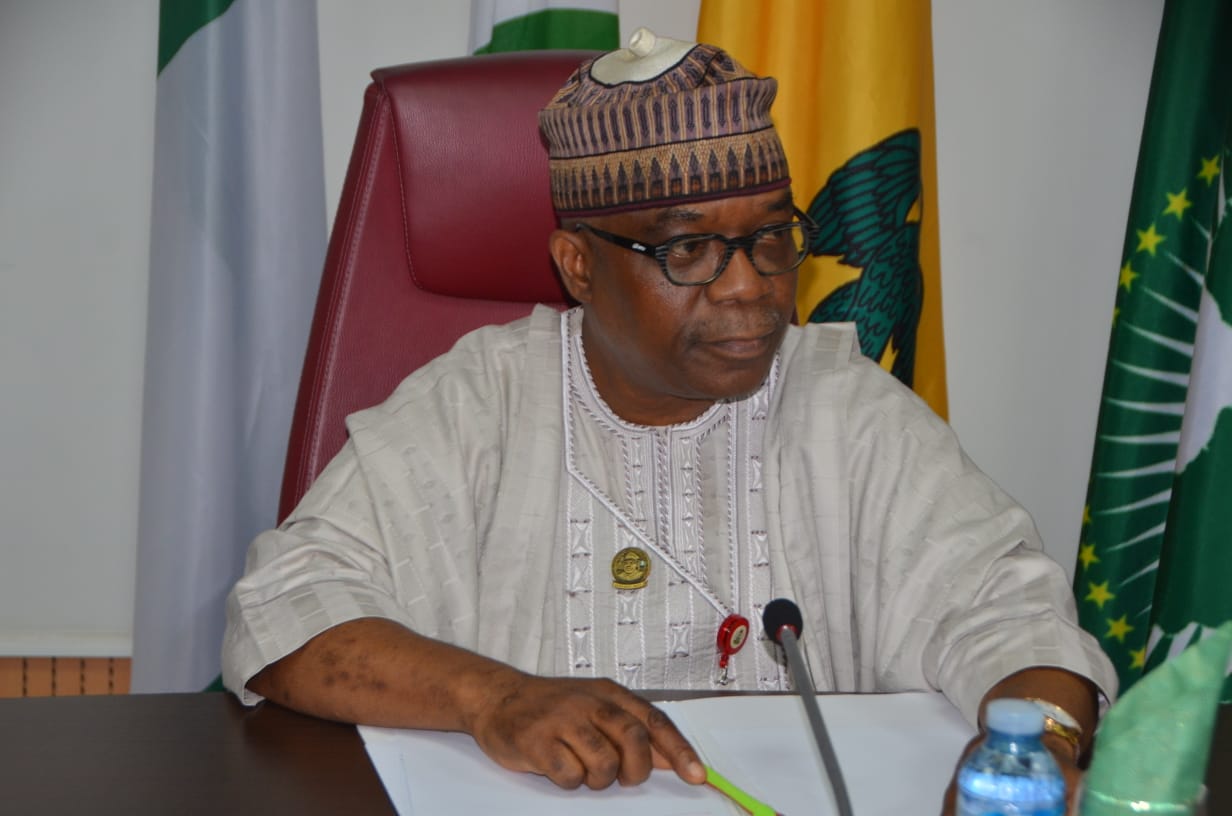
Written by Ambassador Sola Enikanolaiye,
Minister of State for Foreign Affairs, Federal Republic of Nigeria

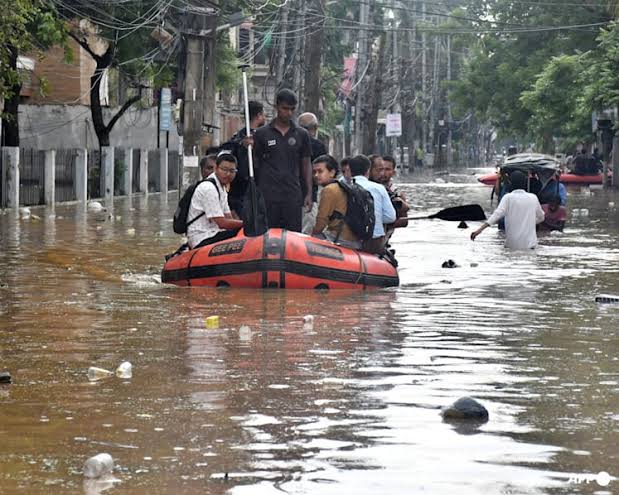
India’s northeast floods have killed close to 100 people, according to an official toll update on Friday, with villages buried in mud after one of Assam state’s worst deluges in years.
No fewer than 97 people have died in the floods in Assam that have affected nearly 170,000, including thousands who have been forced into temporary shelters as swollen rivers inundate homes and farmland.
Floodwaters have submerged more than 14,000 hectares of cropland, an area almost one-and-a-half times the size of Paris.
AFP confirmed sighting half-submerged houses, uprooted trees and vehicles buried under mud across the worst-hit district of Sivasagar.

Assam Chief Minister Himanta Biswa Sarma posted a video on Friday of him consoling the parents of a 13-year-old boy who died while trying to rescue his pet dog from floodwaters.
“No parent should ever have to bid farewell to their child,” he wrote.
India’s Health Minister J.P. Nadda, who visited the flood-hit region on Thursday, said the scale of the devastation was “so huge that it will take time” for normality to be restored.
“Village after village has been submerged,” he told reporters.
Like most of the subcontinent, flooding is common in Assam during the June-September monsoon as the Brahmaputra — India’s biggest river — and its many tributaries overflow.
However, experts say climate change, coupled with poorly planned development, is increasing the frequency, severity and impact of the disasters.
Residents and officials have blamed illegal coal mining in the neighbouring state of Nagaland for worsening the flooding, saying it has affected areas not historically prone to inundation.
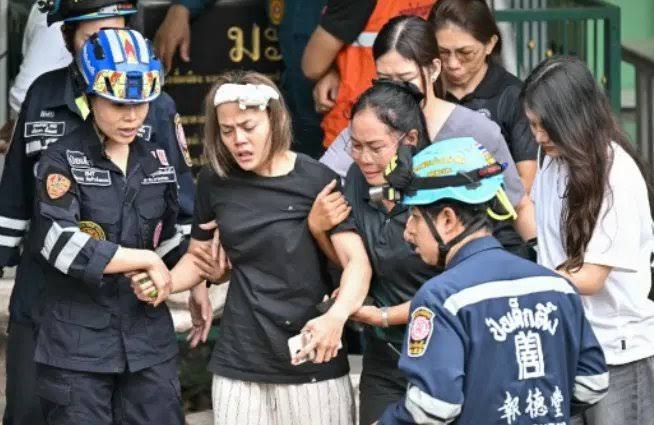
A teenage suspect killed his grandparents before shooting dead at least six more people at a school near Bangkok Friday, police said.
First, he shot dead his grandparents, using his grandfather’s handgun, then went to a secondary school north of Bangkok and killed three teachers and three students, national police said in a statement.
Dozens of police and emergency responders gathered outside the Debsirin Nonthaburi School in Nonthaburi province on Friday, while parents raced to pick up their children and tearful students and staff comforted each other outside.
“I was afraid that I would die, and I was scared that I wouldn’t be able to pursue my dreams,” said Pawarisa Maylissa, a grade 12 student who hopes to attend medical school.

“I heard many gunshots very loudly because it seemed the suspect was on the floor directly above us. I could even hear bullets hitting the floor.”
Fifteen injured students were not struck by gunfire but hurt as they were trying to flee, deputy interior minister Polapee Suwunchwee told local broadcaster Thai PBS.
The shooter was identified as a teenage student of the school and also reported dead, according to local media reports citing authorities.
Some reports said police officers had shot and killed the suspect, while others said he had died by suicide.
“It’s such a terrible incident. It should never have happened. How could this happen in our country?” Prime Minister Anutin Charnvirakul told reporters at Bangkok’s Government House.
Photos published by local media show the suspect wearing a purple school uniform and carrying a black cross-body bag, with several bullet casings visible on the ground.
An AFP journalist saw a dozen mental health workers arrive at the school, where traffic was nearly at a standstill.
Thailand has one of the highest rates of gun ownership in the region, with around 10 million firearms estimated to be in circulation — one for every seven inhabitants.
Past promises of tightening gun laws have not prevented repeated shootings.
Thai police shot and arrested a teenager who opened fire at a school in the south of the country in February, killing the principal and wounding two students.
The teen had used a police officer’s weapon in the shooting.
A local police chief said at the time that the suspect was hospitalised for psychiatric treatment in December and had been discharged.
The teen stabbed a police officer with a knife and stole his weapon — a 9mm pistol — just before the incident, and then used it to carry out the attack.
In 2022, an ex-policeman armed with a gun and a knife stormed into a nursery in the country’s north and murdered 24 children and 12 adults, one of Thailand’s deadliest massacres.
AFP

How I delivered ten pregnant women while in captivity, nurse reveals

Countries opposing, supporting Infantino ahead 2027 FIFA election

Just in: Football fans worldwide mourn as Lionel Messi’s father dies at 68




-
 Politics17 hours ago
Guber Election: Osun APC Accuses Davido of Distributing Money to Residents
-
 Economy17 hours ago
Equities market records N235bn gain
-

 Metro17 hours ago
Court jails four over $5.2 million money laundering scheme in Lagos
-
 News17 hours ago
Gov Abiodun Commends Army, Police, DSS, Others for Intelligence-led Rescue of 5 Kidnapped Poly Students, 2 Others
-

 Economy17 hours ago
RMAFC gives NUPRC 48 hours to dissolve host community trust
-
 News16 hours ago
Why FCT can’t have state police — Senate
-

 News17 hours ago
I Will Involve Trump Over Osun Election If… – Davido Warns
-

 Metro17 hours ago
28-Year-Old Nigerian Man Deported From Ireland After Conviction for Terror Offences and Mass Murder Threats in UK
Warning: Undefined variable $user_ID in /home/naijuinz/public_html/wp-content/themes/zox-news/comments.php on line 49
You must be logged in to post a comment Login