
News
OF JUNE 12, DEMOCRACY STRUGGLES, NATIONAL HONOURS, AND OKUN NATION

- /home/naijuinz/public_html/wp-content/plugins/mvp-social-buttons/mvp-social-buttons.php on line 27
https://naijablitznews.com/wp-content/uploads/2024/04/kogi-state-map.jpg&description=OF JUNE 12, DEMOCRACY STRUGGLES, NATIONAL HONOURS, AND OKUN NATION', 'pinterestShare', 'width=750,height=350'); return false;" title="Pin This Post">
- Share
- Tweet /home/naijuinz/public_html/wp-content/plugins/mvp-social-buttons/mvp-social-buttons.php on line 72
https://naijablitznews.com/wp-content/uploads/2024/04/kogi-state-map.jpg&description=OF JUNE 12, DEMOCRACY STRUGGLES, NATIONAL HONOURS, AND OKUN NATION', 'pinterestShare', 'width=750,height=350'); return false;" title="Pin This Post">


BY BOLAJI AFOLABI
Penultimate week, President Bola Tinubu, in commemoration of this year’s “Democracy Day” conferred different categories of National Honours on about 100 prominent Nigerians; dead and living. Tinubu announced names of the awardees while addressing Nigerians at a joint session of the National Assembly; in one of the activities to mark the celebrations of the day, which has been included among national landmarks. The choice of the venue was symbolic, as the legislature remains the fulcrum of democracy. The awardees, drawn from the civil society, media, academia, business, and politics were identified as major players in the determined agitation for the restoration of the June 12, 1993 elections; recognition, declaration of Chief M.K.O Abiola as the winner, and president; as well as subsequent struggles for the enthronement of democracy.
Mrs. Kudirat Abiola, the late wife of Abiola, who was gruesomely murdered in Ikeja area of Lagos; late General Musa Yar’adua, (Rtd); Bagauda Kaltho, journalist who was mysteriously killed in Kaduna; Alfred Rewane, veteran politician and businessman murdered in Ikoyi, Lagos; Chima Ubani, of the Civil Liberties Organization, (CLO); and few others were given posthumous awards. Eminent Nigerians, still alive who emerged beneficiaries include Prof. Wole Soyinka; Rt. Hon. Prof. Julius Ihonvbere, Leader, House of Representatives; Governor Uba Sani of Kaduna state; Ms. Ayo Obe. Mr. Labaran Maku, former Information Minister; Senator Shehu Sani; Hon. Abdul Oroh, journalist and former parliamentarian, and other professionals made the list.
As expected, there were divided opinions about the novel decision to recognize patriots who fought for the birth of democratic governance in Nigeria. The gestures attracted commendation and criticisms; cheers and jeers; kudos and knocks. While many people saluted the government for her thoughtfulness, some others pop-pooh it. Few others wondered why names of other Nigerians who contributed to the democratic struggles were left out. Happily, a few days later, while commissioning some projects executed by Governor Uba Sani, Tinubu addressed the omissions by adding a few more names to the list of honourees. Tinubu’s immediate response attracted hearty reactions, and wholesale applause by people at the event including Sani; himself a recipient who in two years as the head of the “citadel of learning” state has endeared himself to the people through pragmatic leadership, inclusivity, equitable distribution of projects, and fair allocation of resources to all segments.
In August 1985, when General Ibrahim Babangida took over the reins of power from General Muhammadu Buhari, there was spontaneous jubilation by the people. Disenchanted with the coercive administrative style of Buhari, Nigerians were excited, and hopeful there will be measurable changes by the new regime. Somehow, Babangida, who was the Chief of Army Staff prior to emerging as Nigeria’s 5th post-civil war military head of state started on a high. He took deliberate actions to distance the new administration from Buhari’s government. He positioned himself, and the government as willing, and ready to meet the yearnings of the citizenry. To portray signs of readiness, and commitment to good governance, he assembled some of Nigeria’s best human resources to work with him in various positions and offices. To underscore his commitment to democracy, he came up with an ingenious leadership model where civilians were appointed as deputies to military governors in all the states of the federation.
However, a few years down the line, “tory change.” The honeymoon was literally over as things began to manifest, in lightening speed. Nigerians were regularly beseeched with policy sourmersaults, perennial shifting of the political calendar, and many other selfish decisions. In few cases, programmes that had prospects of impacting on the nation’s development were sadly, chiseled, plundered under vacuous reasons as they were deployed as conduits for the slushing of the economy. Many people described the period as one where there was mindless, vicious, and rudderless acquisition by the privileged few. Nigerians witnessed capricious malfeasance, and wasteful disfiguring of our commonwealth in many ways such that the economy was stripped and savaged. To few discerning minds, the subtle, unconvincing, and pretentious tendencies of IBB, which earned him the sobriquet, “Maradonna” came to the fore when he added “President” to his title as Nigeria’s leader.
With incessant rigmarole, and sneaky non-commitment to the return of democracy, IBB dribbled everybody. The elites, politicians, technocrats, and many people were confounded by his theatrics. Humongous public funds were wasted on various engagements, whose outcomes were premeditated and robbed in deceptions. How can one forget the political interactions that were held across the country? How about the lifting on the ban on politics which led to the formation of many parties including the Peoples Front; Peoples Solidarity Party; and others. However, the media, civil society, and few other groups and personalities tired of the military junta’s intentions to frustrate the return to democracy, were very vocal, resolute, and dynamic in calling them out.
Within spans and space, the deluge of criticisms against the military grew. Sensing the dwindling popularity, and evaporating acceptability of his government, IBB, proscribed all the political parties and formed the Social Democratic Party, (SDP), and National Republican Convention, (NRC). With the growing rate of systemic impunity, unbridled insensitivity, and crass arrogance that characterized military rulership, Nigerians were upbeat with the opportunities for regime change; through the ballot. On election day, many people trooped out in huge numbers across the country to cast their votes for either Abiola, or Alhaji Bashir Tofa, candidates of the SDP, and NRC respectively. Sadly, as results were trickling in, with Abiola’s victory assured, the elections were suspended, and later annulled by the military. The National Electoral Commission, (NEC), under late Prof. Humphrey Nwosu cited that the free and fairest elections were “marred by irregularities” as the reason for the spurious actions orchestrated by the military.
Just as there were sighs and hisses among the people, the annulment elicited global umbrage. Nigeria’s image as the giant of Africa was soiled and sullied. Heavily, and roundly vilified, it was described as immoral, illogical, and self-serving. Amid growing protests, and general condemnation, IBB had to “step aside.” Adding a new lexicon to Nigeria’s evolution. Though Chief Ernest Shonekan was named Head of Interim Government but he lasted barely 4 months as General Sani Abacha took over as Nigeria’s 6th Head of State; post-civil war. Under his watch, Nigeria witnessed brutal suppression; pervasive human rights violations; and other anti-people practices.
Serial harassment and intimidation by the IBB, and Abacha juntas led to the killings, incarceration, and dehumanization of many people which sparked widespread protests, civil unrest, sustained agitation, and prolonged struggle for democracy. The media, pro-democracy groups, and many personalities played crucial roles in sustaining the advocacy to end military rulership, and pursue the restoration of democratic governance. Abacha allegedly coerced the 5 registered political parties to endorse his presidential ambition. Late Chief Bola Ige, former Justice Minister described it as “fingers of a leprous hand.” This was effectively challenged with more protests across the country, and around the world. Nigeria suffered global neglect, and treated as a pariah nation, Abacha, ruthlessly dug in by expanding the search for identified “renegades” with plans to unleash harm, and assaults. Military officers became targets. Many communities, tribes, and ethnic groups suffered collateral damages.
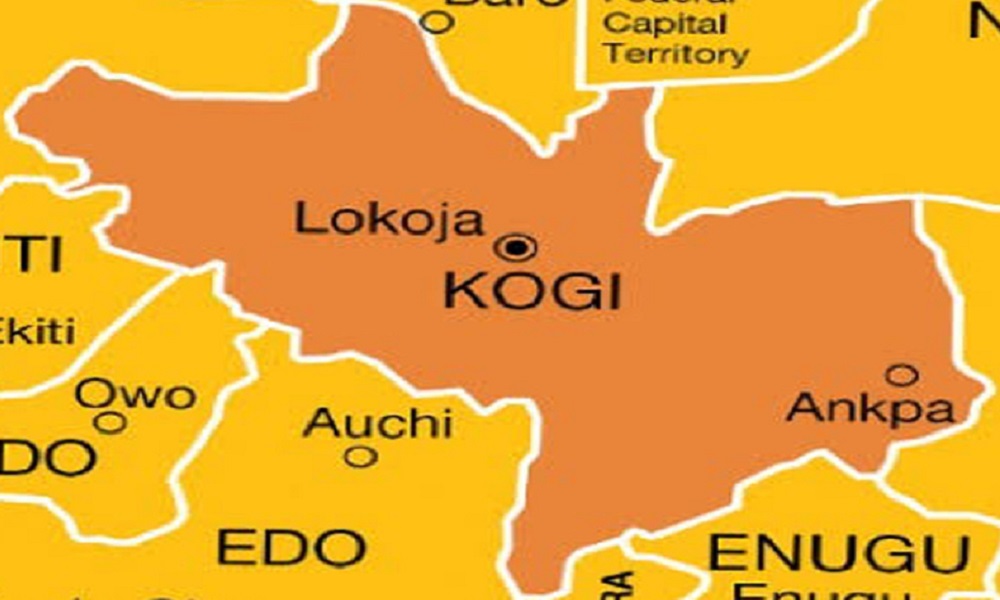
The Yoruba speaking people of Kogi state, better known as Okuns was one of such ethnic sub-regions. Domiciled, majorly in 5 LGAs; Kabba-Bunu, Ijumu, Mopa-Muro, Yagba East, and Yagba West, the Okuns consists of about 60 percent of Kogi West Senatorial District. Recognized as the intellectual hub of the “confluence state” with over 500 academic professors, 5 Senior Advocates, and accomplished technocrats in various professions, the people have always played vital roles at every point of Nigeria’s socio-political and economic oddysses. Some indigenes contributed their respective quotas towards the exit of the military, and return of participatory governance. Some Okun indigenes who were senior military officers, were severely harassed, hounded, and incarcerated by Abacha for taking principled and progressive positions against prolonged military rulership. Others in varied professions distinguished themselves as heroes of the over 10 struggles. Happily, their sweats and tears have not gone unnoticed, as they have been recognized by Nigeria.
Prof. Olatunji Dare, a prodigious academic, iconic columnist, and conscionable activist was bestowed with the Commander of the Order of the Niger, (CON) by Tinubu. Through his insightful writings, he displayed unbridled courage, and unwavering boldness by speaking truth to power during the period under review. As a public intellectual, he contributed immensely in shaping opinions towards ensuring the exit of the military from governance. His book, “Diary of a Debacle: Tracking Nigeria’s Failed Democratic Transition, 1986-1994,” is an outstanding masterpiece for research, education, and information. The renowned communication scholar, who has been a consistent columnist for about four decades, declined to join The Guardian newspapers delegation to apologize to Abacha; to avoid a shut down. A highly principled Dare resigned, and subsequently left Nigeria for the USA in 1996 after suffering serial threats and humiliation by the military junta.
The history of resolute opposition against military rulership will not be complete without the mention of The News, and Tempo publications who pioneered “guerilla journalism” in Nigeria. Mr. Dapo Olorunyomi, variously called “Dapsy” and “Uncle Dapsy” by his friends, associates, and mentees respectively, stood out as a colossus. The multiple-award winning journalist, publisher, and author was one of the “strategic generals” who sustained the war against military dictatorship. Drawing from his antecedents of moral upbringing, political engagement, and social activism, his focused advocacy and uncommon comportment amid adversity inspired many people. Abacha, disturbed about the depth of Olorunyomi’s advocacy against his government, declared him wanted. Thereafter, he reluctantly relocated to the USA in 1995, to evade the government’s violent persecution of pro-democracy groups. Indeed, the Commander of the Order of the Niger, (OON) given to him is well-deserved, and long overdue.
True, the national honours on Dare and Olorunyomi represent the fitting endorsement of their respective contributions to democracy, and good governance. More importantly, it has further confirmed the status of the Okun-Yoruba as a fearless, selfless, conscientious, and forthright people whose commitment to national development is unequivocal. Going forward, as one commends Tinubu for the initiative, it is imperative that more distinguished Okuns; in the academia, military, and a few other disciplines who also made immeasurable contributions to democratic governance be considered. The gesture should also be extended to other Nigerians.
* BOLAJI AFOLABI, a Development Communications specialist was with the Office of Public Affairs, The Presidency.
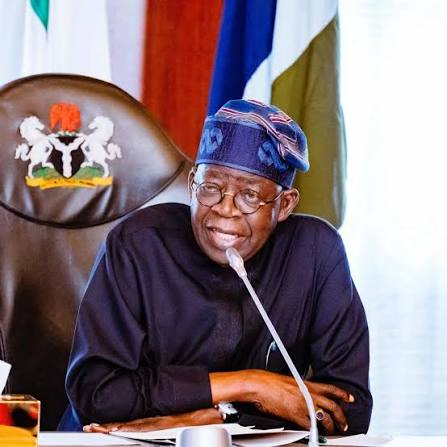
Hundreds of youths on Thursday staged a peaceful protest in Potiskum Local Government Area of Yobe State, demanding an end to President Bola Tinubu’s administration over worsening economic hardship, insecurity and unemployment.
The demonstration, tagged “Tinubu Must Go”, coincided with Nigeria’s 66th Independence Anniversary on October 1.
The protesters marched through the Tsohowar Kasuwa area of Potiskum, carrying placards and flags of the African Democratic Congress (ADC), while expressing dissatisfaction with the state of the country.
They said President Tinubu’s Independence Day broadcast failed to address their concerns, particularly the rising cost of living, poverty, unemployment, insecurity and what they described as poor governance since the administration assumed office in 2023.
Speaking to journalists on condition of anonymity, one of the protesters said the demonstration was an exercise of their fundamental rights and a call for urgent action to address the country’s challenges.
“We came out today to express our fundamental rights, freedom of speech. We are suffering from this government, people are dying due to insecurity, poverty and unemployment in the land,” the protester said.
Another demonstrator, who identified with the opposition, expressed concern over the country’s economic situation and the state of the education sector.
He said the youths were dissatisfied with the government’s handling of issues affecting ordinary Nigerians.
Similarly, a protester identified as Malam Gambo said the demonstration was organised to draw attention to hunger, insecurity and what the participants described as bad governance.
Eyewitnesses reported that the protest remained peaceful and orderly, with young men and women making up the bulk of the demonstrators.
Some participants were seen carrying ADC flags as they marched through parts of Potiskum to express their grievances against the Tinubu administration.
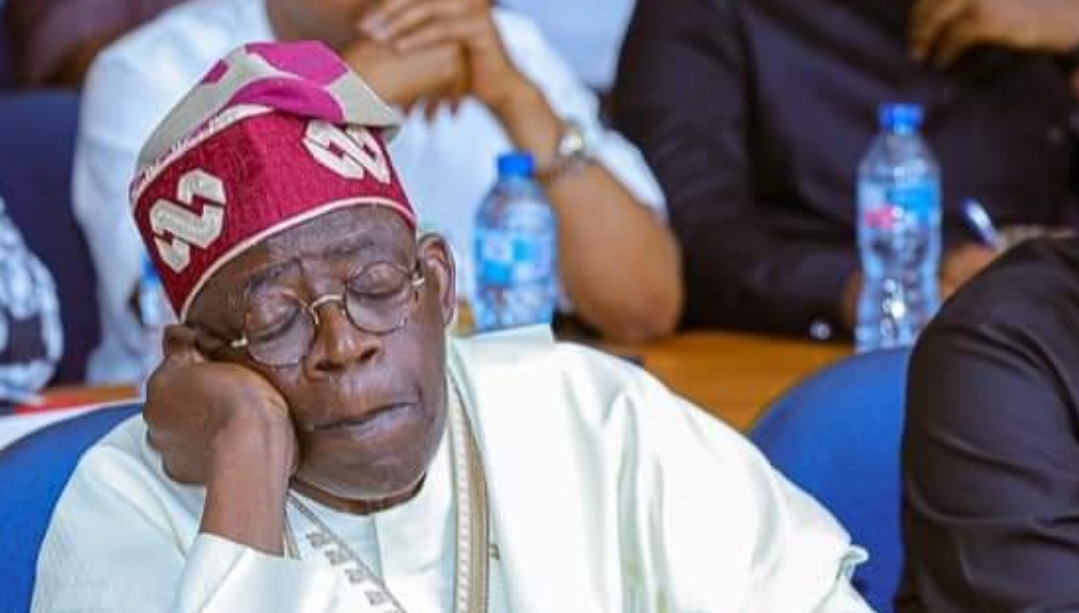
A United States-based advocacy firm, Von Batten-Montague-York, has accused President Bola Tinubu of being desperate to retain power ahead of Nigeria’s 2027 general elections.
The firm alleged that Tinubu was prepared to use security agencies, the judiciary and electoral institutions to manipulate the electoral process and secure another term in office.
Von Batten-Montague-York made the allegations in a statement published on its verified X handle on Thursday, amid growing political activities ahead of the 2027 polls.
The firm’s remarks followed reports that five men were arrested in Borno State for wearing T-shirts bearing the inscription “Tinubu Must Go.”
Reacting to the incident, the advocacy firm raised concerns about what it described as threats to democratic freedoms and the rule of law in Nigeria.
It also called attention to the importance of the United States standing with Nigerians in the defence of democracy and their constitutional rights.
In its statement, the firm claimed that Tinubu had personal reasons for seeking to remain in office, including the legal protections associated with presidential immunity.
“Nigerian President Bola Tinubu is desperate to remain in power for many self-beneficial reasons, including something called head-of-state immunity, a doctrine that can protect sitting heads of state from the jurisdiction of foreign courts while they remain in office,” the firm stated.
The organisation further alleged that Tinubu’s presidency could shield him from a possible fresh examination of allegations concerning his alleged involvement in heroin trafficking in the United States during the 1980s and 1990s.
“Tinubu is now fully aware that the only thing standing in the way of a possible official re-examination of his alleged role in the trafficking of heroin from Nigeria into the United States during the 1980s and 1990s, and a possible new criminal indictment, is his current status as President of Nigeria,” it added.
The allegations remain claims made by the advocacy firm and do not, in themselves, establish wrongdoing by the Nigerian President.
With the 2027 general elections approaching, debates over political freedoms, the conduct of security agencies and the credibility of the electoral process are expected to remain prominent in Nigeria’s political discourse.
News
2027: Wike rallies support for Tinubu In Akpor kingdom, Insists He’II resign as Minister should president lose FCT, Rivers(Photos)
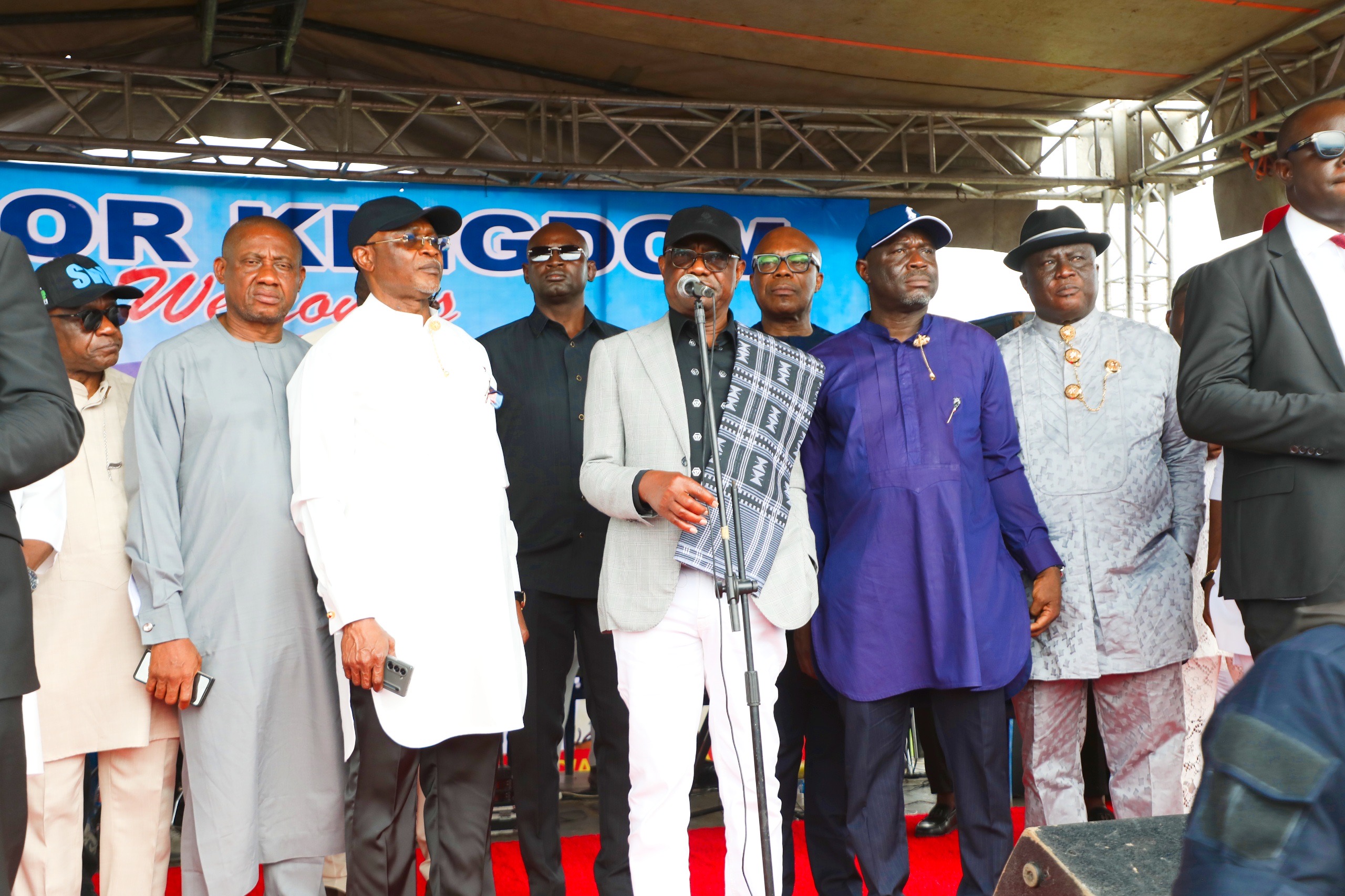
The Minister of the Federal Capital Territory (FCT), Nyesom Wike, on Friday declared that his political alignment with President Bola Tinubu remains unshakable, rallying the political structure of Rivers State to consolidate support for the President.
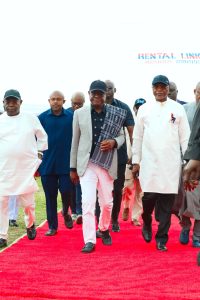
”My interest in Rivers State is for God to use me as a vessel to help our people. I am back here not for what I will get, but for what I will be to raise my people”, Wike declared during a strategic consultative meeting with stakeholders of the Akpor Kingdom in Obio-Akpor Local Government, Rivers State, Wike emphasized that politics is driven by the collective interest of the people rather than perpetual animosity.
He also reiterated his decision to resign his position as Minister should President Tinubu lose in Rivers State and the FCT.
The former governor of Rivers State maintained that expanding the political base is essential for delivering democratic dividends.
He said; “there is no permanent enemy in politics what we have is permanent collective interest.
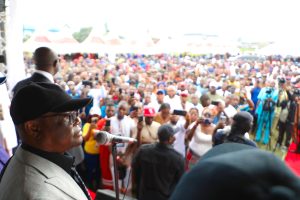
“It is all about the interest of our people. The more you are in number, the happier you become. Leadership is like a waste dustbin. If you cannot absorb things, both the good and the bad, then you cannot be a true leader.”
Reflecting on the political trajectory that led to his appointment as FCT Minister, Wike noted that working with President Tinubu was an extraordinary milestone that defied political convention.
He stressed that his return to grassroots mobilization in Rivers State is aimed at leveraging his position as a vessel to uplift the state and its people.
”You know how difficult, you know how impossible it looked, but he made it possible for us to produce the Minister of the Federal Capital Territory,” Wike told the gathering.
He charged political actors in the state not to be distracted by social media criticism regarding his open-door policy toward former detractors, asserting that true political strength lies in numerical superiority.
In a fiery charge to local leaders, Wike demanded an all-inclusive campaign structure spanning every stratum of society in Obio-Akpor Local Government Area.
He called on traditional rulers, clergy, and community leaders to unite behind a single political direction.
”Obio-Akpor as a whole, whether you are a politician, whether you are a traditional ruler, whether you are a pastor, or whether you are a native doctor, I need everybody now,” he declared.
Wike said further; “Because all of them will vote. For the purpose of voting and elections, we must bring everyone together. ”
Drawing from his political history as the first elected chairman in the history of Obio-Akpor Local Government to win a second term following its creation in 1989, Wike reminded incumbent council leaders that performance and human connection remain the ultimate yardsticks for re-election.
He stated; “I was not elected two times because I was just Chairman.
“I was elected because people felt the impact of governance and because I related with the people. Anywhere, whether for burial or thanksgiving, I was always identifying with them”.
Outlining the electoral roadmap, the FCT Minister highlighted Wards 15, 16, and 17 in Obio-Akpor Local Government as strategic strongholds capable of deciding electoral outcomes across the local council.
”We have over 200 units across three very important wards Ward 15, Ward 16, and Ward 17. These three wards can defeat ten wards in Obio-Akpor. They are three wards with a difference, and you must utilize them to make that difference,” he instructed.
Wike directed local leaders to immediately deploy unit coordinators and door-to-door canvassers across all polling units, urging them to mobilize their immediate families, in-laws, and neighbors to ensure a decisive victory.
Reiterating his loyalty to his constituency, Wike affirmed that he would remain the state’s “Chief Critic” and guide to ensure elected council officers stay accountable to the electorate.
Wike was accompanied by the Rivers State APC governorship candidate, Kingsley Chinda and other political leaders.

‘Tinubu Must Go’: Yobe Youths Protest Economic Hardship, Insecurity

Iconic Nigerian actor, Olu Jacobs finally embarks on last journey on planet earth

Mafab and the unfulfilled 5G network rollout


-

 News16 hours ago
If you elect me as your president in 2027, I will end election rigging in Nigeria — Atiku
-

 Metro16 hours ago
Gunmen Abduct 20 Corps Members In Imo
-
 Foreign16 hours ago
UK government begins freeing 5,000 prisoners due to extreme prison overcrowding
-

 News16 hours ago
Nigeria Is Now the Worst Place To Be Born — Peter Obi
-
 News16 hours ago
Nigeria at 66: ‘Tinubu made Yahoo Yahoo promise to Nigerians, he’s fake’ – Atiku
-

 News7 hours ago
Independence Day: NNPCL Slashes Petrol Price With N66 Discount for Nigerians
You must be logged in to post a comment Login