Connect with us

News

ECHONO GOES TOUGH ON RESOURCE MISAPPLICATION IN TETFUND

Published

on

ADVERTISEMENT
Zoom Ad
ADVERTISEMENT
Zoom Ad

By Tunde Olusunle

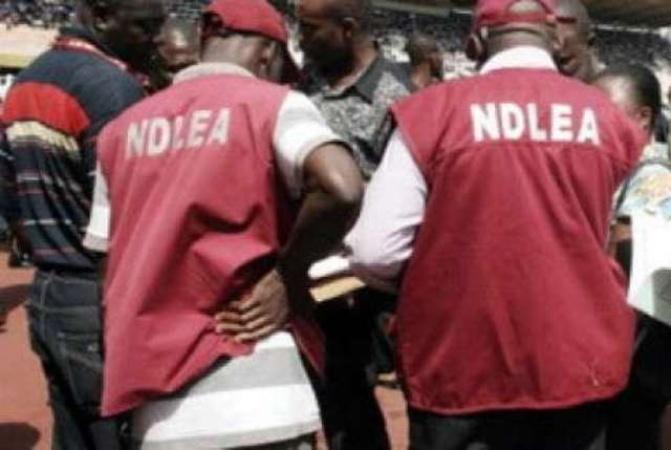
Sonny Togo Echono, the Executive Secretary of the Tertiary Education Trust Fund, (TETFUND), would most probably have earned the sobriquet of “action administrator,” if Nigeria were in a military dispensation. Successive military regimes over several years and decades, profited Nigeria’s governance lexicon with sundry additions and infusions. “Action Governor” was one such sobriquet which gained and sustained prominence in public conversations in times past. It referred to military superintendents who were proactive, maybe also heavy-handed in their approach to public service. For their roles in advancing infrastructural development in their states of jurisdiction, Mobolaji Johnson, David Bamigboye, Robert Adebayo, Osaigbovo Ogbemudia, all Army Colonels who administered Lagos, Kwara, Western and Midwestern states, were garlanded as action Governors. Mohammed Buba Marwa, incumbent Chairman of the National Drug Law Enforcement Agency, (NDLEA), a Brigadier-General who led Lagos State between 1996 to 1999, was similarly so decorated.

Marwa was upfront in road rehabilitation, revamp of health institutions and crime control. He initiated a joint military and police task force christened *Operation Sweep* as a crime containment strategy, which success was adopted by many other states. All of these were consummated by his honorific as an “action administrator.” Marwa’s precedence was emulated by several other states, notably Oyo under Colonel Ahmed Usman and his Kogi State counterpart, Bzigu Lassa Afakirya, who launched *Operation Gbale,* (gba’le being the Yoruba expression for sweeping), and *Operation Hot Chase,* respectively. Raji Rasaki, a former military administrator of Lagos State also earned the nickname of *akson* governor, from his Yoruba-accented pronunciation of the word “action.” He is remembered for the massive demolition of illegal structures which significantly cleared Lagos of shanties and slums. This would subsequently impact the real estate market in the state.

Since his appointment to his present brief a little over three years ago, Echono has demonstrated the ability to talk tough and follow up with similar resoluteness. At every opportunity, Echono has striven to harp on the fact that a new *Sheriff* is at work in TETFUND. He began his reformation agenda with sequenced encounters with entrenched cabals in the organisation who appropriated to themselves the rights to determine contract awards. To rejig our memories, Echono was one of the pioneer civil servants to be taken through the mills of a new public procurement and due process regime in the early years of the present democratic era. He has “preached the gospel” across his various “bus stops” in public service, which spanned several ministries before his present schedule. He has never been deterred, irrespective of the reactions of the establishment.

Advertisement

His insistence on reorientation and reforms earned him spontaneous adversaries. “Victims” of Echono’s new preachment responded by waging a ferocious media campaign against him, calculated to spin the narrative. The war was escalated to the national legislature which received several petitions alleging humongous fiscal infractions and malfeasance under Echono’s watch. Anti-corruption agencies, notably the Independent Corrupt Practices and Related Offences Commission, (ICPC) and the Economic and Financial Crimes Commission, (EFCC) took interest, expectedly, in the untoward information filtering in from TETFUND. To the consternation of Echono’s traducers, he received clean bills of health and glowing testimonials each and every time TETFUND’s systems, and his personal profile were put through the grindstone of serial integrity tests. Such has been Echono’s experience as he moved to stop the preexisting bazaar in TETFUND under his watch.

For academics who have benefitted from the generosity of government by way of scholarships and grants to study in foreign countries but have opted to “defraud” the state, Echono has since wielded the big stick. Certain lecturers and instructors across institutions have been privileged beneficiaries of government funding for further studies abroad. They are usually expected to return to Nigeria to give back to the system which availed them such benevolence, by way of continuing service to their primary employers. Conversely, in many instances, some scholars repay government their benefactor, with a bad coin. They abscond or “defect” as it were. In the face of the current economic situation in the country impacted by inflation and currency devaluation, Echono has since declared that government will no longer play the *Santa Claus.*

Rather, government will henceforth support in-country capacity building for its intellectuals and scholars. Military officers from many foreign countries for instance receive primary and advanced training in Nigerian military institutions. Almost every graduating set from the Nigerian Defence Academy, (NDA), or the Nigerian Defence College, (NDC), have sprinklings of foreign students. Why wouldn’t indigenous scholars also receive advanced training in retooled and recalibrated home-based institutions? Indeed, Nigerian academics populate the faculties of several universities and training institutions across the world. These include choice destinations like the United States of America, the United Kingdom, Canada, the United Arab Emirates and South Africa. Nigeria can look inwards such that experienced Nigerian scholars and technocrats at home, impact their colleagues desiring retraining and advanced exposure, within the bounds of tolerable financial exertion.

Echono has equally conducted forensic interrogations into the size of tertiary institutions, relative to funding accruable to them. In a milieu where the population of some citadels nestle in upper five figures, Echono finds it curious that the numbers of a few colleges are way below a miserable 100 students! An alarmed Echono once highlighted the specific case of a polytechnic which had just 30 enrollees, which had operated for four years and had continued to receive public funding. For him, such an example is anathema to the intentions of government as channelled through TETFUND. Accountability in the deployment of funding he noted is also paramount. Should unutilised funds be discovered in the accounts of benefitting institutions, such funds will be recalled and reallocated to schools with better performance indices. Equally strident is Echono’s regular admonition against abandoned projects in the nation’s public tertiary institutions. Such unsightly stumps in the landscapes of institutions, such monuments to waste will no longer be tolerated under his watch.

Advertisement

More recently, Echono warned institutions covered by TETFUND against abuse and misuse of intervention funds. At a two-day strategic workshop for Directors of Physical Planning, Academic Planning and ICT which commenced on Monday July 7, 2025 in Abuja, Echono warned that improper utilisation of resources allocated to errant institutions will culminate in the delistment of defaulting institutions. He restated government’s commitment to enabling the nation’s tertiary education system via addressing procedural gaps and ensuring that institutions fully understand the agency’s intervention guidelines. Underperformance and mismanagement, the TETFUND head noted will not be condoned. Echono reiterated that “institutions that fail to access, utilise or retire funds in accordance with TETFUND guidelines, or those that underperform in key academic or operational benchmarks, may be delisted.”

In a public service otherwise construed as dour, uninspiring and tepid, Echono has raised the bar with his well thought interventions. His approach to administration has been characterised by regular engagements and interfaces with key operators of the tertiary education mills. While Vice Chancellors, Rectors, Provosts at the helm in universities, polytechnics and colleges of education were hitherto sole regular guests at meetings with the leadership of TETFUND, the Echono milieu has expanded the scope of engagements. Other key stakeholders in the leadership crust of tertiary institutions, notably heads of administrative, financial and developmental departments, have equally earned the buy-in of TETFUND under Echono’s leadership. The conference hall within the Abuja headquarters complex of the organisation is ever busy with activity. All of these are geared towards a better performing tertiary education system to accord the country with the quality manpower necessary to drive growth and development.

For a dye-in-the-wool public servant who cut his teeth at the very core of the bureaucracy during which he grossed a glowing three and half decades before his current portfolio, Echono’s transformation will constitute the subject of future investigations. He joined the federal civil service in 1987 and retired early 2022. During his years in service, he traversed a string of ministries serving in various capacities and offices. The rule book of the civil service we are told is that “civil servants can be seen but their voices are not to be heard.” Echono evolved from that very same system. His present job description, however, has brought out the more vocal, more forthcoming persona in him, in continuing service to the nation.

*Tunde Olusunle, PhD, FANA, Fellow of the Association of Nigerian Authors, (FANA), is an Adjunct Professor of Creative Writing at the University of Abuja*

Advertisement
Continue Reading
Advertisement
Click to comment

Warning: Undefined variable $user_ID in /home/naijuinz/public_html/wp-content/themes/zox-news/comments.php on line 49

You must be logged in to post a comment Login

Leave a Reply

News

Photos/Video: Senator pays working visit to FERMA boss Agbasi over failed Gashaka Saldana federal road

Published

on

ADVERTISEMENT
Zoom Ad
ADVERTISEMENT
Zoom Ad

…demands urgent intervention

…as Engr promises to carry out on the spot assessment to effect restoration

Senator Haruna Manu representing Taraba Central alongside his colleague Senator Babangida Hussaini, paid a working visit to the Managing Director of the Federal Roads Maintenance Agency (FERMA), Engr. Chukwuemeka Agbasi, over urgent intervention on failed Gashaka Sardauna federal in Taraba.

Senator Manu explained the critical need for repairs on the stretch linking in Gashaka LGA to Sardauna LGA, Serti – Gembu road, from Mayo -Selbe in Gashaka LGA to Nguroje in Sardauna LGA and from Lekitaba in Sardauna LGA to Gembu where the road is about to totally cave-in due to gully erosion.

Responding, Engr. Agbasi committed to conducting a formal evaluation of the road to make the necessary restoration arrangements.

Rounding up, Senator Manu urged the agency to prioritize the restoration plan to ensure the road is fixed without delay as it serves as a major link to two big local government areas in the state.


WATCH:

Advertisement
Continue Reading

News

Reps Probe Lingering Bille Gas Leak, Demand Swift Action as Regulators Confirm Emissions Continue

Published

on

ADVERTISEMENT
Zoom Ad
ADVERTISEMENT
Zoom Ad

By Gloria Ikibah

The House of Representatives Committee on the South-South Development Commission has launched an investigation into the prolonged gas leak 0in Bille Community, Degema Local Government Area of Rivers State, expressing concern over the environmental and humanitarian consequences nearly a year after the incident first came to public attention.

At an interactive session held on Thursday at the National Assembly, lawmakers questioned officials of the National Oil Spill Detection and Response Agency (NOSDRA) and Nigerian Upstream Petroleum Regulatory Commission (NUPRC) over the delayed response, conflicting official reports and the continued hardship faced by residents.

In his opening remarks, Committee Chairman, Rep. Julius Pondi, said the investigation was intended to establish the facts surrounding the incident, evaluate the response of relevant agencies and identify measures to prevent a recurrence.

Advertisement

He said: “The Committee approaches this engagement with an open mind. Our objective is neither to prejudge any individual or institution nor to apportion blame without due process. Rather, we seek to establish the facts, identify operational or regulatory shortcomings, ensure every stakeholder is held accountable and make practical recommendations that will strengthen environmental governance and improve regulatory oversight.”

Presenting NOSDRA’s findings, the agency’s Director of Oil Field Assessment, Cyrus Nkangwang, told lawmakers that it first became aware of the unusual gas emissions in October 2025 after receiving reports from residents of Bille Community.

He explained that the investigations detected elevated concentrations of methane, hydrogen sulphide and carbon dioxide, as well as groundwater contamination, deteriorating air quality and potential health risks for residents.

When the committee sought clarification on whether the emissions had stopped, NOSDRA admitted that the leak was still active.

Advertisement

Pondi asked:
“After this moment we speak, has this stopped leaking or is the leak still going on?”

The agency’s representative replied:
“It’s still leaking.”

Lawmakers also queried the apparent delay in responding to the incident despite repeated complaints from the affected community.

Explaining the circumstances, the NOSDRA official said:
“This incident is not the regular incident that attracts reportage. It is not from any facility. It is gas bubbling that enveloped the community… It started gradually and the community brought it to public attention before we became aware of it.”

Advertisement

Representing the NUPRC, Mr Joseph Olushola said the commission only became directly involved after a stakeholders’ meeting convened by the Ministry of Petroleum Resources on February 4, 2026.

“Our clear involvement started when that meeting was called. Before then, we had reports of investigations being carried out by NOSDRA. We also believed we should have been brought up to speed since the community had reported the incident”, he said.

He disclosed that joint investigations involving Renaissance Africa Energy, Newcross Exploration and Production, NNPC Eighteen Operating Limited and host community representatives confirmed methane emissions across approximately 1.5 kilometres of the community.

According to him, extensive field studies, laboratory analyses and geological investigations found no evidence linking the emissions to existing oil and gas infrastructure.

Advertisement

He explained that the evidence suggested the gas was migrating naturally from deep underground reservoirs.

“There is no relationship between the pipeline, the facility, to the signature and the structure of the gas seepage.

“This began to give an indication that this gas may be coming from deep reservoirs up to the surface. We therefore commenced detailed geological and geophysical investigations to determine the source, the trigger and the migration pathways”, he said.

Describing the incident as unusual, the NUPRC official added:
“This is novel. We have studied similar seepages around the world, but the expanse, the duration, the pressure of the bubbling and the fact that it is linked to almost every borehole and water well in Bille Community makes this a special occurrence.”

Advertisement

Lawmakers, however, questioned why residents had continued to suffer while investigations dragged on.

Pondi asked:
“From December to February when you got involved till now, what happened to the Bille people? Whose water has been affected? Who does not have clean water to drink? Whose farmland has been devastated? What remedial measures have you taken?”

In response, the commission said it had pursued both technical investigations and humanitarian interventions.

The commission disclosed that relief materials had already been distributed and that a medical outreach programme would begin within two weeks.

Advertisement

“No operator has been found culpable, but the industry decided to rally round as part of its corporate social responsibility.

“An integrated relief programme involving medical outreach, provision of potable water and safety management is ongoing while technical investigations continue”, he noted.

The regulator also acknowledged that the community’s environment had been adversely affected.

“The water is contaminated. Air is polluted. We visited and we felt it. You smell the odour”, he said.

Advertisement

Officials explained that temporary measures had been introduced to vent gas above rooftop level to reduce fire risks, but maintained that a lasting solution would depend on identifying and sealing the source of the seepage.

The hearing also revealed inconsistencies between reports submitted by the two regulatory agencies.

Committee members questioned a section of NOSDRA’s report indicating that the NUPRC had “no pipeline record in the area”, an assertion the commission firmly rejected.

“Emphatically, no. We have always had records of the pipelines, their operating status, pressures, temperatures and other operating parameters,” the NUPRC official said.

Advertisement

Asked to explain the discrepancy, NOSDRA maintained that the statement reflected discussions at an earlier stakeholders’ meeting but admitted it may have conveyed a misleading impression.

Several lawmakers criticised what they described as the slow pace of intervention.

One member remarked:
“Are we saying after eight months we cannot stop the leakage? If we cannot, then the only thing left is to relocate the village.”

Another urged the Federal Government to immediately involve the National Emergency Management Agency (NEMA), describing the situation as a humanitarian emergency.

Advertisement

The committee also questioned why the Environmental Remediation Fund established under the Petroleum Industry Act had not yet been deployed.

Responding, the NUPRC official said remediation could only commence after investigators identified the precise source of the gas seepage.

“Any attempt to conduct remediation now will be like plastering over cracks. We cannot begin remediation until we identify and stop the source”, he stated.

On the possibility of relocating residents, the commission revealed that it had advised the Rivers State Government to consider a managed evacuation pending the outcome of ongoing health and risk assessments.

Advertisement

“The laboratory analysis shows there are gases that should not normally be breathed. Government should consider a managed evacuation of the people pending further investigations”, he said.

Pondi assured residents that the House committee would sustain its oversight until a permanent solution was found, insisting that protecting lives, public health and the environment remained its foremost priority.

Continue Reading

News

Video of Deltans scooping fuel from Tanker in Asaba surfaces online

Published

on

ADVERTISEMENT
Zoom Ad
ADVERTISEMENT
Zoom Ad

A video depicting residents scooping fuel from a leaking tanker in Asaba, the Delta State capital, has surfaced on social media, raising fresh concerns over public safety.

The incident reportedly occurred around the City Gate area of Asaba after a tanker developed a leak, causing its contents to spill onto the road.

Rather than fleeing the scene over fears of a possible explosion, dozens of people were seen rushing toward the tanker with buckets, jerrycans, kegs and other containers to collect the leaking fuel.

Footage circulating online captured men and women crowding around the tanker as they struggled to fill their containers, apparently ignoring the dangers associated with highly flammable petroleum products.

Advertisement

Eyewitnesses said the leaking tanker quickly attracted a large crowd, with many residents taking advantage of the situation to gather free fuel despite the significant risk posed by the spill.

The incident has sparked widespread reactions on social media, with many Nigerians expressing concern over the hazardous behavior and warning that such actions could easily trigger a devastating fire or explosion.Africans & Diaspora

Safety experts have repeatedly cautioned the public against approaching or attempting to collect fuel from damaged tankers, noting that even a small spark from a vehicle, mobile phone, cigarette or any ignition source can ignite spilled fuel and lead to catastrophic consequences.

Fuel tanker accidents have claimed hundreds of lives across Nigeria over the years, particularly in situations where residents gathered to scoop spilled petrol before an explosion occurred.

Advertisement

The latest incident has renewed calls for greater public awareness on the dangers of fuel spills, with many urging motorists and residents to immediately vacate areas where petroleum tankers are leaking and allow emergency responders to secure the scene.

As of the time of filing this report, there was no official statement from the relevant authorities regarding the incident, and it remained unclear whether emergency personnel were deployed to contain the fuel leak or prevent further danger.

Continue Reading

Trending

Copyright © 2024 Naija Blitz News