
Foreign
US president, Trump diagnosed with vein condition causing leg swelling- White House




Donald Trump is suffering from a chronic vein condition, the White House announced on Thursday, after days of speculation regarding photographs showing bruising on the US president’s hand.
After recently experiencing swelling in his legs, Trump underwent a “comprehensive exam” including vascular testing, according to White House Press Secretary Karoline Leavitt.
Leavitt said Trump’s bruised hand was consistent with “tissue damage from frequent handshaking” while taking aspirin, which she said is “part of a standard cardio-vascular prevention regimen”.
Trump, 79, has regularly touted his good health and once described himself as “the healthiest president that’s ever lived”.
The president’s recently discovered vein condition is called chronic venous insufficiency, which occurs when leg veins fail to pump blood to the heart, causing it to pool in the lower limbs, which can then become swollen.
Veins and valves “propel the blood up and out of the leg” and back toward the heart, Dr Meryl Logan, assistant professor of vascular surgery at the University of Texas at Austin told the BBC.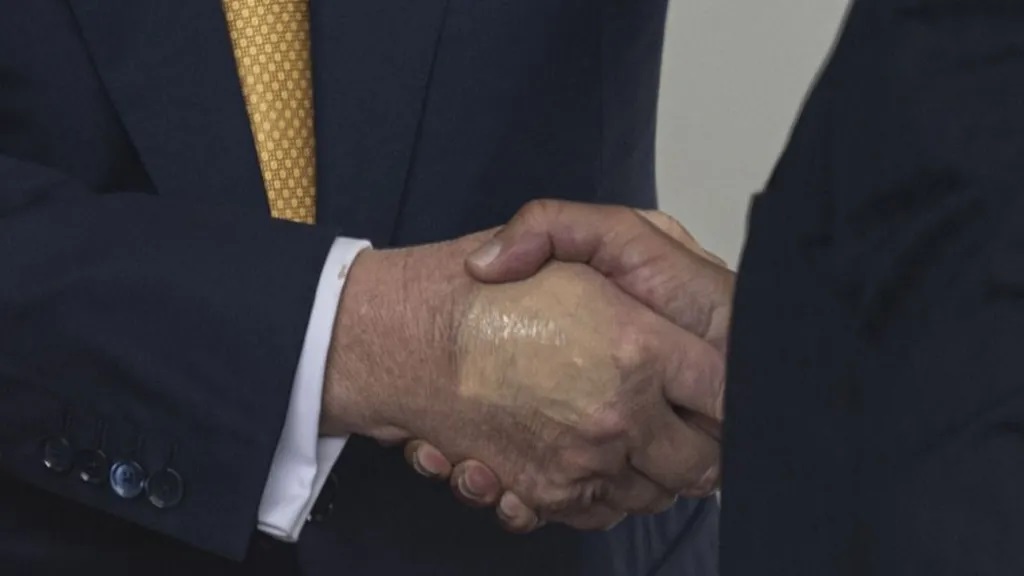
Blood flowing from the legs to the heart is moving against gravity, which can make that process more difficult.
“So what chronic venous insufficiency is, is when those veins and valves don’t work and blood goes backwards down the legs,” she said.
Oldest US president ever inaugurated
Leavitt said that there was “no evidence of deep vein thrombosis or arterial disease” and that all results from the test were “within normal limits”.
According to a note from White House physician Sean Barbabella released to reporters, the condition is “benign and common”, especially in people over age 70.
Additional testing showed “no signs of heart failure, renal impairment, or systemic illness” in Trump, Barbabella said in the note, which confirmed the information from Leavitt’s earlier briefing.
Overall, Trump is in “excellent health”, the doctor wrote.
Photographers captured what appeared to be Trump’s swollen legs during the Fifa Club World Cup final in New Jersey on 13 July, with subsequent photos taken earlier this week showing his bruised hands during a meet with Bahraini Prime Minister Salman bin Hamad bin Isa Al Khalifa at the White House.
A bruise on the president’s hand had previously been photographed during a meeting with French President Emmanuel Macron in February.
His swollen legs and bruising prompted online speculation and rumours that the president may have been experiencing an illness that hadn’t been made public.
Following an annual physical exam in April, Barbabella wrote that Trump “exhibits cognitive and physical health”.
Trump was 78 years and seven months old when he was sworn in for his second term in January, making him the oldest president to ever be inaugurated as US leader.
What to know about chronic venous insufficiency
Doctors told the BBC they agree with Barbabella’s assessment on the severity of chronic venous insufficiency.
“It can be associated with serious conditions, but in and of itself it is not a serious condition, and one that is very common,” Dr Matthew Edwards, chair of the Department of Vascular Surgery at Wake Forest University, told the BBC.
“People in his age (group), I would say probably somewhere between 10 and 35% of people would have this.”
Experts say other risks include being overweight, having a history of blood clots, and having jobs that require patients to be on their feet for long durations.
Wearing custom-made medical-grade compression stockings can help manage the condition, and experts also recommend patients elevating their legs at night.
“I tell my patients to use a good creamy lotion all over their legs and feet every day, and then controlling other potential risk factors such as obesity,” Dr Logan said.
The president’s bruised hand
Chronic venous insufficiency only affects the lower part of the body, so the condition is unrelated to the bruising seen on the president’s hand, which generated speculation in recent days.
The president’s doctor said the bruising was a result of handshaking and a side effect of him taking aspirin, a medication which can help prevent heart attacks, blood clots, and strokes.
Dr Edwards said he agrees with the White House doctor’s explanation that Trump’s aspirin intake along with his age could be responsible for the bruising.
“We are all more prone to bruising as we get older, and you see that a lot in people that take aspirin and other blood-thinning agents.”
“I’m sure it could if someone squeezes your hand hard enough, (you could get a bruise),” Dr Edwards said.
“That would be a pretty stiff handshake.”

Iran has ruled out fresh negotiations with the United States at the United Nations General Assembly in New York, despite US President Donald Trump saying he expects talks between the two countries to resume this week.
Iran’s state-run IRNA news agency reported Monday that the Iranian delegation in New York had no plans to hold negotiations with Washington, citing an unnamed source close to the delegation.
The development came a day after Trump told Axios that he expected US and Iranian representatives to engage in further discussions following Washington’s rejection of Tehran’s latest proposal concerning the Strait of Hormuz.
“Iran’s delegation in New York has no plans for negotiations with the United States,” IRNA quoted the source as saying.
However, indirect diplomatic contacts appear to be continuing through regional mediators, particularly Qatar. Axios reported that Qatari officials have been shuttling between Iranian and US negotiators in an effort to narrow differences between the two sides.
Iran has proposed reopening the Strait of Hormuz within seven days as part of a broader arrangement to halt hostilities. Tehran has linked the proposal to demands including the lifting of the US naval blockade, removal of sanctions affecting its oil exports and a regional ceasefire.
The Strait of Hormuz is a crucial global energy corridor through which a significant share of the world’s oil trade passes, making the dispute over access to the waterway a major concern for international energy markets.
The latest diplomatic standoff follows months of conflict between Washington and Tehran. Iran has sought to use negotiations over the strait as a pathway toward a broader settlement, while the Trump administration has also pressed Tehran over its nuclear programme.
Trump rejected Iran’s latest proposal on Saturday but said the door to further discussions remained open. According to Axios, he said he expected more talks during the week and that Qatar and other regional mediators were continuing efforts to revive negotiations.
Iranian Foreign Minister Abbas Araghchi also indicated Sunday that Tehran remained open to diplomacy, saying Iran was waiting for an official response through mediators despite Trump’s rejection of the proposal.
The conflicting statements highlight the uncertainty surrounding the next phase of US-Iran diplomacy, with Washington signalling interest in further talks while Tehran says its delegation currently in New York has no plans for direct negotiations.
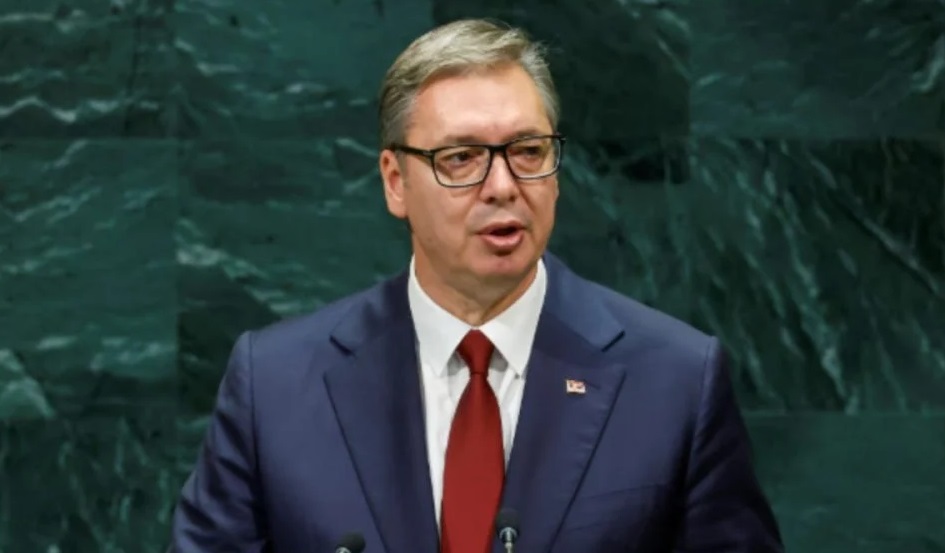
Serbia’s President Aleksandar Vucic announced his resignation on Sunday, seven months before his tenure was originally scheduled to expire.
56-year-old Vucic ended his second and final five-year term amid campaigning for the October 25 snap parliamentary vote to elect 250 members of the National Assembly.
His departure sets the stage for early presidential elections and allows him to be appointed Prime Minister if the Serbian Progressive Party (SNS) retains majority control of government.
“I have faithfully served you and my fatherland, Serbia. I am proud of what we have done together,” he told supporters at the Presidency building in Belgrade.
The populist politician, who previously served as Minister of Defence, said the first round of presidential elections will be held by the end of December.
Serbia’s constitution stipulates that the presidential election must be completed within 90 days, with the campaign lasting between 30 and 60 days.
Outgoing parliament Speaker Ana Brnabic will serve as acting President until her successor is elected. She was the Prime Minister from 2017 until 2024.
Factor Plus polling places public support for Vucic’s United Serbia, led by the SNS, at 49%. The youth-backed opposition challenger, known as the Student List, has about 37% popularity.
The movement stemmed from the “Students in Blockade” group after the collapse of the Novi Sad railway station canopy in November 2024, which sparked anti-corruption protests.
The group, which comprises academics, public figures, and professionals, gathered nearly 70,000 signatures and was proclaimed as number 3 on the ballot by the Electoral Commission.

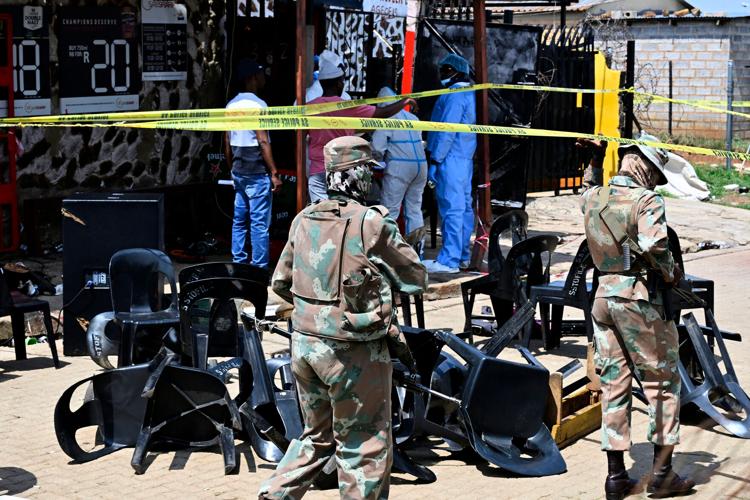
At least 27 people have been killed and 26 others wounded in two separate mass shootings near South Africa’s two biggest cities, Johannesburg and Cape Town, triggering a police manhunt for the attackers.
The shootings occurred within hours of each other, adding to growing concern over gun violence and organised crime in the country.
In the first attack, eight gunmen armed with assault rifles and pistols stormed a tavern in Wedela township, about 80 kilometres southwest of Johannesburg, at around 9:30 p.m. on Saturday.
Police said the attackers opened fire on patrons drinking outside before moving into the tavern and continuing the shooting.
Seventeen people — 13 men and four women — were killed, while 15 others sustained gunshot injuries.
The suspects reportedly searched some patrons and took their mobile phones before fleeing in two vehicles, which they later set ablaze. No arrests had been made as of Sunday, according to police.
The motive for the Wedela attack remained unclear. However, police said preliminary information suggested it could have been linked to an earlier incident at the same tavern.
Deputy provincial police commissioner Major General Fred Kekana said investigators had obtained images of the suspects and were confident they would eventually be identified and arrested.
The shooting occurred in an area where authorities have been intensifying operations against illegal mining and criminal networks operating around abandoned mine shafts.
Second attack near Cape Town
Hours later, another mass shooting was reported in Lwandle township, near Cape Town.
Police said gunmen opened fire at an entertainment venue selling grilled meat at about 1:46 a.m. on Sunday, killing 10 people and injuring 11 others.
Five victims died at the scene, while five others succumbed to their injuries after being taken to medical facilities.
Police said detectives were searching for the perpetrators, with no arrests reported in connection with the attack.
Videos circulating on social media showed people drinking and dancing before gunfire erupted, sending revellers scrambling for safety.
Ramaphosa vows action
The two attacks came just days after another mass shooting near Durban in which 11 people, including a pregnant woman, were killed at a house party.
South Africa has long struggled with high levels of violent crime, with shootings frequently linked to gangs, organised criminal groups and disputes involving local businesses.
President Cyril Ramaphosa condemned the latest attacks and said security agencies would continue efforts to reduce violent crime.
“This cannot go on like this,” Ramaphosa said, stressing that people should not be able to pick up firearms and randomly shoot others.
South Africa has repeatedly deployed soldiers to support police operations in areas affected by serious violence and organised crime.
Despite those efforts, shootings remain a persistent security challenge.
The latest attacks have renewed questions about the availability of firearms, organised crime and the ability of security agencies to prevent repeated mass-casualty shootings.
Police investigations into both incidents are ongoing, and authorities are urging anyone with information about the attackers to come forward.
Iran Rules Out Fresh US Talks as Trump Pushes for New Negotiations

Ex-Plateau Governor Wanted N40m Vehicle Invoice Doubled to N80m, Coscharis Founder Alleges

Obi: I Left Over $150m in Anambra, Enough to Offset Alleged $123.7m Debt


-
 Foreign16 hours ago
Sad! 27 Killed, 26 Injured in Two South Africa Mass Shootings as Police Hunt Gunmen
-

 News16 hours ago
Tinubu Shifts Return Date Again, Now Expected Back Tuesday
-
 Entertainment17 hours ago
BREAKING: Nollywood Actor Rykardo Agbor Survives Ghastly Car Crash in Ibadan
-
 News10 hours ago
NECO 2026: Kano beats Lagos, Oyo, emerges best-performing state
-

 News4 hours ago
2027: Elections must never be treated as do-or-die affairs – INEC Chair, Amupitan appeals to Emir of Zazzau
-
 Metro10 hours ago
Terrorists abduct newlywed couple, four others in Kwara
You must be logged in to post a comment Login