Connect with us

News

Bayelsa pushes for 33 LGAs, State Police, and fiscal federalism in constitution review

Published

on

ADVERTISEMENT
Zoom Ad
ADVERTISEMENT
Zoom Ad

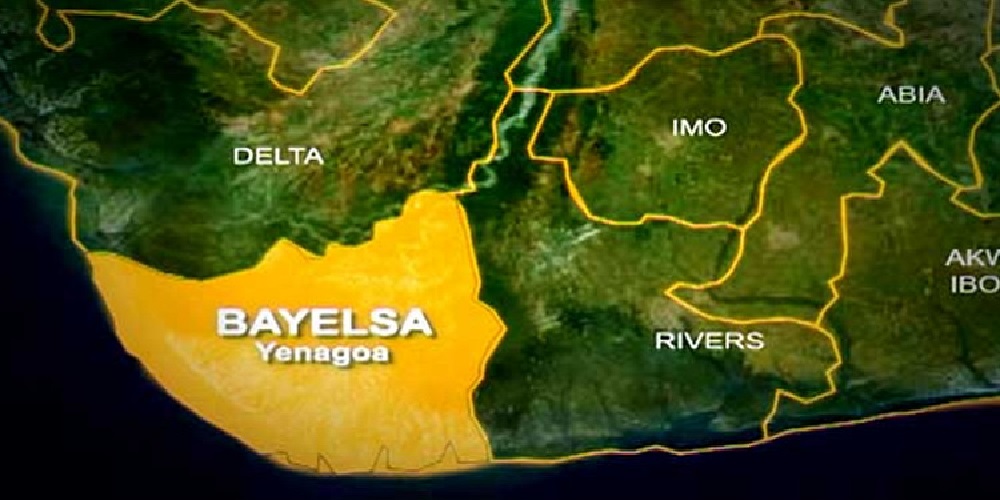
Bayelsa State has proposed the creation of 25 additional local government areas (LGAs) to add to its existing eight, highlighting the strain of overpopulation in some LGAs, with certain areas hosting over 150 communities.


The state also advocated for fiscal federalism, the establishment of state police, and sweeping electoral and judicial reforms during a public hearing on the 1999 Constitution review.

The event, organized by the South-South Centre A (Bayelsa, Delta, and Edo) of the House of Representatives’ Committee, took place at the DSP Alamieyeseigha Banquet Hall in Yenagoa on Saturday.

The Bayelsa State Attorney General and Commissioner for Justice, Mr.Biriyai Dambo, presented the state’s position, stressing that the proposed LGAs, already created by the Bayelsa State House of Assembly under Section 8(3) of the 1999 Constitution (as amended), are financially viable.

Advertisement

He emphasized that Bayelsa has the resources to sustain the new councils, which are intended to address administrative and developmental challenges caused by overpopulated LGAs.

On fiscal federalism, Bayelsa urged that states gain full control over their onshore and offshore natural resources, proposing a revenue-sharing model where states retain 60% of resource-derived income and remit 40% as tax to the federal government.

Dambo noted that the creation of new councils would enhance service delivery and representation in underserved communities, particularly in rural areas where access to government resources remains limited.

He cited examples of LGAs struggling to manage large populations, which has hindered effective administration and infrastructure development.

Advertisement

The state also strongly supported the creation of state police, arguing it would bolster security and crime-fighting capabilities, aligning with the principles of true federalism.

Bayelsa further called for reforms to grant greater local government autonomy, revise the exclusive and legislative lists, strengthen the Independent National Electoral Commission, and overhaul the judicial system.

Governor Douye Diri emphasized the necessity of constitutional amendments to reflect the evolving aspirations of Nigerians. “A robust democracy hinges on the people’s right to amend the Constitution, ensuring it remains a dynamic instrument responsive to our needs,” Diri said.

He underscored Bayelsa’s commitment to a federal system that is equitable and addresses historical injustices in resource allocation and LGA distribution, promoting holistic development across the Niger Delta and Nigeria.

Advertisement

Representatives from Delta and Edo states, including Delta’s Deputy Governor, Sir Monday Onyeme, and Edo’s Attorney General, Samson Osagie, endorsed the review process, describing the 1999 Constitution as controversial and in need of updates to address its gaps.

They expressed optimism that the exercise would strengthen Nigeria’s democratic framework.Prof. Julius Ihonvbere, Majority Leader of the House of Representatives and chairman of the South-South Centre A Committee, assured attendees that all submissions would be meticulously reviewed and forwarded to the full Constitution Review Committee for deliberation in the House.

He highlighted the importance of stakeholder engagement in fostering a more inclusive and participatory democracy.

The hearing saw the presence of prominent figures, including Dr. Gloria Diri, wife of the Bayelsa governor, Deputy Governor Senator Lawrence Ewhrudjakpo, federal lawmakers such as Dr. Fred Agbedi (Sagbama/Ekeremor), Mrs. Marie Ebikake (Nembe/Brass), Dr. Mitema Obordor (Ogbia), and Rodney Ambaiowei (Southern Ijaw), as well as Bayelsa State House of Assembly Speaker, Rt. Hon. Abraham Ingobere, and his Delta counterpart, Emomotimi Guwor. Traditional rulers, including the Amanyanabo of Twon-Brass, King Alfred Diete-Spiff, and the chairman of the state traditional rulers council, King Bubaraye Dakolo, also attended.Bayelsa’s push for additional LGAs stems from the need to address developmental disparities and improve governance at the grassroots level.

Advertisement

The state’s advocacy for state police and fiscal federalism reflects growing regional demands for decentralization.

Bayelsa argued that state-controlled police forces would be better equipped to address localized security challenges, such as militancy and oil theft, which have plagued the Niger Delta. By retaining a larger share of resource revenue, the state believes it can fund critical infrastructure and social programs, reducing dependence on federal allocations and fostering economic self-sufficiency.


Continue Reading
Advertisement
Click to comment

Warning: Undefined variable $user_ID in /home/naijuinz/public_html/wp-content/themes/zox-news/comments.php on line 49

You must be logged in to post a comment Login

Leave a Reply

News

FG excludes Makinde from Ibadan-Ijebu-Ode Road flag-off, Oyo govt reacts

Published

on

By

ADVERTISEMENT
Zoom Ad
ADVERTISEMENT
Zoom Ad

The Oyo State Government has condemned the exclusion of Governor Seyi Makinde from the official flag-off ceremony of the Ibadan-Ijebu-Ode Road dualisation project held on Monday at Idi Ayunre, Oluyole Local Government Area of the state.

The state government described the development as an unnecessary politicisation of a major federal infrastructure project, saying the deliberate exclusion of the governor amounted to taking politics too far.

In a statement issued by the Commissioner for Information, Prince Dotun Oyelade, the government said the ceremony, which was attended by Ogun State Governor Dapo Abiodun, Minister of Works Dave Umahi, APC gubernatorial candidate Sarafadeen Alli and the Olubadan of Ibadanland, Oba Rashidi Ladoja, was overshadowed by what it described as a desperate political undertone.

Oyelade said the event fell short of the significance attached to the road project, arguing that the exclusion of the host state’s governor reflected a lack of political maturity and confidence.

Advertisement

He dismissed the explanation that Governor Makinde was not invited because he was currently on leave, noting that the state has a functioning acting governor who is available to represent the government at official engagements.

According to him, the decision to exclude Makinde from the ceremony was difficult to justify, particularly given the importance of the road to Oyo State and its residents.

The commissioner, however, said Governor Makinde remained unperturbed by the development, but regretted that an important infrastructure project had been reduced to what he described as a political jamboree.

Oyelade maintained that the Oyo State Government remained focused on the development and welfare of its people, irrespective of political considerations surrounding the 2027 elections.

Advertisement

He added that the state’s political direction would ultimately be determined by the people, stressing that attempts to intimidate or distract the administration would not alter their democratic choices.

“The course of 2027 is set, and no level of indecorum or desperation from whatever quarters will hold back the will of the people,” Oyelade said.

The state government reaffirmed its commitment to supporting projects capable of improving transportation, boosting economic activities and strengthening connectivity between Oyo State and neighbouring states.

Advertisement
Continue Reading

News

Major Boost for Atiku as ADC Faction Ends Feud, Resolves to Work for Party’s Victory

Published

on

ADVERTISEMENT
Zoom Ad
ADVERTISEMENT
Zoom Ad

The African Democratic Congress (ADC) in Adamawa State has resolved its internal crisis, with party stakeholders pledging to work for the victory of the party’s presidential candidate, former Vice President Atiku Abubakar, and other candidates in the 2027 general elections.

The development is seen as a major boost to Atiku’s campaign in the state, where the party had been divided over the leadership of its state chapter and the authentic governorship candidate.

The crisis had resulted in the emergence of two parallel state executive committees led by Barrister Ibrahim Sadiq Dasin and Sai’du Naira.

However, the factions appear to be closing ranks following a meeting between the newly appointed Acting State Chairman of the ADC, Sai’du Naira, and ward chairmen and state executive members from the Adamawa Central Senatorial Zone.

Advertisement

The meeting, held at the ADC Secretariat over the weekend, focused on loyalty, unity and the promotion of internal democracy within the party.

Speaking at the meeting, Naira expressed satisfaction with the cooperation of the party’s state executive members and urged them to remain committed to rebuilding the ADC.

He reaffirmed the faction’s loyalty to the national leadership of the party under former Senate President, Senator David Mark, and pledged to work towards strengthening the party across the 226 political wards in Adamawa State’s 21 local government areas.

Naira said the ADC had regained its strength after emerging from what he described as an unnecessary internal crisis, promising that transparency and honesty would guide his leadership of the party.

Advertisement

“Honestly, ADC as a party almost collapsed because of the way the suspended leader was handling the affairs of the party,” Naira said.

He, however, commended party members who, according to him, took the necessary legal steps to resolve the crisis.

“But thank God that those with the love and interest of the party at heart did all that was legally necessary to push them aside,” he added.

Naira subsequently called on members to intensify their efforts ahead of the 2027 elections, stressing the need for collective commitment to the party’s success.

Advertisement

“We urge you all to work day and night for the progress and victory of former Vice President Atiku Abubakar and all other ADC candidates seeking elective positions,” he said.

The latest development could strengthen the ADC’s structure in Adamawa and provide greater cohesion for Atiku’s presidential campaign as opposition parties intensify preparations for the 2027 elections.

Continue Reading

News

Paternity Tests: 1 In 4 Men Not Biological Fathers Of Their Children

Published

on

ADVERTISEMENT
Zoom Ad
ADVERTISEMENT
Zoom Ad

About one in four paternity tests conducted by Smart DNA Nigeria returned negative results in its 2025/2026 reporting period, its latest annual DNA Testing Report has revealed.

The company, in a statement on Sunday, August 22, 2026 in Lagos, said the report confirmed that 23.6 per cent of recorded paternity test outcomes were negative, meaning the tested man was not the biological father.

According to the report, the negative paternity outcome declined marginally from 24.0 per cent in the preceding year and 26.1 per cent in 2023.

The report, however, cautioned against interpreting the figure as evidence that one in four Nigerian children is not biologically related to the man regarded as the father.

Advertisement

It stressed that its clients were people who had already developed sufficient doubts or reasons to seek DNA testing.

The report also revealed that 87 per cent of DNA tests conducted were ‘Peace of Mind tests’, representing private, self-initiated tests undertaken outside legal, immigration or court proceedings.

It said the proportion increased from 83.7 per cent in the preceding reporting period, indicating that personal concerns and the desire for certainty largely drove DNA testing in Nigeria.

Immigration-related tests accounted for 9.7 per cent, legal tests 1.9 per cent, avuncular tests one per cent, while prenatal testing represented 0.4 per cent of recorded cases.

Advertisement

The report further showed that older men accounted for the majority of male clients seeking DNA tests, with men aged 41 years and above representing 48 per cent of age-classified male records.

Men aged between 31 and 40 accounted for another 35.8 per cent, meaning that men above 30 constituted 83.8 per cent of the male testing population.

On the other hand, 59.5 per cent of tested individuals were children aged five years and below, a figure that remained virtually unchanged from the previous reporting period.

The company said the concentration of testing among younger children suggested that many families preferred to resolve questions surrounding biological relationships early, although the data could not establish the reasons behind the trend.

Advertisement

Geographically, Lagos accounted for 75.1 per cent of all classified cases, rising from 69 per cent in the preceding period.

Lekki recorded the highest number of named locations in Lagos, followed by Ajah, Ikorodu, Yaba and Ikeja, while Lagos Mainland accounted for 61.6 per cent of Lagos cases with specific location classifications.

Outside Lagos, Ogun recorded the highest testing activity, followed by Delta, Oyo, Rivers, Enugu, Edo, Abuja, Imo and Kwara.

The report said testing activity outside Lagos increased during the period, suggesting that awareness and demand for DNA testing were gradually spreading across other parts of the country.

Advertisement

It further revealed that men initiated 78.6 per cent of recorded first contacts with the company, compared with 15.2 per cent by women.

The ethnic distribution of clients was led by Yoruba at 52.6 per cent, followed by Igbo at 29.1 per cent, Edo at 5.8 per cent and a combined 5.4 per cent for Delta, Ijaw, Isoko, Urhobo and Itsekiri groups.

The Hausa accounted for one per cent.

Smart DNA said the figures reflected its geographical and client base rather than differences in paternity behaviour among ethnic groups.

Advertisement

The company also warned that its findings should not be generalised to the entire Nigerian population, stressing that its clients were not a random sample of Nigerian families.

It said the 23.6 per cent negative result represented its testing population, a group in which doubts about biological relationships already existed and therefore could not be used to estimate the prevalence of non-paternity across Nigeria.

The report maintained that while DNA testing could provide highly accurate answers to biological questions, it could not independently explain the social, cultural, economic or relationship circumstances that led families to seek such tests.

Advertisement
Continue Reading

Trending

Copyright © 2024 Naija Blitz News