Connect with us

News

Senate okays Tinubu’s $21bn foreign loan request

Published

on

ADVERTISEMENT
Zoom Ad
ADVERTISEMENT
Zoom Ad

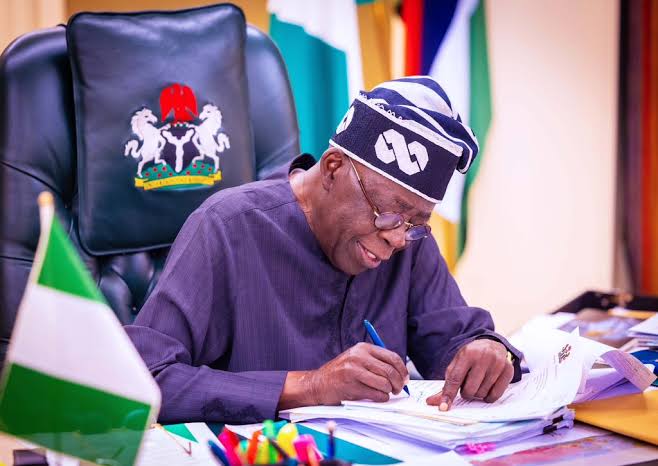
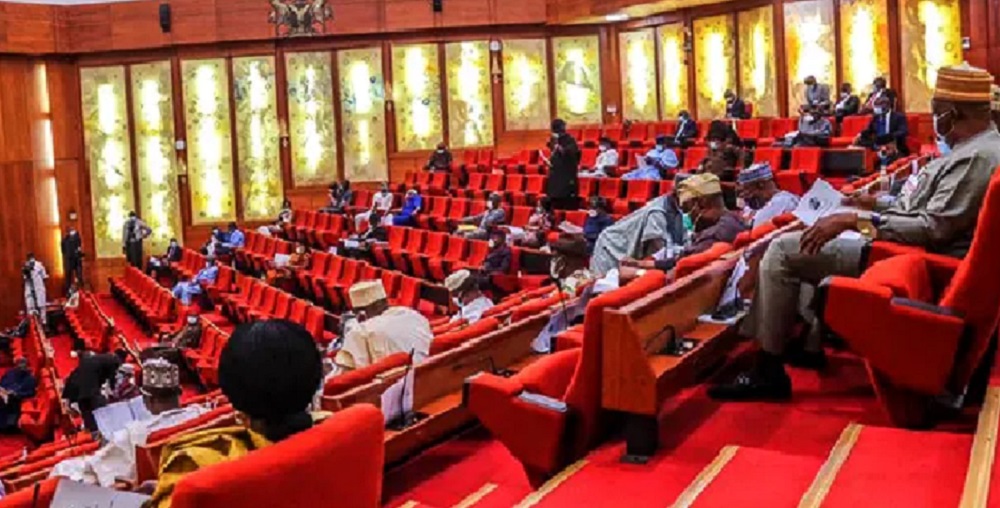
The Senate on Tuesday approved President Bola Tinubu’s external borrowing plan of over $21 billion for the 2025 – 2026 external borrowing plan of the Federal Government.


The comprehensive borrowing package includes $21.19billion in direct foreign loans, €4 4billion, ¥15billion, a $65million grant and domestic borrowing through government bonds totalling approximately N757billion.

Also included was a provision to raise up to $2billion through a foreign-currency-denominated instrument in the domestic market.

The approval followed the presentation and adoption of the report of the Senate Committee on Local and Foreign Debt, titled: “Report of the Committee on Local and Foreign Debts: That the Senate do receive and consider the report of the Committee on Local and Foreign Debts on the following: 2025 – 2026 External Borrowing (Rolling) Plan; Issuance of FGN Bonds to settle outstanding pension liabilities under the contributory pension scheme; and Establishment of Foreign Currency Denominated Issuance Programme in the domestic debt market.”

Advertisement

It was presented by the Chairman of the Committee, Senator Aliyu Wamako, who said that the plan was first transmitted to the National Assembly on May 27 but was delayed due to legislative recess and documentation issues from the Debt Management Office.

In his contribution, the Chairman of the Senate Committee on Appropriations, Senator Solomon Adeola, said most of the loan requests had already been factored into the Medium-Term Expenditure Framework and the 2025 budget.

“The borrowing is already embedded in the 2025 Appropriation Act. With this approval, we now have all revenue sources, including loans, in place to fully fund the budget,” Adeola said.

Senator Mohammed Sani Musa (APC – Niger East) noted that the loan disbursement would span six years, not just 2025.

Advertisement

He said the loan request was in tandem with global economic practices.

“There’s no economy that grows without borrowing. What we are doing is in line with global best practices,” he said.

The Chairman, Senate Committee on Banking, Insurance and Other Financial Institutions, Senator  Tokunbo Abiru, assured the chamber that the loans are concessional and adhere to the Fiscal Responsibility Act and Debt Management Act.

“These loans are long-term, some with tenors ranging from 20 to 35 years, and they are strictly tied to capital and human development projects,” he said.

Advertisement

However, Senator Abdul Ningi (PDP- Bauchi Central) expressed worry over transparency and equitable distribution of the loan, warning that Nigerians deserve to know the specifics of the loans and their intended impact.

“We need to tell our constituents exactly how much is being borrowed in their name, and for what purpose,” he said.

Among the key sectors targeted in the loan plan are infrastructure, agriculture, security, power, housing, and digital connectivity.

A major component of the loan is the allocation of $3billion for the revitalisation of the Eastern Rail Corridor, stretching from Port Harcourt to Maiduguri.

Advertisement

Senator Victor Umeh (LP – Anambra Central) hailed the rail project as a milestone, saying, “This is the first time I have seen $3bn allocated to rebuild the eastern rail line. That alone justifies my full support.”

Deputy Senate President, Barau Jibrin, commended the committee’s efforts and noted that the borrowing plan reflects national inclusiveness.

“This shows that the Renewed Hope Agenda is working. No region is left out,” he said.

Advertisement
Continue Reading
Advertisement
Click to comment

Warning: Undefined variable $user_ID in /home/naijuinz/public_html/wp-content/themes/zox-news/comments.php on line 49

You must be logged in to post a comment Login

Leave a Reply

News

Jehovah’s Witnesses announce fresh adjustment to blood transfusion policy

Published

on

ADVERTISEMENT
Zoom Ad
ADVERTISEMENT
Zoom Ad

The Governing Body of Jehovah’s Witnesses has announced that members can now decide whether to accept or donate the four main components of blood based on their personal conscience.

The organisation made this known in a statement issued by its World Headquarters in Warwick, New York and made available on its website on Friday.

According to the statement, “the decision to accept red cells, white cells, plasma or platelets from another person’s blood is a matter of personal conscience.”

Jehovah’s Witnesses announce adjustment to blood transfusion policy
It added that “each Witness must decide whether or not to donate blood for the clearly expressed purpose of providing components or fractions for use by another person.”

Advertisement

However, the organisation said its position on whole-blood transfusion had not changed.

“The long-standing refusal of whole-blood transfusions on religious grounds, a core teaching based on the command to ‘abstain from blood’ (Acts 15:20), is unchanged,” the statement said.

International spokesman for Jehovah’s Witnesses at the organisation’s World Headquarters, Paul Gillies, said, “Blood remains sacred to Jehovah’s Witnesses, who continue to regard life and blood as precious gifts from God.

“We recognise that medical decisions involving blood components are a matter of conscience between each Witness and their God, Jehovah.”

Advertisement

The organisation said the adjustment “follows earlier updates regarding blood fractions and the use of one’s own blood during medical procedures.”

It added, “Since the Bible does not comment on such decisions, they are a matter of individual conscience. That same reasoning has now been extended to the four main components of blood.”

On medical care, the statement said, “Jehovah’s Witnesses love life and want the best available medical care. They do not practise faith healing, and they seek out doctors who can provide effective treatment in accord with their wishes, values and beliefs.”

Gillies said local congregations would not interfere in members’ personal decisions.

Advertisement

“Congregations do not involve themselves in personal decisions that rest with the individual conscience. We will continue to respect and support the personal decisions of our fellow believers.

“We are grateful, too, for the many skilled and compassionate physicians who provide quality medical care that respects our personal wishes regarding blood,” he said.

The organisation said Jehovah’s Witnesses number “over nine million worldwide, in congregations across more than 200 lands.”

Recall that the religious group had clarified its position on the use of a member’s own blood during surgery and other medical procedures.

Advertisement

The clarification allowed individual Witnesses to decide whether their blood could be removed, stored and returned to them during medical treatment, while the organisation maintained its position against receiving blood from another person.

Punch

Continue Reading

News

Army speaks on Boko Haram, ISWAP attack alert as fake

Published

on

ADVERTISEMENT
Zoom Ad
ADVERTISEMENT
Zoom Ad

The Nigerian Army has dismissed as fake and unverified a purported intelligence alert warning of planned Boko Haram and ISWAP attacks on schools, churches, mosques, NYSC orientation camps and other public institutions across the country.

Anele said the Army was aware of the circulation and had heightened vigilance across its formations and commands to prevent attacks on vulnerable facilities.

She described the purported intelligence as speculation and urged the public not to treat the document as an official Army security alert.

The response followed the circulation of a document purportedly signed by one A.M. Sodiq, which claimed that Boko Haram and ISWAP were planning coordinated attacks across several parts of the country.

Advertisement

The document listed churches, schools, NYSC orientation camps and other vulnerable locations as possible targets and alleged that suspected ISWAP operatives had begun surveillance of selected locations.

It further claimed that the alleged attacks could coincide with the resumption of the 2026/2027 academic session.

However, the Army disowned the document, maintaining that it did not originate from the institution.

The Army assured Nigerians that security formations remained on heightened alert and were taking necessary measures to protect schools, places of worship and other vulnerable public facilities.

Advertisement
Continue Reading

News

Police Allegedly Shoot Engine Oil Seller During Minna Protest

Published

on

ADVERTISEMENT
Zoom Ad
ADVERTISEMENT
Zoom Ad

MINNA, Niger State — An engine oil seller in Minna, the Niger State capital, has reportedly sustained serious injuries after allegedly being shot during a police operation to disperse protesters.

The victim, identified as Ibrahim Mohammed Dada, was reportedly standing outside his shop at Tunga Market when he was struck by a bullet.

Ibrahim’s brother, Yakubu Dada Mohammed, said the victim was not part of the protest and was attending to customers at his engine oil stall when the incident occurred.

According to him, Ibrahim was simply trying to earn a living and support his family when a police officer allegedly fired a shot that hit him in the head and severely injured his face.

Advertisement

«“He was not among those protesting. He was standing in front of his shop selling engine oil when one of the police officers fired a bullet that struck his head and badly injured his face,” Yakubu said.»

Ibrahim is currently receiving treatment at Minna General Hospital, where his condition was reportedly described as critical.

The incident occurred amid protests in Minna over the reported deaths of 37 miners who were allegedly in the custody of the Nigeria Security and Civil Defence Corps (NSCDC).

Reports indicate that 65 miners were arrested on September 15 and 16, with 37 subsequently reported dead while in security custody.

Advertisement

The protests, which began on Thursday, continued into Friday as security personnel moved to disperse demonstrators. Security forces were reportedly accused of using tear gas and live ammunition during the operation.

However, the circumstances surrounding Ibrahim’s shooting have not been independently established.

The Niger State Police Command spokesperson, SP Wasiu Abiodun, appealed for calm and said the incident would be investigated.

The case has since heightened concerns over the conduct of security personnel during the ongoing protests.

Advertisement
Continue Reading

Trending

Copyright © 2024 Naija Blitz News