

News
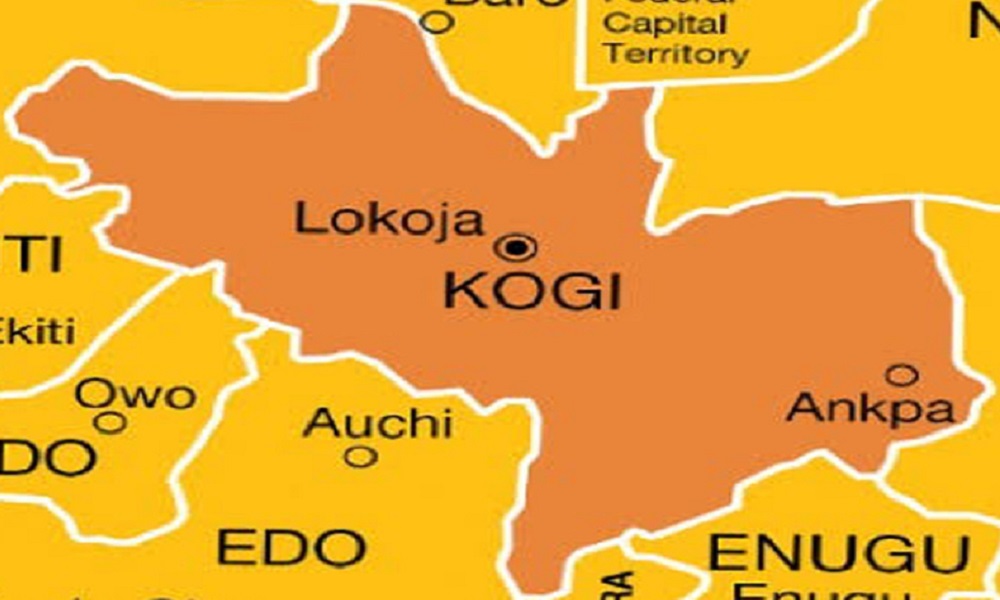
*OKUNLAND AND PROSPECTS OF “AWALOKAN” IN 2027 KOGI GUBER POLITICS*
- /home/naijuinz/public_html/wp-content/plugins/mvp-social-buttons/mvp-social-buttons.php on line 27
https://naijablitznews.com/wp-content/uploads/2024/04/kogi-state-map.jpg&description=*OKUNLAND AND PROSPECTS OF “AWALOKAN” IN 2027 KOGI GUBER POLITICS*', 'pinterestShare', 'width=750,height=350'); return false;" title="Pin This Post">
- Share
- Tweet /home/naijuinz/public_html/wp-content/plugins/mvp-social-buttons/mvp-social-buttons.php on line 72
https://naijablitznews.com/wp-content/uploads/2024/04/kogi-state-map.jpg&description=*OKUNLAND AND PROSPECTS OF “AWALOKAN” IN 2027 KOGI GUBER POLITICS*', 'pinterestShare', 'width=750,height=350'); return false;" title="Pin This Post">
*By Tunde Olusunle*
A titleless piece authored by a certain “Comrade Adabara Abduljelili El-Okene,” made the rounds on the social media last weekend. Shared on many platforms peopled largely by the Okun-Yoruba of Kogi State, the kernel of the piece was the insinuation of a *growing pattern of marginalisation of the Ebira people of Kogi State, by Nigerian Presidents from the Yoruba country.* Two of such Presidents, Abduljelili Okene observes in his missive, are Olusegun Obasanjo who served between 1999 and 2007, and Bola Tinubu, the incumbent who has been in office since 2023. El-Okene is an unknown quantity in national public intellection. The sole plausible claim of his script to authenticity, which should command a rejoinder, is a telephone number affixed to his payoff line at the bottom of the document. Aside from being an eternal student of Nigeria’s sociopolitics, I am myself from Kogi State.
Just so Abduljelili El-Okene knows a bit about me, I served three Governors of the state, the departed pioneer democratically elected Abubakar Audu, and his military successors, Colonels Paul Omeruo and Bzigu Afakirya, of blessed memory, between 1992 and 1997. For the avoidance of doubt, I was Director of Information and Public Affairs to Audu, and Chief Press Secretary to Omeruo and Afakirya. Substantially, I am a repertory of invaluable knowledge about sociopolitical fluxes in Kogi State through its evolution. In addition to this, I was a very close personal staff to Obasanjo all through the eight year duration of his regime. Having worked as his media attache during his pre-election campaign which began in the last quarter of 1998, I was subsequently appointed by him and deployed to the ante-room of his office, overlooking his oakwood desk and swivel chair in his armor-glazed office. I encountered and engaged with tons and tons of paperwork. Not many people are better qualified than I am, to perspectivise the issues raised by Abduljelili El-Okene.

Let me begin by educating Adabara El-Okene, that Obasanjo indeed took a well-informed decision to pragmatically mitigate the scripted exclusion and marginalisation of Okunland from state politics, during his regime. All through Obasanjo’s eight years in Aso Villa, the predominantly Igala-speaking Kogi Eastern zone, produced Abubakar Audu and Ibrahim Idris, who succeeded Audu as Governor, in 2003. All through these eight years, the *Ebiras produced the Deputy Governors in the recently transited Patrick Adaba, mni, and Philip Salawu. Salawu remained in office for eight years with Idris, both exiting office in January 2012.* A sensitive Obasanjo availed Okunland some reprieve from domestic political asphyxiation by ensuring that all four Ministers he appointed in his administration, were from that part of Kogi State. As against Adebara’s jumbled ordering of the list, General David Jemibewon, CFR, (Police Affairs); Chief Kola Jamodu, CON; (Commerce and Industry); Professor Eyitayo Lambo, (Health), and Chief Bayo Ojo, SAN, CON, served the Obasanjo era in that sequence. I should add that Prince Olusola Akanmode, who was tapped by Obasanjo’s deputy, Vice President Atiku Abubakar, GCON, as his Chief of Staff, had but his solid, sterling credentials to qualify him for the job
Despite the fact that El-Okene’s Ebira kinsfolk locked down the position of Deputy Governor of Kogi State all through his years in office, *Obasanjo appointed other respected Ebira technocrats into key positions in his government. Former banker, Alhaji Usman Bello who vied for, but lost in his bid to be Governor of Kogi State in 1999, was promptly compensated by Obasanjo who appointed him Nigeria’s Ambassador to Sudan, a position he held for four years. Engineer Joseph Makoju, CON, and Dr Onukaba Adinoyi-Ojo, both sadly of blessed memory, were Special Adviser on Power, and Managing Director of the Daily Times of Nigeria Plc, respectively. Following the privatisation of the Daily Times in 2003, Onukaba was taken up by Obasanjo’s deputy, Vice President Atiku Abubakar, GCON, as Media Adviser during Obasanjo’s second term in office. Within Obasanjo’s time in office, one of his closest aides, the late Wisdom Baiye, from Ebiraland, a career diplomat and Ambassador, was Deputy Chief of Protocol and Presidential Interpreter. You don’t get closer to a President than that.*
Abduljelili El-Okene remembers that Mohammed Bello Adoke, SAN, CFR, was Minister of Justice and Attorney General of the Federation, (AGF), under the administration of President Goodluck Jonathan, GCFR, between 2010 and 2015. He is, however, silent on the fact that *Austin Oniwon, who is also Ebira, was Group Managing Director, (GMD), of the coveted Nigerian National Petroleum Corporation, (NNPC), also under Jonathan. Within the Nigerian governance scheme, being GMD of the NNPC is better preferred than being Minister in several ministries. Yusuf Abubakar, a retired Army General also from the Ebira nationality, was Ambassador of Nigeria to South Korea, within the duration of the subsisting Fourth Republic.*
To refresh Abduljelili El-Okene’s mind, if political capital is to be measured by totalitarian capture of state power, his people have made a good job of their eventful occupation of *Lugard House, Lokoja,* seat of administration of Kogi State within the past 10 years. Yahaya Bello’s fortuitous advent as Governor of Kogi State in January 2016, has consolidated Ebira dominance of the levers of the politics of the state. Abubakar Audu who was coasting home as flag bearer of the All Progressives Congress, (APC), in the November 2015 gubernatorial poll during which he contested against the erstwhile incumbent, Captain Idris Wada, of the Peoples Democratic Party, (PDP), died mysteriously before the conclusion of the election. Bello who emerged second in the primary which was to produce Audu as Governor, became the “beneficiary” of the electoral votes already garnered by Audu, in an unprecedented, most astounding, even uncanny turn of events.
Bello’s eight year rule dug deep gashes on the minds of the generality of Kogi indigenes, which continue to ache even till this day. He pampered his people with projects and political patronage. His style was famously totalitarian and absolutist. He privileged himself a “third term” by singlehandedly recruiting and anointing his biological cousin as they say, Ahmed Ododo, as successor. Bello, for the information of Abduljelili El-Okene, has assumed the role of self-styled godfather of Ebira politics. In Ododo’s teething weeks as Governor, he affirmed to his kinsmen, Bello is the supremo who could overrule him as Governor on any subject related to Ebira sociopolitics!
Bello announced while hosting political leaders from Okunland during a recent yuletide visit to him, that “discussions about power shift to that part of the state, can only be negotiated when his protege, Ododo, must have completed his second term in 2031!” This is on record. El-Okene will do well to surf the internet to find the relevant video clip. Bello is standing trial on allegations of corrupt misappropriation of over N100Billion, during his eight year quasi-fascism. His recent request to seek medical attention abroad mid-trial, was flatly rejected by the court hearing his matter, which admonished him to seek treatment in the “world class hospital” he reportedly built in Okene, the political and cultural headquarters of Kogi Central district. Bello recently unleashed a N1.2Billion, ($30million) customised *Escalade-based armored Rezvani Vengeance SUV,* reputed to be one of the “world’s toughest three-row SUVs.” He has also taken a fourth wife, consolidating his place as contemporary god of Kogi politics.
Abduljelili El-Okene’s disappointment with Tinubu for not consulting with the “incumbent Governor of Kogi State or Ebira stakeholders” before making appointments close to the heart of his people, is palpable, albeit laughable. That Tinubu has elected to compensate the family of late Governor Audu a major figure in Nigeria’s Third and Fourth Republic politics by appointing his son Shaibu, (Igalaland) Minister for Steel, is distressing to El-Okene. That Tinubu has also looked the way of Okunland in his choice of Professor Nasir Naeem Abdulsalam as Managing Director of the Ajaokuta Steel Company, is equally vexatious to El-Okene. It must be stated very unambiguously that it is presumptuous of him or any other person for that matter, to think the President owes them any obligations whatsoever in make his preferences and decisions. The buck stops on his desk. The database of qualified Nigerians across disciplines available to the President is humongous. His obligation to Nigerians is to make the best decisions in the interest of the generality of his constituents, irrespective of ethnicity or religion. Come to think of it, Tinubu could well have appointed an indigene of his home state, Lagos as Minister of the Federal Capital Territory Administration, (FCTA), for the period of his sojourn in State House, Abuja!
El-Okene’s people occupy four of the five local councils in Kogi Central. They have historically and eternally locked out the smaller Ogori and Magongo ethnicities in their district from aspiring to be Senator or House of Representatives member. He has equally obliged us a sneak preview of the plan by Kogi Central to hold on to power beyond 2027, re-echoing Yahaya Bello’s earlier declaration of “No Vacancy in Lugard House, till 2027.” It has been proffered that the recent upsurge in kidnapping, banditry and the orchestrated insecurity in Okunland, is rooted in the importation of Fulani elements from the core North by Bello in his time, and their dispersal across the acreage, ahead of a time like this. The agenda is to distractively engage the Okun in repelling the marauding onslaught against its territory, as the race for 2027 gathers momentum. This is to weaken the capacity of the Okun people and their comrades in Kogi West to focusedly pursue its turn at the political helm of Kogi State. Okun people and their kith across Kogi West have previously punctured the fallacy about being the smallest voting block in the senatorial tripod in the state. This is evidenced by results from recent elections, beginning from 2015.
Abduljelili El-Okene’s simulated wolf-cry in the name of his brethren stems from apprehensions about the bright and plausible prospects for the emergence of an Okun-Yoruba Governor of Kogi State under the superintendence of President Tinubu. A people who have gifted Nigeria the quality of people El-Okene earlier recalled to have served Nigeria as Ministers, with legions in the wings, cannot be disregarded forever. El-Okene and his sponsors have indeed chosen the path of selective amnesia in their present campaign. They have conveniently discounted the fact that the first Governor of the Old Kwara State during the Second Republic, Alhaji Adamu Atta, who ruled for four years between 1979 and 1983, was Ebira. Bello added an eight year stretch to the Adamu Atta milieu, while Ododo’s first four years will extend this vice grip to 16 years. All of these have been at the total exclusion of Kogi West and Okunland. This is the manner in which the third component of the Kogi State sociopolitical tripod, is serially disrespectfully undermined.
Make no mistakes. The people of Okunland are neither a colony of *Lookmans* or consigned to forever *siddon look,* in the politics and development of their state. Until there is a national geopolitical restructuring which takes them out of the present Kogi State, the Okun people will very rightly and robustly stake a claim for the executive leadership of our *confluence state.* Across Nigeria, several states have sustainably perfected the rotation of the governorship among various senatorial districts, ensuring political inclusion. Abia, Akwa Ibom, Anambra, Cross River, Edo, Delta, Enugu, Lagos, are just a few examples of states which have jettisoned “winner takes all politics” and committed to giving every section of the various states, a bite of the pie. Okun people will stake a robust and determined claim to Lugard House, Lokoja, in 2027. *Awalokan,* it is our turn, to adapt Tinubu’s 2023 *Emilokan* assertion, to the effect that it was undeniably his turn to call the shots from Aso Villa, Abuja.
*Tunde Olusunle, PhD, Fellow of the Association of Nigerian Authors, (FANA), is an Adjunct Professor of Creative Writing at the University of Abuja*
News
China’s Poverty Fight Lifted More Than 800m People – Ambassador Yu
By Gloria Ikibah
China has said it lifted more than 800 million people out of poverty since the country began its reform and opening-up programme in 1978, contributing more than 70 per cent of global poverty reduction, the Chinese Embassy in Nigeria has said.
Chinese Ambassador to Nigeria, Yu Dunhai, stated this on Tuesday in Abuja ar a one-day workshop on Nigeria’s Poverty Alleviation and China’s Development model organised by the Diplomatic Correspondents Association of Nigeria on Tuesday in Abuja.
Ambassador Yu was represented by the Counsellor, Economic and Commercial Office of the Chinese Embassy in Nigeria, Counsellor Sun Xuekun.
According to him, China’s poverty reduction achievement was unprecedented in scale, speed and sustainability, with the country eradicating absolute poverty by 2020.
He said when the People’s Republic of China was founded in 1949, nearly 87 per cent of its population lived in rural areas under extreme poverty, while per capita national income stood at only 27 US dollars.
Dunhai said the pace of poverty reduction also stood out, noting that nearly 100 million rural residents were still living below the poverty line at the end of 2012.
“Since the launch of reform and opening-up in 1978, China has lifted more than 800 million people out of poverty, contributing over 70 percent of global poverty reduction.
“Yet within only eight years, by the end of 2020, all of them had been lifted out of poverty.
“On average, more than 12 million people escaped poverty each year, equivalent to the population of a medium-sized country,” he said.
He added that 98.99 million rural poor residents, 832 impoverished counties and 128,000 impoverished villages were removed from poverty.
“China eradicated absolute poverty and achieved the poverty reduction target of the United Nations 2030 Agenda ten years ahead of schedule,” Dunhai said.
He attributed the achievement to strong government leadership, targeted interventions, economic development and the mobilisation of communities, businesses and social organisations.
The envoy said China invested nearly 1.6 trillion yuan in special poverty alleviation funds and deployed more than three million officials and village work team members to support poor communities.
He said the country also moved away from broad-based interventions towards targeted poverty alleviation by identifying poor households, examining the causes of poverty and tailoring assistance to local needs.
“China shifted from broad, generalized measures to precision-based interventions.
“Through detailed identification of poor households and villages, analysis of the causes of poverty, and the establishment of a national information management system, assistance was tailored to local realities,” he said.
Dunhai said China’s strategy included developing local industries, relocating communities from inhospitable areas, ecological compensation, educational assistance and stronger social security.
He also highlighted investments in roads, drinking water, electricity, telecommunications, education and healthcare as important parts of the country’s poverty reduction strategy.
According to him, China has since linked poverty alleviation with rural revitalisation to prevent people from slipping back into poverty.
“Poverty governance has gradually shifted from intensive campaigns to long-term institutional mechanisms, demonstrating that poverty can not only be overcome but also prevented from recurring,” he said.
The envoy said China’s experience showed that poverty reduction should be people-centred and treated as a core responsibility of government.
“China’s experience shows that poverty reduction begins with putting people’s interests first,” he said.
He also argued that poverty was fundamentally a development issue and could be tackled through economic growth, investment, improved livelihoods and policies adapted to local conditions.
“Poverty is fundamentally a development issue.
“By prioritizing economic development, addressing regional disparities, and continuously improving people’s livelihoods, China created conditions that enabled sustained poverty reduction,” Dunhai said.
He said China’s experience also had lessons for developing countries, stressing that each country should adopt policies suited to its own circumstances.
He said China had supported international development cooperation through initiatives including the Global Development Initiative and the Belt and Road Initiative.
“China’s experience in targeted poverty alleviation, strong accountability, and dynamic management demonstrates that developing countries can successfully overcome poverty through strategies suited to their own national circumstances,” he said.
He maintained that despite continuing global poverty challenges, China’s experience demonstrated that poverty could be overcome through determination, appropriate policies and collective action.
“China’s poverty reduction journey demonstrates that poverty is neither inevitable nor irreversible.
“Through strong leadership, people-centered development, targeted policies, sustained economic growth, and broad social participation, China has achieved a historic transformation that has improved the lives of hundreds of millions of people.
“China’s experience shows that with determination, appropriate policies, and collective effort, poverty can be overcome, development can be shared, and a more prosperous future can be built for all,” Dunhai said.
News
China’s Poverty Model Can Help Nigeria, But Must Fit Local Realities — FG
By Gloria Ikibah
The Federal Government has called for a careful adaptation of China’s development and poverty reduction strategies to Nigeria’s realities, stressing that the country must learn from international models without abandoning its own institutions, values and priorities.
The Permanent Secretary of the Ministry, Ambassador Dunoma Umar Ahmed, made the call at a one-day workshop organised by the Diplomatic Correspondents Association of Nigeria (DICAN) on Tuesday in Abuja.
The workshop, themed, “Nigeria’s Poverty Alleviation Efforts: Adopting China Modules and Its Relevance in a New Era — The Place of Policy Makers, Development Partners and Diplomatic Reporters,” brought stakeholders together to examine possible lessons from China’s development experience.
Ahmed who was represented by the immediate past Spokesperson of the Ministry, Kimiebi Ebienfa, said Nigeria, like many developing countries, continued to face poverty, unemployment and inequality, making bold and collaborative solutions necessary.
“No single institution or country holds all the answers. That is why the constructive study of international models, the adaptation of best practices, and strengthened partnerships are essential for delivering inclusive progress for our citizens,” he said.
The Permanent Secretary said China’s experience offered useful lessons in long-term planning, infrastructure-led growth, targeted poverty reduction and the mobilisation of domestic resources.
He, however, cautioned against copying the Chinese model wholesale, stressing that Nigeria’s unique institutions, social structure and values must guide any adaptation.
“Yet every country’s path must be shaped by its unique institutions, social fabric and values.
“Our objective should be to assess which elements of the China model can be responsibly contextualized for Nigeria, enhancing agricultural productivity, expanding social protection, leveraging public–private partnerships, and investing in human capital — while ensuring transparency, accountability, and respect for democratic governance,” he said.
Ahmed said policymakers, development partners and the media all had important roles to play in tackling poverty.
He charged policymakers with developing practical frameworks that would translate international lessons into reforms suited to Nigeria, while protecting fiscal sustainability and strengthening institutions.
“Policy makers must design coherent frameworks that translate lessons into context-appropriate reforms, safeguard fiscal sustainability, and build the institutional capacity to implement and monitor results,” he said.
On the role of development partners, the Permanent Secretary said they could provide technical expertise, funding and international experience, but stressed that their interventions must be aligned with Nigeria’s priorities.
“Development partners bring technical expertise, financing and international experience; their support is most effective when aligned with Nigeria’s priorities and subject to rigorous oversight and mutual accountability,” he said.
Ahmed also highlighted the role of diplomatic correspondents and the wider media in shaping public understanding of government policies and holding stakeholders accountable.
“Diplomatic correspondents and the wider media are critical in shaping public understanding, scrutinizing policy choices, and holding stakeholders accountable.
“Clear, accurate and balanced reporting fosters informed public dialogue and helps ensure that poverty-alleviation strategies are responsive to citizens’ needs,” he said.
He said the Ministry of Foreign Affairs will continue to deepen international partnerships to support Nigeria’s development goals through investment, technology transfer and capacity building.
“The Ministry of Foreign Affairs is committed to supporting these efforts by deepening international cooperation, promoting knowledge exchange, and mobilizing partnerships that advance Nigeria’s development objectives.
“We will therefore continue to engage bilateral and multilateral partners to attract responsible investment, technology transfer and capacity-building programs that respect our development priorities,” Ahmed said.
The Permanent Secretary urged participants at the workshop to have frank and evidence-based discussions and produce practical recommendations capable of accelerating poverty reduction.
“As you deliberate over the course of this workshop, I encourage frank, evidence-driven discussions that weigh opportunities against risks, and that prioritize the welfare of Nigeria’s most vulnerable populations.
“Let this forum produce practical recommendations on policy adaptation, partnership modalities, and communication strategies that can accelerate sustainable poverty reduction in our country,” he said.
Ahmed commended DICAN for organising the workshop, saying stronger collaboration between policymakers, development partners and the media would be critical to lifting millions of Nigerians out of poverty.
“On behalf of the Ministry, I wish you productive deliberations and actionable outcomes that will strengthen the contributions of policymakers, development partners and the press in lifting millions of Nigerians out of poverty,” he said.
Earlier in his welcome address, Chairman of DICAN, Comrade Idehai Frederick, called for stronger collaboration between Nigeria and China to tackle poverty and accelerate economic development.
Frederick said China’s experience in lifting more than 800 million people out of extreme poverty offered useful lessons for Nigeria, but stressed that the model must be adapted to the country’s peculiar socio-economic realities.
“China’s historical feat of lifting over 800 million people out of extreme poverty provides a compelling blueprint. However, adaptation rather than direct replication is key to achieving meaningful impact within Nigeria’s unique socio-economic landscape,” he said.
He urged policymakers to move from blanket subsidies to targeted, data-driven interventions at household and community levels, while prioritising infrastructure, industrialisation, the digital economy and stronger economic partnerships.
Frederick also called on the Chinese Government to expand fellowship opportunities, media exchange programmes and technical journalism training for DICAN members.
He further urged the Chinese Embassy to establish stronger links between Chinese businesses in Nigeria and DICAN, saying this would provide a platform for promoting corporate social responsibility, trade achievements and market opportunities.
On trade, the DICAN chairman said Nigeria must take advantage of China’s zero-tariff policy for African exports by strengthening local supply chains, improving product standards and expanding non-oil exports.
“We invite the Chinese Government to expand fellowship opportunities, media exchange programmes, and technical journalism training for DICAN members.
“Fully leveraging this policy requires strengthening local supply chains, improving standardization, and expanding non-oil exports from Nigeria to Chinese markets,” he said.
Frederick said journalists had an important role to play in promoting development and ensuring that policies were properly communicated to the public.
“Media professionals are not merely observers of policy; we are critical partners in documenting and accelerating national development,” he said.
He expressed appreciation to the Ministry of Foreign Affairs and the Chinese Embassy for their support, adding that DICAN will continue to promote informed public understanding of Nigeria’s foreign policy and development partnerships.
News
Osun Attacks: Panic as parties exchange words over local councils, motor parks
The Osun State Police Command,on Tuesday confirmed the killing of two civilians during an alleged attack on a patrol team while responding to a distress call in Ikire community of Irewole Local Council.
A statement by the Police Public Relations Officer (PPRO), DSP Abiodun Ojelabi, stated that the killing occurred on Monday along the Ibadan–Ife Expressway.
According to Ojelabi, the patrol team, accompanied by the Divisional Police Officer (DPO) of Ikire Division, was responding to a distress call over alleged abduction of one Sunkanmi when they came under heavy gun attack by suspected political thugs.
The statement further stated that the police patrol vehicle, forcefully taken away by the assailants, was later abandoned and subsequently recovered with multiple bullet holes and a destroyed windscreen.
Meanwhile, the newly appointed Commissioner of Police (CP) of Osun State, Ibrahim Zungura, has visited the scene of the incident for an on-the-spot assessment of the situation and subsequently directed a comprehensive investigation to be conducted by the Deputy Commissioner of Police (DCP) in charge of the State Criminal Investigation Department (SCID) over the incident.
MEANWHILE, Osun State Chairman of the All Progressives Congress (APC), Sooko Tajudeen Lawal, has raised the alarm over alleged plans to create fresh tension in local councils across the state, urging security agencies to protect council officials and workers.
Lawal’s allegation followed a statement by the Osun State Government alleging that some stakeholders were planning to cause crises at local councils and motor parks following the August 15, 2026 governorship election.
In a statement by Osun APC Director of Media and Information, Mogaji Kola Olabisi, the APC chairman cautioned Governor Ademola Adeleke against any action capable of plunging the state into another round of political tension.
On his part, the Minister of Marine and Blue Economy and immediate past governor of Osun State, Gboyega Oyetola, yesterday, decried post-election violence allegedly recorded in some parts of the state, describing the development as a threat to democratic values, peace, and harmonious co-existence.
He, therefore, urged the police and other security agencies to rise to the challenge by restoring peace and tranquillity in the areas affected by alleged killings and violence.
In a statement by his Special Adviser, Dr Bolaji Akinola, Oyetola contended that the attacks on citizens constitute a threat to “peace, heritage and democratic values of the people of Osun State.”
He emphasised that no political ambition or commercial interest could ever justify the loss of human life, appealing to all stakeholders to reject violence and embrace dialogue in resolving disputes.
The minister also urged the security agencies to deploy adequate personnel to volatile locations, reclaim public spaces from hoodlums, and ensure that all those responsible for the killings and other acts of violence are swiftly apprehended and brought to justice.
The statement stated: “We are expressing our condolences to the families of those killed in the violence, while charging the Osun State Police Command and other security agencies to act decisively to restore order and protect residents, particularly in areas affected by the unrest.
“Politics must be a vehicle for development, not a catalyst for bloodshed. We are appealing to residents across the state to prioritise peace and restraint. The progress and prosperity of Osun State must not be sacrificed on the altar of political or commercial interests.
“We are also affirming our commitment to the peace, security and development of Osun State, urging citizens to work together to preserve the state’s long-standing reputation for civility, enterprise and democratic values.”
The Nation
-
Sports24 hours agoUsain Bolt proposes to longtime partner Kasi Bennett after 13 years courtship
-
News24 hours agoTerrorists are exploiting dead persons accounts, women’s details to fund attacks- NFIU
-
News22 hours agoTravel Advisory: Alternative route as Lagos shuts Bridge for 3Weeks
-
News22 hours agoOver 10, 200 killed in two years under Tinubu govt — Amnesty International
-
News21 hours agoTo be defeated, drug barons must lose their wealth, Marwa declares at Cambridge
-
News22 hours agoKidnappers showcase video showing hundreds abducted from Nigerian mosque
-
News21 hours agoSad! Catholic Priest Commits Su!cide Over Transfer To Another Parish
-
News18 hours agoJust in: Police finally handover 16-year-old Jennifer to parents after alleged forced conversion to Islam

Warning: Undefined variable $user_ID in /home/naijuinz/public_html/wp-content/themes/zox-news/comments.php on line 49
You must be logged in to post a comment Login