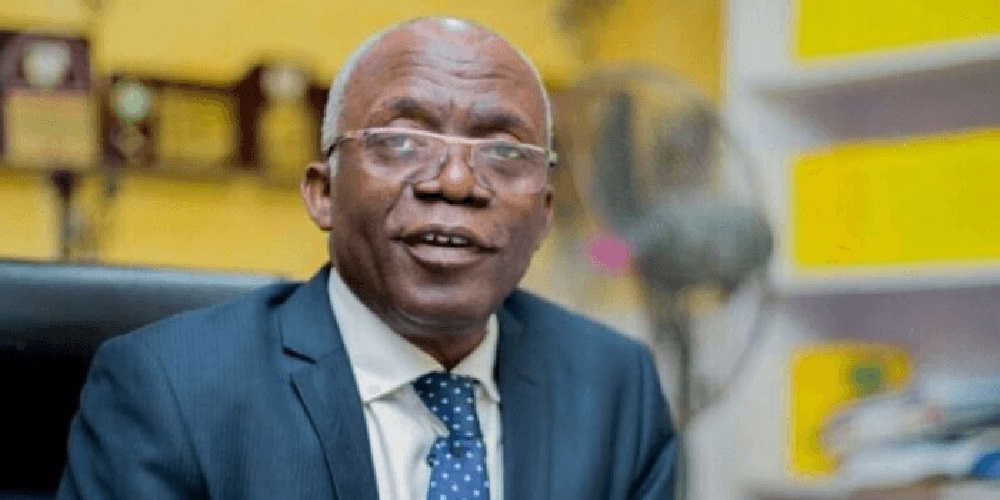
Senior Advocate of Nigeria (SAN), Femi Falana, has called on President Bola Ahmed Tinubu to take concrete steps in addressing the widespread poverty across the country, rather than merely appealing to state governors.


In a statement released on Sunday, Falana responded to Tinubu’s recent remarks during a meeting with All Progressives Congress (APC) governors, where the President acknowledged the economic hardships faced by Nigerians and urged governors to “wet the grass” at the grassroots level.
Quoting the President, Falana noted: “Nigerians are still complaining at the grassroots. To you, the governors, you must wet the grass more and deliver progressive change to Nigerians.” 
While acknowledging the President’s recognition of the economic challenges, Falana urged the Federal Government to go beyond rhetoric and demonstrate leadership by prioritising the full implementation of existing social welfare programmes.
“Instead of begging state governments to ‘wet the ground more’, President Tinubu is urged to ensure that the National Social Investment Programme Agency Act is adopted by the 36 states and fully implemented,” he stated.
Falana criticised the imbalance in government spending, highlighting the ₦32.7 billion allocated to the National Social Investment Programme (NSIP) in 2025 as grossly inadequate when compared to luxury expenditures, such as the ₦39 billion reportedly spent on renovating the International Conference Centre in Abuja.
“A government that can justify ₦39 billion for conference hall renovations cannot reasonably allocate less to programmes meant to support 133 million multi-dimensionally poor Nigerians,” he said.
The NSIP, established under the 2023 Social Investment Programme Agency Act, is designed to combat poverty through initiatives like N-Power, school feeding programmes, conditional cash transfers, and access to microloans for small businesses.
Falana stressed that resources to fund these initiatives exist. He cited ₦11.195 trillion disbursed to states, local governments, and the FCT in the past year through the Federation Accounts Allocation Committee (FAAC).
He also referenced a report by civic tech group BudgIT, which revealed that the 2025 federal budget was inflated with over 11,000 inserted projects worth ₦6.93 trillion—12.5% of the ₦54.99 trillion budget signed into law in February.
Falana raised concerns about legislative spending priorities, noting that senators and House of Representatives members reportedly receive ₦21 million and ₦15 million monthly, respectively, while critical social programmes remain underfunded.
The senior lawyer also referenced the recent approval of ₦3.5 trillion by the Federal Executive Council (FEC) for roads, airports, and other infrastructure, and argued that similar urgency should be applied to the social sector.
“As a matter of urgency, the FEC should approve no less than ₦5 trillion to fund the National Social Investment Programme,” he said.
Falana concluded by recommending that the management of the fund be inclusive and transparent. He proposed that elected representatives of trade unions and credible civil society organisations be involved to ensure accountability and impact.