




Connect with us

Economy

Abuja overtakes Lagos as Capital importation rose to $5.6bn in Q1 2025 – NBS

Published

on

ADVERTISEMENT
Zoom Ad
ADVERTISEMENT
Zoom Ad

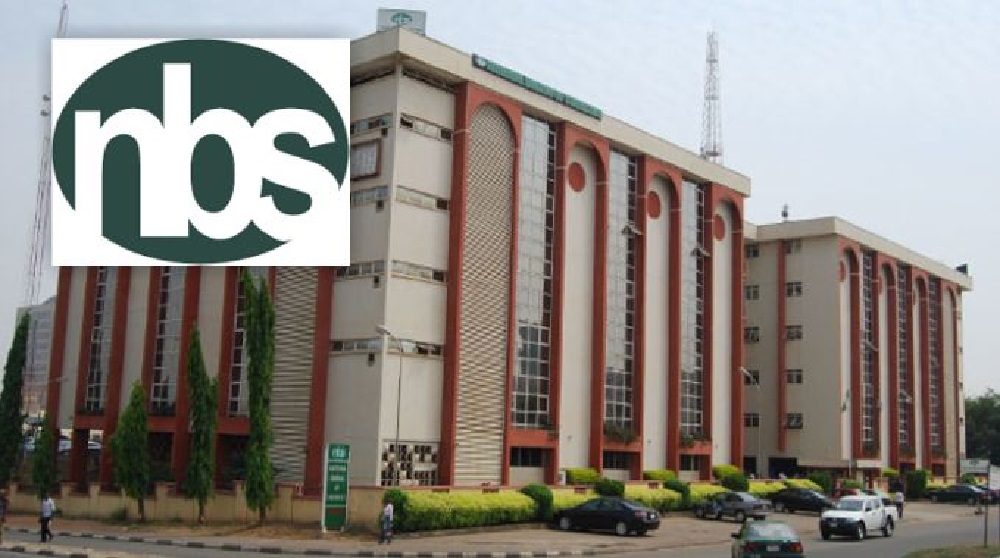
Capital importation into Nigeria rose to $5.64 billion in the first quarter (Q1) of 2025, according to the latest report from the National Bureau of Statistics (NBS).

In a report on Tuesday, NBS said the figure represents a 67.12 percent increase from the $3.38 billion recorded in Q1 2024 and a 0.86 percent rise compared to $5.09 billion in the fourth quarter (Q4) of 2024.

Capital importation is the inflow of funds from abroad to fuel investment, trade, and manufacturing within a country.

The bureau said the surge was largely driven by portfolio investments, which accounted for $5.20 billion, representing 92.25 percent of total capital inflows during the period.

Advertisement

Other investments followed with $311.17 million (5.52%), while foreign direct investment (FDI) contributed the least with $126.29 million, making up just 2.24 percent of the total contribution.

“The Banking sector recorded the highest inflow with US$3127.92 million, representing 55.44% of total capital imported in Q1 2025, followed by the Financing sector, valued at US$2097.48million (37.18%), and Production/Manufacturing sector with US$129.92 million (2.30%),” The bureau said.

“Capital Importation during the reference period originated largely from the United Kingdom with US$3681.96 million, showing 65.26% of the total capital imported.

“This was followed by the Republic of South Africa with US$501.29 million (8.88%) and Mauritius with US$394.51 million (6.99%).”

Advertisement

Abuja Overtakes Lagos As Top Capital Destination

Giving state analysis, NBS said out of the five states that recorded capital importation during the quarter, the federal capital territory (FCT) was the top destination with $3.04 billion, accounting for 54.11 percent of the total capital imported.

Abuja overtook Lagos for the first time since Q1 2018.

Lagos followed on the list with $2.56 billion (45.44 percent), and Ogun state with $7.95 million (0.16 percent), while Oyo contributed $7.81 million, and Kaduna with $4.06 million.

Advertisement

By financial institution, NBS said Standard Chartered Bank Nigeria received the highest capital importation with $2.1 billion (37.29 percent).

Stanbic IBTC Bank followed with $1.40 billion (24.78 percent), while Citibank Nigeria received $1.05 billion, accounting for 18.66 percent of total inflows in Q1 2025.


Continue Reading
Advertisement
Click to comment

Warning: Undefined variable $user_ID in /home/naijuinz/public_html/wp-content/themes/zox-news/comments.php on line 49

You must be logged in to post a comment Login

Leave a Reply

Economy

FG increases pension for soldiers

Published

on

By

ADVERTISEMENT
Zoom Ad
ADVERTISEMENT
Zoom Ad

The Federal Government has approved a new pensionable salary structure for personnel of the Nigerian Armed Forces.

The new structure affects personnel in the Nigerian Army, Nigerian Navy and Nigerian Air Force and took effect from September 1, 2026.

The approval was contained in a circular issued on September 3 by the National Salaries, Incomes and Wages Commission.

Under the new arrangement, Generals, Admirals and Air Chief Marshals occupy the highest level, with their annual pensionable salaries ranging from ₦21.9 million to ₦29.75 million, depending on their salary steps.

Advertisement

The highest figure works out to roughly ₦2.48 million per month when divided by 12.

Lieutenant Generals, Vice Admirals and Air Marshals will have annual pensionable salaries between ₦16.99 million and ₦25.91 million.

Major Generals, Rear Admirals and Air Vice Marshals will receive pensionable salaries ranging from about ₦14.98 million to ₦23.9 million annually.

For Brigadier Generals, Commodores and Air Commodores, the approved annual pensionable figures range from ₦13.86 million to ₦16.39 million.

Advertisement

Colonels, Captains and Group Captains will have annual pensionable salaries between ₦8.31 million and ₦9.49 million, while Lieutenant Colonels, Commanders and Wing Commanders will fall between ₦7.55 million and ₦8.74 million.

Majors, Lieutenant Commanders and Squadron Leaders will have pensionable salaries ranging from ₦5.99 million to ₦7.01 million annually.

Captains, Lieutenants and Flight Lieutenants will receive between ₦5.28 million and ₦6.42 million.

At the junior officer level, Second Lieutenants, Midshipmen and Pilot Officers will have annual pensionable salaries ranging from ₦4.92 million to ₦5.59 million.

Advertisement

The new structure also covers non-commissioned personnel.

Warrant Officers across the three services will have annual pensionable salaries between ₦4.53 million and ₦5.17 million, while Master Warrant Officers will receive between ₦3.94 million and ₦4.93 million.

Warrant Officers will have annual pensionable salaries ranging from ₦3.46 million to ₦4.35 million. Staff Sergeants, Petty Officers and Flight Sergeants will have figures between ₦2.98 million and ₦3.76 million.

Sergeants and Leading Seamen will have annual pensionable salaries ranging from ₦2.81 million to ₦3.16 million, while Corporals and Able Seamen will receive between ₦2.48 million and ₦2.73 million.

Advertisement

Lance Corporals and Seamen will have pensionable salaries between ₦2.32 million and ₦2.58 million annually.

Privates, Ordinary Seamen and Aircraftmen will have figures ranging from ₦2.28 million to ₦2.49 million.

The government clarified that the amounts contained in the new schedule are meant for calculating pension benefits.

They should not be treated as the actual monthly salaries or take-home pay of serving military personnel.

Advertisement
Continue Reading

Economy

Black Market Dollar To Naira Exchange Rate Today 8th September 2026

Published

on

ADVERTISEMENT
Zoom Ad
ADVERTISEMENT
Zoom Ad

Dollar To Naira Exchange Rate Today 27 January 2023(Black Market)

The Black Market Dollar-to-Naira Exchange Rate for 8th September 2026 Can Be Accessed Below.

NOTE: The exchange rate changes hourly. It depends on the volume of dollars available and the Demand. This means…you can buy or sell 1 dollar at a certain rate, and the price can change (high or low) within hours.

The official naira black market exchange rate in Nigeria today, including the Black Market rates, Bureau De Change (BDC), and CBN rates.

Advertisement

The exchange rate fluctuates hourly based on the supply and demand of dollars in the market.
What’s the dollar to naira black market today, 8th September 2026?
The exchange rate for a dollar to naira at Lagos Parallel Market (Black Market) players sell a dollar for ₦1405 and buy at ₦1395 on Tuesday, 8th September, 2026, according to sources at Bureau De Change (BDC).
Please note that the Central Bank of Nigeria (CBN) does not recognize the parallel market (black market), as it has directed individuals who want to engage in Forex to approach their respective banks.
Dollar to Naira Black Market Rate Today
Dollar to Naira (USD to NGN) Black Market Exchange Rate Today
Selling Rate ₦1405
Buying Rate ₦1395
Dollar to Naira CBN Rate Today
Dollar to Naira (USD to NGN) CBN Rate Today
Highest Rate ₦1320
Lowest Rate ₦1326

Continue Reading

Economy

See Dollar to Naira exchange rate today, September 7, 2026

Published

on

ADVERTISEMENT
Zoom Ad
ADVERTISEMENT
Zoom Ad

The dollar-to-naira exchange rate opened the new week with the naira trading at about ₦1,321.68 per US dollar at the official rate, while the parallel market rate stood at ₦1,390 per dollar for buying and ₦1,400 for selling, according to available market data.

The latest available NFEM figure for September 7 puts the official exchange rate at ₦1,321.68 to the dollar. However, the Central Bank of Nigeria’s published NFEM table shows September 4 as the latest dated trading entry, with a rate of ₦1,321.2160 per dollar. The September 7 figure should therefore be treated as the latest available indicative rate rather than a confirmed CBN trading close.

At the parallel market, Aboki Forex reported a buying rate of ₦1,390 and a selling rate of ₦1,400 per dollar. This means a person selling $1 could receive about ₦1,390, while buying $1 could cost approximately ₦1,400. Actual rates may vary by dealer, location and transaction size.

The difference between the indicative official rate and the parallel-market selling rate is about ₦78.32 per dollar. For $100, the indicative official equivalent is approximately ₦132,168, while buying $100 at the parallel-market selling rate would cost about ₦140,000.

Advertisement

The naira’s performance remains closely watched by importers, businesses, travellers and Nigerians receiving or sending foreign currency. However, the parallel market is separate from the regulated official market, and the two rates should not be treated as interchangeable.

Rates can change during the day, so anyone exchanging currency should confirm the current quote with a bank, licensed Bureau de Change or trusted dealer before completing a transaction.

Continue Reading

Trending

Copyright © 2024 Naija Blitz News