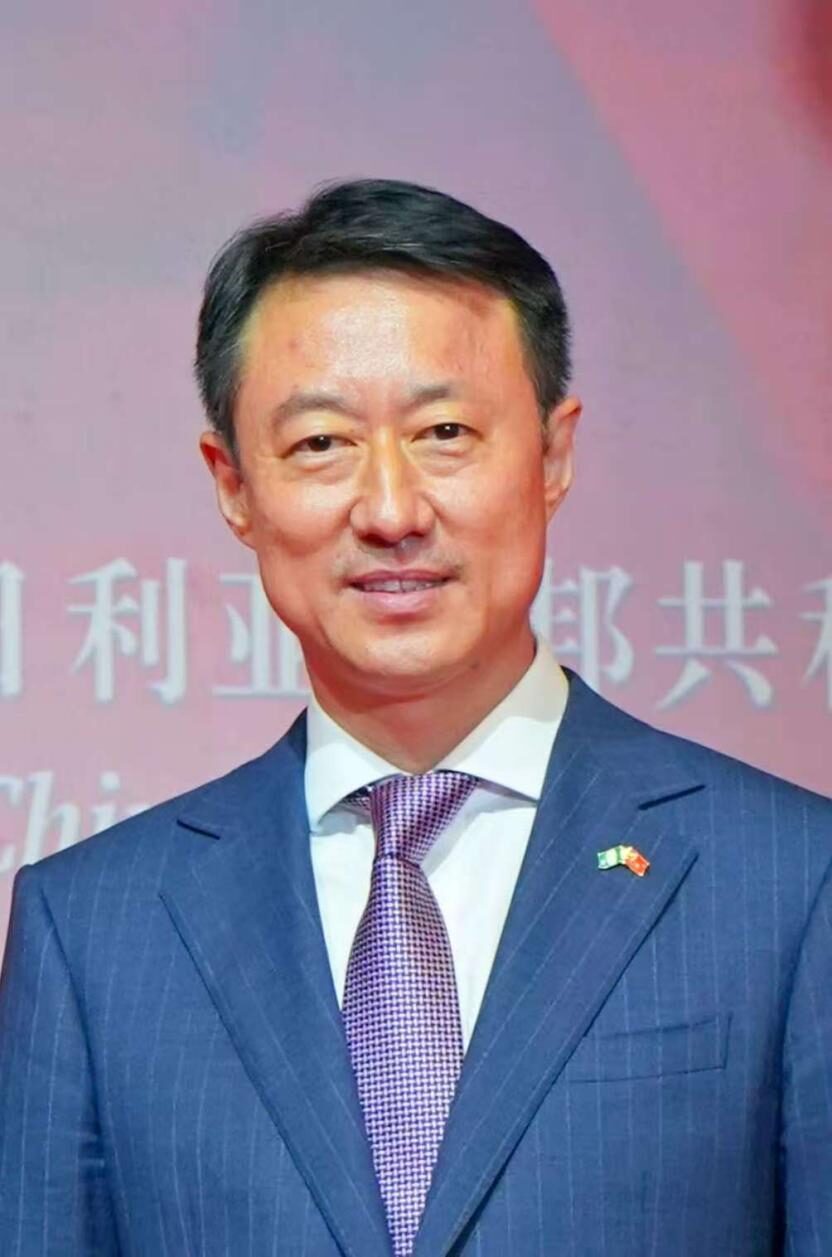
By His Excellency Yu Dunhai, Chinese Ambassador to Nigeria
On September 1, 2025, President Xi Jinping solemnly proposed the Global Governance Initiative (GGI) at the Shanghai Cooperation Organization Plus Meeting held in Tianjin, China.
With its profound insight into the times, broad humanistic commitment and clear value orientation, this initiative aims to address a pressing subject of our times which has attracted high attention from the international community, namely what kind of global governance system to build and how to reform and improve global governance. 
It further contributes Chinese wisdom and proposes a Chinese approach to strengthening and improving global governance, injecting more stability and certainty into a turbulent world.
Today, transformative changes unseen in a century are accelerating across the world, while the lingering gloom of Cold War mentality, hegemonism, and protectionism continues to cast a shadow. Humanity is confronted with unprecedented challenges as the world enters a new phase of turbulence and transformation, and global governance now stands at a critical juncture.
The world is in greater need of strengthening global governance than ever before, and the GGI comes at an opportune time. Regarding it as the fundamental guideline to uphold the purposes and principles of the U.N. Charter and practice the vision of global governance featuring extensive consultation and joint contribution for shared benefit, the GGI seeks to promote the building of a more just and equitable global governance system and work together for a community with a shared future for humanity.
To be more specific, the GGI embodies five core concepts: First, adhere to sovereign equality. All countries, regardless of size, strength or wealth, shall have the right to participate in, make decisions in and benefit from the global governance as equals. Second, abide by the international rule of law. There shall be no double standards, and the self-defined rules of a few countries must not be imposed upon others. Third, practice multilateralism.The irreplaceable and crucial role of the United Nations in global governance must be given full play. Fourth, advocate a people-centered approach. It is essential to ensure that people of all nations jointly participate in global governance and share in its outcomes. Fifth, focus on taking real actions. More tangible results should be delivered, and global governance should avoid lagging behind the times or becoming fragmented.
The above five core concepts advocated by the GGI are closely aligned with the inherent needs of China-Africa and China-Nigeria cooperation. Africa, which includes 54 United Nations member states, is the continent with the largest concentration of developing countries. It is not only an important participant in global governance but also a major force driving global multi-polarization. Nigeria, as Africa’s most populous country and major economy, serves as a critical growth engine on the continent and an influential representative of the Global South. It is also a key strategic partner for China in Africa. It is fair to say that China-Africa and China-Nigeria cooperation not only enjoy a solid historical foundation but also correspond to practical needs of reforming the global governance system and transforming the global order.
The year 2025 marks the 80th anniversary of the establishment of the United Nations, which represented a pioneering practice by the international community in initiating global governance.
In 1971, African countries strongly supported the restoration of the lawful seat of the People’s Republic of China in the United Nations, with Nigeria casting a sacred vote in favor. This moment marked the beginning of the joint participation of African nations and the People’s Republic of China in global governance. In 1992, China worked closely with the Group of 77, in which African countries served as a major force, ultimately leading to the incorporation of the principle of “common but differentiated responsibilities” into the United Nations Framework Convention on Climate Change.
Since the 21st century, China has actively promoted solutions to address the under-representation of African countries in the United Nations, advocating that the Security Council reform must genuinely reflect international fairness and justice, prioritize correcting historical injustices faced by Africa, and support special arrangements to address Africa’s demands as a priority. In 2022, China took the lead in explicitly expressing support for the African Union’s accession to the G20 and facilitated the formal admission of the African Union as a member of the G20 the following year.
The Beijing Declaration issued at the Beijing Summit of the Forum on China-Africa Cooperation (FOCAC) in 2024 emphasized that China supports African countries in playing a greater influential role in global governance, particularly within inclusive frameworks addressing global issues, and will continue to support Africa-related priorities in G20 affairs. China also appreciated and welcomed more African countries joining the BRICS family. Shortly thereafter, Nigeria, with China’s active support, became a BRICS partner country. China firmly supports Africa’s efforts to enhance its international standing and voice, fully demonstrating the spirit of China-Africa friendship and cooperation, and profoundly illustrating China’s role as a major country in promoting the improvement of global governance.
The year 2025 also marks the 25th anniversary of the establishment of the FOCAC. The FOCAC mechanism itself is a model of the vision of the global governance featuring extensive consultation and joint contribution for shared benefit. Guided by the principles of sincerity, real results, amity, and good faith towards Africa and the principle of pursuing the greater good and shared interests, China is committed to supporting Africa in advancing its integration and enhancing its capacity for self-driven development.
From the “Ten Cooperation Plans” and the “Eight Major Initiatives” to the “Nine Programs” and the recently launched “Ten Partnership Actions for China-Africa Collaboration on Modernization,” a series of practical cooperation plans have focused on Africa’s priority areas such as infrastructure connectivity, healthcare, agricultural modernization, and capacity building.
This cooperation comes with no political strings attached, emphasizes action-oriented approaches and aims to enhance the “self-development capacity” of African countries, representing a tangible contribution to building a more just and equitable global governance system. On September 3, 2024, Nigerian President Bola Ahmed Tinubu paid a state visit to China and attended the FOCAC Beijing Summit. The leaders of the two countries jointly announced the elevation of China-Nigeria relations to a comprehensive strategic partnership and were committed to building a high-level China-Nigeria community with a shared future.
Over the past year, China-Nigeria relations have achieved rapid growth across all sectors. We have more frequent high-level exchanges, deeper political and strategic trust as well as increasingly substantial outcomes in practical cooperation. We have supported each other on issues concerning our respective core interests and major concerns while maintaining sound communication and coordination in international and regional affairs under a results-oriented approach. We can proudly say that China and Nigeria are setting an exemplary model for South-South cooperation.
In conclusion, Chinese president Xi Jinping has proposed four major initiatives to date: the Global Development Initiative (GDI), the Global Security Initiative (GSI), the Global Civilization Initiative (GCI), and the Global Governance Initiative (GGI). Together, these initiatives form the four pillars for building a community with a shared future for mankind.
The GDI focuses on promoting international cooperation on development, the GSI on encouraging dialogue and consultation over international discord, the GCI on promoting exchanges and mutual learning among civilizations, and the GGI on the direction, principle and path for reforming the global governance systems and institutions. The four initiatives have their respective priorities and can be pursued simultaneously. They will each be a source of positive energy for a changing and turbulent world and impetus for humanity’s development and progress.
China is willing to work with African countries, including Nigeria, under the framework of the GGI to promote reforms in the UN Security Council and the international financial system, to make the existing international system and international institutions better at taking actions and working effectively, to step up coordination among multilateral bodies, and to prioritize consensus-building in such areas as the international financial architecture, artificial intelligence, cyberspace, climate change, trade and outer space to bring about early harvests.
The successful practices of China-Africa and China-Nigeria cooperation demonstrate that the GGI embodies strong vitality and broad prospects for development. Moving forward, China will continue to stand shoulder to shoulder with African countries, especially our Nigerian friends, to actively advance the GGI, jointly address global challenges and work toward building a community with a shared future for mankind.