
By Kayode Sanni-Arewa

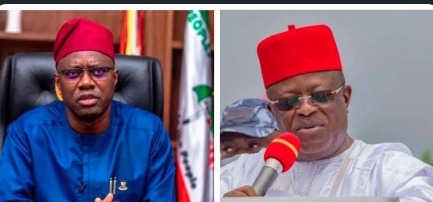
Oyo State Governor, Seyi Makinde, has slammed the Minister of Works, Dave Umahi, following his controversial altercation with Arise Television presenter, Rufai Oseni, over questions surrounding the cost of the Lagos–Calabar Coastal Highway project recently approved by President Bola Ahmed Tinubu.
During an interview with journalists on Friday, Governor Makinde criticized the minister for what he described as an evasive attitude toward providing a clear breakdown of the multi-trillion-naira coastal highway project, urging him to be more transparent and accountable to Nigerians. 
Recall that the Works Minister had engaged in a heated on-air exchange with Rufai Oseni after the journalist requested a cost analysis of the Lagos–Calabar road project on a per kilometre basis.
Apparently displeased by Oseni’s insistence on transparency, Umahi accused the presenter of being biased and even claimed that Oseni had reported him to President Tinubu over his previous comments on the project.
At one point in the interview, Umahi, a former governor of Ebonyi State, interrupted the journalist and declared himself a “professor in engineering,” sparking further debate online.
When pressed to specify when and where he obtained the professorship, the minister clarified that he was not awarded the title by any academic institution but rather earned it through years of experience in the engineering field.
Governor Makinde, reacting to the controversy, urged Umahi to stop “dancing around” the main issue and instead provide Nigerians with transparent details of the project’s cost.
Drawing from his own experience in road construction, Makinde offered practical examples from Oyo State projects to demonstrate how transparency can be achieved in public works.
Makinde’s remarks add to growing public concern over the Lagos–Calabar Coastal Highway, a flagship infrastructure project estimated to span over 700 kilometres and cost several trillion naira. Critics have consistently questioned the project’s financial transparency, environmental impact, and the displacement of businesses along its route.
While the Ministry of Works maintains that the project is crucial for coastal connectivity and long-term economic growth, many Nigerians, including public figures like Makinde, have continued to call for an open, data-driven explanation of how public funds are being allocated.