News
FCTA ready to strengthen healthcare delivery, targets 15% budget allocation to health
- /home/naijuinz/public_html/wp-content/plugins/mvp-social-buttons/mvp-social-buttons.php on line 27
https://naijablitznews.com/wp-content/uploads/2025/10/fcb7f291-75c4-40e0-a37d-5e8a570ed330.jpeg&description=FCTA ready to strengthen healthcare delivery, targets 15% budget allocation to health', 'pinterestShare', 'width=750,height=350'); return false;" title="Pin This Post">
- Share
- Tweet /home/naijuinz/public_html/wp-content/plugins/mvp-social-buttons/mvp-social-buttons.php on line 72
https://naijablitznews.com/wp-content/uploads/2025/10/fcb7f291-75c4-40e0-a37d-5e8a570ed330.jpeg&description=FCTA ready to strengthen healthcare delivery, targets 15% budget allocation to health', 'pinterestShare', 'width=750,height=350'); return false;" title="Pin This Post">
By Prosper Olayiwola

The Federal Capital Territory Administration (FCTA) has unveiled plams towards strengthening healthcare delivery across the territory through the creation of dedicated budget lines for core health programmes, among other key initiatives.

As part of its renewed health agenda, the FCTA announced plans to fully implement the Primary Health Care Under One Roof (PHCUOR) policy and fast-track the passage of the FCT Health Insurance (FHIS) and Public Health Emergency and Risk Management Agency (PHERMRA) Bills.
The administration also disclosed plans to establish an Infectious Disease Hospital, revitalize the FCT Molecular Laboratory, and advocate for a minimum 15 percent budgetary allocation to health in line with the Abuja Declaration.
These measures, the FCTA said, are designed to enhance access to quality healthcare, strengthen the health system’s resilience, and ensure the FCT remains at the forefront of effective public health management in Nigeria.
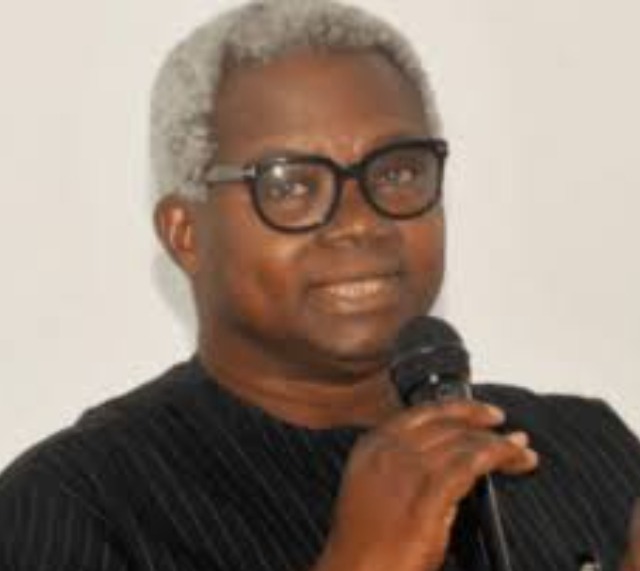
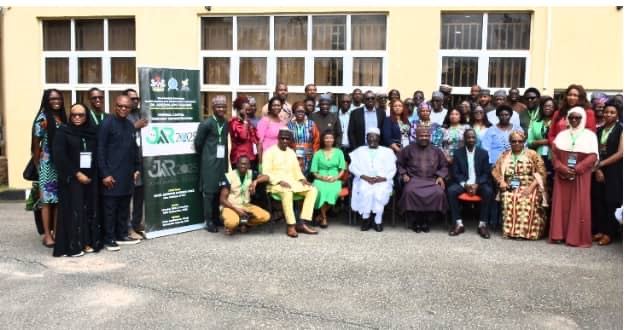
These were outlined in a communiqué issued at the end of the two-day 2025 Health Sector Joint Annual Review and Performance Dialogue, presided over by the Mandate Secretary of the Health Services and Environment Secretariat (HSES), Dr. Adedolapo Fasawe, which convened senior government officials, development partners, civil society representatives, traditional leaders, and health experts to assess progress and challenges across key health pillars under the National Health Sector Renewal Investment Initiative (NHSRII).
The communiqué, endorsed by representatives of the Mandate Secretary and the Ona of Abaji, Dr. Alh. Baba Adamu Yunusa, who was represented by Wodi Nathaniel the Sarkin Jinya Abaji, reaffirming collective commitment to equitable, accessible, and resilient healthcare for FCT residents, was jointly signed by Dr. Ahmadu Abubakar, Acting Director-General of the Hospital Management Board, on behalf of the Mandate Secretary, and Dr. Dan Gadzama, Acting Director of Public Health, on behalf of the Permanent Secretary, Health Services and Environment Secretariat.
The joint review assessed the FCT’s performance in maternal and child health, immunizations, non-communicable diseases, infectious disease control, health financing, and human resources for health.
Participants identified critical challenges including funding constraints, infrastructure gaps, weak data systems, and shortages of qualified health workers.
Presentations during the dialogue revealed improvements in maternal and child health outcomes, expanded immunization coverage, reduced HIV incidence, and strengthened malaria response.
The FCT also recorded progress in health insurance enrolment, established a Health Workforce Registry, and developed a five-year Human Resource Recruitment Plan (2025–2029).
However, participants stressed the need for stronger funding mechanisms and policy alignment to sustain these gains.
One major recommendation was the creation of a dedicated Nutrition Department with an independent budget line to accelerate maternal and child nutrition programmes.
On immunization, recurring challenges such as funding shortfalls, insecurity in rural and nomadic areas, and weak demand generation due to vaccine hesitancy.
Stakeholders emphasised the need for greater community engagement, especially in identifying and reaching zero-dose children, and for institutionalized supportive supervision to improve coverage.
The Public Health Department highlighted the rising burden of non-communicable diseases (NCDs) while calling for more partner involvement to address limited funding, short pilot projects, and high staff attrition.
Similarly, funding delays and infrastructure weaknesses continue to affect HIV, tuberculosis, and malaria control were reported while stronger collaboration with the private sector was advocated.
The presentation on primary health care delivery by the FCT Primary Health Care Board identified inadequate staffing and lack of 24-hour operational facilities as major constraints.
The upgrading of primary health centres and the recruitment of additional personnel to ensure round-the-clock maternal and child healthcare services were recommended
The discussions on healthcare financing underscored the slow implementation of health insurance coverage in the FCT, largely due to the pending FHIS Bill.
Stakeholders called for the swift passage of the bill to expand access to mandatory health insurance and ensure equitable service delivery.
Human resources for health also received strong attention, with the HR Department noting skill imbalances and poor working conditions across area councils.
The creation of a national workforce database and improved incentives to retain skilled personnel were proposed.
On pandemic preparedness, Dr. Lukman Lawal, the FCT State Epidemiologist, outlined multi-level challenges including vaccine hesitancy, weak surveillance networks, and poor data quality.
He called for integrating private hospitals into disease surveillance systems, enhancing logistics, and ensuring timely release of operational funds, “Timely operationalization of funding mechanisms is vital to effective outbreak response,” he said.
At the end of the dialogue, participants agreed that sustained progress in the FCT health sector depends on increased investment, inter-agency coordination, improved data reporting, and strengthened collaboration between public and private actors.
Nation
News
Nigerian govt working towards scrapping fine option for convicted drug peddlers – NDLEA
The National Drug Law Enforcement Agency (NDLEA) has disclosed that the Federal Government is working to remove the option of fines for convicted drug traffickers, describing the provision as a loophole that weakens the fight against drug-related crimes.
NDLEA spokesman, Femi Babafemi, disclosed this during a chat with Channels TV, he said the judiciary has remained a strong partner in the agency’s efforts to prosecute drug offenders, noting that the agency records a conviction rate of nearly 90 per cent.
He, however, identified the option of fines for convicted drug traffickers as a major challenge, saying its removal would serve as a stronger deterrent.
“There is a small nag there and that is the issue of the option of fine, and we are very grateful that the Federal Government through the office of Attorney General of the Federation and Minister of Justice is addressing that.
“I think there is an executive bill which will soon get to the national assembly to amend the law so that there will be no that option of fine.
“Because they know that there is a loophole for an option of fine, the judge gives an option of fine, then you find them paying there whether 5 million, 10 million, 20 million.
“But that I believe is being addressed at the moment and when that law is passed then there will be nothing like that, you will have probably a minimum of 15 then 25 years in prison so that you know that when you are arrested you are going to jail and then you lose everything,” Babafemi said.
He said the proposed amendment, being championed through the Office of the Attorney General of the Federation and Minister of Justice, would eliminate the fine option and replace it with mandatory prison terms ranging from 15 to 25 years for convicted drug traffickers.
This, he said, would ensure that offenders face imprisonment rather than paying fines and returning to the illicit drug trade.
Babafemi described the global drug problem as a hydra-headed monster, but said the NDLEA has remained relentless in its campaign against drug trafficking, recording significant successes.
He said the agency’s sustained crackdown on drug traffickers has reduced the availability of illicit drugs, leading to scarcity and a sharp rise in street prices.
According to him, even drug users have acknowledged the impact of the agency’s operations.
“If you follow some of the conversations online, you will hear young people complaining, ‘Why are you people always seizing these things? Now because of what you are doing, a gram of cana has moved from N5,000 to N35,000.’”
Babafemi said the agency has, in some of its recent operations, uncovered billions of naira in the bank accounts of suspected drug traffickers, adding that the funds have been frozen while efforts are underway to secure their forfeiture to the Federal Government.
Babafemi said Nigeria has become an increasingly hostile environment for drug traffickers, forcing many of them to relocate to other countries to evade arrest.
He, however, said the agency continues to monitor their activities through collaboration with its counterparts in the countries where they are hiding, with the aim of tracking them down and bringing them to justice.
News
Marwa inaugurates historic weapon handling training course for NDLEA officers in Jos(Photos)
. Inducts thousands of new AK-47 rifles, pistols into operations after 36 years; hails President Tinubu for the milestone
In a historic shift aimed at bolstering its tactical capabilities against increasingly violent drug cartels, the National Drug Law Enforcement Agency (NDLEA) has officially commenced the formal induction of AK-47 rifles and advanced pistols into its operational architecture.

The Chairman/Chief Executive Officer of the Agency, Brig Gen Mohamed Buba Marwa (Rtd) disclosed this on Monday 29th June 2026 during the formal inauguration of a specialized Train-the-Trainer Course on Weapon Handling (AK-47 Rifle Type 56-1 and HS-9/CF98A Pistols) at the NDLEA Academy in Jos, Plateau State.
Speaking at the landmark event, Marwa who was represented by his Chief of Staff, Col. Murtala Aminu noted that the development marks a critical milestone in the 36-year history of the Agency, driven by the changing dynamics of the war against drug trafficking in Nigeria.
“The nature of the war we fight has evolved,” Marwa stated, adding that “Drug trafficking organisations are no longer mere commercial criminal enterprises; they are armed, organised, and ruthless. Our officers face increasing danger in the field, and it would be unconscionable for this Agency to send men and women into harm’s way without the tools and training to protect themselves and the public they serve. This programme is, therefore, not just about firearms, it is about the preservation of lives and the projection of institutional strength.”
The NDLEA boss expressed profound gratitude to President Bola Ahmed Tinubu, for his unwavering commitment to boosting the Agency’s operational capacity, describing his leadership as the driving force behind the agency’s operational successes. He also commended the Office of the National Security Adviser (ONSA) for its timely intervention in providing the initial substantial consignment of firearms and ammunition to kickstart the training without delay.
Providing insights into the arms procurement, Marwa revealed that the process, which began in 2023 through the China North Industries Corporation (NORINCO), has reached its final stage. Thousands of procured arms and ammunition are scheduled for imminent delivery, with a precise distribution and accountability plan already approved. The NDLEA is also partnering with the Nigerian Air Force to facilitate the strategic airlift of these assets across its commands nationwide.

The ongoing course, is designed to produce pioneer master trainers. Carefully selected from various commands based on merit, these pioneer participants will return to their respective formations to lead a mandatory, comprehensive one-month training programme for all personnel before the weapons are operationally deployed. “The weight of that responsibility should not be lost on you. You are the first. You are the standard-bearers. The operational culture, the safety ethos, the professional discipline that will define how the NDLEA handles weapons, all of that begins here, with you, in this academy, on this day”, he stated.
Marwa charged the participants to maintain the highest level of professionalism. According to him, “First, embrace discipline as your bedrock. Weapons handling is not a privilege — it is a grave responsibility. Every firearm must be treated with the seriousness it demands, at all times, in all circumstances.
“Second, internalise safety as a culture, not a checklist. Avoidable incidents are the result of complacency. The NDLEA cannot and will not tolerate negligence when it comes to the handling of arms and ammunition. We owe this standard to our colleagues and to the Nigerian public.
“Third, understand that proficiency is not just technical — it is ethical. The power that a firearm confers must always be tempered by restraint, judgement, and an unwavering commitment to the rule of law and rules of engagement. Our mandate is to protect lives, not to endanger them.
“Fourth, be worthy of the trust placed in you. When you stand before your colleagues as instructors, you carry with you not just technical knowledge but the authority of this institution. Teach with integrity, lead by example, and hold yourselves to the highest standards.”
Marwa expressed happiness over the transformation of NDLEA into a highly professionalized and feared adversary to drug lords, emphasizing that the induction of the tactical arms represents a new chapter of honour and enhanced security for the nation.
“I am proud of the extraordinary strides this Agency has made under our collective watch. In the past few years, the NDLEA has transformed into a more professional, more capable, and more feared adversary to drug criminals. We have recorded unprecedented seizures, dismantled criminal networks, and brought justice to traffickers who once believed themselves untouchable. The induction of more arms into our operational inventory is the next chapter in that story and it is a chapter that must be written with honour”, he added.
News
Wike Hails Indigenous Contractor, Says Nigerian Firms Can Rival Foreign Counterparts
Minister of the Federal Capital Territory (FCT), Barr. Nyesom Wike, on Monday declared that indigenous contractors have come of age and are now capable of delivering projects to the same standard as their foreign counterparts, following the successful completion of the Karu road project in Abuja.
Speaking during the commissioning of the road by President Bola Ahmed Tinubu, who was represented by the Vice President Kashim Shettima, Wike disclosed that he initially had reservations about awarding the contract to a local firm, Abdul-Val Constructions Limited, because of his previous experiences with some indigenous contractors who failed to deliver after collecting mobilisation funds.
“I was initially sceptical about giving this company the job because of my past experience as a local government chairman and governor. When you give some local contractors money to build, they start eating the profit before commencing the job. Before you know it, you are chasing them around and even involving the police. I didn’t want that experience again,” Wike said.
The minister explained that the contractor personally appealed for an opportunity, prompting the FCT Administration to first test the firm’s capacity with the execution of the War College-Ushafa Road project commissioned last year.
“But this young man came to my office pleading that we should give him the opportunity. If you remember, last year we commissioned the War College-Ushafa Road. That was the trial project. He showcased himself and convinced me that local contractors have come of age and can do what foreign companies can do,” he stated.
Wike further commended the contractor for demonstrating commitment by keeping work ongoing even when payments had not been made.
“One thing I noticed is that whether the money was available or not, they never abandoned the site. They kept working and kept telling me, ‘Mr. Minister, I believe in President Bola Ahmed Tinubu. I will complete the project because I know government will pay.’ That kind of confidence is rare these days, and I want to sincerely commend him.”
He noted that the contractor fulfilled his promise by completing not only the road but also the accompanying drainage infrastructure in time for the President’s third anniversary project commissioning programme.
“I was afraid we would not finish this job before the anniversary activities, but he assured me that it would be completed. Today, he has fulfilled that promise, and on behalf of the Federal Capital Territory Administration, I say thank you for believing in this government.”
The minister said the successful execution of the project has strengthened his confidence in indigenous construction firms and demonstrated that Nigerian companies can deliver quality infrastructure when given the opportunity.
Wike also revealed that President Tinubu had approved the construction of all roads within Karu Town, noting that the administration has fulfilled its promise to residents by delivering the requested infrastructure.
“As you are coming into this area, you can see that the entire landscape has changed. We promised the people of Karu that all the roads they requested, including the EFCC Road, DSS Road, hospital road and others, would be constructed. Today, we have fulfilled that promise.”
He maintained that quality infrastructure should be appreciated irrespective of political affiliation.
“I don’t know who does not like good things. It doesn’t matter the political party you belong to. When you see good things, you acknowledge them. Nobody can hate this road because this is what development is supposed to be.”
The minister thanked President Tinubu for his continued support to the FCT Administration, noting that the President had devoted nine days out of the 14-day project commissioning programme to personally inaugurate projects across the Federal Capital Territory.
He added that the reconstruction of roads in Karu and the adjoining Nyanya-Mararaba corridor would significantly improve traffic flow and enhance the quality of life for residents.
“We want every community and every district in the FCT to know that under the leadership of President Bola Ahmed Tinubu, development will reach every part of Abuja. All we ask is for Nigerians to continue supporting this government because, in the end, everyone will benefit,” Wike said.
-
Sports14 hours ago‘It’s a disaster World Cup’ — Iran captain Taremi slams FIFA over visa, travel chaos
-
News7 hours agoPhotos: DAY 14 of Projects Commissioning in the FCT: See Karu road during construction by Nigerian contractor
-
Sports7 hours agoDrama as Cape Verde captain Ryan Mendes in fingered in messy rape scandal
-
Entertainment14 hours ago‘I didn’t sell my husband properties alone’ – Mr Ibu’s wife
-
Entertainment14 hours agoNew Video Of Hanks Anuku Sparks Fresh Concern Over Actor’s Well-Being
-
Politics14 hours agoDeregistration: Kwankwaso meets NDC National Leader Seriake Dickson over party’s fate
-
News14 hours agoCertified True Copy of court judgment ordering NDC deregistration emerges (Photos)
-
News7 hours agoDAY 14 of Projects Commissioning in the FCT