Connect with us

News

Speaker Abbas Backs Alternative Education as Catalyst for National Growth

Published

on

ADVERTISEMENT
Zoom Ad
ADVERTISEMENT
Zoom Ad

…say vocational, technical training will bridge gap between classroom learning, employable skills


By Gloria Ikibah

The Speaker of the House of Representatives,  Rt. Hon. Tajudeen Abbas has said that alternative education is the brain child borne out of necessity.

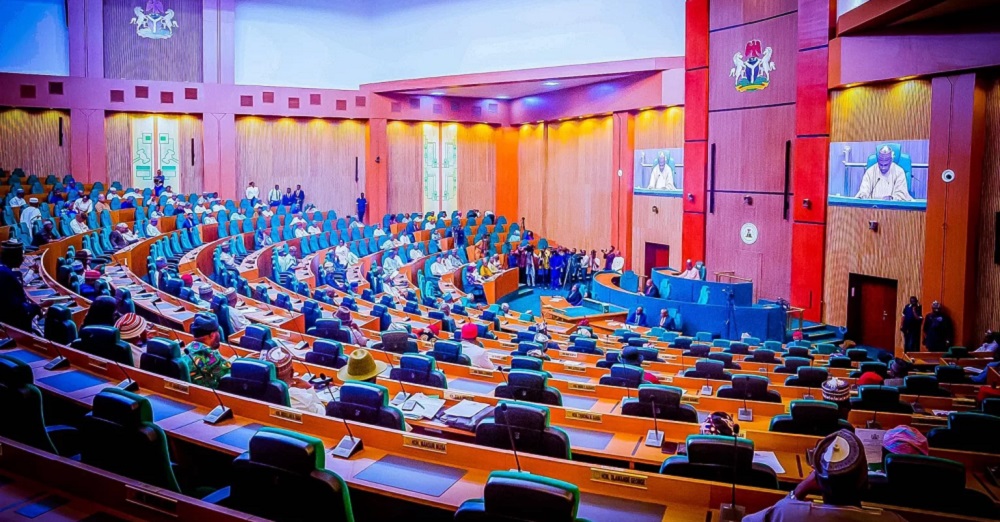
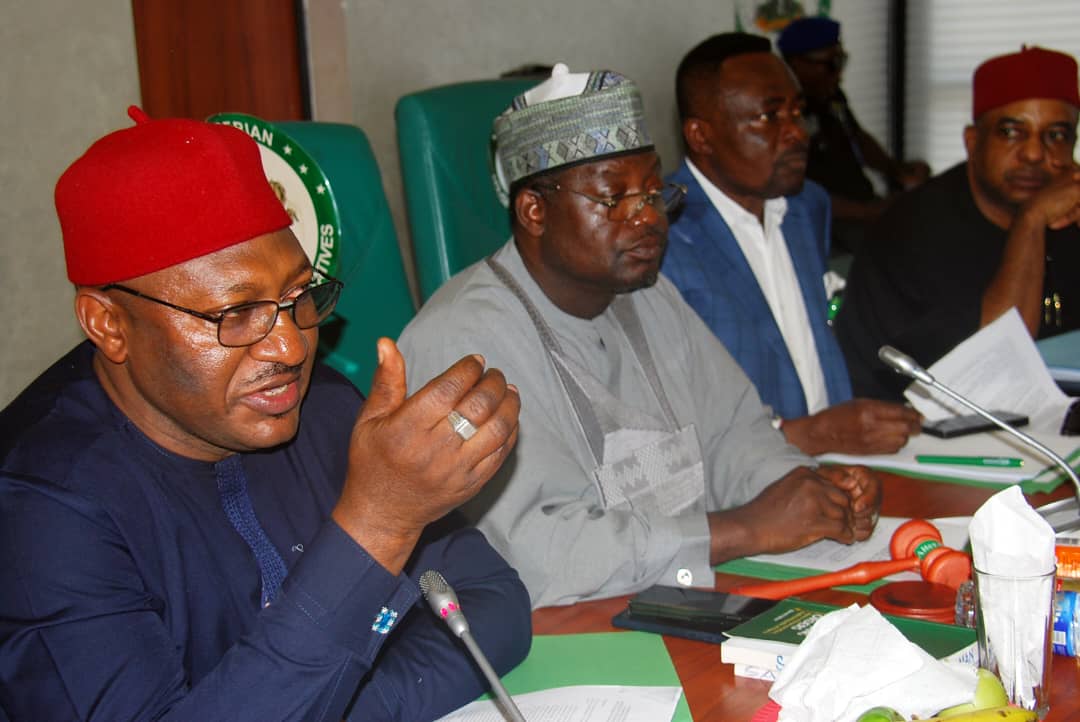
The Speaker stated this at a one-day public hearing on four bills seeking to establish vocational and skills acquisition training centres across different parts of Nigeria, organised by the House Committee on Alternative Education on Monday in Abuja.

Advertisement

The Speaker who was represented by Rep. Paul  Nnamchi, stated that vocational, technical and entrepreneurship is the needed bridge between educational qualifications and skills for national development.

Earlier in his opening remarks, the Committee Chairman, Rep. Ibrahim Al-Mustapha Aliyu, member representing Wurno/Rabah Federal Constituency of Sokoto State, said the Committee was determined to make the alternative education sector a credible path for lifelong learning and employment generation, noting that the public hearing was designed to gather experts and stakeholders’s input for effective implementation.

The Chairman described the initiative as a bold step toward addressing unemployment, promoting entrepreneurship, and strengthening Nigeria’s human capital base through practical education.

Rep. Almustapha commended Speaker Abbas for his foresight in establishing, for the first time, the Committee on Alternative Education to bridge the gap for millions of Nigerians without access to formal education.

Advertisement

He said: “Vocational training and entrepreneurial skill acquisition are fundamental drivers of national development.

“Nigeria’s youthful population remains a valuable asset that must be empowered through skills training and alternative education for self-sufficiency and national progress.

“The Committee is determined to make the alternative education sector a credible path for lifelong learning and employment generation, noting that the public hearing was designed to gather expert and stakeholder input for effective implementation”.

In his submission on the bills, representative of the Executive Director South East Development Commission (SEDC), Ifejika Sunday reiterated the commitment of the commission to any initiative that promote technical education.

Advertisement

He said the commission was in support of the establishment of vocational and entrepreneurship educational institutions as it aligns with its establishment mandate.

Some key stakeholders like the National Commission for Almajri Education (NCAE), People of Arogbo Ijaw Kingdom and Mbaise Community supported the establishment of these educational institutions.

However. representative of the Nigeria Non Governmental Association for Literacy Support Services (NOGALSS), Director Special Initiatives (NOGALSS), Princess Stephanie Osa- Osaghae called for the inclusion of NOGALSS on the board of the proposed Federal Vocational and Skill Acquisition Centres adding such will guarantee broad based participation and effective coordination.

The four bills under consideration include:
“A Bill for an Act to Establish the South East Institute for Vocational and Entrepreneurial Studies, Umuobum, Imo State (sponsored by Hon. Ikeagwuonu Onyinye Ugochinyere — HB.2263);

Advertisement

“A Bill for an Act to Establish the Federal Institute of Technical Education and Skills Acquisition, Mbaise, Imo State (sponsored by Hon. Chinedu Emeka Martins — HB.2342);

“A Bill for an Act to Establish the Federal College of Entrepreneurship and Skills Acquisition, Ilorin West, Kwara State (sponsored by Hon. Muktar Tolani Shagaya — HB.554); and

“A Bill for an Act to Establish the National Institute for Vocational and Entrepreneurial Studies, Agadagba-Obon, Ese-Odo, Ondo State (sponsored by Hon. Donald Kimikanboh Ojogo — HB.2033).

The event brought together key stakeholders from government, academia, industry, and professional bodies, including the Nigerian Society of Engineers (NSE), to deliberate on the proposed legislative frameworks aimed at boosting technical education and youth empowerment. 

Advertisement
Continue Reading
Advertisement

News

Photos: Karu township roads: Our interventions injecting life into local economy – Tinubu

Published

on

ADVERTISEMENT
Zoom Ad
ADVERTISEMENT
Zoom Ad

President Bola Tinubu has said that the ongoing construction of road infrastructure across satellite towns of the Federal Capital Territory (FCT) was to inject life into the local economy.

Tinubu, represented by Vice-President Kashim Shettima made the remarks in Abuja on Monday, while inaugurating the newly rehabilitated and expanded Karu township roads.

The president said that the Karu township roads stand as a clear testament of his administration’s promise to resolve urban congestion and uplift the living standards of FCT residents.

He described the development as a direct product of his Renewed Hope Agenda in action to modernise the infrastructure of our nation’s capital.

“When we took office three years ago, we recognised that true development must reach where the people actually live, work and commute.

“For years, the Karu corridor, serving as a critical gateway between the FCT and neighboring states, suffered from severe traffic congestion that drained the productivity and energy of residents.

“By expanding and rehabilitating these roads, we are not just laying asphalt; we are injecting life back into the local economy.

Tinubu said that the completed road project had dramatically cut down daily travel times, eliminated frustrating gridlocks, and ensured that businesses in this densely populated area could thrive under the right conditions.

Advertisement

He commended FCT Minister Nyesom Wike saying, “the rapid physical transformation across Abuja could not have happened without the dogged, relentless and focused supervision of Wike.

“His aggressive implementation of our urban renewal master plan is visible for everyone to see. I sincerely commend the minister and his team.

“By prioritising high-density, strategic satellite roads like Karu alongside the city center, the FCT Administration is validating our governance philosophy: that the wealth of this territory must yield practical everyday comfort for all socio-economic classes”.

The president also commended the contractor, Abdul-Val Constructions Limited, a local contractor for the quality work and timely delivery, adding that it has demonstrated that Nigerian firms could match international benchmarks for quality, structural integrity, and project management.

In his remarks, Wike noted that the entire landscape in Karu has changed and urged residents to appreciate government efforts to make their lives better.

“It doesn’t matter the political party you belong to. It doesn’t matter the association you belong to, when you see a good thing say, ‘this is a good thing’.

“Whether anybody hates you (Tinubu) or not, he cannot hate this road. Opposition people use this road; those in government use this road; and those who say they are not politicians also use this road,” he said.

He assured every community and every district in the FCT of steady development and dividends of democracy under the Tinubu administration.

Advertisement

Commending the local contractor, Abdul-Val Constructions Limited, the Minister said the company has demonstrated that local contractors have come of age and they could do what other foreign companies could do.

“For this local contractor, I have seen that whether the money is there to pay him or not, he will never abandon the site.

“He will continue to work and say, ‘Mr minister, I believe in this government of Bola Tinubu. I will do everything, and I know at the end of the day, I will be paid.’

“Mr president, it is rare these days to find people who will commit their money and carry out this kind of assignment,” Wike said.

Advertisement

Earlier, Mr Abdulkadir Zulkiflu, Coordinator, Satellite Towns Development Department, said that the road, which was awarded in August 2025, connects Karu Interchange along the Abuja-Keffi Expressway, to Customs Clinic Junction.

Zulkiflu identified the other roads as the DSS Road, NIA Road, EFCC Road, Hospital Road and Old CBN Quarters Road, all within Karu town.

According to him, the successful completion of the project will significantly improve accessibility, ensure a smooth flow of traffic, an effective drainage system, and enhance the security of lives and properties within the area.

“Karu is one of the highly populated satellite towns of the FCT, and its proximity to the city center has made it a preferred abode for so many prominent Nigerians.

Advertisement

“With this road, in less than a 10-minute drive, you are already in the city center.”

Continue Reading

News

FG to evacuate 271 from South Africa today

Published

on

ADVERTISEMENT
Zoom Ad
ADVERTISEMENT
Zoom Ad

By Francesca Hangeior

The Federal Government will evacuate 271 Nigerians stranded in South Africa, today, The Nation learnt.

According to an update by the spokesperson Ministry of Foreign Affairs, Kimiebi Imomotimi Ebienfa, Air Peace aircraft will depart Nigeria today, Monday, 29th June 2026, at 3:00 pm for the evacuation. 

Ebienfa said the plane will depart South Africa at midnight to arrive on Tuesday morning. 

Advertisement

The anti-immigration vigilante groups have set a June 30, 2026 deadline demanding undocumented foreign nationals, especially blacks, to leave South Africa. 

The threat has sparked widespread fear of xenophobic unrest, leading several African nations to evacuate thousands of their citizens. Though South African authorities have heavily condemned the vigilante threats and deployed the police and military to tighten security nationwide.

Ebienfa in a terse statement said: “Nigeria will resume the evacuation of our Nationals from South Africa today.

“Air Peace aircraft will depart Nigeria today, Monday, 29th June 2026, at 3:00 pm, and is expected to arrive in South Africa at approximately 9:00 pm local time. 

Advertisement

“The return flight is scheduled to depart South Africa at 12:00 midnight and is expected to arrive Murtala Mohammed International Airport, Lagos on Tuesday morning. The expected number is 271.”

Continue Reading

News

UK rejects 1.34m Nigerian visa applications in 21 years

Published

on

ADVERTISEMENT
Zoom Ad
ADVERTISEMENT
Zoom Ad

… As Nigeria records 33% refusal rate, accounts for 44% of Africa’s denials

By Francesca Hangeior

The United Kingdom has rejected more than 1.34 million visa applications from Nigerians over the past 21 years, according to official figures from the UK Home Office.

The data, drawn from the UK’s Entry Clearance Visa Outcomes database, show that 1,344,595 applications by Nigerians were refused between 2005 and the first quarter of 2026, placing Nigeria second only to India among countries with the highest number of UK visa denials.

Advertisement

Despite the high rejection rate, Nigeria remained one of the UK’s biggest sources of successful applicants. During the period, 2,723,558 visas were issued to Nigerians, making the country the third-largest recipient of UK visas after China and India.

Overall, Nigerians submitted more than 4.09 million visa applications, with decisions taken on about 4.07 million. The figures translate to an average refusal rate of 33.1 per cent—more than double the global average of 14.8 per cent. Nigeria also accounted for 44.4 per cent of all visa refusals involving African applicants.

Visitor visas accounted for the bulk of refusals, with 1,127,088 refusals—almost 84 per cent of the total. Study visas recorded 130,712 refusals, while 41,410 work visa and 12,217 family visa applications were also denied.

The highest rejection rates were recorded in the mid-2000s.

Advertisement

In 2006, UK authorities refused 117,968 Nigerian applications, a refusal rate of 49.6 per cent, while 111,058 applications were rejected in 2005.

Approval rates improved steadily over the years, peaking in 2023, when the UK granted a record 281,658 visas to Nigerians and the refusal rate fell to 21 per cent, the lowest in the review period.

However, the trend reversed after Britain tightened immigration rules in 2024 by raising salary thresholds for Skilled Worker visas and restricting dependents of international students and care workers.

Following the changes, Nigerian work visa applications fell sharply, while refusal rates climbed to 33.5 per cent in 2024, eased marginally to 33.1 per cent in 2025, and rose again to 35.4 per cent in the first quarter of 2026.

Advertisement

Among African countries, Ghana recorded the second-highest number of UK visa refusals, at 374,108, followed by Algeria, Egypt, Zimbabwe, Morocco, Kenya, Uganda, South Africa, and Sudan.

The UK Home Office also noted that Nigerian nationals remain among the largest groups seeking asylum after entering Britain on valid visas, a development it said has contributed to increased scrutiny of applications from Nigeria.

Former Nigerian Ambassador to Singapore, Ogbole Amedu-Ode, attributed the sustained surge in applications to Nigeria’s economic challenges and the “Japa” migration wave.

He said expanding economic opportunities at home would reduce the pressure on Nigerians seeking to relocate abroad, adding that the large number of visa approvals also reflected the UK’s continued attractiveness as a destination for Nigerians.

Advertisement
Continue Reading

Trending

Copyright © 2024 Naija Blitz News