Connect with us

News

Reps Vow Comprehensive Reforms to Safeguard Nigeria’s Financial System

Published

on

ADVERTISEMENT
Zoom Ad
ADVERTISEMENT
Zoom Ad

…as stakeholders rally behind new bill aimed at protecting victims of bank fraud

By Gloria Ikibah

The House of Representatives has reaffirmed its determination to introduce far-reaching reforms designed to reinforce public confidence and strengthen the country’s financial system.

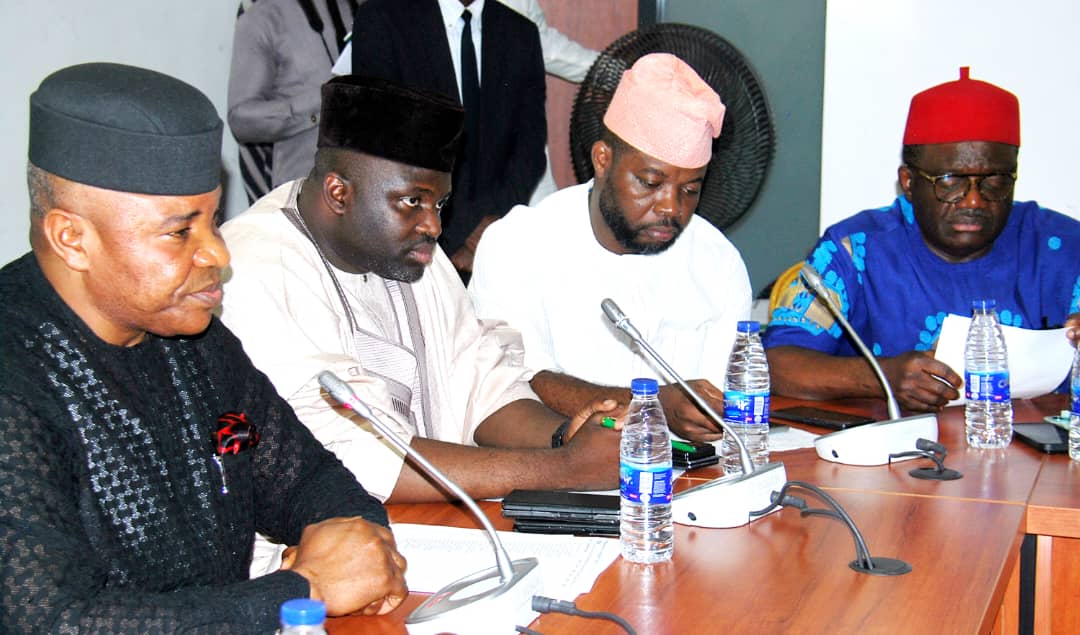
At a public hearing held in Abuja, the Chairman House Committee on Banking Regulations, Rep. Mohammed El-Rufai, said that the proposed legislation before the National Assembly aims to close regulatory gaps, expand access to finance, and protect consumers from fraudulent activities within the banking sector.

Advertisement

The hearing centred on two key bills: one seeking to regulate factoring, the purchase of receivables, and the establishment and oversight of receivables financing businesses; and another proposing amendments to the Banks and Other Financial Institutions Act (BOFIA) 2020.

The first bill is designed to enhance liquidity for small and medium enterprises, facilitate business financing, and align Nigeria’s financial framework with global trade finance standards. While the second bill focuses on ensuring greater protection for bank customers, particularly those affected by unauthorised withdrawals, while promoting transparency and accountability within the financial ecosystem.

Stakeholders from across the financial sector expressed broad support for both bills, describing them as timely measures that would not only stabilise the banking industry but also boost investor confidence and consumer trust in Nigeria’s financial institutions.

“Both Bills share a common goal: enhancing trust, transparency, and stability in our banking and financial ecosystem.”

Advertisement

Delivering the keynote address, Governor Uba Sani of Kaduna State who was represented by Special Adviser on Research, Documentation and Strategy, Fabian Okoye described the Factoring and Receivables Financing Bill as a legislative intervention that can significantly deepen access to finance and energize Nigeria’s productive economy, especially for our Micro, Small and Medium Enterprises (SMEs).

He said: “This Bill is one that I hold close to heart. During my time in the 9th Senate, as Chairman of the Senate Committee on Banking, Insurance and Other Financial Institutions, I sponsored the Factoring, Assignments and Receivables Financing Bill (SB.667) with the goal of establishing a clear legal and regulatory framework for factoring and receivables financing in Nigeria.

“Our intention then, and the purpose that continues today, was to empower businesses to convert their invoices and receivables into immediate liquidity. Many Nigerian enterprises deliver goods and services on credit but are forced to wait months before being paid.

“Factoring provides a practical solution by enabling them to raise cash against those receivables, sustain their operations, meet payroll, and expand production.

Advertisement

“Around the world, factoring has become a critical engine for trade finance and SME growth. In emerging markets, it accounts for billions of dollars annually in financing — improving cash flow, reducing defaults, and supporting export competitiveness.

“With the right legal backing, Nigeria can unlock similar benefits, attract investors into the factoring space, and strengthen our financial infrastructure. However, this must be done with balance, ensuring transparency, protecting SMEs from predatory practices, and aligning the law with existing frameworks such as the Secured Transactions in Movable Assets Act, the Companies and Allied Matters Act, and CBN regulations.”

Governor Sani applauded Speaker Tajudeen Abbas for his visionary leadership and steadfast commitment to economic reforms, and for demonstrating consistency in promoting legislations that directly impact the productivity and competitiveness of our economy.

While commending the 10th House for sustaining legislative momentum on this critical reform, he said that by organising the public hearing, the Committee has created an inclusive platform for stakeholders to refine the Bill and ensure that it truly meets the needs of our economy.

Advertisement

“Let me also commend the National Assembly for its consistency in prioritizing financial reforms that strengthen our banking system and enhance Nigeria’s business environment. When passed, this Bill will not only expand access to finance but also foster innovation, reduce the cost of credit, and promote sustainable economic growth.

“This hearing is a crucial step toward bridging the financing gap for Nigerian businesses and strengthening our economy from the ground up. I am confident that the insights shared here today will guide us toward a law that truly delivers results”, he added.
Continue Reading
Advertisement

News

Association of Medical, Dental Academics in Nigeria gives FG three week ultimatum or face strike

Published

on

ADVERTISEMENT
Zoom Ad
ADVERTISEMENT
Zoom Ad


The Nigerian Association of Medical and Dental Academics (NAMDA) has given the Federal Government a three-week extension to conclude negotiations over its outstanding demands, warning that failure to reach an agreement could trigger a three-day warning strike.

The association issued the ultimatum in a communiqué released to journalists in Uyo on Friday, following its Emergency National Executive Council (E-NEC) meeting.

The communiqué, endorsed by the President, Nosa Orhue, and the Acting Secretary-General, Aniekan Peter, said the extension would run until August 31, 2026.

Advertisement

It stated, “A three-week timeline extension was adopted for a possible further consideration. E-NEC further resolved that the extension period should be utilised by government to resolve all outstanding issues.

“Failure to achieve meaningful resolution at the expiration of the period ending on the 31st of August 2026 shall result in the declaration of a three-day warning strike to be announced by NOC.”

NAMDA also directed all its branches nationwide to engage their members through congresses and sensitisation programmes at least twice during the extension period.

The branches are expected to submit evidence and reports of the mobilisation activities to the National Executive Council through the secretariat, indicating their level of preparedness for possible strike action.

Advertisement

The association expressed concern over what it described as the government’s reluctance to conclude negotiations, while commending the Department of State Services (DSS) and other stakeholders for their interventions in the process.

NAMDA also appreciated its members for their patience and cooperation in maintaining stability within the university system.

The association further lamented the alleged neglect of medical education and training amid the shortage of medical and dental doctors and the increasing migration of professionals, popularly known as the “Japa” syndrome.

It reaffirmed its commitment to pursuing the full implementation of all approved benefits for medical and dental lecturers and urged its members to comply with all directives and decisions reached at the meeting.

Advertisement
Continue Reading

News

Why FCT can’t have state police — Senate

Published

on

By

ADVERTISEMENT
Zoom Ad
ADVERTISEMENT
Zoom Ad

The Senate has explained why the Federal Capital Territory will not be included in the proposed state police structure, saying Abuja lacks the constitutional institutions required to operate one.

Chairman of the Senate Committee on Media and Publicity, Yemi Adaramodu, said the FCT has no governor or State House of Assembly and remains directly under the control of the Federal Government.

Adaramodu said the territory is administered by a minister who takes directives from the Federal Executive Council, while the National Assembly performs legislative functions for the FCT.

“I have heard many people raise a lot of questions on why the Federal Capital Territory is not among the plan for state police. The FCT issue is different. It is under the Federal Government,” he said.

Advertisement

He added that because Abuja does not have a governor or state legislature, it cannot operate under the same policing arrangement being proposed for the 36 states.

“The federal capital does not have an assembly. It is the National Assembly that legislates for the FCT. This is why it can’t be different from what the Federal Government does. Therefore, the federal police are in charge,” Adaramodu said.

The clarification comes as the Federal Government pushes ahead with plans for a new policing structure amid mounting calls for decentralised security across the country.

President Bola Tinubu is expected to receive the draft Executive National Policing Bill on September 3 as part of efforts to provide an operational framework for the proposed system.

Advertisement

Chief of Staff to the President and Chairman of the Presidential Working Group on the National Policing Bill, Femi Gbajabiamila, had also unveiled a public information portal through which Nigerians can submit memoranda and position papers on the proposal.

Under the constitutional amendments being considered, state Houses of Assembly would have powers to legislate on the establishment, administration, funding and oversight of state police.

States would bear the primary responsibility for funding their police formations, although the Federal Government could provide grants or assistance on the recommendation of the National Police Council and subject to approval by the National Assembly.

The FCT, however, would remain under the federal policing structure because of its unique constitutional status and direct administration by the Federal Government.

Advertisement
Continue Reading

News

Gov Abiodun Commends Army, Police, DSS, Others for Intelligence-led Rescue of 5 Kidnapped Poly Students, 2 Others

Published

on

By

ADVERTISEMENT
Zoom Ad
ADVERTISEMENT
Zoom Ad

Governor Dapo Abiodun of Ogun State has lauded the Department of State Services (DSS), the Nigerian Army, the Nigerian Police, as well as Civil Defence Corps (NSCDC), for rescuing five kidnapped students of Gateway ICT Polytechnic, Saapade, in Remo North Local Government Area of the state.

The students, who were abducted by suspected kidnappers earlier this week, were rescued in the early hours of Friday, in an intelligence-led operation around Alamala community, off Ayetoro Road Roundabout, of the state capital. Also rescued were two non-students.

The governor described the rescue as a major breakthrough in its fight against kidnapping, even as he reaffirmed his administration’s unwavering commitment to ensuring that kidnappers and other criminal elements have no hiding place in the state.

He described the operation, which included members of the State Security Network Agency (Amotekun Corps), local vigilantes and hunters, as a demonstration of the success that can be achieved when security agencies work together.

Advertisement

“One of the victims sustained a gunshot injury during the incident and was immediately evacuated for medical attention. The student has since been stabilised.
“This operation is still ongoing, and I wish to assure the good people of Ogun State that our security agencies remain on the trail of every individual connected with this criminal enterprise,” said the governor.

“Our resolve is very clear. Ogun State will remain hostile to criminality and safe for every law-abiding citizen, resident and investor,” the Governor declared, stressing that

According to him, recent joint security initiatives, particularly Operation Kò S’Áyé, have demonstrated the effectiveness of intelligence sharing, inter-agency collaboration and sustained operational pressure against criminal elements.

The governor also commended President Bola Ahmed Tinubu for his administration’s commitment to combating banditry, terrorism and kidnapping across the country, noting that the recent rescue of 308 abducted victims by Nigerian security forces underscores the growing effectiveness of coordinated security operations nationwide. (Reuters)

Advertisement

“At this juncture, I must acknowledge the purposeful leadership of President Bola Ahmed Tinubu, whose administration has placed the restoration of peace and security at the centre of Nigeria’s development agenda through sustained investment in the operational capacity of the Armed Forces and other security agencies.
“The strengthening of intelligence coordination, the acquisition of modern security assets and his deliberate reforms have continued to deepen inter-agency collaboration,” he said.

The governor further noted that the Federal Government has continued to strengthen the nation’s security architecture, adding that the recent approval of a substantial salary increase for officers and men of the Armed Forces would further boost personnel welfare and morale.

“One of the kidnapped victims sustained a gunshot injuries during the operation and was immediately evacuated for medical attention and has since been stabilised.” disclosed a security source.

Advertisement
Continue Reading

Trending

Copyright © 2024 Naija Blitz News