




Connect with us

News

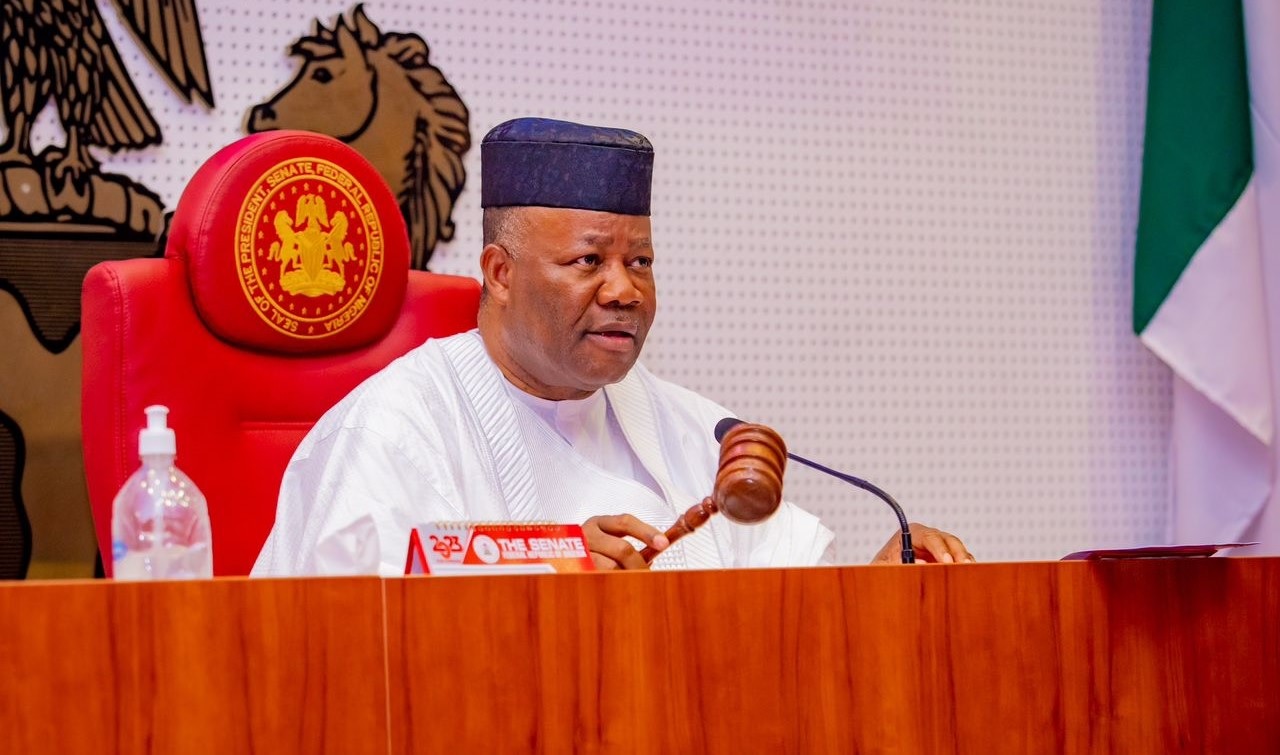
Leadership like fire: Akpabio’s path to greatness, By Sufuyan Ojeifo

Published

on

ADVERTISEMENT
Zoom Ad
ADVERTISEMENT
Zoom Ad

History, in its long and patient arc, is a master storyteller. Its finest tales often begin with conflict rather than applause, with accusation rather than acclaim. Before the garlands and the gratitude, there is the crucible, the fire through which greatness is tested and purified.

The recent wave of false accusations against Nigeria’s Senate President, Senator Godswill Obot Akpabio, belongs to this ancient pattern.

Far from diminishing him, they place him squarely in the historical company of giants like Socrates, Mansa Musa, Patrice Lumumba, and Nelson Mandela, whose trials became the prelude to vindication.

In every civilisation, those who dared to challenge convention were first rewarded with suspicion. Socrates, the Athenian philosopher, was condemned in 399 BC on the charge of corrupting the youth and defying the gods.

Advertisement

Whereas, his true offence was the audacity to question the complacency of his city. He unsettled the powerful and embarrassed the comfortable. The state silenced him, but not his truth.

Today, the same Athens that sentenced him to death has his statue in its squares, while his false accusers are completely forgotten, condemned by history to nothing more than an ignoble footnote.

Socrates’ calm dignity before false judgement still echoes across millennia, a reminder that time is the ultimate judge of moral worth. Akpabio’s silence in the face of lies carries the same wisdom: that one does not wrestle with shadows when history itself is one’s witness.

Nigeria’s Senate President now finds himself walking a road well-travelled by men whose lives became lessons in perseverance. Like Socrates, Akpabio has been accused not because he has failed his people but because he has dared to lead differently.

Advertisement

Indeed, his reforms, his capacity to command loyalty, and his influence in both national and regional politics have unsettled old networks of privilege. Yet his focus remains unwavering, on legislation that strengthens governance, on national stability, and on the quiet labour of statecraft. In a country often distracted by noise, Akpabio embodies the rare discipline of purpose.

In another era, across the deserts of the Sahara, Mansa Musa of Mali experienced a similar misunderstanding. When he embarked on his legendary pilgrimage to Mecca, he displayed the wealth of his empire with generosity that startled the medieval world.

To some, it was extravagance. To history, it became evidence of unmatched vision. His empire flourished through learning, commerce, and faith. His name still shines centuries later, unblemished by the gossip of his age. Likewise, those who misread Akpabio’s grand development strides mistake ambition for arrogance. They fail to see that behind the public works and the national projects lies the spirit of reconstruction, a man rebuilding systems, not just seeking applause.

Patrice Lumumba’s ordeal in the 20th century brought the tragedy of false accusation to its most brutal form. The first Prime Minister of an independent Congo was accused of sowing division and branded an extremist. As the world now knows, his crime was clarity, the insistence that Africa’s freedom must not be dictated by foreign powers. His enemies silenced his voice but could not extinguish his vision.

Advertisement

Today, Lumumba’s name inspires every generation that seeks to reclaim African dignity. The same pattern of vilification, born of fear and envy, trails every reformer. When Senator Akpabio’s detractors peddle falsehoods, they reveal more about their own insecurity than about his record. It is the familiar resistance of the old against the birth of the new.

South Africa’s long night under apartheid produced another target of defamation: Nelson Mandela. For decades, he was called a terrorist and enemy of the state. Yet, in his quiet cell, he found the strength to forgive those who condemned him. When he emerged, he transformed his nation without bitterness. His victory was not only political; it was also moral, a triumph of the human spirit over injustice. Mandela’s story teaches that the mightiest response to falsehood is patience.

Without claiming a direct similarity of their situations, Senator Akpabio’s restraint, his refusal to engage in personal recrimination, reflects Mandela’s lived philosophy; that true leaders answer falsehood with performance, not theatrics.

It is tempting to view each accusation against Akpabio in isolation as a passing political quarrel. Yet to do so would be to miss the deeper rhythm of history. Great leaders are not defined by what is said about them in the heat of their time, but by what is remembered of them when the noise has faded.

Advertisement

The allegations that swirl around Akpabio today are not evidence of guilt but signs of significance. Insignificant men are not worth defaming. As the musician 2Baba once sang, “If nobody talks about you, then you are nobody.” The very ferocity of the attacks against Senator Akpabio is proof of his stature and the disruptive power of his vision.

Reflecting on this lineage of misunderstood greatness, one sees that accusation is often the final refuge of the threatened. Akpabio’s career, from transforming Akwa Ibom State into a model of modern governance to repositioning the Senate as a stabilising institution, represents a continuity of purpose that even his critics cannot deny.

Akpabio has brought maturity to national politics, forged collaboration across divides, and demonstrated that leadership can be firm without being fractious. His calm under pressure and his devotion to national unity have become the quiet pillars of Nigeria’s democratic consolidation.

Clearly, these attacks are not the measure of the man but the echo of his impact. The history of leadership is littered with names once maligned and later sanctified. Socrates’ trial became the cornerstone of philosophy. Mansa Musa’s misunderstood generosity defined a golden age. Lumumba’s persecution gave Africa a martyr. Mandela’s imprisonment forged a moral compass for humanity. Senator Godswill Akpabio stands among them, a contemporary figure walking through the same furnace of falsehood towards the same horizon of vindication.

Advertisement

To see Akpabio merely as a politician under attack is to miss the larger story unfolding. His journey is a lesson in patience, endurance, and the power of moral steadiness in the face of hysteria. As Nigeria searches for stability and renewal, Akpabio’s conduct offers something rarer than rhetoric: a model of composed leadership that refuses to be baited into bitterness, let alone the flitting satisfaction of viral outrage. He is writing, through action rather than argument, a chapter that future historians will read with admiration.

The crucible of false accusation, then, is his initiation into greatness. Every great leader must pass through the fog of misunderstandings before emerging into the sunlight of vindication. For Senator Akpabio, that sunlight is inevitable. When the passions of the present have cooled, and the record of reform stands tall against the smallness of slander, Nigeria will see him for what he truly is, a nation builder tested by fire, a visionary misunderstood in his own time but destined for vindication in the fullness of history.

Posterity, which has already cleared the names of Socrates, Mansa Musa, Lumumba, and Mandela, will do the same for the Uncommon Transformer. For in the grand tribunal of time, truth always wins its appeal.

● Sufuyan Ojeifo is the publisher and editor-in-chief of THE CONCLAVE online newspaper.

Advertisement
Continue Reading
Advertisement

News

Borno Commissioner Vows To Cut Off Fingers Of Those Who Vote Against APC

Published

on

ADVERTISEMENT
Zoom Ad
ADVERTISEMENT
Zoom Ad

Saina Buba, the Borno State Commissioner for Youth and Sports Development, has threatened political opponents with physical harm if they fail to support the ruling All Progressives Congress (APC).

Buba made the remark during a campaign inauguration event organised by the Tinubu City Boy Movement, a political support organisation campaigning for President Bola Tinubu’s administration and his anticipated 2027 re-election bid.

Addressing the crowd, the commissioner warned that anyone who opposed the APC by raising a finger against the party would have the same finger cut off.

He said those who challenged the party would have their fingers broken, stressing that the warning was part of the political contest.

Advertisement

Buba also warned that government benefits would be used to favour supporters of the administration while those who refused to support it could face punitive treatment.

The commissioner said those who supported the government would enjoy its benefits, while those who rejected it would face the consequences.

Buba’s comments have sparked outrage.

Advertisement
Continue Reading

News

APM, ADC Group Demand Release Of FBI Record On Tinubu

Published

on

ADVERTISEMENT
Zoom Ad
ADVERTISEMENT
Zoom Ad

The Grassroots Mobilisation Network (GMN), a support group of the African Democratic Congress (ADC), on Sunday called on President Bola Tinubu to break his silence over alleged references to him in narcotics-related documents reportedly submitted by the United States FBI before the District Court for the District of Columbia, or resign from office.

The group, in a statement by its spokesperson, Mr Peter Emeka, expressed concern over what it described as the continued silence of the Presidency, arguing that Nigerians deserve clarity on an issue that, in its view, has implications for the country’s international reputation.

Pressing for a US response, the APM National Publicity Secretary, Abubakar, said the sustained efforts by the Tinubu Presidency to block the release of the report to the public heightened suspicion of guilt and desperation for a cover-up.

“The APM urges the United States authorities to note that withholding such information is of enormous harm to Nigeria’s security, national integrity and democratic growth.

Advertisement

“The United States, being a leading democracy in the world, should at all times be seen to facilitate the consolidation of democracy and transparency in the international fight against drug trafficking and corruption.

“The drug and other ancillary allegations against President Tinubu, who is a major contender in the 2027 presidential election, constitute a global issue which continues to harm Nigeria’s reputation among the comity of nations.

“This is especially as the public is already aware of the 1993 $460,000 forfeiture judgment against accounts traced to Tinubu by the US District Court for the Northern District of Illinois following an investigation into drug-related transactions.

“The effect of the $460,000 forfeiture judgment is that, by virtue of Section 137 of the Constitution of the Federal Republic of Nigeria, 1999 (as amended), President Tinubu remains ineligible for election in Nigeria. Moreover, Nigeria is a signatory to international conventions on drugs and money laundering.”

Advertisement

The APM urged the “United States authorities to assist Nigerians in their decision to elect a leader with clean records and not an individual encumbered by drug-related allegations and corruption cases.”

On its part, the spokesman for the Grassroots Mobilisation Network (GMN), Mr Peter Emeka, said, “We call on President Tinubu to come out clean and speak to the nation over the ongoing litigation in America.”

He also criticised Nigeria’s law enforcement and intelligence agencies, accusing them of failing to adequately investigate or respond to the allegations and documents circulating in the public domain.

“Our system has failed for the fact that they were unable to detect all these embarrassing documents being paraded against the President, which are now the subject of litigation in a far-away country,” Emeka stated.

Advertisement

“Our intelligence agencies saddled with the responsibility of investigation and various checks have all failed,” he added.

According to the group, the continued silence from the Presidency is becoming increasingly disturbing and has the potential to deepen public suspicion.

“If the President continues to remain mute, he should quietly resign to save the nation from the ongoing global embarrassment,” Emeka said.

In a related development, the GMN has demanded greater transparency regarding President Tinubu’s reported three-week vacation in Europe.

Advertisement

The group said that, given the prevailing mood in the country and the controversy surrounding the narcotics-related allegations, the Presidency should provide Nigerians with adequate information about the President’s itinerary and engagements while away.

“The prevailing mood of the country requires the Presidency to make a full disclosure of President Tinubu’s movements,” the group said.

The GMN maintained that greater transparency would help dispel speculation, reassure Nigerians and protect the country’s image and standing in the international community.

The group urged the Presidency to address the issues directly rather than allow speculation and unanswered questions to dominate public discourse.

Advertisement
Continue Reading

News

FG set to blacklist schools, publishers using unapproved textbooks from September

Published

on

ADVERTISEMENT
Zoom Ad
ADVERTISEMENT
Zoom Ad


The Federal Government will begin blacklisting schools, authors, and publishing houses that use or distribute unapproved instructional materials starting this September.

This harsh sanction coincides with the resumption of the 2026/2027 academic session in two weeks, marking the official enforcement of an aggressive new national textbook ranking policy.

Under the new directive, standard licensing from the Nigerian Educational Research and Development Council (NERDC) no longer guarantees a textbook’s entry into classrooms.

Advertisement

Every instructional resource from primary to senior secondary school must now pass a rigorous national evaluation, securing a minimum score of 70% to qualify for the official national ranking.

Speaking recently with education stakeholders—including state commissioners, private school owners, and administrators—the Minister of Education, Dr. Tunji Alausa, emphasized that the policy is central to making Nigeria’s education sector globally competitive.

According to the policy statement obtained by Nigerian Tribune, the government is capping the final approved list to a maximum of six to 10 titles per subject to prevent an overcrowded market.

Once a textbook makes this elite list, it will remain standard for a minimum lifespan of three years to ensure educational stability.

Advertisement

While unranked textbooks are strictly banned in all public primary and secondary schools nationwide, the Federal Government strongly recommends that private institutions adopt these exact standards to maintain uniform educational quality.

Continue Reading

Trending

Copyright © 2024 Naija Blitz News