News
Stop hailing presidents, tell them the truth, Sanusi urges ministers
- /home/naijuinz/public_html/wp-content/plugins/mvp-social-buttons/mvp-social-buttons.php on line 27
https://naijablitznews.com/wp-content/uploads/2025/10/Sanusi-tinubu-583x381-1.webp&description=Stop hailing presidents, tell them the truth, Sanusi urges ministers', 'pinterestShare', 'width=750,height=350'); return false;" title="Pin This Post">
- Share
- Tweet /home/naijuinz/public_html/wp-content/plugins/mvp-social-buttons/mvp-social-buttons.php on line 72
https://naijablitznews.com/wp-content/uploads/2025/10/Sanusi-tinubu-583x381-1.webp&description=Stop hailing presidents, tell them the truth, Sanusi urges ministers', 'pinterestShare', 'width=750,height=350'); return false;" title="Pin This Post">
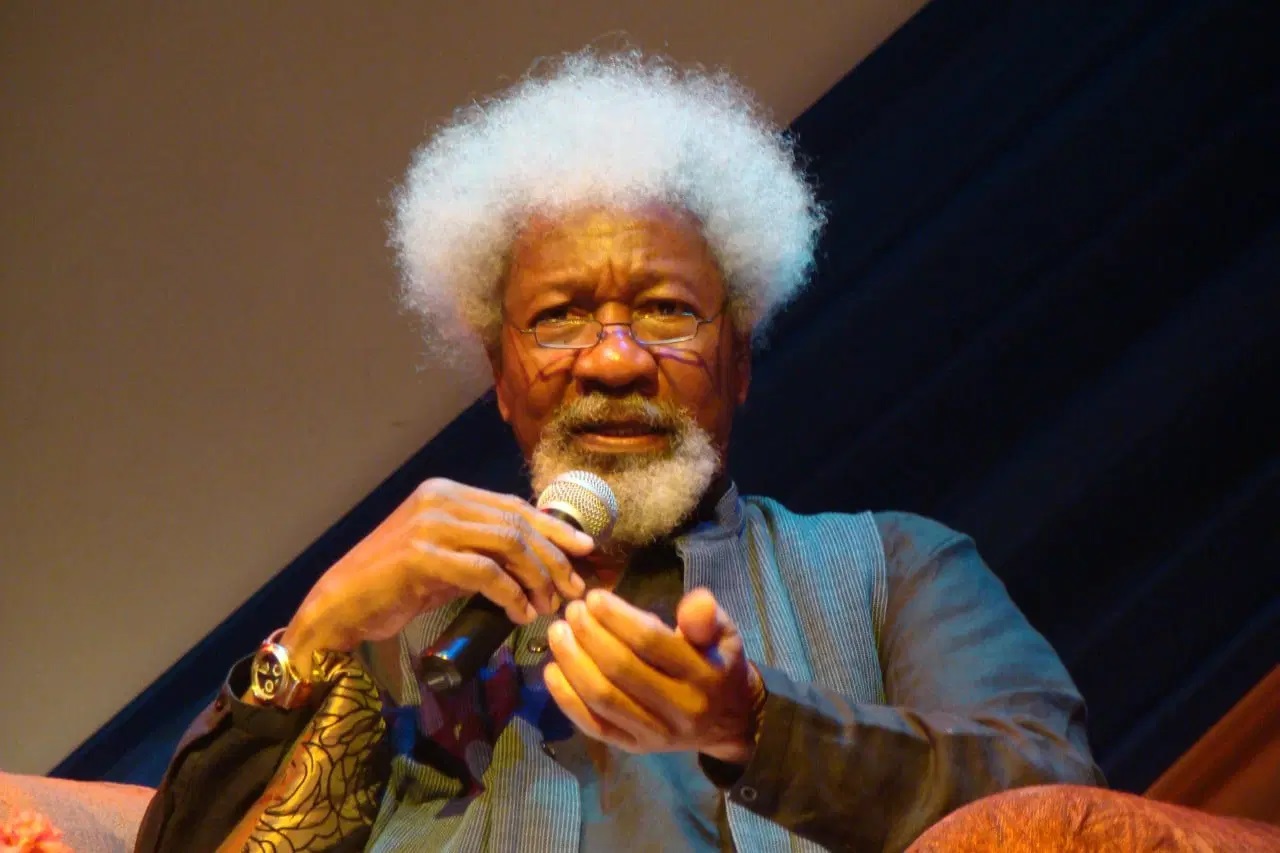
The Emir of Kano and former Governor of the Central Bank of Nigeria (CBN), Muhammadu Sanusi II, has warned ministers and presidential aides against turning themselves into praise singers rather than giving the President honest advice that can save the nation’s economy.
Sanusi gave the charge on Monday in Abuja at the Oxford Global Think Tank Leadership Conference and Book Launch, where he and Atedo Peterside dissected Nigeria’s economic policies and governance challenges.
Speaking on the need for integrity and courage in public service, Sanusi lamented that Nigeria’s leadership crisis is worsened by sycophancy, as those who tell the truth are often branded enemies of the government.

“Our leaders listen but only to those who tell them what they want to hear,” the Emir said. “Nigeria has too many sycophants in government. Those who speak the truth are seen as enemies of the state.”
He condemned the growing culture of excessive praise for political leaders during official functions, warning that it stifles honest feedback and good governance.
“You sit in a meeting, and the President is there. The first thing people say is, ‘Mr. President, I want to thank you for your great leadership. God has blessed Nigeria by making you our leader,’” Sanusi said. “By the time they finish laying that foundation, it is their advice that the President accepts.”
“But when you tell the truth and point out what is wrong, they say you are the enemy. That is why people like Atedo Peterside and myself are always seen as enemies of the state because people don’t like hearing the truth.”
Sanusi urged ministers and presidential advisers to restore integrity to public service by speaking truth to power, stressing that blind loyalty has been one of Nigeria’s greatest obstacles to progress.
“Those who work with the President must understand that it is not in their benefit to turn themselves into praise singers,” he warned. “You disgrace yourself and the office you hold when you do that.”
Turning to the economy, the Emir commended the Tinubu administration for removing fuel subsidy and unifying exchange rates, describing both as “painful but necessary steps.” However, he cautioned that these reforms will fail if not matched with institutional discipline and prudent spending.
“If you stop paying subsidies but continue borrowing more, it means you’ve filled one hole only to dig another,” he said. “The real challenge now is the quality of government spending and the management of the revenues saved.”
Sanusi, who served as CBN Governor between 2009 and 2014, said Nigeria’s current economic crisis was the consequence of years of policy inconsistency and populist politics, noting that the same politicians who opposed subsidy removal in 2012 are now implementing it.
“In 2012, we warned that the subsidy was unsustainable, but politics took over,” he recalled. “Now the same people who led protests against it have inherited the problem and had no choice but to do the right thing.”
The Emir praised the professionalism of the current economic team, including Finance Minister Wale Edun and CBN Governor Yemi Cardoso, saying they have taken commendable steps to stabilize inflation and reduce exchange rate volatility.
Nonetheless, he called for urgent action to cut waste in government, reduce the size of the cabinet, and demonstrate leadership by example.
“Why do we need 48 ministers? Why do we need long convoys of vehicles and endless travel expenses?” he queried. “We cannot preach sacrifice to the people while living in luxury at the top.”
The conference, themed “Reimagining Leadership and Governance in a Changing Africa,” brought together policymakers, development experts, and academics to discuss pathways for effective governance and institutional reform.
In his remarks, Atedo Peterside, founder of Stanbic IBTC Bank, echoed Sanusi’s call for fiscal responsibility, saying government must prove that savings from subsidy removal are being used to uplift ordinary Nigerians.
“It’s not true that pain automatically brings gain,” Peterside warned. “Gain only follows pain if the government spends wisely, eliminates waste, and supports the poor.”
The duo agreed that Nigeria’s recovery depends not only on bold economic reforms but on a moral reawakening among those in power.
“Good policy without good governance is like planting a tree and refusing to water it,” Sanusi said. “Nigeria’s leaders must stop surrounding themselves with praise singers and start listening to the truth even when it is uncomfortable.”
News
India-Nigeria Trade Hits $9bn as New Delhi Seeks Deeper Partnership in Energy, Health, Defence
By Gloria Ikibah
India has revealed that its bilateral trade with Nigeria rose to $9 billion in the 2025/2026 financial year, as it pushed for stronger cooperation in energy, healthcare, defence, technology and agriculture.
Speaking during a maiden media parley in Abuja, the Indian High Commissioner to Nigeria, Abhishek Singh, described the relationship between both countries as one of the most promising partnerships in the Global South.
According to him, the trade volume increased from $7.13 billion in the 2024/2025 financial year to $9 billion in 2025/2026, reflecting growing economic ties between both countries.
He said: “When you talk about India-Nigeria relations, you always talk about the huge volumes of bilateral trade, the diverse basket of trade and the ever-growing interest both in India and Nigeria to increase the bilateral trade.
“Very happy to report that the trade for the financial year 25-26 stands at around US dollar 9 billion, which is up from US dollar 7.13 billion in the financial year 24-25”.
The envoy disclosed that more than 200 Indian companies are currently operating in Nigeria across sectors such as pharmaceuticals, manufacturing, power, construction, consumer goods, healthcare and services.
He noted that many of the companies had established production facilities in Nigeria, creating employment opportunities for nearly 100,000 Nigerians.
“I am told that over 200 Indian companies are active in Nigeria and they relate to sectors like pharmaceuticals, manufacturing, power, construction, consumer goods, healthcare and services.
“And a very important aspect is that they are also making in Nigeria. They are producing in Nigeria. They have set up plants in Nigeria.
“And this has translated into close to one hundred thousand brothers and sisters from Nigeria being deployed and employed by these companies. And that makes these Indian companies the second largest employer of Nigerian people after the Federal Government of Nigeria,” Singh said.
On energy cooperation, Singh said crude oil and liquefied natural gas remained important areas of engagement, while India was also interested in Nigerian investments in oil and gas, pipeline security, compressed natural gas conversion and liquefied petroleum gas infrastructure.
“We strongly believe that both our countries can mutually benefit from greater cooperation in the field of energy security.
“As you are aware, India is the most populous country in the world with 1.4 billion people, while Nigeria is the sixth largest country by population, with around 230 million people.
“So, naturally, the consumption of energy is going to be very high. All the more reason that the two great democracies, India and Nigeria, should cooperate more in the field of energy security,” he said.
The High Commissioner also highlighted growing collaboration in defence and maritime security, revealing that a Nigerian naval delegation was preparing to travel to India for bilateral discussions.
He said the partnership between both countries in the defence sector was long-standing and included support for the establishment of the National Defence Academy in Kaduna and the Naval College in Port Harcourt.
According to him, both countries share common security concerns, including terrorism, piracy, organised crime and illicit trafficking.
“This cooperation includes intelligence sharing, counter-terrorism, defence training and maritime security, especially in the Gulf of Guinea. Defence sales are also an important area of our collaboration,” Singh said.
The envoy further disclosed that India had extended concessional lines of credit worth $395 million to Nigeria while providing extensive capacity-building opportunities through the Indian Technical and Economic Cooperation (ITEC) programme.
“We have shared our strengths in affordable medicine, digital public infrastructure, agriculture, skills development and space applications.
“And these align very well with Nigeria’s priorities.
“In this line, we have extended concessional lines of credit worth US$395 million and also provided substantial training through the ITEC programme, including civilian and defence slots,” he added.
Singh noted that approximately 100 Nigerian military personnel participate annually in defence training programmes at leading Indian institutions.
He also highlighted the contributions of the estimated 60,000 Indians living in Nigeria, many of whom are second and third-generation residents.
“I want to thank Nigerian society and the government for embracing them and giving them the ecosystem and the level playing field so that they can succeed in their respective fields.
“These Indians consider India as their motherland, but they rightly also consider Nigeria as their fatherland.
“And these 60,000 Indians have acted as bridges in the educational, cultural, medical and commercial sectors and have also provided a social foundation for our relationship,” he said.
The High Commissioner also confirmed that President Bola Tinubu had been invited to attend the BRICS Summit scheduled for 12 and 13 September in New Delhi, expressing optimism that the Nigerian leader will head a high-powered delegation to the event.
“We are very hopeful that the Honourable President of Nigeria will be leading a high-powered delegation for the BRICS summit very soon.
“As Africa’s largest economy and one of the most populous nations in the world, Nigeria, as a partner country, brings immense strategic, demographic and economic weight to the BRICS bloc.
“Its participation in the earlier edition enriched the deliberations and strengthened the voice of the Global South,” he said.
Singh also announced that India had received Nigeria’s support for its bid for a non-permanent seat on the United Nations Security Council and had, in turn, endorsed Nigeria’s candidature.
Describing India-Nigeria relations as a partnership built on equality, he said: “When I talk about India-Nigeria relations, in my view, it is one of the most promising relationships of the Global South.
“It’s a win-win relationship. It’s a partnership. And when I say partnership, it means a handshake between two equal partners.
“This relationship is based on complementarities and, most importantly, on trust, understanding and mutual respect. I see a great future for India-Nigeria relations based on the progress that we have already made.”
Also speaking, the Deputy High Commissioner of India, Ms Vartika Rawat, highlighted India’s progress in healthcare and explained how the country’s public health achievements can strengthen cooperation with Nigeria.
She said India’s latest National Family Health Survey (NFHS-6), which covered 679,000 families across 719 districts, was the largest household health survey ever conducted anywhere in the world.
According to her, the survey showed that antenatal care now reaches 96 per cent of pregnant women, while institutional deliveries have risen to 90.6 per cent.
“Safer childbirth is no longer the exception in India. It is fast becoming the norm.
“Antenatal care now reaches 96 per cent of pregnant women. Institutional deliveries have climbed to 90.6 per cent, moving the country ever closer to universal coverage,” she said.
Rawat added that full immunisation among children aged 12 to 23 months had increased from 83.8 per cent to 87.1 per cent, while vaccine coverage remained above 96 per cent nationwide.
She also revealed that stunting among children under five had declined from 35.5 per cent to 29.3 per cent, representing nearly 30 million children lifted out of long-term nutritional deprivation.
On healthcare financing, she said household coverage under health insurance schemes had risen from 4.9 per cent in 2005 to 60.2 per cent, while internet usage among women had nearly doubled from 33.3 per cent to 64.3 per cent.
She stressed that India’s health achievements had direct implications for its partnership with Nigeria.
“The very achievements of the National Family Health Survey, that is expanding immunisation, affordable maternal and child care and wider financial protection in healthcare, are the same pillars on which our health partnership with Nigeria is built.
“India today supplies roughly 40 per cent of Nigeria’s pharmaceutical imports and, for certain categories of medicine, over 90 per cent.
“Our pharmaceutical exports to this country reached 315 million US dollars in the financial year 2024-2025, while Indian companies have invested heavily, around four billion US dollars, in local pharmaceutical manufacturing in Nigeria.
“This is what it means in practice for India to be the pharmacy of the world. It means not only affordable medicines reaching Nigerian homes but also manufacturing medicines in Nigeria for Nigerian homes.
“As Nigeria charts its own path towards universal health coverage, India believes the Ayushman Bharat model and other Indian policy models offer a template well worth exploring together.
“These are not two separate stories. They are one and the same story of two nations, once united in the struggle against colonialism and now united in the pursuit of health, dignity and shared prosperity for our people,” she said.
News
Just in: Finally, Fadahunsi leaves police CID after hours of grilling over k!ll Accord party members outburst
Senator Francis Fadahunsi has finally left the Osun State Police Command’s Criminal Investigation Department (CID) in Osogbo after honouring an invitation over a viral video in which he was allegedly heard threatening members of the Accord Party.
It was observed that Fadahunsi, who represents Osun East Senatorial District, departed the police facility on Wednesday afternoon after spending time with investigators.
The senator, dressed in a white outfit and a baseball cap bearing symbols associated with President Bola Tinubu, was accompanied from the police station to his vehicle by his aide and some loyalists.
It was not immediately clear whether Fadahunsi was released unconditionally or whether the police imposed any conditions as part of his release.
Efforts to reach the state police command spokesperson for further details on the circumstances surrounding the senator’s release were unsuccessful as of the time of filing this report.
The senator, dressed in a white outfit and a baseball cap bearing symbols associated with President Bola Tinubu, was accompanied from the police station to his vehicle by his aide and some loyalists.
It was not immediately clear whether Fadahunsi was released unconditionally or whether the police imposed any conditions as part of his release.
Efforts to reach the state police command spokesperson for further details on the circumstances surrounding the senator’s release were unsuccessful as of the time of filing this report.
The invitation followed a viral video from an All Progressives Congress (APC) campaign programme in Ilesa, Osun State, where Fadahunsi was heard making threatening remarks against members and supporters of the Accord Party.
In a letter dated August 11, 2026, the police directed the senator to appear before the State Criminal Investigation Department (SCID) in Osogbo at 11:00 a.m. on Wednesday.
The invitation was signed by Samuel Etaifo Erale, Commissioner of Police in charge of elections in Osun State.
According to the police, Fadahunsi was invited to clarify the circumstances surrounding remarks allegedly made during his address at the APC campaign programme in Ilesa on Tuesday.
“The invitation is premised on information in possession of the Nigeria Police alleging that during your address at the aforementioned programme, you made statements considered to be threatening, inciting and intimidating in nature, and the statement has already been in circulation on various electronic and social media platforms,” the police said in the letter.
The command said his appearance was necessary to enable it to establish the circumstances surrounding the remarks and determine their implications.
The media had earlier reported that Fadahunsi was heard in the viral video allegedly calling on APC supporters to attack members of the Accord Party ahead of the Osun governorship election scheduled for Saturday, August 15.
“If we hear of Accord Party again in Ilesa here for the election coming up on Saturday, you can record me and say it anywhere,” he was heard saying.
He allegedly went on to tell APC supporters that they should kill Accord Party members seen in the area before the election.
“So we are here now to tell you that till the day of the election, if we see any Accord Party members, we’ll kill them,” he was heard saying.
“We cannot be watching.”
Fadahunsi also warned that Accord Party members who intended to vote would not be allowed to do so, while making threats against traditional rulers whom he accused of supporting the opposition party.
He vowed that Ijesa land would not contain such chiefs and declared that, henceforth, it would be “an eye for an eye or an eye for anything.”
The remarks have sparked concerns among political stakeholders as campaigns intensify ahead of the August 15 governorship election, with fears that inflammatory statements by political actors could heighten tensions and contribute to electoral violence.
Fadahunsi is a serving senator representing Osun East Senatorial District and a member of the APC.
News
FG plans digital registration of cattle to tackle rustling
The Federal Government has concluded plans to introduce a digital registration system for cattle and other livestock as part of measures to curb cattle rustling and improve livestock management across the country.
Under the proposed system, cattle and other four-legged livestock will be fitted with electronic ear tags containing unique identification details, geolocation information and proof of ownership.
The Minister of Livestock Development, Idi Maiha, disclosed this on Tuesday after briefing President Bola Ahmed Tinubu on the activities of his ministry and the implementation of the National Ranching Policy at the State House, Abuja.
Maiha said the electronic identification system would form part of a national livestock database designed to enable authorities to identify, monitor and track animals across the country.
According to him, the technology would help establish ownership and make it easier to trace livestock that stray or are stolen.
He described the initiative as part of the Federal Government’s non-kinetic strategy for addressing insecurity in rural communities, particularly cattle rustling.
Beyond its security benefits, the minister said the digital registration system would contribute to the modernisation of Nigeria’s livestock sector by moving production away from traditional practices towards a more organised and technology-driven system.
Maiha explained that the electronic identification programme was being developed alongside the government’s plan to rehabilitate 417 grazing reserves and transform them into integrated livestock communities.
He said the ranching programme would commence with a pilot project in Plateau State before being extended to Benue, Nasarawa, Kaduna and Adamawa states, as well as the Federal Capital Territory.
The minister said the locations were prioritised because of their history of farmers-herders conflicts.
He explained that the ranching strategy was designed to reduce the movement of large herds by providing livestock owners with access to pasture, water, veterinary services and other essential infrastructure within designated settlements.
Maiha noted that the traditional system of livestock production had become increasingly difficult to sustain due to the disappearance of grazing routes as a result of agricultural expansion, urbanisation and infrastructure development.
“Large number of cattle on the move is crisis-prone because, number one, the grazing routes have disappeared. Farms, large farms have come up, aggressive urbanisation, demand for land for infrastructure development, so many other things have made nomadism not sustainable,” he said.
He said the proposed grazing reserves would be developed as economic communities rather than places where cattle would merely be confined.
According to him, the planned settlements would include residential facilities, primary schools, healthcare centres, veterinary clinics, solar power installations and earth dams for irrigation and pasture production.
The government also expects the concentration of livestock within the reserves to attract private investment into milk production, dairy processing, meat processing and other areas of the livestock value chain.
Maiha said the ministry was promoting improved livestock breeds and commercial pasture cultivation to boost productivity.
He explained that improved breeds would enable pastoralists to maintain smaller herds while producing higher quantities of milk and meat.
He added that pasture would either be cultivated within the livestock settlements or harvested from other locations and transported to ranches.
The minister said the government was also working to modernise other aspects of livestock production, including veterinary services, dairy production, abattoirs, fodder cultivation and vaccine storage.
He disclosed that seven model veterinary clinics had already been established, while the long-term objective was to establish at least one model veterinary hospital in every state.
Maiha further said the government was developing off-grid cold-chain facilities for animal vaccines to ensure that they were properly stored and transported under the required conditions.
He expressed confidence that the combination of digital livestock identification, ranching, improved breeds, better veterinary services and modern infrastructure would help reduce conflicts associated with cattle movement while strengthening Nigeria’s livestock economy.
-
Sports21 hours agoSad; Katsina United footballer, Ozor, slumps, dies, Gov Radda mourns
-
News22 hours agoGov Adeleke reveals what TInubu told him about Osun account freeze
-
News14 hours agoSee Dollar to Naira exchange rate today, August 12, 2026
-
Politics22 hours agoINEC shuts down portal as APC, NDC, ADC, others upload candidates
-
News22 hours agoEbonyi State Assembly passes Bill regulating house rent, agent fees
-
Politics14 hours agoJust in: Three days to election, PDP candidate pulls out of guber race
-
News14 hours agoJust in: Finally, after years of litigations, Cross River, again becomes oil producing state
-
News22 hours agoJust in: Police summon Osun Senator over alleged violence threat against Accord members