Connect with us

News

Just in: US Lawmakers Demand Sanctions For Miyetti Allah, Fulani Militias Over Alleged Religious Killings In Nigeria

Published

on

ADVERTISEMENT
Zoom Ad
ADVERTISEMENT
Zoom Ad

By Kayode Sanni-Arewa

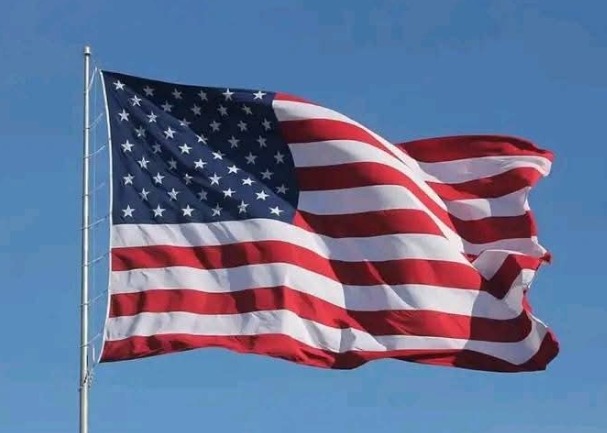
The United States House of Representatives has called on the Departments of State and Treasury to impose targeted sanctions on some Nigerian groups including the Miyetti Allah Cattle Breeders Association of Nigeria and Miyetti Allah Kautal Hore, over alleged complicity in religious violence in Nigeria.

This was contained in a resolution introduced before the US House on Tuesday and seen on the US Congress website on Wednesday.

Filed as H. Res. 860 in the 119th Congress, the resolution, submitted by Rep. Christopher Smith with Rep. Paul Huizenga as a co-sponsor, commends President Donald Trump for redesignating Nigeria as a CPC.

Advertisement

The sponsors decried the alleged worsening persecution of Christians and other religious minorities, PUNCH reports.

They cited a catalogue of findings and reports that informed the measure, including media accounts and NGO data alleging large-scale attacks on civilians, destruction of places of worship, and a pattern of impunity.

The resolution reads in parts, “For over a decade, Islamic terror organisations have carried out mass murder, rape, kidnappings, and other atrocities targeting mostly Nigerian Christians and non-Fulani moderate Muslim populations, resulting in mass displacement and destruction of places of worship.

“Prominent Christian and Muslim leaders have been kidnapped or assassinated, including priests, pastors, and imams who advocate for religious tolerance;

Advertisement

“Religious leaders, such as Father Remigius Iyhula and Bishop Wilfred Anagbe, who testified on March 12, 2025, at a hearing of the House Foreign Affairs Committee about the persecution and targeted killings of Christians in the Diocese of Makurdi, have faced intimidation, threats, and harassment from both extremist groups and government authorities.”

Supporters of the measure argued that the CPC redesignation would strengthen diplomatic leverage to press Nigeria for accountability and protection of religious minorities.

“The designation of Nigeria as a CPC will enhance diplomatic efforts to encourage the Nigerian government to take necessary actions to protect religious minorities and uphold fundamental human rights,” they said.

They therefore moved that “President Donald Trump acted appropriately and decisively to redesignate Nigeria as a CPC and hold the Nigerian government accountable for its complicity in religious persecution by radical Islamists, such as Boko Haram and Fulani terrorists.”

Advertisement

“The State Department should provide immediate humanitarian assistance directly to faith-based groups to support internally displaced people in Nigeria’s middle belt states.

The United States, through the Department of State and Department of Treasury, should impose targeted sanctions, including visa bans and asset freezes under the Global Magnitsky framework and other restrictive measures, on individuals and entities responsible for severe violations of religious freedom in Nigeria, including sanctions against Miyetti Allah Cattle Breeders Association of Nigeria (MACBAN) and Miyetti Allah Kautal Hore, and should place Fulani-Ethnic Militias operating in Benue and Plateau States on the Entities of Particular Concern List under the International Religious Freedom Act,” the resolution read.

The resolution also asked the US to justify the purposes and amounts of recent security and development assistance to Nigeria and to tie future support to improved human-rights outcomes.

The resolution was referred to the House Foreign Affairs Committee and the Judiciary Committee for further consideration.

Advertisement

Meanwhile, the Nigerian government had told US President Donald Trump to respect Nigeria’s sovereignty and stay away from any plans to deploy American troops to its territory.

Daniel Bwala, an aide to President Bola Tinubu, stated this on Monday while appearing on Russia National TV.

Bwala dismissed the allegations as part of an orchestrated media campaign to paint the Tinubu administration as anti-Christian, saying independent global monitors and credible civil society organizations have found no evidence of state-backed religious genocide.

Advertisement
Continue Reading
Advertisement

News

Obi drags former political acolyte Okonkwo to court over alleged defamatory bribery claims

Published

on

ADVERTISEMENT
Zoom Ad
ADVERTISEMENT
Zoom Ad

The presidential candidate of the Nigerian Democratic Congress (NDC), Peter Obi, has started legal action against his former political acolyte and kinsman, Kenneth Okonkwo, over allegations that he and other party leaders collected bribes from aspirants seeking elective positions.

The lawsuit marks a significant escalation in the public fallout between the two political associates, whose relationship has deteriorated in recent months following disagreements over political developments and party affairs.Politics

According to court documents filed by Obi’s legal team, the former Anambra State governor is challenging a series of statements allegedly made by Okonkwo during a public broadcast, in which he accused Obi and leaders of the NDC in the South-East of demanding illicit payments from aspirants seeking tickets to contest for seats in the House of Representatives.

The suit, dated June 9, 2026, was filed by Chief Alex Ejesieme (SAN) of Alex Ejesieme (SAN) & Co. (Madiba Chambers), who described the allegations as false, malicious, and highly damaging to Obi’s reputation.

Advertisement

According to the legal filing, Okonkwo allegedly claimed that House of Representatives aspirants were required to pay an additional ₦10 million to party leaders after paying the official expression of interest and nomination fees.

The suit quoted Okonkwo as alleging that Obi and South-East leaders of the NDC informed aspirants that payment of the additional sum was necessary to secure consideration within the party.

Obi’s lawyers further stated that Okonkwo claimed documentary evidence existed to support the allegation and that receipts had allegedly been issued for the payments.

The actor-turned-politician was also accused of alleging that Obi personally compiled the list of party candidates from a hotel room and manipulated the candidate selection process.

Advertisement

Among other assertions attributed to Okonkwo were claims that Obi travelled abroad to collect money from individuals and that he, alongside other NDC leaders in the South-East, was involved in activities amounting to criminal conduct.

Obi Describes Allegations as False and Defamatory

In the legal action, Obi’s lawyers strongly rejected the allegations, insisting that the statements were entirely fabricated and intended to tarnish the former governor’s image.

The legal team argued that the claims portrayed their client as a dishonest political figure involved in bribery, extortion, fraud, and criminal conspiracy.

Advertisement

According to the suit, the statements were capable of exposing Obi to public hatred, ridicule, contempt, and distrust among members of society.

“The above statements, in their natural and ordinary meaning and by necessary implication, falsely and maliciously represent our client as a person who demands, solicits, organises and collects bribes; who extorts, defrauds and swindles political aspirants of their money; who is a fraudster, a scammer and a dishonest political actor,” the legal team stated.

The lawyers further argued that the allegations struck directly at Obi’s reputation as a public servant and political leader.

They described the remarks as reckless and unsupported by any credible evidence.

Advertisement

Concern Over Social Media Amplification

Obi’s legal representatives also expressed concern over the manner in which the statements were allegedly disseminated.

According to the law firm, the comments were made during a live television appearance before being widely circulated across social media platforms and online channels, thereby increasing their reach and potential impact.

The legal team maintained that while freedom of expression remains a constitutional right, it does not extend to publishing statements capable of damaging another person’s reputation without factual basis.

Advertisement

They argued that the remarks went beyond the limits of political criticism and fair comment.

“Your words were not mere political commentary. They crossed the permissible bounds of fair comment and constituted a direct assault on our client’s person, integrity, image and reputation,” the lawyers stated.

Obi Demands Retraction, Apology and Compensation

As part of the reliefs sought, Obi’s legal team is demanding that Okonkwo immediately withdraw the statements in their entirety and issue a public apology.

Advertisement

The proposed apology, according to the lawyers, must be clear, unconditional, and given the same level of prominence as the original allegations.

They further requested that the apology be published across all major social media platforms, including X, Facebook, Instagram, and YouTube.

In addition, the legal team is seeking a written undertaking from Okonkwo, committing him to refrain from making further defamatory statements against their client.

The suit also includes a demand for financial compensation for the alleged damage caused to Obi’s reputation and public standing.

Advertisement

The legal battle comes amid ongoing political realignments and public disagreements involving former allies within Nigeria’s opposition landscape, with the dispute expected to attract significant public and political attention in the coming weeks.

Continue Reading

News

NCC: Telecom operators to deploy 12,000 new sites as 75m subscribers get compensation

Published

on

ADVERTISEMENT
Zoom Ad
ADVERTISEMENT
Zoom Ad

NCC moves to stop big telcos from crushing small players
The Nigerian Communications Commission, NCC, says mobile network operators will deploy over 12,000 new coverage and capacity sites nationwide, with more than 5,000 already completed, to improve service quality and expand infrastructure.

This was contained in a communiqué issued after the NCC’s 109th Board Meeting held on May 25, 2026, where the Governing Board reviewed sector developments and outlined regulatory priorities.

The commission said operators have also extended fibre connectivity to more than 700 sites, while colocation and infrastructure-sharing companies have upgraded equipment at over 2,000 Base Transceiver Stations, BTS, to strengthen network resilience and quality of service.

It noted that the ongoing expansion reflects the industry’s commitment to improving coverage, capacity, and customer experience nationwide.

Advertisement

–75m subscribers compensated–

In a major consumer protection move, the NCC revealed that more than 75 million subscribers have been compensated following its directive requiring operators to provide redress for poor quality of service in areas where standards were not met.

The commission described operators’ compliance level as substantial, adding that it is independently validating claims to ensure all eligible subscribers receive due compensation.

However, the NCC expressed concern over partial compliance by Tower Companies, TowerCos, with directives to reinvest regulatory fines into infrastructure upgrades through escrow accounts. It stressed that full compliance is needed for sustainable network improvements.

Advertisement

–Fibre growth, security challenges–

The commission also reviewed data consumption trends and noted that rising demand for broadband continues to pressure existing infrastructure.

Fibre-to-the-Home, FTTH, subscriptions rose from 84,141 in Q4 2025 to 210,065 by the end of the following quarter, reflecting growing adoption of fixed broadband.

The NCC said expanding fibre infrastructure remains critical to reducing pressure on mobile networks, lowering connectivity costs, and improving service quality.

Advertisement

The commission also raised concerns over persistent vandalism of telecom infrastructure despite its designation as Critical National Information Infrastructure, CNII. To address this, it said it is exploring a Communications Industry Security Trust Fund and stronger stakeholder collaboration.

The NCC reaffirmed its commitment to building a sustainable, resilient, and inclusive communications sector that supports Nigeria’s digital transformation and the federal government’s $1 trillion economy goal.

Continue Reading

News

Tinubu orders urgent diplomatic action to bring back 300 Nigerians jailed in Ethiopia after inmates die in custody

Published

on

ADVERTISEMENT
Zoom Ad
ADVERTISEMENT
Zoom Ad

President Bola Ahmed Tinubu has ordered immediate diplomatic action aimed at securing the return of hundreds of Nigerians currently serving prison sentences in Ethiopia, following growing concerns over their welfare and reports that several inmates have died while in custody.

The move is expected to pave the way for the transfer of nearly 300 Nigerian prisoners from Ethiopian correctional facilities to Nigeria, where they would complete the remainder of their jail terms under an international prisoner-transfer arrangement.

To facilitate the process, a high-powered Nigerian delegation comprising senior government officials is set to travel to Addis Ababa to finalise negotiations with Ethiopian authorities. Members of the delegation include the Minister of Foreign Affairs, Bianca Odumegwu-Ojukwu, and the Attorney-General of the Federation and Minister of Justice, Lateef Fagbemi.

Presidency had disclosed that Tinubu directed the officials to expedite discussions and conclude a Memorandum of Understanding (MoU) with the Ethiopian government that would provide the legal framework for transferring the inmates to Nigeria.

Advertisement

The intervention comes amid mounting concerns over the conditions faced by Nigerian prisoners at Ethiopia’s Kaliti Prison, where many of the inmates are reportedly serving lengthy sentences for drug-related offences.
Government sources indicated that reports of deteriorating living conditions, inadequate healthcare services, and overcrowding within the prison facility played a major role in prompting the President’s decision.

According to available estimates, close to 300 Nigerians are currently incarcerated in Ethiopian prisons, with a significant number convicted for offences linked to narcotics trafficking. However, families, advocacy groups, and legal rights organisations have repeatedly expressed concerns over the treatment of the inmates, citing poor feeding conditions, limited access to medical attention, and overcrowded detention facilities.

The issue has remained a sensitive diplomatic matter between Nigeria and Ethiopia for years, attracting growing attention from civil society groups and concerned relatives.

Calls for government intervention intensified after reports emerged that several Nigerian inmates had died while serving their sentences. The deaths sparked renewed appeals for authorities to activate an inmate-transfer agreement that would allow the prisoners to complete their sentences closer to home.

Advertisement

Families of the affected inmates have argued that relocation to Nigeria would improve access to healthcare, family support, and rehabilitation opportunities.

The matter also attracted judicial attention after a Federal High Court in Abuja reportedly directed relevant government agencies to take steps toward facilitating the inmates’ return, citing humanitarian concerns surrounding their continued detention abroad.

Prior to Tinubu’s latest directive, Nigerian and Ethiopian officials had engaged in multiple rounds of discussions over the proposed transfer arrangement. Nigerian authorities maintained that necessary domestic procedures had largely been completed and that the process was awaiting final approvals from the Ethiopian government.

Diplomatic engagements reportedly continued throughout 2025, with both countries expressing willingness to reach a mutually acceptable agreement.

Advertisement

Observers say the President’s latest intervention represents the most decisive effort yet to resolve the long-running issue and bring closure to concerns raised by families and advocacy groups.

If successfully concluded, the agreement would enable the affected prisoners to serve the remainder of their sentences in Nigerian correctional facilities while remaining subject to the terms of their original convictions.

Such prisoner-transfer arrangements are widely recognised under international law and are commonly used by countries seeking to promote rehabilitation, maintain family ties, and improve the welfare of convicted citizens serving sentences abroad.

Many of the Nigerians currently detained in Ethiopia were reportedly arrested while transiting through Addis Ababa’s international airport, one of Africa’s busiest aviation hubs. Although several were convicted on drug-trafficking charges, some advocacy groups continue to argue that certain individuals may have unknowingly been used as drug couriers and deserve further review of their cases.

Advertisement

The outcome of the planned negotiations in Addis Ababa is expected to determine when and how the transfer process will begin, offering hope to many inmates and their families who have long awaited a resolution to the issue.

Continue Reading

Trending

Copyright © 2024 Naija Blitz News