

Opinion
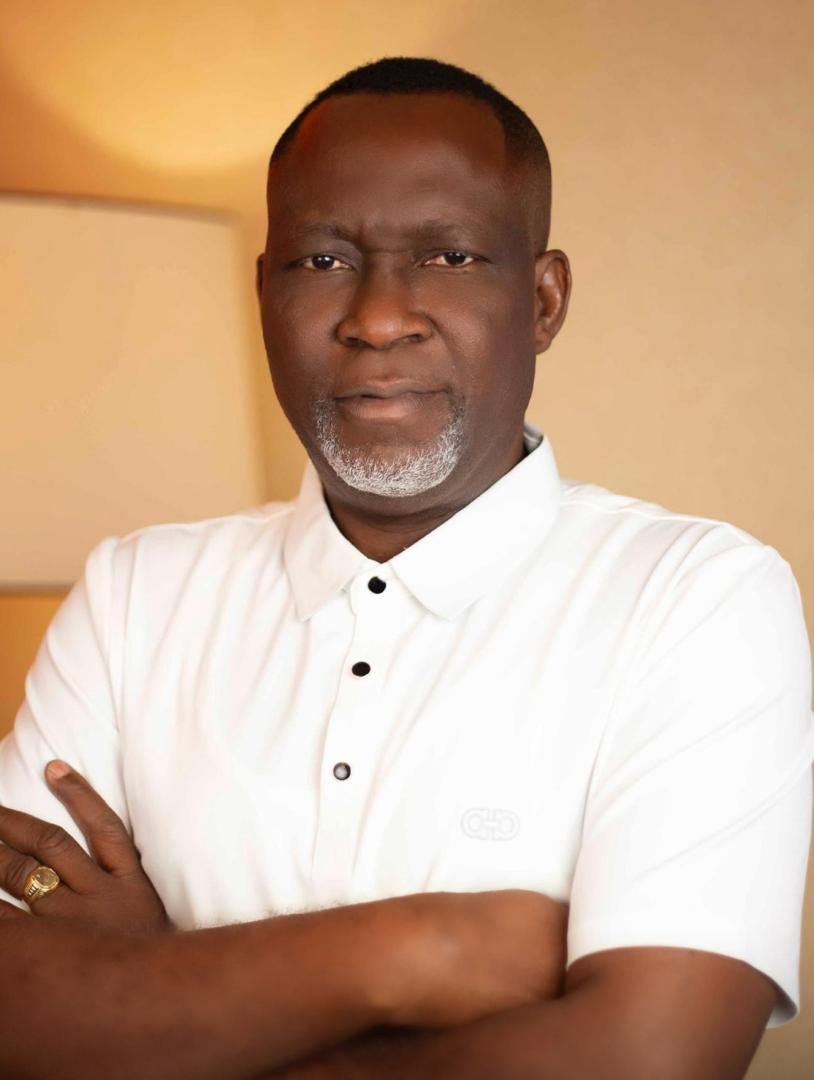
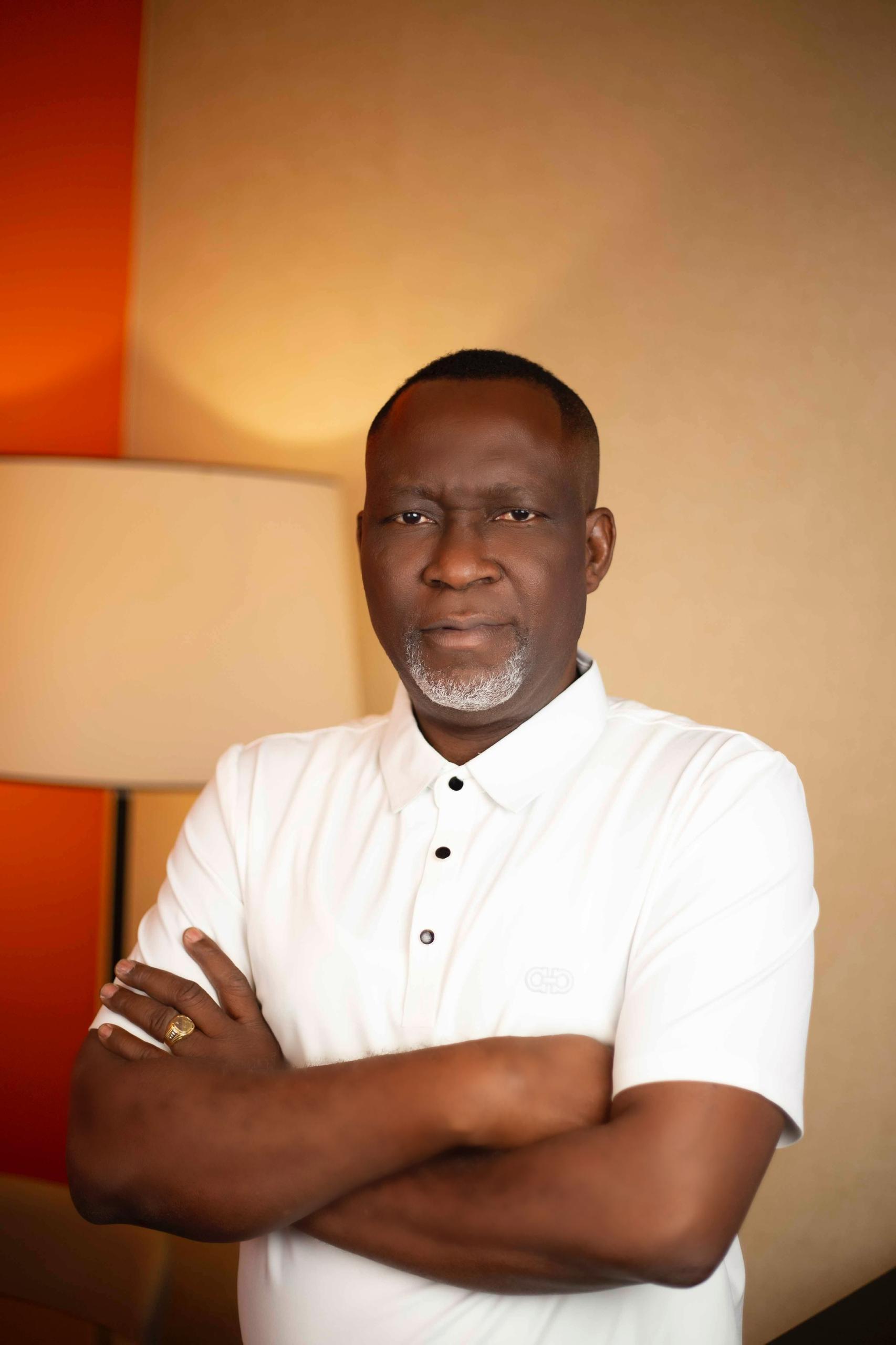
TRIBUTE TO A MENTOR, SHEPHERD, SERVANT; AYO NATH AIYEDOGBON, (ANA) @ 60!!!!!!
- /home/naijuinz/public_html/wp-content/plugins/mvp-social-buttons/mvp-social-buttons.php on line 27
https://naijablitznews.com/wp-content/uploads/2025/11/IMG-20251107-WA0009-1000x600.jpg&description=TRIBUTE TO A MENTOR, SHEPHERD, SERVANT; AYO NATH AIYEDOGBON, (ANA) @ 60!!!!!!', 'pinterestShare', 'width=750,height=350'); return false;" title="Pin This Post">
- Share
- Tweet /home/naijuinz/public_html/wp-content/plugins/mvp-social-buttons/mvp-social-buttons.php on line 72
https://naijablitznews.com/wp-content/uploads/2025/11/IMG-20251107-WA0009-1000x600.jpg&description=TRIBUTE TO A MENTOR, SHEPHERD, SERVANT; AYO NATH AIYEDOGBON, (ANA) @ 60!!!!!!', 'pinterestShare', 'width=750,height=350'); return false;" title="Pin This Post">
BY BOLAJI AFOLABI
A few months back, when it was officially announced that the subject of this article will join the “Diamond club” in November, as expected, the Every Nation Centre metaphorically, quaked. Everybody, everyone in ecstatic mode, responded with tumultuous applause, raptorial screaming, cinematic hugs, and lively handshakes. The response to the cheering news was organic, intuitive, and straight-from-the-heart. These positive reactions are expected, from people that have, for over two decades (and more) savoured spiritual delicacies from his fountain of life-changing menus. Cognisant that he has impacted on them severally, as a shepherd, mentor, and leader, they reasoned that the birthday presents a great opportunity to show gratitude. Immediately, there were formal and informal meetings towards crafting a most-befitting birthday soiree for him. Despite the drive and desire to have a classy, and never-seen before ceremonies, comments moved around in whispers to the contrary that he doesn’t want any form of celebrations. Just prayers and praise.
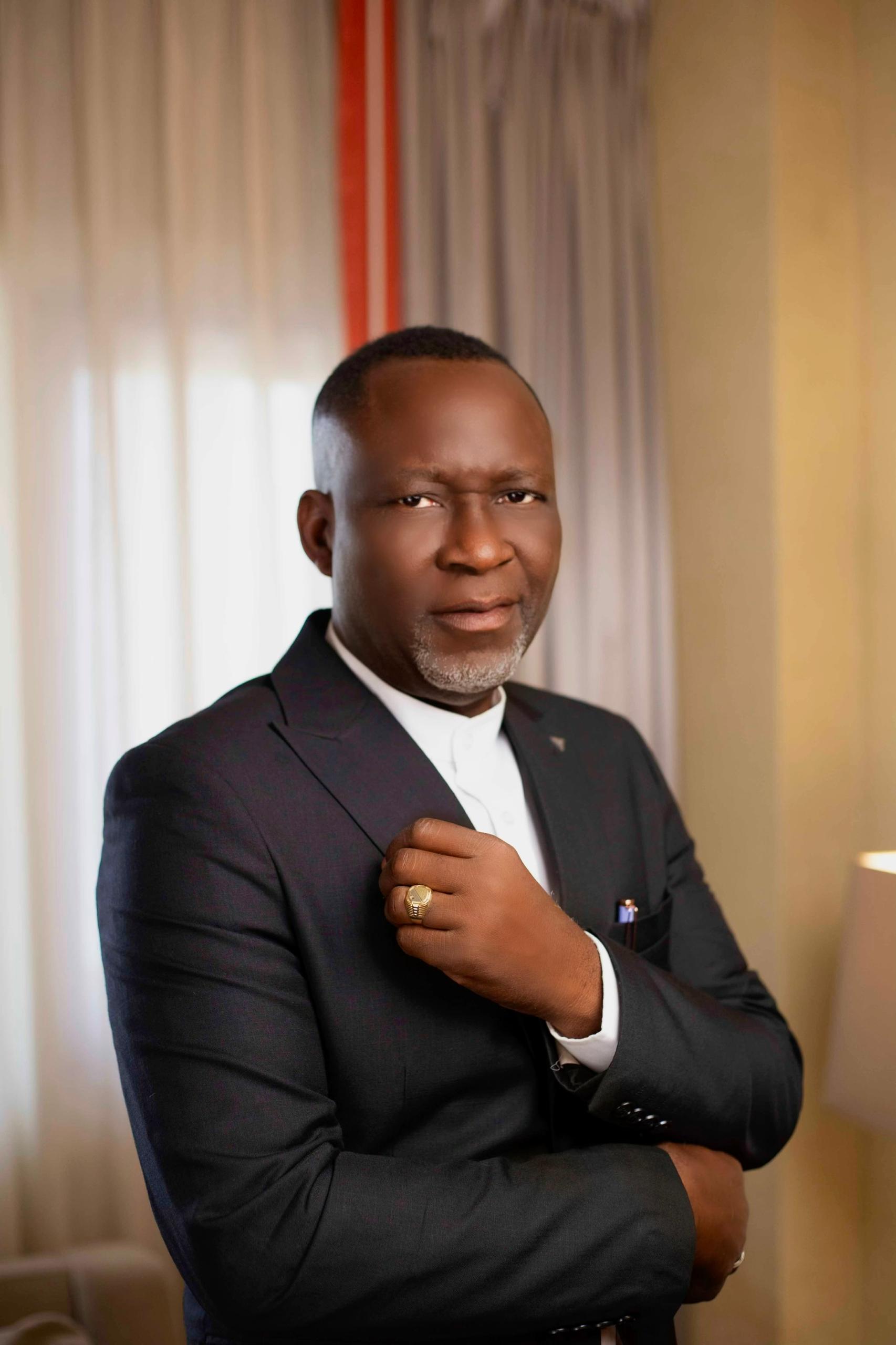
As the d-day approached, the challenge of what, and how to celebrate a man who detest drawing attention to himself became real. Many people were somewhat cocooned in the “confusion.” That is vintage Ayo Nath Aiyedogbon, (ANA), who detests self-adulation, hero-worshipping, and abhors human validations. Sometime in 2014, at the public presentation of Evangelist Lola Ajueyitsi’s album, which was held at the Christ Apostolic Church, Garki-Abuja, ANA was the Guest Minister. While the Master of Ceremony went lyrical with colourful superlatives about him, ANA literally stopped him, and “ordered” the audience to “continue clapping for the Only One, and make joyful shouts to The I Am.” At the same function, Mrs. Toyin Obafemi, a Lagos-based entrepreneur declared to a few friends that, “he greeted those of us at the entrance with much humility and enthusiasm. We didn’t know that he was the Minister for the event.”
Sometime in the mid 2000s, Jim Laffon, an American Evangelist and a few others had a programme at the Rockview Hotels, Abuja. The well-attended programme had many people including pastors, christians, and some others. Somehow, an altercation happened between the ushers and one “big man” over sitting arrangement. Aiyedogbon, who played a key role in the planning of the programme, stepped in to intervene in the seemingly needless beef which bothers on ego-massaging. Despite the “big man’s” angry disposition, nasty reactions, and boastful comments, ANA remained courteous, and humble. Displaying no signs of disillusionment or helplessness, he succeeded in appeasing, and leading the “big man’s” choice seat and area in the jam-packed hall. For ANA, no sacrifice is too big towards ensuring peace, unity, understanding, and development.
Over the years, at different levels of his daily interactions with people, ANA epitomizes virtues and values that are anchored on his faith. He is an exemplar of integrity, humility, humanity, and uprightness, whose unwavering belief in the universality of God Almighty, in all situations has been an enduring inspiration to many people. As expected, his easy-going, friendly, and receptive demeanor is sometimes misunderstood, and underated by some people. However, beneath the slender and supple appearance lies grit, and resilience in the pursuit of truth, love, fairness, and justice. He lives a life of purpose, passion, and conviction for God, His Kingdom, and humanity. Indeed, ANA is a gift from God, Graced by God, and Graced for humanity. As a mentor, he inspires, and challenges his mentees towards reaching enviable status. As a shepherd, he nourishes the flock with undiluted teachings and principles of God’s Kingdom for exploits in the market place. As a servant, he takes the “bullets” for all.

Over time, ANA has built strong bonds of enduring friendship, fruitful relationships, and resourceful alliances with people from all parts of the country, and across the world. Imbued with enviable qualities, and outstanding attributes that are worthy of emulation, ANA relates freely with anyone irrespective of age, social, economic status, and whatever categorization. Arc. Bankole Owolabi, Managing Director, CEDASCOPE Limited believes as “a responsible husband to his wife; caring father to his immediate family; and a reliable shepherd to his flock at home and abroad, God will make him stand before kings, and grant him immeasurable favour before people that will lead to the deepening and expansion of his Kingdom assignment.”
Elder John Mmaka, Chairman of JASTEL Limited, “He is a ubiquitous but quiet builder of men who has positively impacted on the lives of many people that are, today making tremendous progress in their respective careers.” Mrs. Stella Fadeyi, a retired federal Director in the Office of the Head of Service declared that, “my Pastor, at all times and in every situation gives life to his name; AYO. No matter your mood, he exudes and brings joy, peace, love, and warmth. His counsel, guidance, prayers, and support have helped many people navigate challenges and difficulties.” Continuing, Mrs. Uzoma Nwobu, an Educationist said, “in different ways, he has taught people the power of resilience, the place of commitment, and values of empathy and altruism.”

Dr. Sylbriks Obriki, a former presidential Adviser on SERVICOM recalls his first encounter with ANA, “despite his repertoire of intelligence, wisdom, and understanding of God’s Word, he was extremely receptive to other views. With no airs, and pumping of shoulders, he was humble and humility personified.” Mr. Oladele Clement, a Deputy Corp Marshal with the Federal Roads Safety Corp, (FRSC) describes ANA as, “a man of character, who embodies purity of heart, exudes steadfastness, and is always passionate about the spiritual growth, and personal development of everybody that comes around him.” Rt. Hon. TeeJay Yusuf, Managing Director, Twenty Five Eleven Limited declared that, “Pastor has etched his name in the hearts of many people, not just members of his flock. His life journeys, calling, and other noble causes remain testaments of selflessness, integrity, and inspiration.”
Professor Tunde Olusunle of the University of Abuja describes ANA as, “a reliable, upright, contented, open-handed, and open-hearted person whose commitment to people, and the work of God remains unequivocal.” An Abuja-based strategic communications specialist, Mr. Simon Ukadike affirmed that, “from findings and testimonies, he has helped in shaping the journeys of numerous people within and outside his church. Happily, those who passed through his spiritual tutelage are achieving landmark achievements elsewhere.” Corroborating, Mr. Chike Azubuike, a brand management specialist said, “the few times I listened to him, his views on issues were intriguing, expository, and inspiring. You always pick veritable lessons that can be explored in the marketplace.”
As humans, we experience twists and turns, just as we pass through varied dimensions of vicissitudes. On life’s journey, these tapestries in most situations, shapes what, and who emerges thereafter. So it is with ANA. He encountered pleasant and unpleasant trajectories that served as a veritable compass for who he is, and where he is headed. Convinced that he has the calling to serve in the Lord’s Vineyard, he abandoned his civil service career and relocated to Lagos. A decision that did not resonate with many of his friends and family members. Again, as a trainee, he was saddled with some responsibilities that were described as demeaning for a graduate. Added to this, the generator house was his home. Vilified by many people, some of whom reasoned that something was wrong with him, ANA, who had his eyes on the bigger vision was unperturbed by criticisms and concerns.
In 2000, at a period when the capital city was in its infancy, ANA was deployed to Abuja from Lagos to see the possibility of starting a centre for the ministry. Again, he and the wife, Pastor Faith Aiyedogbon, (PFA) were serially ridiculed and advised not to make the Abuja venture. According to reports, ANA and PFA were further convinced they were on the right track, and proceeded to Abuja. Indeed, over two decades afterwards, there are stones of memorials as evidence that ANA heard right; the Abuja directive was divinely orchestrated. The Abuja Centre; which began from the living room of the Willie-Iyke Nwobus moved to its own property within the Garki District. Happily, it has birth centres in Jos, Abakaliki, Ogoja, Dawaki, Ado, and a few more in the planning stages. More importantly, some of his mentees are making exploits in major cities across the United States of America, United Kingdom, Canada, Australia, and a few other countries.
As we all celebrate ANA, a courageous fighter and advocate for everything Right; a cerebral being who dislikes indolence and mediocrity, I pray that God Almighty will perfectly order his steps in fulfilling divine Will. This is wishing our beloved indefatigable mentor and shepherd, a glorious 60th birthday.
* BOLAJI AFOLABI, a Development Communications specialist was with the Office of Public Affairs, The Presidency, Abuja.

Opinion
THE SUNDAY STEW – 16: The Three-Month Sprint (2): Vocabulary, Concepts, Metaphors
By Max Amuchie | The Sunday Stew
Every serious intellectual undertaking eventually reaches a threshold where it can no longer rely entirely on inherited language. It must create its own vocabulary.
The three-month sprint that produced The Insecurity Triad, the Trinity of State Decay (TSD), and the Decoupling Sovereignty Index (DSI) crossed that threshold repeatedly. New realities demanded new concepts, and new concepts demanded new names.
Some of those names describe the architecture of collapse. Others describe the mechanisms that sustain it. Still others describe what recovery requires. Together, they form a vocabulary of sovereignty — its decay, its distortion, and its possible reconstruction.
The Grammar Beneath the Vocabulary
Before naming the concepts, it is worth naming the architecture that organises them.
The Insecurity Triad identified three vectors through which rival sovereignty is produced: Money, Land, and Mind. Kidnapping finances violence through ransom economies — that is Money. Banditry governs territory and controls the means of production — that is Land. Terrorism reshapes the ideological order, rewriting who commands loyalty and who commands fear — that is Mind.
These three vectors do not operate in isolation. They converge. And their convergence is what makes The Insecurity Triad a system rather than a catalogue of threats.
What the Trinity of State Decay reveals is what happens to a state when that convergence is sustained. Money drains the state’s fiscal and security capacity. Land slips from its territorial grip. Mind withdraws — citizens, communities, and eventually institutions themselves stop believing that the state is the relevant authority. The Trinity maps the structural consequences of what the Triad set in motion.
The Decoupling Sovereignty Index then asks the measurement question: how far has each vector decoupled? M1 tracks the Money dimension — the degree to which ransom economies and rival revenue systems have displaced the state. L tracks the Land dimension — the erosion of territorial authority and enforceability. M2 tracks the Mind dimension — the collapse of psychological allegiance and institutional legitimacy.
Every concept that follows in this column lives inside that architecture. The Institutional Mirage is what the Mind dimension produces at the level of governance. The Shadow Order is what Land and Money produce when they combine to constitute rival authority. The Ransom Economy is Money in its most organised form. Constitutional Erasure is Land rewritten at gunpoint. The Psychology of the Table is Mind in its most exclusionary expression.
Money. Land. Mind. That is the grammar. What follows is the vocabulary it generates.
The Architecture of Collapse
Among the formulations that emerged was the Trinity of State Decay.
Consider what happens when a state begins to lose its grip.
It does not lose one thing. It loses three — simultaneously, and in ways that accelerate each other.
Territory slips first, or perhaps institutions do, or perhaps the people withdraw their faith before either of the others move. The sequence varies. What does not vary is the convergence.
The first dimension is territorial: the state’s control of physical space becomes contested, fragmented, then absent in places it once claimed without effort.
The second is institutional: governance structures remain formally intact — ministries open, officials report, procedures are observed — but effectiveness drains away, and with it, public confidence.
The third is psychological: citizens stop believing. Not all at once. Not loudly. But progressively, they withdraw their emotional allegiance from the state and redirect their trust toward other identities, other authorities, other protections.
And then the loop closes.
Land is lost because institutions have weakened. Institutions weaken because citizens no longer trust them. Citizens withdraw their trust because the state can no longer protect the land.
Each failure licenses the next. Each decay deepens the others. The trinity does not merely describe deterioration — it drives it.
That is what makes it a trinity rather than a list.
But what fills the space that the decaying state vacates? Two concepts answer that question, and they must be understood together.
The first is the Institutional Mirage. When a state loses empirical authority — the actual capacity to protect, compel and deliver — its formal structures do not always disappear. They persist. Ministers are appointed. Budgets are passed. Ceremonies are conducted. The architecture of governance remains visible, sometimes impressively so. But it no longer functions as architecture. It functions as scenery.
The Institutional Mirage is the state performing sovereignty it no longer possesses.
The second concept is the Shadow Order. Into the spaces the Mirage cannot reach, alternative authority structures move. They may be armed groups, criminal networks, ethnic militias, or insurgent organisations. They collect their own revenues, enforce their own rules, and provide their own version of protection — however brutal or extractive. They do not merely fill a vacuum. They constitute a rival sovereignty.
The Institutional Mirage and the Shadow Order are not opposites. They are a system. One performs authority without possessing it. The other possesses authority without performing it in the language of the state. Together, they represent the decoupling at the heart of the Trinity of State Decay: the separation of juridical sovereignty from empirical sovereignty, of the state that exists on paper from the state that exists on the ground.
The Mechanisms of Sustenance
Collapse of this kind does not sustain itself through inertia alone. It requires mechanisms — arrangements, transactions and distortions that keep the system operational even as it deteriorates.
Three concepts describe these mechanisms:
The first is the Ransom Economy. In zones where the Shadow Order operates and the Institutional Mirage cannot reach, kidnapping ceases to be merely criminal. It becomes economic. Ransom payments circulate as a form of revenue — funding armed groups, sustaining supply chains of complicity, and generating employment in the logistics of abduction and negotiation. The Ransom Economy is not a disorder within the economy. In the territories where it operates, it is the economy.
The second mechanism is Pacification Bargaining. Faced with armed groups it cannot defeat militarily, the state — or the communities caught between the state and the Shadow Order — enters into informal negotiations. Cattle corridors are quietly conceded. Seasonal movements are permitted. Attacks pause in exchange for unspoken accommodations. The bargaining is never acknowledged publicly, because acknowledging it would require admitting the limits of state authority. But it happens. And each round of bargaining, however tactically rational, extends the life of the arrangement it was meant to manage.
The third is Constitutional Erasure. This is not a legal phenomenon. It does not occur in courtrooms or parliamentary chambers. It occurs on the ground, at gunpoint. This is, in the most precise sense, a Violent Amendment of the Constitution — not through any legitimate process of revision, but through the barrel of a gun. The armed group does not petition the state to redraw its map. It redraws it unilaterally, inscribing its own authority where the constitution once held.
Constitutional Erasure is the illegal process by which armed non-state actors unmake the official state map and replace it with their own sovereign order. Where the state’s constitution says one thing about who governs a territory, the gun says another — and the gun wins. The armed group does not merely occupy the space. It renames it. It redraws it. It inscribes its own authority onto territory that the constitution still claims but can no longer hold.
This is counter-constitutional inscription: a rival cartography written in violence.
The constitution remains on paper. But on the ground, a different document governs — unwritten, unratified, enforced by the threat of death. What is erased is not the text of the state’s founding law but the physical reality it was meant to describe.
The Psychology of Recognition
Beneath the structural and economic dimensions of decay lies something harder to measure but no less consequential: the question of who belongs.
Political power is frequently imagined through offices, armies and constitutions. Yet societies often possess another, less visible metric of authority.
Who sits at the table?
Who is invited?
Who is absent?
The Architecture of Resurrection
Perhaps the most hopeful formulation to emerge from the sprint was the idea of the Architecture of Resurrection.
Most analyses of state fragility devote considerable attention to decline and collapse. Far less attention is given to recovery. Yet history repeatedly demonstrates that societies possess remarkable capacities for renewal.
The Architecture of Resurrection refers to the institutional, psychological and political design necessary for rebuilding state effectiveness and legitimacy after periods of profound disruption.
Resurrection is not restoration
A building that has partially collapsed cannot simply be painted and declared repaired. It requires redesign. Its foundations must be reassessed. Structural weaknesses must be corrected. New load-bearing systems must be introduced.
The same principle applies to states
The Architecture of Resurrection therefore concerns the deliberate reconstruction of authority, trust and institutional capability. It asks difficult questions.
How is territorial control re-established?
How is confidence in institutions rebuilt?
How are psychologically alienated populations reintegrated into a common political project?
How does sovereignty become recoupled — the Institutional Mirage dissolved into functional authority, the Shadow Order displaced, the Ransom Economy dismantled, Pacification Bargaining replaced by genuine security provision, Constitutional Erasure reversed by the renewed enforceability of rights?
How are communities that have been excluded from the table brought back — not as afterthoughts but as constitutive members of the political project?
The metaphor is intentionally architectural because durable recovery requires design, sequencing and structural coherence. Political resurrection cannot be improvised.
These concepts did not emerge in isolation. They emerged in conversation with one another— each one clarifying, qualifying or extending the others.
States do not live merely through constitutions and coercive instruments. They also live through perceptions. They survive because people believe institutions matter, believe they belong at the table, and believe collective political life remains worth investing in.
Conversely, states decay when these sustaining beliefs weaken—when the Institutional Mirage replaces genuine authority; when the Shadow Order occupies the spaces the state has abandoned; when the Ransom Economy becomes normalised; when Pacification Bargaining substitutes for security provision; when Constitutional Erasure progressively empties the law of its force; and when the Psychology of the Table degenerates into a psychology of permanent exclusion.
That is why vocabulary matters. These are not merely descriptive terms; they are diagnostic concepts that identify the mechanisms through which sovereignty decouples from authority and states slide along the continuum of decay.
The Trinity of State Decay reveals the multidimensional nature of collapse. The Institutional Mirage and the Shadow Order name the twin faces of decoupled sovereignty. The Ransom Economy, Pacification Bargaining and Constitutional Erasure describe the mechanisms that sustain it. The Architecture of Resurrection directs attention toward the design principles of renewal.
Together, they demonstrate that scholarship is not simply the accumulation of information. It is also the invention of language capable of capturing realities that old vocabularies struggle to describe.
For sometimes the first step toward understanding a crisis is learning to name it.
And sometimes the first step toward renewal is discovering the words that make recovery imaginable.
Trust is sacred. Stay seasoned.
•Dr. Max Amuchie is an Independent Scholar-Journalist, Media CEO, and Lead Researcher at the Sundiata Post Intelligence Unit (SPIU). He is the architect of The Insecurity Triad framework for African security analysis, the Trinity of State Decay theory, and the Decoupling Sovereignty Index (DSI)—original, indigenous analytical frameworks for understanding, categorising, and measuring conflict, state decay, and sovereignty in the Global South. He writes The Sunday Stew, a weekly syndicated column on faith, character, and the structural forces that shape society, with a focus on Nigeria, Africa, and the Global South in a changing world.
X (formerly Twitter): @MaxAmuchie | Email: max.a@sundiatapost.com | Tel: +234(0)8053069436
Opinion
Distinguished Ego, Reckless Falsehoods and Senator Oshiomole’s Journey of Self-Destruct
By Ken Harries Esq
There are few spectacles more embarrassing in politics than a man arguing passionately against himself while pretending to be attacking someone else. Psychologists call this cognitive dissonance. The rest of us call it eating your own words without choking. It is a difficult performance. The audience remembers the speech made earlier out of conviction, the newspapers preserve the quotes, and the politician is left insisting that black is white and that he has always believed the reverse of what he said. This is a classic Catch-22 situation.
Senator Adams Aliyu Oshiomhole is presently engaged in such a trial. He finds himself confronted not by Senator Godswill Akpabio, but by a far more formidable adversary: his own words. The evidence against him is not supplied by his enemies. It is supplied by his own mouth. The falcon cannot hear the falconer.
In May 2025, Oshiomhole stood on the floor of the Senate and delivered one of the most effusive endorsements ever offered by a senator to another. Under Akpabio’s leadership, he posited, opposition politicians were joining the APC voluntarily and happily. The atmosphere in the Senate had become more cordial. Political tensions were easing. Defections were taking place without intimidation, coercion or conflict.
Then came the line that would become impossible to forget. “Mr Senate President, I thought that you would enter the Guinness Book of Records.”
For Oshiomhole, Akpabio’s leadership was not merely effective but profound. It was exceptional. He described it as “truly uncommon and increasingly uncommon.” He praised Akpabio’s patience, warmth and ability to attract political opponents through persuasion rather than pressure. He spoke admiringly of the Senate President’s smile and suggested that his leadership style had succeeded where others had failed. This was not a routine parliamentary courtesy. It was lavish public endorsement and heartfelt sentiments.
Indeed, Oshiomhole went even further to contextualize his praise of Akpabio. He reminded his audience of his reputation as someone who always speaks out of conviction, and added that public figures had an obligation to acknowledge success when they saw it.
That was Oshiomhole speaking. That was Oshiomhole’s standard. That was Oshiomhole’s record. That was Oshiomhole being Oshiomhole.
Now, fast forward to June 2026.
Appearing on a podcast, the same Oshiomhole launched one of his strongest (and strangest) attacks yet on Akpabio. Among other claims, he alleged that the Senate President’s daughter had secured employment at the Nigerian National Petroleum Company Limited through improper influence and outside normal procedures. The allegation was serious and spurious. It was also, according to Akpabio’s colleagues, completely false.
The Senate President’s Spokesperson stated that it is trite that whoever alleges must proof. He asserted further that none of Akpabio’s children work at NNPC or any of its subsidiaries. Suddenly, the issue was no longer about Akpabio. The issue became a test of Oshiomhole’s integrity and conscience.
How does a former labour leader, former governor, former national chairman of the ruling party and serving senator make such a damaging allegation without first establishing a basic fact: whether the person in question even works where he claims? More troubling still was Oshiomhole’s own explanation for the allegation: “Somebody told me.”
Those three words should worry every Nigerian. Not because politicians should never raise concerns about public institutions. They should. Not because powerful people should be shielded from scrutiny. They should not. But because a democracy cannot function when public accusations are built on hearsay rather than evidence.
The low standards expected from a roadside gossip are not the standards expected from a senator of the Federal Republic. And that is what makes this episode so disappointing and worrisome. Like the first Adam, this Adams gave Eve the apple of lies and digested it.
Adams should have known better. He is not an ordinary politician. His place in Nigeria’s political history compels him to be more circumspect in his communication. He rose through the labour movement to become one of the country’s most recognisable public figures. He challenged military rule. He led workers’ struggles. He governed Edo State. He chaired the APC at a critical period in its development.
Few public figures have accumulated such political capital. Yet the path he toed which made Oshiomhole formidable now appears increasingly to be covered with indignity and less than noble motives.
For much of his career, he thrived on confrontation. There was always a cause to champion, an adversary to challenge or an institution to hold accountable. That instinct served him well when it was anchored in facts and robed with decency.
The danger comes when confrontation becomes an end in itself. Then the need to fight begins to outweigh the need to verify. Then attention becomes more important than accuracy. Then the line between advocacy and recklessness begins to disappear. The contradiction in Oshiomhole’s treatment of Akpabio is therefore impossible to ignore.
A little over a year ago, he was publicly suggesting that Akpabio deserved a place in the Guinness Book of Records. Today, he paints him with tar brush as a beneficiary of nepotism. A little over a year ago, he praised Akpabio’s leadership as a model of political inclusion and persuasion. Today, he portrays him as a leader whose conduct deserves public suspicion. A little over a year ago, he was urging Nigerians to acknowledge what was working. Today, he is making allegations that appear incapable of surviving basic scrutiny and integrity test.
What changed? Did new evidence emerge? Did Akpabio suddenly become a different person? Or is something else at work? Some observers point to Oshiomhole’s growing frustration with developments within the Senate itself, particularly debates around the chamber’s rules and leadership structure. Whether that explanation is accurate or not, it highlights an uncomfortable reality about Nigerian politics and politicians’ sweet descent.
Too often, political disagreements that should remain institutional become personal. Policy disagreements become personality conflicts. Procedural disputes become vendettas. Legitimate criticism becomes a vehicle for settling scores. And when that happens, truth is usually the first casualty. This is where Senator Oshiomhole risks damaging something far more valuable than any political rivalry.
He risks damaging his credibility. Credibility is a strange asset. It takes decades to build and only moments to diminish. It is the reason people listen when a public figure speaks. It is the foundation upon which influence rests. Once it begins to erode, every future intervention becomes harder to take seriously.
That is the tragedy here. Oshiomhole does not need sensational allegations to remain relevant. He has already earned relevance. He does not need unverified claims to command attention. His record already guarantees attention. He does not need to manufacture controversy and peddle rumours. His experience alone should mean his voice would always matter in national conversations.
What he needs is the discipline that once distinguished him from countless others in public life. The discipline to verify before accusing. The discipline to separate evidence from rumour. The discipline to recognise that prominence carries responsibilities. History is often kinder to politicians than their contemporaries. It overlooks many mistakes and forgives many errors. But history is also unforgiving when it comes to patterns.
And a pattern appears to be emerging. The labour leader who once built a reputation on speaking truth to power now risks becoming associated with speaking before establishing the truth. The politician who once demanded accountability now finds himself facing questions about his own standards. The man who urged others to “put a record” when things were going well now stands accused of abandoning the record altogether when it became politically convenient.
That is why this story is ultimately not about Godswill Akpabio. It is about Adams Aliyu Oshiomhole. It is about the danger of allowing ambition, frustration and ego to eclipse judgement. It is about how distinguished careers are rarely destroyed by a single scandal or a single defeat.
More often, they unravel through a series of avoidable choices. A careless allegation here. An unverified claim there. A growing willingness to sacrifice accuracy for effect. For a man of Oshiomhole’s stature, that should be the real concern. Because the greatest threat to his legacy is not Akpabio but ego and himself
It is the possibility that, after spending decades building a reputation for courage and credibility, Adams Oshiomole may now be remembered for diminishing both with reckless falsehoods and needless ego of his own making.
Ken Harries Esq is an Abuja based Development Communication Strategist
Opinion
Nuclear Safety at Zaporizhzhia Nuclear Power Plant under Russian Occupation: Threats, Legal Violations, and Ukraine’s Stance
By Artem Kovalenko
From the outset of Russia’s full-scale invasion of Ukraine in 2022, disregard for the principles of nuclear safety and security has been a persistent feature of Russia’s misconduct.
In particular, Russia has threatened the safe operation of Ukrainian nuclear power plants, raising the risk of a nuclear emergency whose effects would be felt far from the borders of Ukraine.
Four years ago, on March 4, 2022, Russian military forces attacked and seized the Zaporizhzhia Nuclear Power Plant (ZNPP) – the largest nuclear plant in Europe (6 reactors, 5,700 MW installed capacity).
Russia turned ZNPP into a military base, disrupted its normal operations, damaged infrastructure, detained plant employees, and restricted access for experts from the International Atomic Energy Agency to critical areas of the plant, making a full and objective safety assessment impossible.
Four years of illegal control pose a direct threat to global nuclear security. For the first time in history, a civilian nuclear facility of this scale is being operated not by its lawful operator, but by an aggressor state.
The Russian Federal Service for Environmental, Technological and Nuclear Supervision (“Rostechnadzor”) directly controls the operation of the NPP and has already launched an unlawful modernization of the station’s radiation monitoring systems without the authorization of the legitimate operator (Ukraine) and without compliance with IAEA standards.
On July 1, 2023, the President of Ukraine, Volodymyr Zelenskyy, stated in an interview with Spanish media: “The Zaporizhzhia Nuclear Power Plant is mined — that is a fact. The IAEA confirms that the Zaporizhzhia plant is mined”.
Russia’s activities at ZNPP constitute a systematic violation of international nuclear law and treaty obligations under the Statute of the International Atomic Energy Agency, the Convention on Nuclear Safety (1994), and UN General Assembly Resolutions ES-11/1 and ES-11/4.As of June 2026, the ZNPP continues to be a critical unresolved issue within the framework of the peace settlement for the Russia-Ukrainian war.
However, Ukraine and Russia maintain fundamentally different visions regarding the settlement of the Zaporizhzhia NPP issue.
Ukraine is pushing for the total restoration of its sovereign control over the Zaporizhzhia NPP and the demilitarization of Enerhodar, emphasizing that Russia must be entirely barred from the plant’s management.
Only this approach complies with international law and stands as the sole option to eliminate the threat of an illegal restart of the Zaporizhzhia NPP.
Russia demands the preservation of its operational control over the Zaporizhzhia NPP, alongside the scheduled restarting of the station’s nuclear reactors under its domestic Russian regulatory framework.
However, any attempt to restart the nuclear reactors without full compliance with international safety standards and independent regulatory oversight constitutes a direct threat to nuclear safety.
Meanwhile, the US is proposing its own compromise option: tripartite management (Ukraine-US-Russia, 33/33/33%) with the subsequent distribution of the generated electricity.
However, this scenario remains unacceptable because granting Russia any stake in the ZNPP’s management would de facto legitimize the occupation, representing a direct violation of Ukraine’s national sovereignty.
In response to the US initiative, Ukraine proposes a joint US-Ukrainian management structure for the Zaporizhzhia NPP (50/50%).
Under this model, the American side would distribute 50% of the generated electricity, while Russia would be completely barred from the plant’s management.
This option complies with international law and eliminates the risk of legitimizing the occupation of the ZNPP.At the same time, Ukraine’s core position remains clear: the Zaporizhzhia NPP must be fully demilitarized and returned under Ukrainian sovereign control, as this is the only guarantee of nuclear safety for Europe and the entire world.
To prevent a potential nuclear catastrophe, the international community must publicly support the full return of the Zaporizhzhia NPP under Ukrainian sovereign control, while condemning the illegal modernization of the plant and plans to restart its reactors under Russian licenses.
Concurrently, it is of paramount importance to endorse the expansion of the IAEA mission’s mandate to enable full-scale independent monitoring of the Zaporizhzhia NPP.
In turn, China, as a permanent member of the UN Security Council and a nuclear-weapon state bearing special responsibility for maintaining the nuclear non-proliferation regime, must use its diplomatic influence on Russia to halt the illegal actions of “Rostekhnadzor” and prevent the restart of the ZNPP reactors.
Thus, the only path to restoring security in Europe is the complete and immediate withdrawal of Russian troops and personnel from the Zaporizhzhia NPP, its return under Ukrainian control, the release of all unlawfully detained individuals, and increased international pressure, including sanctions against “Rosatom” and “Rostekhnadzor”.
The ZNPP was and remains a Ukrainian facility, and its return is not only a matter of Ukraine’s sovereignty, but also a matter of global security.”Artem, a public relations expert, writes from Kyiv, Ukraine.
-
Foreign24 hours agoUS Targets Alleged ISIS Funding Network, Names Nigerian
-
Metro23 hours agoAlleged Drug Trafficking: Billionaire, Two Others Face Trial in Lagos
-
News16 hours agoDAY 11 of Projects Commissioning in the FCT: TInubu set to commission Kuje, Gwagwalada road today
-
News15 hours agoBREAKING: El-Rufai arrives in court under heavy security for trial over alleged financial crimes
-
Sports23 hours agoSuper Eagles: Chelle, NFF Reach New Contract
-
News23 hours agoBenin monarch to place a curse on kidnappers, armed robbers, fixes date
-
News16 hours agoPhotos: Police Block Truck Conveying 47 Sacks Of Camouflage & Drugs In Lagos
-
News23 hours agoHajj: NAHCON concludes return of pilgrims’ airlifts