Connect with us

News

Oil Revenue nosedives by 43% despite increased production

Published

on

ADVERTISEMENT
Zoom Ad
ADVERTISEMENT
Zoom Ad

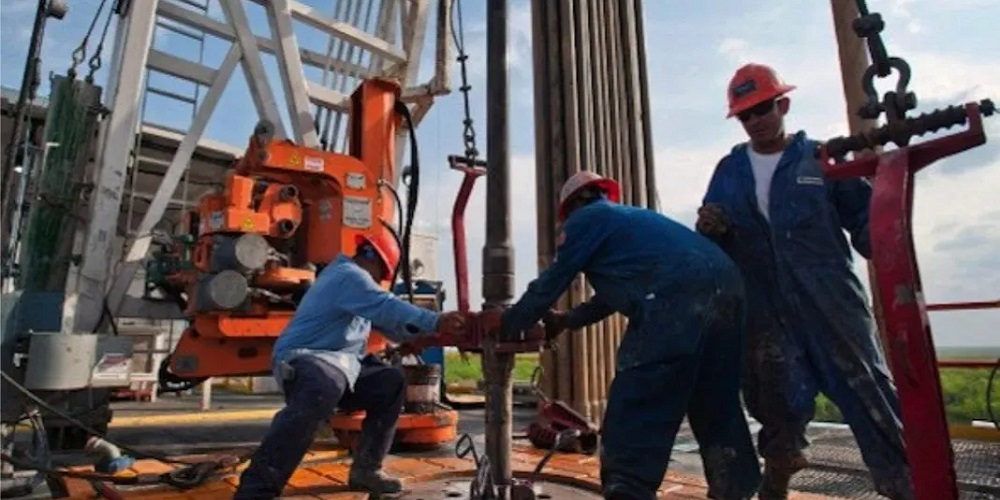
Nigeria’s gross profit from crude and gas sales fell by 43 per cent, accounting for only about 8 per cent of total oil and gas revenue, despite a rebound in oil production, according to figures from the latest Budget Implementation Report for the fourth quarter of 2024 released by the Budget Office of the Federation.


Oil revenue fell by ₦824.66 billion to ₦1.08 trillion during the year, from ₦ 1.90 trillion in 2023, representing a 43.32 per cent decline in the year under review.

The decrease in revenue highlights a drift toward taxes and royalties as the dominant contributors. Petroleum Profit Tax and Company Income Tax brought in ₦6 trillion, while royalties generated ₦6.99 trillion — nearly triple the previous year, aided by improved compliance and changes under the Petroleum Industry Act.

Total oil and gas revenue before deductions stood at ₦15.07tn in 2024, against a budget of ₦19.99tn. This means that actual inflows fell short of the budget by ₦4.93tn or 24.65 per cent.

Advertisement

Gas-flaring penalties rose to ₦391.26 billion, up 178% from 2023. Incidental revenue from royalty recovery and marginal-field settlements also more than doubled, while pipeline-fee income increased to ₦35.2 billion.

One of the largest boosts came from exchange-rate gains, which surged to ₦4.24 trillion from ₦791.88 billion in 2023 following currency liberalisation.

After deductions, net oil revenue stood at ₦12.95 trillion — below the ₦16.98 trillion target but significantly higher than the ₦4.82 trillion recorded in 2023.

The Nigerian Upstream Petroleum Regulatory Commission reported that crude oil production rose to 442.21 million barrels in 2024, up 12.6 per cent from 2023. Daily average production increased to 1.43 million barrels per day from 1.27 million barrels.

Advertisement

Production recovered in the second half of the year, reaching 1.49 million barrels per day in December, the highest of 2024. Total liquids — crude and condensates — amounted to 492.34 million barrels, up from 451.09 million barrels in 2023.

Despite the gains, output reached only about 80 per cent of the government’s projection. Analysts attribute the shortfall to ongoing infrastructure constraints, crude theft, and underinvestment.

Compared with the previous year’s total of ₦8.36trn, however, oil and gas inflows almost doubled, showing an 80.33 per cent improvement.

The year-on-year increase was largely driven by stronger receipts from royalties, penalties, and exchange rate gains following the unification of the naira, rather than from higher crude export volumes.

Advertisement

The quarterly pattern showed that oil receipts rose from ₦3.35trn in the first quarter to ₦3.91trn in the fourth quarter, but remained consistently below the projected quarterly average of ₦4.99trn.

Incidental oil revenue from royalty recovery and marginal field settlements climbed to ₦347.75b from ₦155.99b a year earlier, a growth of 122.93 per cent, while miscellaneous income, mainly from pipeline fees, increased to ₦35.2b from ₦16.38b.

One of the most significant contributors to the apparent growth in oil revenue was the exchange-rate gain, which soared to ₦4.24trn in 2024 from ₦791.88b in 2023—an increase of over 435 per cent.

The surge followed the naira’s steep depreciation after exchange rate liberalisation, which inflated dollar-denominated oil earnings when converted into local currency.

Advertisement

After accounting for all deductions, the net oil revenue for 2024 stood at ₦12.95trn, against a budget target of ₦16.98trn, a difference of ₦4.03trn or 23.74 per cent.

When compared with the ₦4.82trn realised in 2023, the 2024 outcome represents a 168.83 per cent increase.
Continue Reading
Advertisement

News

Akpabio sad over demise of Dotun Oladipo, says he was a courageous journalist

Published

on

ADVERTISEMENT
Zoom Ad
ADVERTISEMENT
Zoom Ad


The President of the Senate, Senator Godswill Obot Akpabio, has expressed profound sadness over the death of veteran journalist and publisher of The Eagle Online, Dotun Oladipo.

Akpabio described Oladipo’s passing as a painful loss to the Nigerian media industry and the nation, noting his significant contributions to journalism, public discourse and the growth of online media in Nigeria.

The President of the Senate commiserated with the family, friends, colleagues and professional associates of the deceased, particularly members of the Guild of Corporate Online Publishers (GOCOP), where Oladipo served as Emeritus President.

Advertisement

“Dotun Oladipo was a courageous, principled and dedicated journalist who devoted a significant part of his life to the pursuit of truth, responsible journalism and the advancement of society.

“His sudden passing is a profound loss to his family, the journalism profession and Nigeria as a whole. His immense contributions to the development of online journalism, as well as his commitment to professional excellence, integrity and public interest, will remain indelible.

“As the philosopher John Stuart Mill reminded us, ‘He who knows only his own side of the case knows little of that.’ Dotun understood that a free and responsible press must listen, question and speak truth to power. His life demonstrated that journalism, when guided by courage and conscience, can illuminate society and strengthen democracy.

“His legacy will continue to inspire journalists and media professionals who believe in the power of responsible journalism to strengthen democracy and contribute to national development,” Akpabio said.

Advertisement

The Senate President prayed that God Almighty would grant the deceased eternal rest and give his family, friends, colleagues and loved ones the fortitude to bear the irreparable loss.

Akpabio also urged members of the media to uphold and build upon Oladipo’s legacy of professionalism, integrity, courage and unwavering commitment to the public interest.
“May God acquaint his soul with the compass of His course” he added.

Continue Reading

News

SGF sets up presidential security committee, demands professionalism, urgency

Published

on

ADVERTISEMENT
Zoom Ad
ADVERTISEMENT
Zoom Ad

The Secretary to the Government of the Federation (SGF) on Wednesday inaugurated the Presidential Committee on the National Threat Assessment and Five-Year Strategic Defence Operations Plan, charging members to approach the assignment with the highest degree of professionalism, objectivity, urgency and patriotism.

The committee, established by President Bola Ahmed Tinubu, has 90 days to produce a comprehensive National Threat Assessment and a rolling Five-Year Strategic Defence Operations Plan for the President’s consideration and approval.

The SGF, who described the assignment as one of considerable national importance, urged members to bring their collective expertise to bear on developing a coherent framework that would strengthen Nigeria’s capacity to anticipate, plan for and respond to current and emerging security threats.

He assured the committee of the full support and cooperation of the Office of the Secretary to the Government of the Federation, adding that it had been authorised to consult or co-opt representatives of other Ministries, Departments and Agencies whose specialised knowledge might be required.

Advertisement

According to a statement issued by his Special Adviser on Media and Publicity, Yomi Odunuga, Akume said the inauguration marked an important step in strengthening the country’s ability to understand and respond effectively to an increasingly complex and evolving security environment.

He observed that contemporary security threats had become increasingly interconnected and adaptive, with the capacity to exploit gaps between institutions, jurisdictions and operational theatres.

While acknowledging significant successes recorded by the Armed Forces and other security agencies across different theatres in recent months, the SGF said Nigeria must move beyond responding to individual security challenges to building a system capable of anticipating threats, setting priorities, allocating resources rationally and sustaining operational momentum.

Such a system, he said, must also ensure that national security objectives are consistently translated into measurable outcomes.

Advertisement

The SGF stressed that although heads of defence, intelligence and security agencies must retain the flexibility required to respond to immediate threats, their responses should be anchored on a shared national understanding of the security environment and a coherent short-, medium- and long-term strategy.

He noted that operational requirements were sometimes considered independently without sufficient reference to an agreed national threat assessment, clearly prioritised national objectives or a unified capability plan.

According to him, the situation made coordination more difficult and limited the efficient deployment of scarce resources.

The committee, he explained, is therefore expected to help establish a coherent strategic system in which Nigeria’s threat assessment determines operational objectives, while those objectives, in turn, determine the capabilities required.

Advertisement

Capability requirements, he added, should inform expenditure, procurement, force development and industrial priorities.

“In simple terms, we must establish a clear path from threat to objective, from objective to capability, from capability to resource, and from resource to measurable outcome”, the SGF said.

He explained that the National Threat Assessment would provide the government with a comprehensive and objective understanding of Nigeria’s security landscape by identifying what threatens the country, why the threats matter, how they are likely to evolve and the consequences of failing to address them.

It would also determine appropriate government responses and provide a common planning basis for the Armed Forces, intelligence services and other relevant security agencies.

Advertisement

According to him, the assessment should enable the government to distinguish between immediate threats requiring urgent operational responses and emerging threats demanding early investment in intelligence, technology, infrastructure, doctrine, training and other capabilities.

The Five-Year Strategic Defence Operations Plan, on the other hand, would translate the National Threat Assessment into practical and prioritised operational requirements.

The SGF said the plan should establish what must be achieved in each operational theatre and identify the forces, capabilities, equipment, infrastructure, logistics, intelligence, technology and other enablers required to achieve the objectives.

It would also identify existing capability gaps and establish priorities based on the severity and urgency of identified threats, as well as provide a realistic implementation timetable specifying what is required, when it is required, why it is required, who is responsible for delivering it and how progress will be measured.

Advertisement

The five-year timeframe, he said, would provide the medium-term horizon required for force development, capability acquisition, infrastructure development, training, maintenance, research and development and the strengthening of Nigeria’s defence industrial base.

The plan would, however, operate on a rolling basis and be reviewed annually to accommodate emerging threats, changing operational realities, technological developments and lessons from ongoing operations.

Under its Terms of Reference, the committee is to review the principal existing and emerging security threats facing Nigeria and assess their relative urgency and strategic implications.

It is also mandated to define operational priorities and identify capabilities required in each theatre; determine capability gaps and equipment, logistics, infrastructure, technology, personnel and support requirements; and establish procurement priorities based on assessed threats and operational requirements rather than institutional preferences.

Advertisement

The committee will also establish implementation steps and realistic timelines for each priority, including measures for monitoring progress and assessing outcomes, as well as make other recommendations necessary for the formulation and effective implementation of the Strategic Defence Operations Plan.

The SGF said the nation’s military and security personnel, who continue to demonstrate courage and commitment in defending the country, deserve a strategic framework that clearly defines their objectives and provides the capabilities, resources and support required to accomplish them.

He thereafter formally inaugurated the committee on behalf of President Tinubu, wishing members wisdom, diligence, and successful deliberations in discharging the national assignment. Government

The committee, which will be coordinated and supported by the Office of the Special Adviser to the President on Homeland Security, Major General Adeyinka Famadewa (rtd), has as members the National Security Adviser, Nuhu Ribadu; Minister of Defence, General Christopher Musa (rtd); Minister of State for Defence, Bello Muhammad Matawalle; and Chief of Defence Staff, General Olufemi Oluyede.

Advertisement

Others are the Chief of Army Staff, Lt.-General Waidi Shaibu; Chief of Air Staff, Air Marshal Sunday Kelvin Aneke; Chief of Naval Staff, Vice Admiral Idi Abbas; Inspector-General of Police, Olatunji Rilwan Disu; Director-General of the Department of State Services, Tosin Ajayi; and Director-General of the National Intelligence Agency, Ambassador Muhammed Muhammed.

In his closing remarks, Famadewa expressed appreciation to President Tinubu for the confidence reposed in members and the opportunity given to them to contribute to the security and well-being of the country. Government

He urged members to work collectively and in synergy towards strengthening Nigeria’s security architecture, stressing that the assignment must be approached as a shared national responsibility.

Famadewa said his role would not be to command members of the committee but to facilitate collaboration and harness their collective expertise towards achieving the objectives set by the President.

Advertisement

He also said subcommittees would be established to facilitate the work, allow members to concentrate on specialised areas, and ensure the committee completes the assignment within the stipulated 90-day timeframe.

The Nation

Continue Reading

News

How Late Nollywood actor Ogogo donated N2.5m to mosque renovation while on sick bed – Muslim community

Published

on

ADVERTISEMENT
Zoom Ad
ADVERTISEMENT
Zoom Ad

Details have emerged that the late veteran actor Taiwo Hassan, popularly known as Ogogo, donated ₦2.5 million towards the renovation of a mosque in Ilaro, Ogun State, last month despite being on a sick bed.

According to a post by A. Adebanji on X, Ogogo personally contacted the Imam of Ilaro mosque after learning that renovation work was ongoing and expressed his desire to contribute to the project.

The Ilaro Muslim community said it was shocked when it received ₦2.5 million from the actor and immediately contacted him to confirm the donation.

“He told us he would have given us more, but because of his health situation, he didn’t want to come on social media to start begging for financial assistance,” the community said.

Advertisement

The revelation has added a poignant dimension to tributes following Ogogo’s death, highlighting his philanthropic gesture towards his community even while he was battling ill health.

The community prayed for Allah’s forgiveness and eternal rest for the late actor.

Ogogo was widely known for his contributions to the Nigerian film industry, particularly Yoruba-language cinema, and remained a prominent figure in the entertainment industry until his death.

Advertisement
Continue Reading

Trending

Copyright © 2024 Naija Blitz News