News
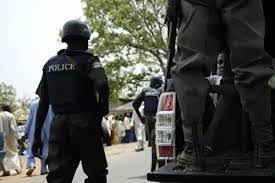
Terrorism: Police tighten S’East security as Kanu knows fate today
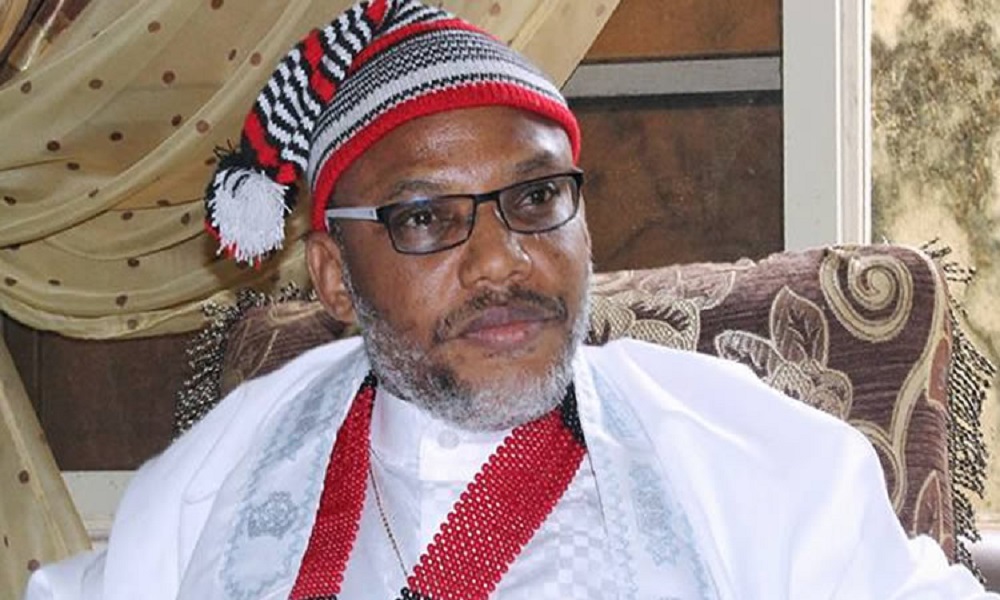
The detained leader of the Indigenous People of Biafra, Nnamdi Kanu, will today know his fate in the prolonged legal battle with the Federal Government.

A court, presided over by Justice James Omotosho of the Federal High Court in Abuja, is expected to rule on a series of applications filed by both Kanu and the Federal Government, including a request by the IPOB leader challenging the competence of the charges against him and seeking his release on the grounds of alleged unlawful detention and infringement of his fundamental rights.
Kanu has been in the custody of the Department of State Services since June 2021, following his controversial interception and return to Nigeria from Kenya in circumstances his lawyers describe as “extraordinary rendition”.

He is facing seven terrorism-related charges bordering on alleged incitement, running an unlawful group, and acts threatening national security—allegations he vehemently denies.
Justice Omotosho, on November 7, fixed Thursday to deliver judgment in the charges brought against Kanu.
Justice Omotosho announced the date while ruling on the matter after Kanu failed to open his defence, having exhausted the six days allocated to him by the court to present his defence.
While Kanu failed to open his defence after the prosecution closed its case, the IPOB leader filed a fresh motion challenging his trial.
He stated that the earlier Terrorism Prevention and Prohibition Act had been repealed, and as such, there are no valid charges against him.
He asked the court to expunge from its record “the purported plea of not guilty entered by him,” claiming it was based on deception and in defiance of the Supreme Court’s decision.
He also sought an order setting aside all subsequent proceedings, arguing that they were founded on a nullity.
Kanu further asked the court to hold that the charges disclosed no offence known to law, as they were allegedly based on a repealed terrorism law. He requested an order striking out the charge for want of jurisdiction and directing his release.
He urged the court to dismiss the charges and allow him to go home.
However, Justice Omotosho had held that since Kanu failed to utilise the opportunity granted to him to conduct his defence, he could not claim to have been denied his constitutionally guaranteed right to a fair hearing.
Justice Omotosho reiterated the court’s position that no ruling or preliminary objection would be determined at this stage.
He noted that the case was filed in 2015 but suffered delays before being re-assigned to his court earlier this year, where it received an accelerated hearing.
He stated that the prosecution called five witnesses and tendered several exhibits before closing its case on June 19, 2025.
The judge observed that multiple adjournments were granted at the instance of the defendant, who sought to cross-examine prosecution witnesses.
He recalled that Kanu’s no-case submission was earlier overruled, and the defendant was directed to open his defence.
Omotosho emphasised that the court had ensured a fair hearing, but noted that Kanu, despite initially agreeing to enter his defence, abandoned it and began claiming that there was no existing law under which he was being tried.
He said the defendant had not demonstrated seriousness in the proceedings, adding that he had personally appealed to Kanu “in God’s name” to present his defence and engage counsel.
Citing Supreme Court authorities, Omotosho held that if a defendant fails to utilise the opportunity of a fair hearing, the court cannot compel him to enter his defence.
The judge ruled that it was on this basis that Kanu had waived his right to defence and proceeded to fix a date for judgment.
Kanu’s legal journey has been marked by numerous adjournments, court orders, appeals, and counter-applications.
In October 2022, the Court of Appeal discharged him of all charges and ordered his release, ruling that his rendition from Kenya violated international law. The Federal Government immediately appealed to the Supreme Court, which later set aside the appellate court’s decision and ordered that he return to the trial court.
His continued detention has remained a contentious issue, attracting widespread national and international attention. Various groups, including Igbo socio-cultural organisations, human-rights activists, and political leaders from the South-East, have repeatedly called for his release, arguing that it would help de-escalate rising insecurity in the region. The Federal Government, however, maintains that he has a case to answer and insists he must stand trial.
Today’s declaration is therefore pivotal, with implications not only for Kanu’s personal liberty but also for national stability and ongoing discussions around political reconciliation and security in the South-East.
Security has been strengthened around the Federal High Court premises as supporters, journalists and observers await the outcome of a matter that has remained one of Nigeria’s most politically sensitive trials in recent years.
Meanwhile, Kanu filed a suit before the Court of Appeal asking it to stop the trial Court from delivering judgment today in his trial. However, a date for hearing has not been fixed by the appellate Court, and no order has been given based on his request.
Police ready to maintain peace in Abia
Meanwhile, in Abia, Kanu’s home state, the police are not leaving anything to chance.
According to the Police Public Relations Officer, ASP Maureen Chinaka, the state Commissioner of Police, Danladi Isa, has noted that Abia State is currently peaceful, but nevertheless security strategies are in place ahead of whatever the outcome of the Thursday judgement on Kanu.
She quoted Isa as saying, “We have already placed security coverage to monitor the entire state. We put some security strategies in place to make sure there is no breakdown of law and order.”
Chinaka added that already, the state police are partnering with other security agencies in the state to keep the state safe.
“I tell you, in Abia State, officers of the Abia State Police Command, under the Commissioner of Police, are all out to ensure that law and order is maintained. And of course, we are collaborating with other sister security agencies to ensure we maintain safety.
“So, Abia is safe. The command, as the lead internal security agency at all times, is out to ensure the maintenance of law and order and protection of life and property. We are collaborating with sister security agencies. So, what I am saying is not only for tomorrow (Thursday).
“Already, every Monday, we have activities of police and other sister security agencies patrolling the state to ensure that there is maintenance of law and order.
“So, the command is not expecting any anti-behaviour on Thursday, whichever way the judgment goes. That’s why I said that officers are on the ground 24/7. The command is always out to ensure that the state is safe”.
Recall that Umuahia in Abia State is the hometown of the IPOB leader, Kanu. As of the time of this report, there has yet to be reported presence of security men in his Afaraukwu country home.
In Enugu State, the PPRO Daniel Ndukwe asked, “Have you seen the judgement that he is going to be convicted?”
The Force spokesman, Benjamin Hundeyin, did not reply to a WhatsApp message sent to his mobile telephone.
Kanu files a complaint against DSS witnesses.
In a related development, Kanu has filed a criminal complaint against two Department of State Services witnesses as the Federal High Court prepares to deliver judgment in his terrorism trial.
The complaint, dated November 13, and obtained by The Punch on Wednesday, was filed before a Chief Magistrate’s Court in Abuja.
The complaint signed by Kanu himself mentions Mr TAA, Mr BBB, the Attorney General of the Federation (Lateef Fagbemi SAN), Director General Department of State Services (Adewale Adeleye or his successor in office) as the defendants and himself as the complainant.
Kanu alleges that the witnesses—identified in court as TAA (PW1) and BBB (PW2)—gave “false evidence on oath.”
The filing cites Sections 156, 158(1), 159(1), and 160 of the Penal Code, Section 88 of the Administration of Criminal Justice Act 2015, and Sections 34 and 36 of the 1999 Constitution (as amended).
The complaint reads partly, “On diverse dates between May and July 2025, at the Federal High Court, Abuja, during the hearing and trial-within-trial in the case of Federal Republic of Nigeria v. Nnamdi Kanu (FHC/ABJ/CR/383/2015), Mr TAA and Mr BBB, being witnesses called by the prosecution in my trial, wilfully gave false evidence on oath, knowing same to be false and/or not believing same to be true and material to the admissibility of the 2015 and 2021 statements, thereby committing perjury contrary to Sections 156, 158 and 159 of the Penal Code.”
Kanu alleged that TAA falsely denied knowing Mr Brown Ekwoaba, the Assistant Director (Investigations) at the DSS National Headquarters, who, according to him, supervised his October–November 2015 interviews and detention. The complaint referenced page 352 of the Certified True Copy of proceedings of June 26, 2025, where TAA reportedly stated: “I cannot recall… I didn’t know any other Mr Brown, my Lord.”
The IPOB leader said the denial was untrue, citing an affidavit by Prince Emmanuel Kanu confirming six visits to the DSS office where Ekwoaba allegedly conducted interviews; another affidavit by Benjamin Madubugwu confirming similar interactions; and public records showing Ekwoaba served as Assistant Director (Investigations) from 2015 to 2020 before becoming a State Director.
Kanu further accused BBB of false testimony, noting that although he claimed (on page 202 of the CTC of proceedings) to have never met Kanu except in court, he had previously testified (pages 184–188) that he led Kanu’s video interview at the DSS Headquarters on July 17, 2021.
He added that the two witnesses, who appeared masked and behind screens by order of the trial court, gave “materially false” testimony to obscure the true chain of custody of his 2015 and 2021 statements.
News
Prof Nnamchi Bags Excellence Award From Catholic Parish For His Investment In Youths(Photos)
——As The Lawmaker offers Bursary to 84 Outstanding Students, Certificates In ICT To 1000 Others
The four-day grand finale of the Free training on information and computer technology, ( ICT) Programme sponsored by the Member Representing Enugu East/Isi-Uzo Federal Constituency, Hon. Prof. Paul Sunday Nnamchi, came to a successful conclusion on Sunday, 20th September, 2026 at St. Therese Parish, Phase Six, Trans-Ekulu, Enugu.

The programme, designed to equip young people with essential digital skills and improve their capacity to thrive in today’s technology-driven world, featured Bursary Awards to 84 outstanding students and presentation of certificates to over 1,000 students and youths drawn from communities across the constituency.
Highpoint of the colourful event was the presentation of a special “Award of Excellence” to Hon. Prof. Paul Sunday Nnamchi in recognition of his commitment to youth development, education and community empowerment by the St. Therese Parish, of Catholic Church, Phase Six, Trans-Ekulu, Enugu.
Presenting the award on behalf of the parish, Very Rev. Fr. Franklin Udeze expressed profound appreciation to Prof. Nnamchi for his numerous contributions to human capital development and what he described as his outstanding performance in the National Assembly. He prayed that God would continue to bless, guide and strengthen him in his service to the people.
In his response, Hon. Prof. Nnamchi appreciated the parishioners, youths and students for the honour and recognition, noting that God’s grace and their prayers had been his strength.
He stated further that, “one of his primary objectives in the National Assembly is to ensure that students across Enugu East/Isi-Uzo Federal Constituency acquire computer literacy and essential digital skills”.
Prof Nnamchi also emphasized that the world had become increasingly technology-driven and that young people must be adequately prepared to participate meaningfully in the global community.

Earlier, the Programme Coordinator, *Engr. Igwe Daniel Nwachukwu, praised the parents and guardians for entrusting their children and wards to the programme and for supporting their participation throughout the excise.
He encouraged the beneficiaries to make meaningful use of the knowledge and skills acquired, stressing that the true value of the programme would be demonstrated through their ability to apply what they have learned to improve their lives, create opportunities and contribute positively to society.
Delivering the Vote of Thanks on behalf of the beneficiaries, Miss Avian Chimeziterem expressed sincere appreciation to Hon. Prof. Nnamchi for remembering young people and providing them with such a valuable and impactful opportunity.
She thanked the lawmaker and resource persons for investing in their future and assured that they would make good use of the skills acquired during the one month intensive computer training programme.
The successful completion of the 4th edition, which trained 2,927 students marks another significant milestone in the lawmaker’s drive to promote digital literacy, youth empowerment and educational development in Enugu East/Isi-Uzo Federal Constituency.
News
Ghana Urges ECOWAS States to Unite Against Climate-driven Insecurity
By Gloria Ikibah
Ghana has called for stronger regional cooperation among ECOWAS member states to tackle the growing links between climate change, environmental degradation, population displacement and insecurity across West Africa.
The call was made on Tuesday by Ghana’s Vice-President, Professor Naana Jane Opoku-Agyemang, who represented President John Dramani Mahama at the official opening of the Second 2026 Parliamentary Seminar and Second Extraordinary Session of the ECOWAS Parliament in Accra.
The seminar, being held under the theme, “Climate Change as a Driver of Environmental Degradation, Population Displacement and Rising Insecurity in the ECOWAS Region,” is examining the growing impact of climate-related pressures on communities, livelihoods and regional security.
Opoku-Agyemang said the interconnected nature of the challenges required ECOWAS countries to move beyond isolated national responses and develop coordinated measures capable of addressing both the immediate consequences and underlying causes.
She said: “We need stronger early warnings, better support for host communities, more resilient livelihoods and better coordination across our borders, acting before local pressures become wider humanitarian crises”.
The Vice-President said climate change should no longer be treated solely as an environmental matter, arguing that its consequences were increasingly being felt in development, humanitarian and security sectors.
She cited population displacement across the Sahel and neighbouring coastal states, noting that insecurity, environmental stress and disrupted livelihoods in one part of West Africa could increasingly place pressure on communities and national systems elsewhere.
According to her, Ghana was working with ECOWAS to strengthen early-warning mechanisms through improved data sharing, closer coordination and stronger links between national and regional response systems.
Opoku-Agyemang also called for greater efforts to mobilise climate finance and invest in resilient agriculture, water management, coastal protection and clean energy.
According to her, ECOWAS already had important frameworks covering free movement, disaster risk reduction, climate action and early warning, but the priority should now be to ensure that the frameworks were fully implemented and adequately funded.
The Speaker of the ECOWAS Parliament, Hadja Mémounatou Ibrahima, also called for climate commitments to be translated into practical measures through legislation, budgets and effective oversight.
“Our role is to ensure that public policy and budgets devoted to climate resilience … contain also the humanitarian dimensions, economic, social, migratory, and security concerns,” she said.
Ibrahima said recent flooding along parts of the region’s coastline had demonstrated how closely climate, humanitarian and security challenges were connected.
She therefore urged parliamentarians to use the seminar to develop practical recommendations capable of protecting vulnerable communities and preventing environmental pressures from escalating into conflict.
The Ghanaian Parliament called on ECOWAS member states to strengthen legislation on environmental governance, climate adaptation, disaster preparedness and sustainable management of natural resources.
It also urged governments to improve protection for displaced persons, refugees and host communities, while creating opportunities for young people and women through climate-smart agriculture, renewable energy and entrepreneurship.
The Second Deputy Speaker of the Ghanaian Parliament, Hon. Andrew Asiamah, who represented the Speaker, emphasised that no ECOWAS member state can address the challenges alone.
He noted that rivers, ecosystems and environmental crimes did not respect national borders, making regional cooperation essential to tackling the problems.
Hon. Asiamah also warned that effective regional responses would require adequate financing, saying policies without the resources to implement them would remain largely aspirational.
The Head of the Ghanaian Delegation to the ECOWAS Parliament, Kweku Ricketts-Hagan, said the regional Parliament had an important role to play in finding solutions to climate change and insecurity because lawmakers were closer to the people.
He called for a coordinated and holistic approach to the challenges confronting the region.
The Second Extraordinary Session of the ECOWAS Parliament will also consider the institution’s 2027 budget and activity programme.
The parliamentary seminar forms part of ongoing regional efforts to examine the relationship between climate change, environmental degradation, population displacement and growing insecurity in West Africa.
News
ECOWAS Seeks New Regional Pact as Climate Crisis Threatens Security
By Gloria Ikibah
The Economic Community of West African States (ECOWAS) has called for a new regional compact to tackle climate change, environmental degradation, population displacement and insecurity, warning that the region can no longer treat climate change as an environmental concern alone.
The call was made on Tuesday by the President of the ECOWAS Commission, General Birame Diop, represented by the Commissioner for Human Development and Social Affairs, Professor Nassirou Bako-Arifari, at the Second 2026 Joint Parliamentary Seminar in Accra, Ghana.
The seminar, which runs from September 21 to 23, is focused on “Climate Change as a Driver of Environmental Degradation, Population Displacement and Rising Insecurity in the ECOWAS Region.”
Prof. Bako-Arifari said the consequences of climate change were already placing growing pressure on communities, livelihoods and regional stability, making coordinated action by governments and parliaments increasingly necessary.
He said: “The theme before us is not simply an environmental issue. It is a development issue, a humanitarian issue, a peace and security issue, and ultimately an issue of human survival and regional stability confronting ECOWAS member states. West Africa is among the regions of the world particularly vulnerable to the consequences of climate change. Rising temperatures, changing rainfall patterns, prolonged droughts, desertification, coastal erosion, floods and the degradation of forests and farmlands are placing unprecedented pressure on communities and livelihoods.”
Naijablitznews.com reports that the World Bank has projected that West African countries could see as many as 32 million people moving within their own countries by 2050 because of climate factors if concrete climate and development action is not taken.
Bako-Arifari said ECOWAS had begun work to address the financing challenge facing climate action, including efforts to establish a regional carbon market platform under Article 6 of the Paris Agreement.
“Honourable Parliamentarians, Since 2024, the ECOWAS Commission has initiated an ambitious process aimed at establishing a regional carbon market platform in accordance with Article 6 of the Paris Agreement, a mechanism intended to mobilise necessary investments to address climate financing needs estimated at $294 bn for the region.
“Against this background, this Seminar is organised to provide a veritable platform for dialogue, knowledge-sharing, inter-institutional consultations to come up with concrete recommendations to strengthen climate resilience, human security and sustainable development in the ECOWAS Region”, he noted.
According to ECOWAS the region’s climate financing needs are estimated at $294 billion, while its regional carbon market initiative is being developed as one avenue for mobilising additional resources.
The ECOWAS commissioner placed particular emphasis on the role of parliamentarians, saying lawmakers had the power to translate regional commitments into national policies and practical action.
“This brings us to the critical role of Parliamentarians. Parliaments are uniquely positioned to translate regional commitments into national action. You provide the legislative frameworks, approve national budgets, exercise oversight and, importantly, serve as a direct bridge between governments and citizens”, he said.
Bako-Arifari proposed stronger climate-responsive legislation and oversight, increased domestic and regional financing, better early-warning systems and more inclusive management of natural resources.
“First, strengthen climate-responsive legislation and oversight. Our laws and policies must adequately address environmental protection, climate adaptation, disaster risk reduction and sustainable management of natural resources.
“Second, prioritise climate financing. Climate resilience cannot be achieved through declarations alone. We need predictable domestic and regional resources, while also mobilising international climate finance and strengthening access to available funding mechanisms.
“Third, strengthen early warning and early action. We must move from reacting to climate-related disasters to anticipating and preventing them. Regional early warning systems should be linked to communitylevel preparedness and rapid response mechanisms.
“Fourth, promote inclusive management of natural resources. Land, water, forests and fisheries must be managed transparently and sustainably. Local communities, women, young people, traditional authorities and other stakeholders must have a meaningful role in decision-making.
“Fifth, place youth and women at the centre of climate resilience. They are not merely victims of climate change. They are innovators, entrepreneurs, community leaders and agents of resilience. Investing in their skills, enterprises and participation is therefore an investment in the future stability of our region.”
Bako-Arifari said ECOWAS must also strengthen cooperation among member states on climate adaptation, disaster management, food and water security, environmental protection and the management of resources shared across borders.
He therefore called for closer collaboration between governments, parliaments, civil society organisations, traditional authorities, the private sector, academia and development partners.
On the broader security implications, he said ECOWAS needed to adopt a wider understanding of security which went beyond the protection of borders and prevention of armed conflict.
But cautioned against waiting for environmental pressures to develop into humanitarian or security crises.
“The scale and complexity of this challenge require us to move from fragmented responses to a comprehensive regional climate-resilience and human-security agenda. We need a new understanding of security—one that recognises that security is not only about protecting borders and preventing armed conflict. It is also about ensuring that citizens have access to food, water, livelihoods, a safe environment and opportunities for a dignified life.
“We must therefore be proactive and invest in resilience before crises occur. We must protect our ecosystems before they become irreversibly degraded. We must create livelihoods before desperation drives communities into displacement. Last but not the least, we must address grievances before they become conflict”, he added.
The commissioner urged parliamentarians to ensure that the seminar produced practical outcomes rather than becoming another forum for discussing the region’s climate challenges.
“Let us build an ECOWAS region embedded in in which climate resilience is development planning; where displacement is managed with dignity; where natural resources become instruments of cooperation rather than sources of conflict; and where our young people see a future of opportunity rather than one defined by environmental vulnerability and insecurity.
“Let our efforts continue to advance peace, security, resilience and sustainable development in the ECOWAS Region as ECOWAS transitions from ECOWAS of States to ECOWAS of People and Prosperity for All”, he stated.
-
News19 hours agoChristian candidates will punish Nigerian Muslims if elected in 2027 elections: APC Lawmaker Ibrahim Shittu
-
News18 hours agoNigeria signs acquisition agreement for 12 Viper Attack helicopters from U.S
-
Politics9 hours ago2027: Anambra Government urges Obi to Quit Presidential Race, Releases Salary Arrears
-
News9 hours agoWatch moment FCT minister Wike campaigns for Tinubu, Aduda
-
News18 hours agoAlleged Forgery: Court Releases International Passport Of Ex-Minister Nnaji
-
Economy7 hours agoBREAKING: CBN cuts interest rate to 23 percent