News
NAHCON directs airlines to issue hajj tickets ahead of pilgrims’ departure
The National Hajj Commission of Nigeria (NAHCON) has directed all hajj carriers for the next year’s airlifts to promptly issue flight tickets to pilgrims.

Chairman of NAHCON, Prof Abdullahi Saleh Usman, said this yesterday during a meeting with State Pilgrims’ Welfare Boards and 2026 Hajj air carriers held in the Commission’s headquarters in Abuja.
The directive, he said, is aimed at ensuring that every pilgrim is fully aware of his or her exact departure schedule vis-a-vis date, time and place of departure.

According to him, the arrangement would drastically reduce incidents of incorrect pre- arrival data sent to Saudi Arabia which affects Nusuk card distribution and other logistics.
He said, “Beginning with the 2026 Hajj, missing a flight will attract grave consequences. This is because each pilgrim’s ticket will be digitally linked to their Nusuk Card, which will be pre-positioned in their assigned buses in Saudi Arabia. These buses will convey them to their hotels. Hence, after visa issuance, a pilgrim cannot change groups again; pilgrims will thereafter maintain the group under which his or her visa was processed. And each group of 45 will travel together under a leader, be lodged together in same hotel in Makkah, Madinah and Masha’ir and return to Nigeria together after Hajj.
“Additionally, NAHCON must upload pre arrival data on the Nusuk Masar platform 72 hours before departure of any aircraft conveying pilgrims. This data include group numbers, names of group members, accommodation details, building assigned, and bed-space number. Any pilgrim who fails to show up for the scheduled flight will be treated as a no-show and will bear the penalty, which may include paying for the un-utilized seat. Same goes for any defaulting party.”
The commission chief said Saudi Arabian Ministry of Hajj and Umrah has introduced a boarding card to be issued to each pilgrim before departure.
The card will contain in addition to the above information, other vital details such as names of airline, its capacity, name of state, name and number of pilgrims on board, departure airport, time and destination airport, arrival time and arrival airport.
Special Assistant (General Matters) to the NAHCON Chairman, Dr Danbaba Haruna, said the commission has concluded its camp booking and other services.
He urged State boards to expedite remittance of Hajj fare payments so as not to lose more slots.
In another development, airline allocation for the Hajj exercise has been communicated to each State Pilgrims’ Board with a recommendation to liaise with one another.
The carriers are Air Peace, Fly Nas, Max Air and Umza Air.
News
ADC Rivers guber candidate, Ibraye dumps party, says 2027 tickets on quicksand
ADC Rivers governorship candidate, Ibraye dumps party, says 2027 tickets on quicksand
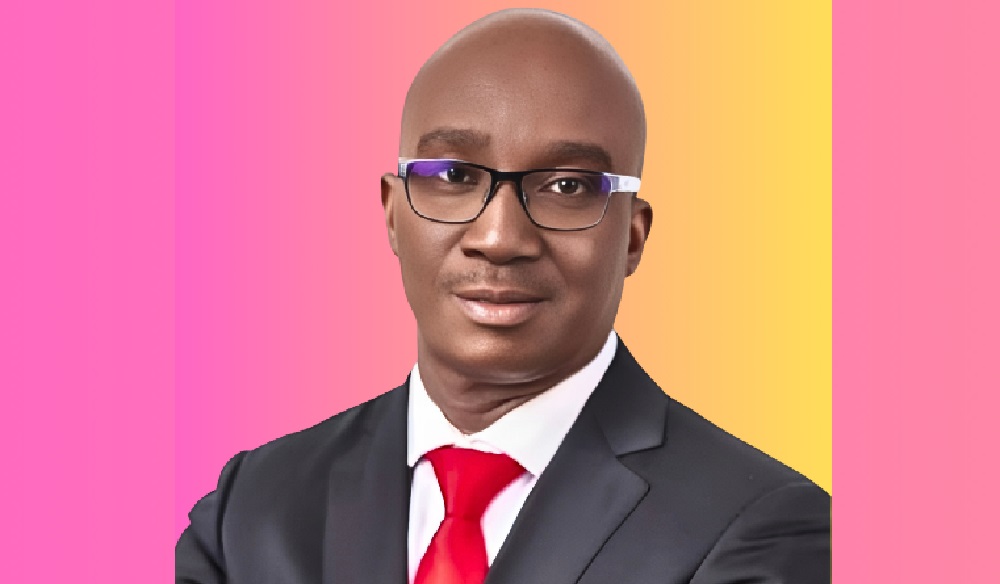
The 2023 governorship candidate of the African Democratic Congress (ADC) in Rivers State, Dr Tonte Ibraye, has resigned from the party, citing concerns over its internal leadership crisis and the foundation of its 2027 electoral process.
Ibraye announced his resignation in a letter dated Thursday and addressed to the ADC Ward Chairman in Degema Ward 16, Bille.
He said the party’s internal leadership crisis, particularly the dispute surrounding the David Mark-led faction, had made it impossible for him to remain a member.
According to him, he had remained committed to the party’s principles of internal democracy, fairness and respect for legitimate structures, but recent developments had undermined those values.
Ibraye accused some new members of attempting to take over legitimate party structures across the country despite ongoing legal disputes over the party’s leadership.
He warned that allowing a disputed leadership to determine candidates for the 2027 elections could create problems for those seeking office on the party’s platform.
“The continued attempt by a disputed leadership to determine ADC candidates for the 2027 elections raises questions about the legitimacy and stability of such candidatures,” he said.
He added that political tickets emerging from the process were being built “on quicksand rather than solid ground.”
The former governorship candidate argued that no political movement could build a credible future while its internal foundation remained unsettled.
Ibraye also criticised the broader opposition, saying it had focused more on removing President Bola Tinubu than presenting Nigerians with a clear plan for governance.
“I have therefore decided that I can no longer remain on what I consider a sinking political ship,” he said.
He said he would begin consultations with his supporters, political associates and political leaders across the 23 local government areas of Rivers State to determine his next political move.
Ibraye thanked ADC members and supporters who had worked with him over the years.
He added that his resignation would not change his commitment to the development of Rivers State and Nigeria or his belief in accountable and people-centred leadership.
News
Niger Bridge: Works minister directs workers to bring all ads down to be replaced with Tinubu’s photos
The Federal Government is repairing the First Niger Bridge to restore its structural integrity, but Works Minister David Umahi has introduced a political dimension to the rehabilitation: President Bola Tinubu’s photographs are to adorn the bridge once the engineering works are completed.
Umahi, who inspected the bridge linking Onitsha in Anambra State to Asaba in Delta State, directed the removal of illegal advertisements from the public infrastructure, while saying the cleared spaces would, “for now,” carry photographs of President Tinubu.
The directive has immediately raised questions over the distinction between prohibited commercial displays and politically favourable imagery on public infrastructure.
If unauthorised advertisements are considered an improper use of the bridge, the question is whether presidential photographs require a different regulatory specification simply because they carry the image of the nation’s president.
The issue is particularly striking because the bridge is currently undergoing emergency structural intervention after vandals removed critical components, including bolts, nuts and portions of its expansion-joint steelwork.
The bridge was closed to vehicular traffic on September 7, 2026, to allow contractors to execute the emergency works. The rehabilitation includes removal of the deteriorated asphalt surface, installation of a new approximately 40-millimetre wearing course, replacement and repair of damaged structural components, and installation of solar streetlights and CCTV systems.
The original September 21 reopening target was pushed back by a week after persistent rainfall disrupted construction activities and affected some completed sections.
Following his September 23–24 inspection, Umahi said the bridge would reopen next week, subject to completion of critical works and safety certification.
That safety-first position is consistent with basic civil-engineering logic: a bridge cannot be reopened merely because a political or administrative deadline has arrived. Structural integrity, load capacity, expansion-joint performance, carriageway condition and overall safety must determine when traffic resumes.
For now, motorists have been diverted to the Second Niger Bridge through Obosi.
But while engineers are calculating loads and replacing compromised components, another kind of load is being placed on the public infrastructure – the political symbolism of presidential imagery.
The First Niger Bridge is not merely another transport structure.
Built by the French construction company Dumez following feasibility studies by Netherlands Engineering Consultants (NEDECO), the approximately 1,404-metre steel bridge was constructed principally between 1964 and 1965 and opened to traffic in December 1965.
It was commissioned by then Prime Minister Sir Abubakar Tafawa Balewa shortly before the political crisis that culminated in his assassination in January 1966.
The bridge subsequently endured the Nigerian Civil War, during which it was partially destroyed, before being repaired and returned to service.
For decades, it has remained one of Nigeria’s most important east-west transport corridors, carrying enormous volumes of commercial and passenger traffic between the South-East and South-South.
Its engineering history is therefore one of endurance, reconstruction and continuous maintenance.
But the current controversy is not about steel fatigue, asphalt failure or expansion-joint displacement.
It is about where public infrastructure ends and political messaging begins.
Umahi’s position creates an unusual visual equation: illegal advertisements are to be removed, yet the President’s photographs are to occupy the resulting space.
That distinction may require more explanation than the bridge’s expansion joints.
A public bridge is designed to carry traffic – not political branding. Its structural drawings specify dead loads, live loads, wind loads and safety factors; they do not ordinarily contain a political billboard schedule.
The government may legitimately determine what can be displayed on federal infrastructure. But where one category of display is removed as illegal and another is permitted, the regulatory basis for that distinction becomes a legitimate matter of public scrutiny.
The engineers may be repairing the bridge’s physical load-bearing system. The government may now have to explain the political load it is asking the same bridge to carry.
News
BRICS: International Journalists Ring Closing Bell at Historic Bombay Stock Exchange
By Gloria Ikibah
A delegation of international journalists has been given the rare honour of ringing the market-closing bell at the Bombay Stock Exchange (BSE), bringing to a close a familiarisation visit to Asia’s oldest stock exchange.
The symbolic ceremony was led by BSE Managing Director and Chief Executive Officer, Sundararaman Ramamurthy, who hosted the visiting media representatives at the exchange’s historic headquarters in Mumbai.
The bell-ringing followed a briefing during which Ramamurthy traced the 151-year-old institution’s remarkable journey from its beginnings under a banyan tree to its emergence as one of the world’s leading stock exchanges.
The journalists were also taken through the historic trading hall where brokers once conducted transactions through open outcry, relying on hand signals and shouted bids before the introduction of electronic trading.
Ramamurthy told the delegation that India’s capital markets had undergone a dramatic transformation, with trading now carried out electronically and increasingly through smartphones, enabling investors to access the market from virtually anywhere.
He also highlighted the growth in investor participation in India, the development of modern settlement systems and the expanding role of technology in promoting transparency and protecting investors.
The visiting journalists were briefed on the BSE’s contribution to capital formation and economic development, as well as India’s growing role in global derivatives and options trading.
The ceremonial closing bell provided the international media representatives with a firsthand experience of one of the longstanding traditions associated with stock exchanges around the world.
The visit was part of efforts to familiarise international journalists with India’s financial markets and the evolution of one of the country’s most important economic institutions.
-
Politics23 hours agoKwankwaso Blames Tinubu’s Fuel Subsidy Removal for Nigeria’s Economic Crisis
-
News13 hours agoEFCC declares Abdulrashhed Maina wanted
-
News24 hours agoIranian Children Return to School After Months of War Disruption as New Academic Year Begins
-
Entertainment13 hours agoHow I manage Davido’s wealth, limit his luxury spending – Sister
-
News3 hours agoVideo: Apo-Karshi road getting required finishing touches
-
News13 hours agoCCB probes 20 ministers, 30 perm secs