News
Supreme Court strikes out Osun State’s suit over withheld LG funds
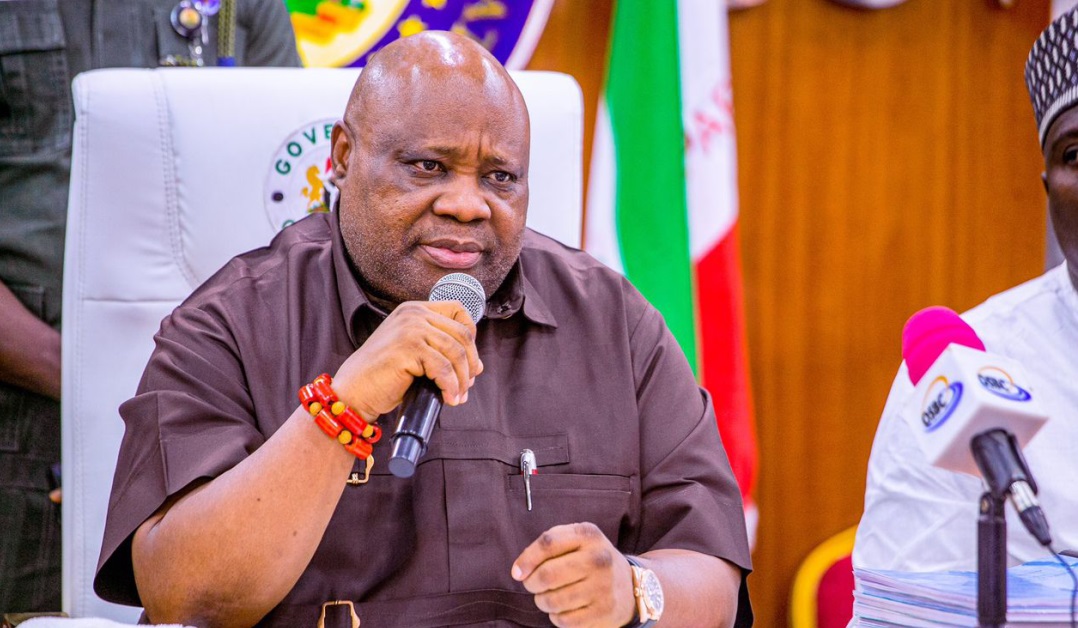
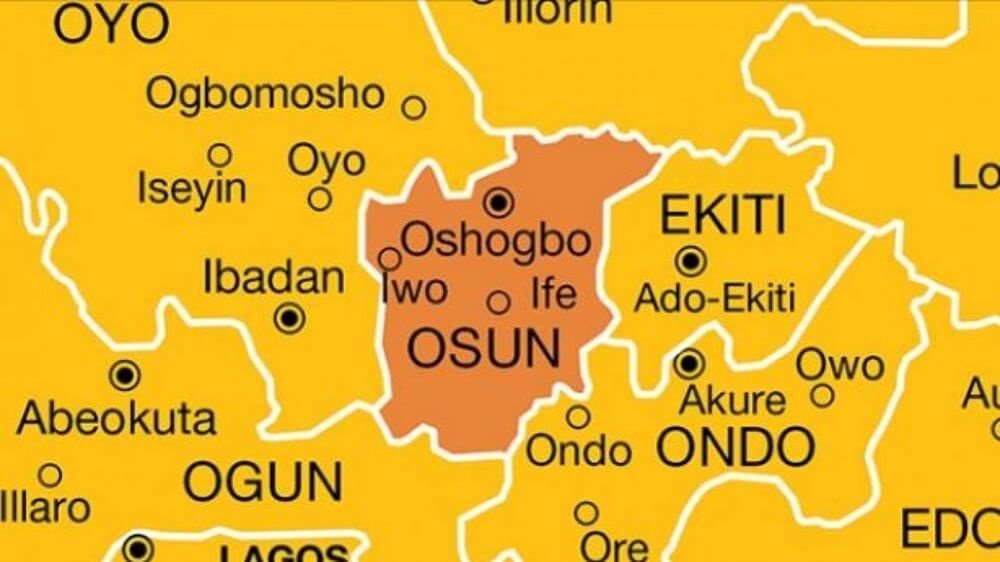
The Supreme Court has struck out a suit filed on behalf of the Osun State Government by the state’s Attorney General to compel the Federal Government to release the allocations due to Local Governments in the state.

In a majority judgment of six-to-one, the apex court held that the AG of Osun State lacked the locus standi (the legal right) to have filed the suit on behalf of Local Governments in Osun State who are legal entity with capacity to sue to assert their right.
The lead majority judgment was prepared and read on Friday Justice Mohammed Idris.

Justice Idris held that the plaintiff failed to establish that there was any cause of action capable of invoking the original jurisdiction of the Supreme Court as provided under Section 232(1) of Construction.
Justice Idris further held that from the facts of the case, the issue in dispute was about the alleged failure of the Federal Government to release funds standing to the credit of Osun State Local Governments in the Federation account, and as such, there is no dispute between Osun State and the FG to have allowed the state’s AG to approach the Supreme Court.
While distinguishing this Osun case from that of the AG, Abia and others v. AG of the Federation, in which the Supreme Court ordered the direct payment of allocations to Local Governments across the federation, Justice Idris held that such suit over withheld Local Government funds ought to have been filed by the affected Local Governments.
Justice Idris however frowned at the failure of the Federal Government to put in place all necessary measures to give effect to the Supreme Court ‘s judgment in AG, Abia and others v. AG of the Federation, mandating direct payment of allocations to Local Governments across the federation.
He held that by the judgment, the Federal Government was under obligation to ensure that all funds standing to the credit of Local Governments in the federation account are sent directly to them without being withheld under any excuse.
Justice Emmanuel Agim wrote the dissenting judgment in which he disagreed with the position of the six other Justices on the seven-member panel.
News
Shehu Sani seeks total probe of El-Rufai’s 8-yr govt in Kaduna
Former Kaduna Central Senator, Shehu Sani, has called for a comprehensive probe of the administration of ex-Governor Nasir El-Rufai, alleging financial impropriety and abuse of office during his tenure.
Addressing a press conference in Kaduna on Saturday, Sani urged security and anti-corruption agencies to investigate what he described as allegations of mismanagement of public funds running into hundreds of billions of naira under the previous government.
He specifically called on the Economic and Financial Crimes Commission (EFCC) to act on the indictment by the Kaduna State House of Assembly and ensure full accountability.
Sani alleged that between 2015 and 2023, Kaduna State witnessed hardship, insecurity, demolitions and human rights violations, insisting that the period represented one of the most difficult eras in the state’s history.
The former lawmaker also questioned El-Rufai’s democratic credentials, citing the arrest and detention of journalists, activists, clerics and community leaders during the administration.
He further urged security agencies to intensify investigation into the disappearance of political activist Abubakar Idris, popularly known as Dadiyata, who has been missing since 2019.
Sani’s remarks followed recent comments by El-Rufai during an interview on Arise TV, where the former governor criticised the current administration.
Describing El-Rufai’s position as hypocritical, Sani said the ex-governor had vigorously campaigned for President Bola Ahmed Tinubu during the 2023 elections and could not now discredit the same government for political convenience.
“You cannot promote a candidate as the best option yesterday and turn around today to attack the same administration,” he said.
Sani also claimed that El-Rufai lost political relevance before leaving office, pointing to what he described as the ruling party’s poor performance in parts of the state during the last general elections.
He commended what he termed a reduction in kidnappings under Governor Uba Sani and urged residents to support ongoing peace efforts.
Declaring his political stance ahead of 2027, Sani affirmed support for President Tinubu and Governor Uba Sani, while maintaining that Nigerians are free to choose credible candidates.
He, however, cautioned that opposition must not be reduced to what he called a “charade of politicians” who contributed to Nigeria’s challenges since 1999 and are now presenting themselves as alternatives.
As the 2027 elections approach, Sani urged political actors to respect zoning and power rotation principles, stressing that competence, integrity and national cohesion must guide leadership choices.
News
FG fast-tracks interest-free loans
The Federal Government has said it will ensure that the planned ₦300,000 interest-free loans for smallholder farmers and targeted credit support for traders are released quickly and in a transparent manner.
The Minister of State for Finance, Dr. Doris Uzoka-Anite, made this known on Saturday through her official X handle. She said the Ministry of Finance is determined to make sure that the loans reach those who truly need them without delay.
“Our priority at the Ministry of Finance is ensuring that these ₦300,000 interest-free loans for smallholder farmers and targeted credit for our traders are disbursed with absolute transparency and speed,” she wrote.
According to her, the aim of the programme is to support people at the bottom of the economic ladder who form a large part of Nigeria’s working population. She said helping small farmers and petty traders would strengthen the country’s economy from the grassroots.
“By empowering the base of our economic pyramid, we are fueling the engine of Nigeria’s growth and moving the #RenewedHope agenda from policy to pocket,” she added.
As part of steps to ensure proper implementation, the minister met with Hon. Hamza Ibrahim Baba, the National Programme Manager for the Government Enterprise and Empowerment Programme, popularly known as GEEP. Their meeting focused on how to effectively carry out the newly launched GEEP3.0 and the FarmerMoni Dry and Wet Season schemes.
GEEP operates under the National Social Investment Programme Agency and is designed to provide financial support to people at the grassroots level. The new phase, known as GEEP3.0, offers six-month interest-free loans starting from ₦10,000 to petty traders and artisans.
The scheme is specially designed for everyday market men and women who rely on daily sales to survive. Many of them operate with small amounts of capital, sometimes as low as ₦2,000 to ₦5,000 worth of goods. For such traders, access to even ₦10,000 can make a big difference in expanding their stock and increasing their daily income.
Under GEEP3.0, the loans are interest-free and do not require collateral. This means beneficiaries do not need to provide property or other valuable assets before they can access the funds. The goal is to remove the common barriers that prevent low-income Nigerians from accessing bank credit.
On the agricultural side, the FarmerMoni Dry and Wet Season Programme is aimed at supporting farmers during both major planting periods in the year. This is expected to help increase food production and improve food security across the country.
The government said it is extending FarmerMoni to more than 20,000 farmers nationwide in the current phase. Officials believe that supporting farmers will not only increase food supply but also create jobs and reduce poverty in rural areas.
Hamza Ibrahim Baba explained that the FarmerMoni scheme will soon open its online portal to allow eligible farmers to register for the interest-free and collateral-free loans. He said the programme is strictly targeted at vulnerable and poor farmers at the grassroots, not large commercial farmers.
According to him, the size of the loan each farmer receives will depend on the type of farming activity and the financial needs of that activity. For example, crop farmers may require funds for seeds and fertilisers, while livestock farmers may need support for feed and animal care.
Baba stated that to qualify, applicants must be Nigerians aged 18 years and above who are already engaged in farming. They must either own or rent farmland and must have a bank account and a valid means of identification. In addition, applicants are required to belong to a recognised farming cooperative or association within their local government area.
He explained that working through cooperatives and farmer associations would make it easier to identify genuine farmers and monitor the use of the funds.
The programme will cover all 774 local government areas in the country. Implementation will involve state programme managers, enumerators who will collect and verify data, partner banks, fintech recovery agents and farmer associations across the 36 states and the Federal Capital Territory.
Baba disclosed that the government is targeting more than 22,000 farmers in this current phase, with about 28 farmers expected to benefit in each local government area. He added that this is only the beginning, as more phases will follow.
Future phases are expected to include TraderMoni and MarketMoni, which are also designed to support artisans and petty traders across the country.
He said the funds for the farmers are expected to be disbursed before the end of March so that beneficiaries can take advantage of the wet season planting period. Timely release of funds is considered important because delays could affect planting schedules and reduce expected harvests.
Addressing concerns that such programmes are sometimes influenced by politics, Baba said measures have been put in place to prevent interference. He explained that the registration and verification processes are digitised, which reduces human manipulation.
He also said that by working closely with recognised farmer associations and using proper data verification methods, only genuine farmers would be selected.
News
Catholic Diocese Protests Attacks, Killings In Southern Taraba
Priests in the Catholic Diocese of Wukari in Taraba have protested against the unabating attacks, killings, and displacement of farmers across the southern zone of the state.
The priests say over 90,000 persons have been displaced, with over 80 persons killed so far, leaving many injured, while over 200 communities and worship centres have been destroyed.
Speaking shortly after the protest, the Vicar Pastoral of the diocese, Very Rev. Father James Yaropay, said that the attackers have taken over farmlands belonging to farmers of the affected areas.
”It has become expedient for us as a diocese to carry out this solidarity walk and to address you, Gentlemen of the Press, on the lingering and heartbreaking carnage that has been going on in Wukari Diocese, particularly Chanchanji Ward of Takum Local Government Area, and parts of Ussa and Donga Local Government Areas in Southern Taraba since September 2025,” he said.
More than 80 people have been killed so far, several others injured with various degrees of injuries, while over 200 communities and churches have been destroyed, and the residents, numbering over 90,000 Catholics, have been displaced.
The suspected militia who carry out these attacks usually come in the wee hours, mostly while people are sleeping, and launch the attacks, killing anyone in sight and setting houses and harvests ablaze.
However, in a statement, they asked that “as a matter of urgency, adequate security personnel should be mobilized and deployed to the hinterlands where this carnage is taking place unabated”.
“The government at all levels must be deliberate in ensuring security guarantees and bringing enablers and perpetrators of these dastardly acts or heinous crimes against humanity to justice through their immediate arrest and prosecution, irrespective of their ethnic, political, and religious affiliations,” the statement read.
They drew attention to the plight of the Internally Displaced Persons, who require immediate intervention by the government, humanitarian agencies at all levels, NGOs, philanthropists, and people of goodwill.
“The urgent needs of the IDPs include, among other things, relief materials such as foodstuffs, beddings, toiletries, medical health care, and temporary tents in order to guarantee their overall well-being so as to avert a major humanitarian disaster,” they said.
-
News16 hours agoElection timetable: INEC reviews Ramadan conflict, vows to make amends
-
News18 hours agoFubara dedicates New Telegraph ‘Man of the Year ‘ Award to his mentor, Wike
-
News11 hours agoSuspected Boko Haram fighters kill 21 in fresh Niger State attacks
-
News15 hours agoKalu Predicts Strong Igbo Backing for APC in FCT Area Council Elections
-
Sports14 hours agoFA Cup: Westham survive Burton’s scare escape with one goal victory
-
News18 hours agoNigeria Must Protect Its Citizens and Reclaim Its Global Respect-ADSC Boss, Oluwafemi
-
News18 hours agoGeneral Elections timetable: HoR to hold emergency session on Tuesday
-
News15 hours agoRAMADAN: Senator Manu distributes over 5,000 bags of rice across five LGAs in Taraba Central (Photos)