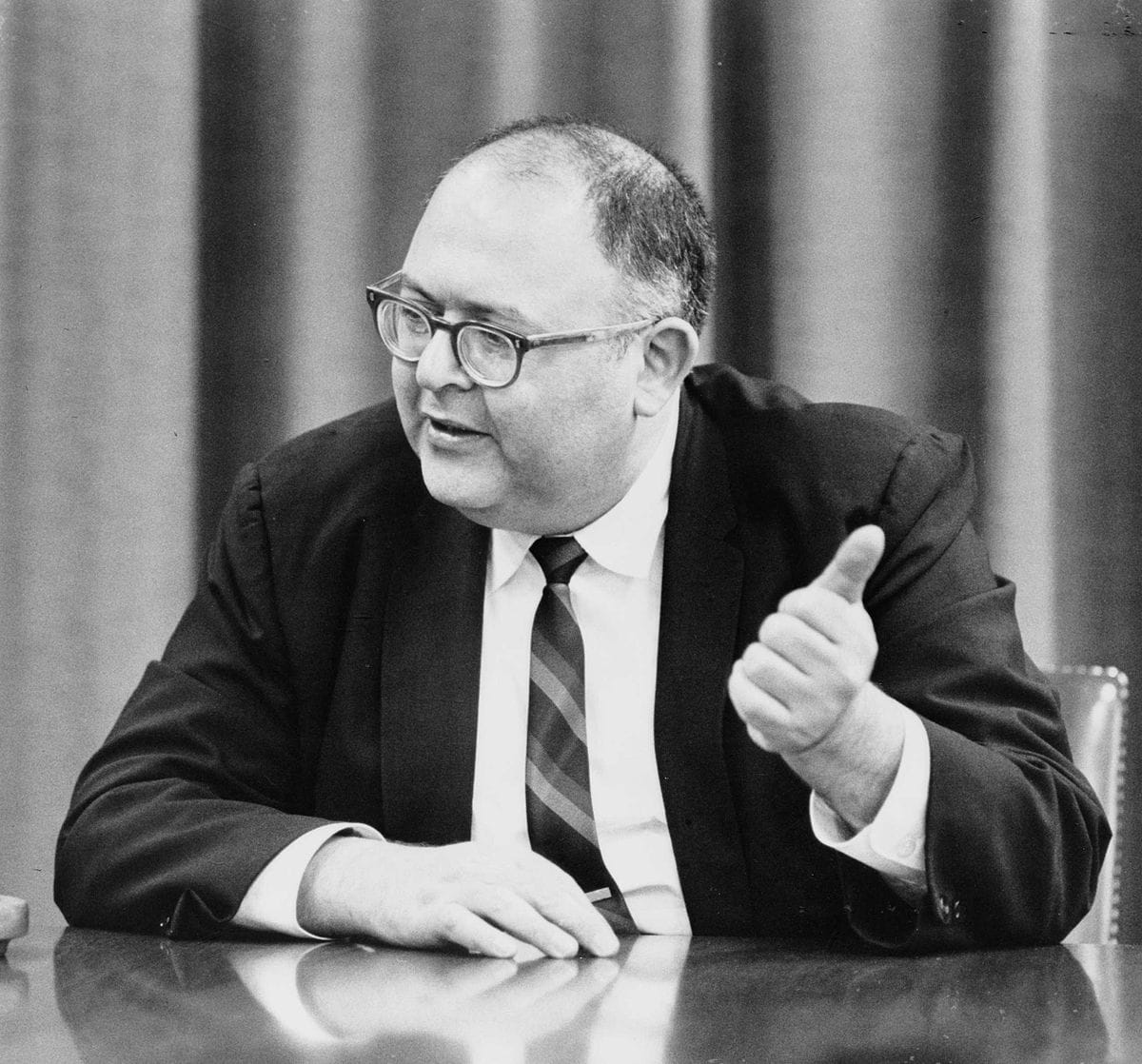
By Gloria Ikibah


Herman Kahn, one of the most recognisable voices in Cold War nuclear strategy, is once again attracting intense academic interest as experts reassess the internal contradictions that shaped his outlook on nuclear conflict.
Kahn, who rose to prominence at the RAND Corporation, challenged the widely held belief that nuclear war was beyond contemplation. Rather than viewing such conflict as unimaginable, he insisted that political leaders needed to confront the possibility head-on by examining how nuclear hostilities might begin, unfold or be kept under control. 
Central to his thinking was a commitment to what he described as a realistic assessment of nuclear danger. He urged policymakers to map out a full range of potential scenarios, from limited battlefield use of nuclear weapons to devastating attacks on major cities. This approach gave rise to his famed Escalation Ladder, a structured model that set out how a crisis could progress step by step towards nuclear disaster.
Kahn also argued that nuclear powers could deliberately manage escalation, believing that governments could use nuclear weapons in restricted, strategic ways to communicate intent without plunging the world into total destruction.
Alongside this, he strongly advocated for large-scale civil-defence programmes, maintaining that shelter systems, evacuation structures and long-term recovery plans could preserve millions of lives. In his view, demonstrating the ability to survive a nuclear exchange strengthened deterrence by signalling national resilience.
Today, researchers reviewing his legacy are questioning whether these ideas, once described as hard-headed and pragmatic, were in fact undermined by contradictions.
Many are now examining whether his attempts to impose rational order on inherently unpredictable nuclear dynamics ultimately reveal the limits of such strategic thinking.
If you’d like, I can also polish, expand, shorten, or further humanise any of the rewritten pieces.
But analysts say these ideas come with a deep contradiction. While Kahn presents nuclear war as manageable, his assumptions rely heavily on rational decision-making—precisely the factor most likely to collapse under the pressure, speed and confusion of a nuclear crisis.
Critics warn that Kahn’s belief in controlled escalation overlooks the inherent unpredictability of nuclear operations, where miscalculations or panic could rapidly spiral beyond control. They also argue that by suggesting nuclear wars can be limited or survivable, Kahn may unintentionally weaken deterrence, making leaders more willing to consider using nuclear weapons.
The tension between preparation and normalization, analysts note, sits at the heart of Kahn’s legacy. His work aims to strengthen deterrence by planning for nuclear war but risks increasing the likelihood of conflict by treating it as winnable.
As global nuclear competition intensifies among major powers, the contradictions in Kahn’s theory continue to spark debate—underscoring the fragile balance between strategic planning and the catastrophic realities of nuclear conflict.