…as President Bio demand firm regional action as bloc faces fresh coups, rising tensions


By Gloria Ikibah
The President of the ECOWAS Commission, Omar Touray, has warned that West Africa faces increasing political and security risks, calling for unity, consistency, and rapid action as the region confronts attempted coups, terrorism, humanitarian displacement, and electoral tensions. 
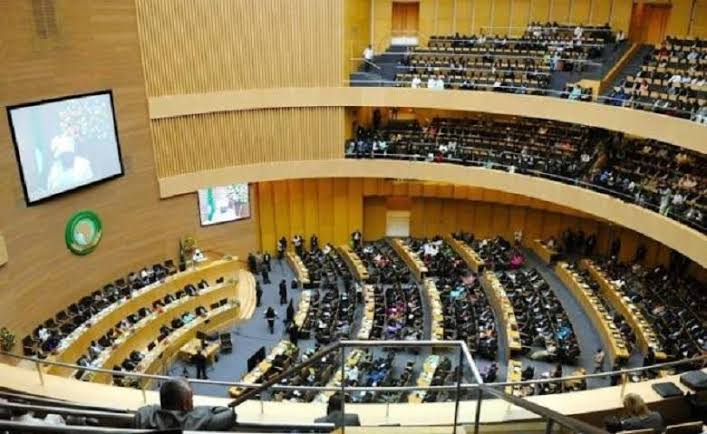
Touray who stated this in his opening remarks during the 55th Ordinary Session of the ECOWAS Mediation and Security Council (MSC), held in Abuja Tuesday, said the gathering comes at a defining moment for the bloc.
He said that the region’s challenges had become more pressing in recent weeks, recognising the swift deployment of regional forces led by Nigeria during the recent unrest in the region.
He said: “As we continue to commemorate the holy jubilee of our community, our tasks for the next decade are becoming clearer. As well as this, the events of the last few weeks have shown the imperative of serious introspection on the future of our democracy and the urgent need to invest in the security of our community.
“Before I go any further, may I pray for your indulgence and please stand and applaud the rapid intervention of adverse under Nigeria’s leadership in the UNCAO. I think this is the adverse our community is looking for. An adverse that is rapid, that is flexible and that is responsive to the needs of our people”.
Touray also commended President Bola Tinubu for providing leadership during the crisis, saying the intervention was made in close consultation with other regional heads of state.
He stressed that ECOWAS must remain firm in defending democratic order, warning that inconsistent responses to similar situations would damage the bloc’s integrity.
“The rapid response provided by Nigeria, the rapid response and the leadership provided by His Excellency President Madadiu in consultation with his colleagues, His Excellency President Diu, His Excellency President Maha, President Mbatha and all the leaders of our community need to be fully recognised.
“Because perhaps we have just seen communities coming out, but perhaps we did not know what was inside those communities. The leaders were in consultation throughout this period.
“That credibility needs to be sustained. We cannot respond rapidly in one situation and propose a different course of action in a similar situation. Our credibility is in the line and we must make sure we maintain our credibility,” he stated.
Touray noted that current country-by-country assessments show varied risk levels but said the overall picture points to a “high-risk” region facing persistent threats—including terrorism, armed groups, criminal networks, electoral tension, and growing geopolitical pressure on member states.
He warned that upcoming elections in Guinea, Benin, Ghana and Cape Verde require close monitoring, adding that ECOWAS must also manage post-coup situations in Guinea-Bissau and the attempted coup in Benin.
“We also have to negotiate with our brothers and sisters from Mali, Niger, and Burkina Faso, particularly with respect to our security cooperation, as we continue to see the devastating effect of terrorism on our borders,” he said.
Touray listed five priority areas for the Council: managing transitions in Benin and Guinea-Bissau, addressing explosive threats within Benin, strengthening the regional response to terrorism, and maintaining unity amid geopolitical pressure.
He also drew attention to worsening humanitarian conditions. Citing UNHCR figures, he said displacement figures have risen significantly in 2025.
“After October 2025, approximately 7.6 million individuals are forcibly displaced across the region, reflecting an increase from 7.4 million recorded in March 2025. Of this total, 6.5 million are internally displaced, with Nigeria, Burkina Faso, Niger, and Mali accounting for the highest numbers,” he noted.
He added that about one million refugees and asylum-seekers remain spread across the region, urging member states to take decisive steps to reverse the trend.
Touray assured citizens that ECOWAS leadership would continue working to build a stable and secure West Africa.
“We will continue to work hard to promote peaceful, stable, and stronger Egypt for the overall benefit of community citizens. Let us all remain committed to preserving regional unity, advancing peace, and upholding the community’s constitutional convergence principle,” he said.
He expressed confidence that the deliberations of the MSC would provide clear recommendations for the Authority of Heads of State and Government.
In his address, Sierra Leone’s Minister of Foreign Affairs, Timothy Musa Kabba, cautioned that West Africa is facing “severe strain” as the region grapples with a surge in unconstitutional takeovers and rising political instability.
Representing President Julius Maada Bio, current Chair of the ECOWAS Authority ahead of the organisation’s upcoming summit, Kabba conveyed President Bio’s greetings and reaffirmed his commitment to the bloc’s shared goals of peace, security and democratic governance.
“I bring you warm greetings from His Excellency Julius Maderville, President of the Republic of Sierra Leone and Chair of the ECOWAS Authority of Heads of State and Government for the upcoming summit.
“His Excellency’s sincere best wishes as he continues to prepare for the upcoming summit and he has asked me to reaffirm his deep commitment to our collective promise of peace, stability and democratic good governance across our region.
“We meet at a time when our region is on the severe strain. The recent coup in Guinea-Bissau and the attempted coup in Benin Republic are sobering reminders of the fragility of our democratic gains,” he said.
He recalled that the Chair of the Authority acted swiftly after the coup in Guinea-Bissau, convening an Extraordinary Summit on 27 November 2025 to demand a return to constitutional order.
Kabba explained that the follow-up mission to Bissau—including ECOWAS Commission President Dr Omar Touray and senior UN representatives—held direct talks with military leaders, political actors and partners.
“Immediately after the unconstitutional change of government in Guinea-Bissau, the Chair of the Authority acted without delay by convening an Extraordinary Summit… The virtual summit reaffirmed ECOWAS’ zero tolerance for unconstitutional actions, called for the urgent restoration of constitutional order and mandated high-level engagement with national stakeholders,” he said.
“We travelled to Guinea-Bissau shortly afterward… where we met with the military leadership headed by Major General Otah Indah, political actors and partners to best overcome respectful constitutional processes and a clear roadmap to restore democratic normalcy.
“Excellency’s engagement helped ease tensions and opened the door for continued dialogue under ECOWAS’ guidance.”
The Minister stressed that the bloc must take a firm stand against destabilising political actions.
“ECOWAS cannot and will not accept this development. They undermine everything our community stands for and threaten the peace and security of our citizens,” he warned.
According to him, citizens across the region are increasingly anxious and expect concrete action, not routine statements.
“They are looking to us not just for expressions of concern, but for leadership that translates into action,” he said. “Our people no longer have patience or commitment that remain on papers. They expect us to confront this challenge with seriousness, unity and purpose.
“Your presence, Excellencies, signals the importance of government attached to the stability and future of our region.
“Let us work with clarity, discipline and a shared determination to safeguard our community,” he said.