News
Regional stability: ECOWAS Declares State Of Emergency Across West Africa Over Coups
- /home/naijuinz/public_html/wp-content/plugins/mvp-social-buttons/mvp-social-buttons.php on line 27
https://naijablitznews.com/wp-content/uploads/2025/11/IMG_1128.jpeg&description=Regional stability: ECOWAS Declares State Of Emergency Across West Africa Over Coups', 'pinterestShare', 'width=750,height=350'); return false;" title="Pin This Post">
- Share
- Tweet /home/naijuinz/public_html/wp-content/plugins/mvp-social-buttons/mvp-social-buttons.php on line 72
https://naijablitznews.com/wp-content/uploads/2025/11/IMG_1128.jpeg&description=Regional stability: ECOWAS Declares State Of Emergency Across West Africa Over Coups', 'pinterestShare', 'width=750,height=350'); return false;" title="Pin This Post">
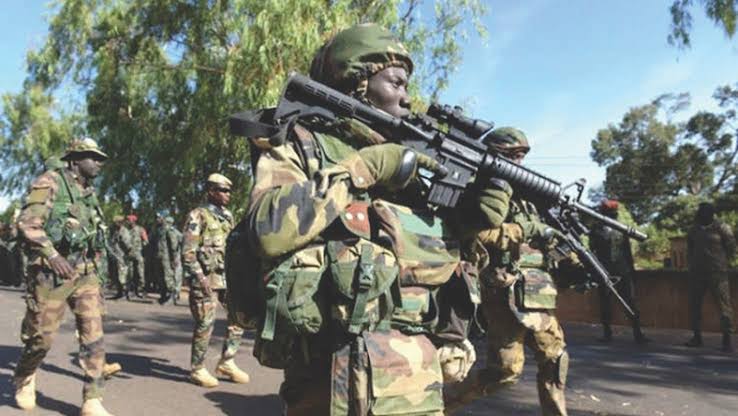
The Economic Community of West African States (ECOWAS) has declared a state of emergency across the entire West African sub-region, citing a disturbing wave of coups, attempted coups, and military mutinies that have destabilized political systems and heightened security concerns in recent months.

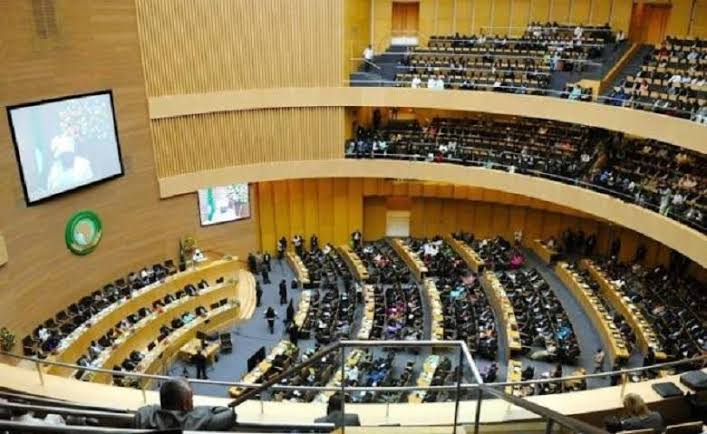
The announcement was delivered on December 9, 2025, by ECOWAS Commission President Dr. Omar Alieu Touray during the 55th Session of the Mediation and Security Council (MSC) at ministerial level in Abuja. According to Touray, the region is facing an “unprecedented security deterioration” driven by unconstitutional changes of government, expanding extremist threats, and a rising loss of public confidence in democratic institutions.
The declaration marks one of the strongest collective security steps taken by ECOWAS in recent years, reflecting the severity of the challenges facing the bloc’s 15 member states.

A Region Under Strain Touray’s remarks painted a sobering picture of a region caught in a spiral of political volatility. Over the last five years, West Africa has witnessed a troubling resurgence of military takeovers, beginning with Mali in 2020 and followed by Guinea, Burkina Faso, and Niger. More recently, the trend appears to be spreading, fueling fears that democratic reversals could become normalized.
The pressure reached a new peak just days ago when security forces in the Benin Republic announced they had aborted an attempted military takeover targeting the government of President Patrice Talon. Though swiftly suppressed, the mutiny sent shockwaves through neighboring countries and raised alarms within regional security agencies. Touray referenced this specific incident while addressing the MSC, noting that the event “reinforces growing concerns that the democratic fabric of the region is being stretched to a breaking point, and urgent coordinated action is required to reverse this drift.”
The ECOWAS chief stressed that these developments cannot be dismissed as isolated episodes, but must be seen as part of a broader pattern of democratic regression and weakening state resilience.
Why ECOWAS Declared the State of Emergency Touray explained that the state of emergency is aimed at enabling member states and the ECOWAS Commission to activate extraordinary mechanisms to safeguard governance, strengthen regional security cooperation, and mobilize resources more rapidly. The emergency declaration includes: Enhanced cross-border intelligence sharing Deployment readiness for regional standby forces Strengthened monitoring of member states facing democratic tensions Streamlined coordination with international security partners Emergency consultations with heads of state and defense chiefs While ECOWAS has previously imposed sanctions and activated diplomatic pressure against coup-born governments, the new emergency framework signals a shift toward more robust collective action. Touray noted that ECOWAS can no longer rely solely on traditional mediation or diplomatic interventions, given the speed with which security situations now deteriorate. “We must treat this moment as a turning point,” he said.
“The stability of our region, the credibility of our institutions, and the future of our young democracies depend on it.” Implications for Democracy in West Africa In his address, Touray also emphasized the need for “deep reflection” on the future of democracy in West Africa. He acknowledged widespread frustrations among citizens over governance failures, corruption, electoral disputes, and socioeconomic hardships—factors that have often been exploited by military actors to justify seizing power.
“Democracy in West Africa cannot survive on declarations alone,” he said. “It must be nourished through credible elections, functional institutions, and leaders who genuinely serve their citizens.” Analysts say Touray’s comments reflect a growing understanding that military coups do not emerge in a vacuum. Instead, they often follow periods of public discontent, political polarization, or perceived injustice—conditions that persist across several West African countries today.
ECOWAS is expected to propose new democratic accountability guidelines in its upcoming heads-of-state summit, including reforms to election monitoring, term-limit enforcement, and early warning mechanisms for governance crises. Security Crisis Deepens Beyond political instability, West Africa continues to battle one of the world’s most complex security environments. Violent extremist groups linked to al-Qaeda and ISIS remain active in the Sahel, particularly in Mali, Burkina Faso, and Niger. Cross-border banditry, rural militias, piracy in the Gulf of Guinea, and rising cyber threats add further layers to the region’s insecurity.
Touray warned that coups and mutinies only worsen these problems by weakening state institutions, disrupting security planning, and giving extremist groups more space to operate.
The fragmentation of regional alliances—most notably with Mali, Burkina Faso, and Niger forming the “Alliance of Sahel States” (AES)—has also complicated ECOWAS’ collective defense strategies. “We cannot fight insecurity with divided fronts,” Touray said. “Our enemies benefit when our countries turn inward or lose trust in regional solidarity.”
International Reaction and What Comes Next Diplomatic sources in Abuja say ECOWAS’ declaration has drawn immediate interest from the African Union, the European Union, and United Nations partners, who have expressed support for intensified regional coordination. ECOWAS is also expected to convene an emergency summit of heads of state in the coming weeks, where further measures—including potential stabilization missions—may be considered.
Member states with stable governments, such as Ghana, Senegal, and Côte d’Ivoire, are reportedly urging for a more proactive approach to deterring military interventions. Meanwhile, states experiencing political strain may receive increased monitoring or early mediation visits as part of the emergency framework.
Conclusion: A Critical Turning Point With political tensions simmering across multiple countries and extremist threats expanding, ECOWAS’ declaration of a state of emergency marks a defining moment for West Africa. Touray’s message was clear: the region must confront its crises head-on or risk a deeper collapse of democratic governance and regional security.
Whether the emergency measures will be enough to halt the wave of instability remains to be seen. But for now, ECOWAS has signaled that it intends to act decisively—and that the survival of democracy in West Africa has become an urgent priority.
News
Disclaimer: NDLEA alerts public on fraudulent auction offers impersonating officials
The National Drug Law Enforcement Agency (NDLEA) has drawn attention to a fraudulent scheme orchestrated by criminal elements and scammers targeting unsuspecting members of the public.
The fraudsters have been found using the names of top NDLEA officials, most notably the Secretary to the Agency, Barrister Shadrach Haruna, to issue fake private letters and messages offering cheap forfeited vehicles for sale on auction.
The public is hereby notified that these offers are a complete scam. The Agency wishes to categorically state that these fraudulent offers are a malicious gimmick designed solely to defraud targeted individuals of their hard-earned money.
No official of the Agency has the mandate to privately offer, allocate, or sell forfeited vehicles or any other seized assets to individuals. Vehicles and other assets forfeited as proceeds of drug crimes are strictly auctioned through public processes managed by appointed, government-registered auctioneers. Any legitimate auction exercise is widely publicized in national dailies and through the Agency’s official channels, in line with established legal and public procurement guidelines.
Members of the public are strongly urged to discountenance, ignore, and report any such private letters, text messages, or social media offers claiming to originate from Barrister Shadrach Haruna or any other NDLEA official.
The NDLEA remains committed to maintaining transparency and integrity in all its operations. Do not fall victim to these criminal elements. If you are approached with such fraudulent offers, please report immediately to the nearest NDLEA command or via our official communication channels.
News
2027 reggae dance: New ADC presidential candidate emerges
By Kayode Sanni-Arewa
A faction of the African Democratic Congress (ADC) led by Nafiu Gombe has picked Professor Chris Uba as its presidential candidate for the 2027 general election.
The party disowned former Vice President Atiku Abubakar as its flag bearer.
The group said the party had already completed its presidential nomination process in line with its constitution and the Electoral Act, adding that Uba emerged as the recognized candidate after all required procedures were concluded.
The faction also disowned the National Working Committee headed by former Senate President David Mark, saying it has no constitutional or legal authority to act on behalf of the party.
It maintained that the recognized leadership of the ADC remains in charge of the party’s affairs.
According to the statement released on Wednesday, the clarification became necessary to stop attempts to create confusion about the party’s position ahead of the 2027 general elections.
The group said the ADC had not entered into any alliance, merger or coalition with any political party.
added that the party remains independent and intends to contest the elections with its own structure, manifesto and leadership.
The faction said it believes Uba has the experience, character and capacity to lead the country if elected in 2027.
It also warned Atiku against presenting himself as the ADC’s presidential candidate, saying such a claim is false and could mislead party members and the public.
The group added that the ADC would not allow its platform to be used by politicians pursuing personal ambitions or by coalition groups seeking to take over the party’s structure.
It said every constitutional and legal step would be taken to protect the party from what it described as unauthorised use of its name and platform.
The faction also dismissed reports suggesting that there were plans to stop the ADC from participating in the 2027 elections, expressing confidence in the Independent National Electoral Commission and the country’s electoral process.
It said the party is preparing to present candidates for the presidency, governorships, National Assembly, state assemblies and local government elections across the country.
News
ANGER: Three Brothers Face Murder Charge for Beating man to death for dating Their Mom
Three brothers have appeared before the Mbabane Magistrates Court in Swaziland on a murder charge following the brutal de@th of their mother’s boyfriend.
The accused, Mlondi Mbuli, 25, Sakhelwe Mbuli, 18, and Lindani Mdziniso, 23, all from the Hholoshini area in Eswatini’s Hhohho Region, are alleged to have fatally assaulted Njabulo Ngwenya on June 28, 2026.
According to police, the brothers att@cked Ngwenya with bricks, stones, sticks, open hands, and kicks to different parts of his body. Investigators allege the assa¥lt was motivated by the brothers’ belief that Ngwenya was having a relationship with their biological mother.
Court records state that the incident was reported after Sibongile Motsa, also from Hholoshini, informed police that she discovered her son, Njabulo Ngwenya, lying deed inside her sister’s house at about 1 a.m. on June 28, 2026.
The matter came before Principal Magistrate Sfiso Vilakati during the trio’s initial court appearance.
The three defendants have been remanded in custody until July 10, 2026, pending committal of the case to the High Court for further proceedings.
-
News15 hours agoFalana To Defend Man Accused Of Forging Tinubu’s Appointment Letter
-
News15 hours agoFake agency rumpus: Prince Adeyemi vows to open a can of worms in court
-
News15 hours agoAgain, Dangote Refinery slashes price of petrol
-
News15 hours agoRead details of meeting between IGP Disu and exIGs
-
News9 hours agoFG Clears Inherited N39.6bn Pension Arrears Under Renewed Hope Agenda Drive
-
Foreign15 hours agoSad: Palestinian goalie, Al-Ashpar shot dead in Gaza
-
News14 hours agoUS Withdraws Troops from Nigeria, Retains Intelligence Partnership in Counterterrorism Fight
-
Economy6 hours agoOyedele Delivers ₦39.63bn Lifeline to 24,814 Pensioners as PTAD Clears Long-Standing DBS Liabilities