
News
High airfares: We can’t fix fares in deregulated market – Keyamo


- /home/naijuinz/public_html/wp-content/plugins/mvp-social-buttons/mvp-social-buttons.php on line 27
https://naijablitznews.com/wp-content/uploads/2024/04/Festus-Keyamo.jpg&description=High airfares: We can’t fix fares in deregulated market – Keyamo', 'pinterestShare', 'width=750,height=350'); return false;" title="Pin This Post">
- Share
- Tweet /home/naijuinz/public_html/wp-content/plugins/mvp-social-buttons/mvp-social-buttons.php on line 72
https://naijablitznews.com/wp-content/uploads/2024/04/Festus-Keyamo.jpg&description=High airfares: We can’t fix fares in deregulated market – Keyamo', 'pinterestShare', 'width=750,height=350'); return false;" title="Pin This Post">


Against the lamentations by air travelers over what they described as outrageous airfare in the country, the Federal Government on Wednesday said it lacked the legal authority to regulate or fix domestic airfares as the aviation sector has been fully deregulated for decades.
Minister of Aviation and Aerospace Development, Festus Keyamo, SAN, stated this while briefing State House correspondents at the end of the Federal Executive Council, FEC, meeting, presided by President Bola Tinubu, at the Council Chambers, Presidential Villa, Abuja.
The Minister explained that deregulation dates back to the administration of former military president, Ibrahim Babangida, when private airlines were first granted freedom to operate and set their own ticket prices.
He also said that the country’s aviation sector is one of the best in Africa.
He confirmed that he had been invited by the Senate over rising airfares, but said he could not attend the session due to his presentations before the Council. He noted that he instructed the Nigerian Civil Aviation Authority (NCAA) and domestic airlines to honour the invitation in his stead.
According to him: “Government has absolutely no powers to fix prices for private enterprises. That is what deregulation means. But that does not mean we are leaving the airlines without engagement.”
Keyamo said operators continue to grapple with several cost drivers, including limited access to aircraft, unfavourable lease arrangements, lack of local maintenance facilities, and the persistent need for foreign exchange to conduct mandatory C-checks abroad—factors which ultimately reflect in ticket pricing.
He explained that one of the most significant developments under the Tinubu administration is the return of a major international aircraft lessor to the Nigerian market after nearly two decades, granting a dry lease to a local carrier at a rate three times cheaper than previous offers.
The minister attributed the breakthrough to recent reforms and new practice directions under the Cape Town Convention that have boosted investor confidence.
“With cheaper dry leases coming in, more airlines will have access to aircraft. More aircraft automatically means stronger competition. And competition is what brings prices down in any free economy,” he said, adding that passengers should begin to see the impact of increased fleet capacity within the next few months to a year.
On multiple taxes and charges—an issue recently flagged by ECOWAS—Keyamo confirmed Nigeria had received a regional advisory urging relief for operators. However, he noted that taxation falls outside the jurisdiction of his ministry.
“I cannot wake up one morning and abolish taxes. These revenues go into the Federation Account. The Finance Minister, the tax authorities, and other stakeholders must all be at the table,” he said.
Keyamo disclosed that he had already escalated operators’ concerns to the relevant authorities and that discussions were ongoing, stating that while government remains committed to easing industry challenges, it must also safeguard the revenue needed to maintain critical aviation infrastructure.


By Gloria Ikibah
The Arewa Christians and Indigenous Pastors Association (ACIPA) has affirmed its support for the reported conversion of Ibrahim Nuru Khalid, son of prominent Islamic cleric Sheikh Mohammad Nuru Khalid, to Christianity, saying his choice of religion is protected by the Nigerian Constitution.
The association said Ibrahim had the constitutional right to choose and change his religion and must not be threatened, intimidated or punished for exercising that right.
In a statement issued by the National Chairman of the Arewa Christians and Indigenous Pastors Association, Rev. Luke Shehu, on Wednesday, September 2, 2026, ACIPA said it had been informed of the reported conversion of Ibrahim and expressed solidarity with his father, Sheikh Mohammad Nuru Khalid.
The association described Sheikh Mohammad Nuru Khalid as a respected Islamic cleric and recalled that he was a recipient of ACIPA’s Special Merit Award of Excellence for his consistent messages of peaceful coexistence, justice and nation-building.
“His voice has been a bridge in a time of division,” he said.
On Ibrahim’s reported conversion, ACIPA said, “the choice of religion is a personal matter between an individual and God, the Creator.”
It cited Section 38 of the Constitution of the Federal Republic of Nigeria 1999, as amended, which guarantees freedom of thought, conscience and religion.
“This includes the freedom to change one’s religion,” ACIPA said, stressing that “No Nigerian can be forced, coerced, or punished for the exercise of this constitutional right.”
The association also condemned any threats of violence against Ibrahim because of his reported decision to become a Christian.
It said it was formally notifying relevant security agencies and called on them to take immediate and decisive action against anyone who attempted to harm, intimidate or harass Ibrahim.
“We strongly condemn and warn against any individual, group, or entity that makes threats of violence, jihad, or any form of harm against Ibrahim Nuru Khalid on account of his personal faith decision.
“The life and liberty of every Nigerian must be protected by law,” ACIPA said.
ACIPA also appealed to Christians to handle the development with restraint, urging both clergy and lay Christians to pray for Ibrahim, his safety, his family and peace in Nigeria.
It cautioned against statements that could provoke Muslims or portray the reported conversion as a victory over Islam.
“We urge restraint from frivolous, provocative, or triumphalist statements against Islam or Muslims.
“Our witness must be one of love, dignity, and truth, not of insult or incitement,” ACIPA said.
The association equally appealed to Muslim leaders and communities to uphold what it described as the long-standing tradition of mutual respect advocated by Sheikh Mohammad Nuru Khalid.
ACIPA stressed that the issue should not be allowed to trigger religious tension or undermine the supremacy of the Nigerian Constitution.
“We appeal to all Muslim leaders and communities to uphold the long tradition of mutual respect that Sheikh Nuru Khalid himself has preached.
“Nigeria is a secular, constitutional democracy. We must not allow this moment to be misused to create tension or to test whether we operate under the supremacy of the Nigerian Constitution or any other law,” the association said.
The group said its position was based on the principle that every Nigerian should be free to determine his or her faith without fear.
“ACIPA stands for the right of every Nigerian to live, believe, and worship without fear,” it said.
The association warned against any attempt to impose different standards of law based on religious affiliation.
“We will not accept a situation where Nigeria operates a “dual constitution”. Our nation is governed by one law: the Constitution of the Federal Republic of Nigeria.”
ACIPA therefore called on the Federal Government, state governments, traditional rulers and religious leaders to work together to douse tension and protect peace.
It also prayed for Ibrahim Nuru Khalid, Sheikh Mohammad Nuru Khalid and his family, as well as peace in Arewa and Nigeria.
Naijablitznews.com reports that the Arewa Christians and Indigenous Pastors Association (ACIPA) is a non-governmental religious advocacy group representing Christian clergy and indigenous Christian communities in Northern Nigeria.
Its core focus us advocating for the rights, social justice, and welfare of Northern Christians, promoting interfaith peace, and addressing issues of security and development in the region.
By Gloria Ikibah
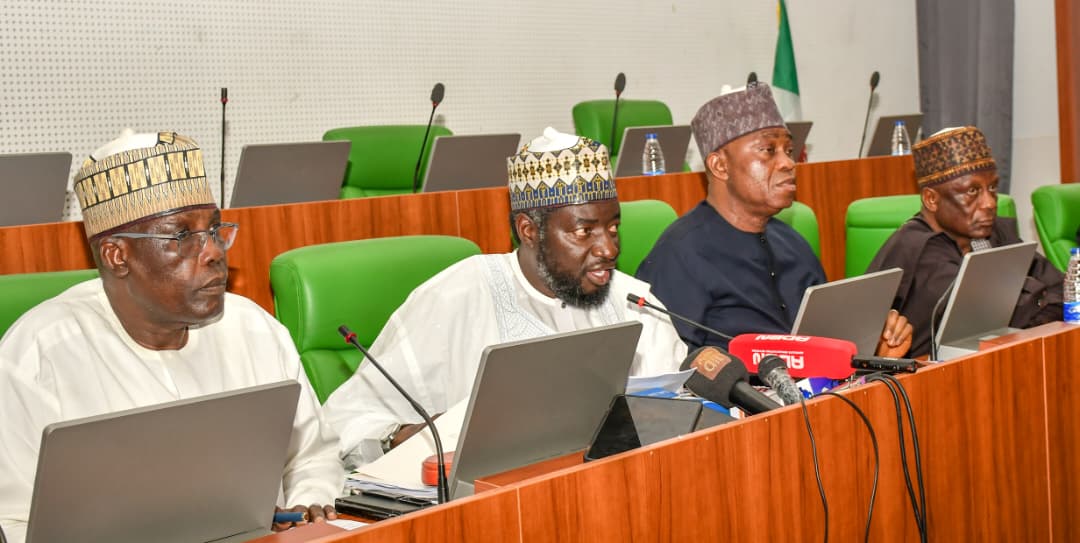
The House of Representatives Adhoc Committee investigating the purported Presidential Foreign Intervention Promotion Council (PFIPC) has traced about 58 bank accounts to Prince Adeniyi Adeyemi, with preliminary findings indicating that more than 30 of the accounts were operated in the names of about nine agencies, companies, foundations and related entities.
The committee also identified more than 12 organisations and entities allegedly linked, directly or indirectly, to Adeyemi, raising questions about a possible network of organisations operating under governmental, international, investment, educational, charitable, foundation and United Nations-related identities.
Chairman of the committee, Rep. Yusuf Gagdi, disclosed the findings on Wednesday in Abuja while presenting the panel’s preliminary report on the need to protect the integrity of the Federal Budget process.
The investigation is also examining the circumstances surrounding the inclusion of the purported PFIPC in the Federal Budget Framework.
Gagdi said information obtained from financial and investigative institutions indicated that Adeyemi’s Bank Verification Number (BVN) and other identifying details were connected to a substantial network of personal, corporate, organisational and foundation accounts.
The names linked to the records, according to the committee, include the Confederation of United Nations Youths, FCT Investment Promotion Agency and Public-Private Partnership, FCT Investment Promotion Council and Public-Private Partnership, Foreign Investment Promotion Agency, United Nations Youth Global Agency, United Nations Youth Global Foundation, World United Nations Youth Global Foundation, World Entrepreneurship University Limited, World Enterprise University Limited, FCT Investment Promotion Act, FCT Promotion Agency and Olubadan of Ibadan Foundation.
Gagdi said some of the entities appeared to operate multiple accounts, while other accounts were registered under personal names or variations of the identified names.
He, however, stressed that the committee had not reached a conclusion that every account, entity or transaction identified in the course of the investigation was unlawful.
“The Committee is reconciling registration records, account mandates, beneficial ownership information, signatories and transaction histories to determine the true nature and control of the identified entities and accounts,” he said.
According to the committee, similarities in the names, objectives, management structures, signatories and banking relationships of some of the organisations had created a legitimate basis for further investigation.
The panel is investigating whether multiple organisations were created or deployed using governmental, international, investment, educational, charitable, foundation or United Nations-related identities.
Gagdi said evidence before the committee indicated that Adeyemi might be connected, either directly or indirectly, to more than 12 of the entities under investigation.
He said the committee was examining whether the organisations were established or used to create artificial credibility, solicit funds, attract investments, obtain official recognition, secure government facilities or persuade members of the public to part with money.
The committee chairman further disclosed that members of the panel had met Adeyemi behind closed doors as part of the investigation, although he declined to reveal details of the meeting.
Gagdi also reiterated that Adeyemi could not be brought before the committee because of a court order keeping him in police custody. He did not provide further details about the order or the circumstances surrounding the custody.
Naijablitznews.com recalled that the House constituted the Adhoc Committee following the adoption of Resolution No. 68/07/2026 on Wednesday, July 8, 2026.
The resolution followed reports concerning the purported establishment and operation of the PFIPC, as well as its alleged inclusion in the Federal Budget Framework.
The House said its action was taken in exercise of its constitutional powers of appropriation, oversight and investigation, particularly in view of concerns surrounding the identity, operations and budgetary status of the purported council.
By Gloria Ikibah
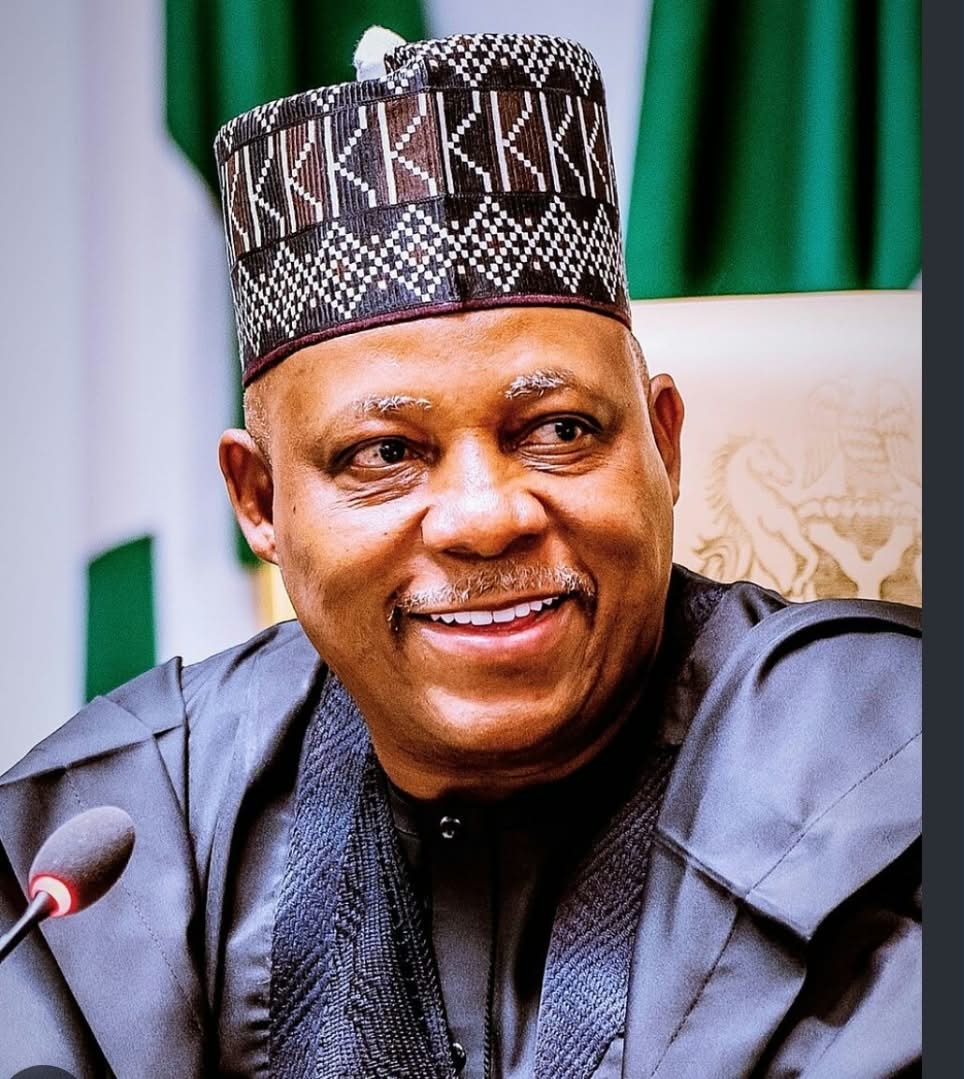
The Speaker of the House of Representatives, Rt. Hon. Tajudeen Abbas has congratulated Vice President Kashim Shettima on his 60th birthday, describing him as a dedicated public servant and a strong ally of President Bola Ahmed Tinubu.
In a congratulatory message issued on Wednesday by his Special Adviser on Media and Publicity, Musa Abdullahi Krishi, Speaker Abbas praised Shettima for his commitment to democracy and public service.
The Speaker described the Vice President’s loyalty to President Tinubu as exemplary, saying his record in public office had prepared him for the responsibilities of his current position.
Speaker Abbas eulogised Shettima as a leader of exceptional qualities and described him as one of the most patriotic Nigerians alive.
He also commended the Vice President for his contributions to the Tinubu administration, noting that his experience and achievements in previous public offices had continued to strengthen his performance as Vice President.
According to the Speaker, Shettima’s experience as governor of Borno State, senator and in other public positions had made him one of the most experienced public servants in government today.
The statement read: “The Speaker of the House of Representatives, Rt. Hon. Abbas Tajudeen, Ph.D., GCON, has extended his congratulations to the Vice President, Senator Kashim Shettima, GCON, on the occasion of his Diamond Jubilee, praising the VP’s steadfast commitment to democracy and devoted public service.”
Speaker Abbas described Senator Shettima as a “reliable ally to President Bola Ahmed Tinubu, GCFR, praising his loyalty as exemplary and worthy of emulation.”
The Speaker further said Senator Shettima “continues to be one of the most patriotic Nigerians alive,” while highlighting his “invaluable contributions” to the Tinubu administration.
On the 2027 presidential election, Speaker Abbas expressed confidence in the APC ticket, following the decision by President Tinubu to retain Shettima as his running mate.
“With Senator Shettima returning as President Tinubu’s running mate in the 2027 presidential election, the ruling All Progressives Congress (APC) ticket is a winning one”, he said
The Speaker also prayed for the Vice President’s continued good health and longevity.
He prayed to Allah (SWT) “to grant Senator Shettima mercy, grace, longevity, and good health so he can continue contributing value to the Tinubu administration and the nation as a whole.”

ACIPA Backs Ibrahim Khalid’s Conversion to Christianity, Warns Against Threats

Fake Agency: Reps Trace 58 Bank Accounts, 12 Entities to Adeyemi Over Alleged PFIPC

Shettima @60: Speaker Abbas Hails VP’s Service, Loyalty to Tinubu




-
 News21 hours ago
“Go Back and Repair Our Road!” — Enugu Residents Turn APC Campaign Ground Into Assessment Session(Video)
-

 Health23 hours ago
Abuja hospital denies organ trafficking, suspends kidney transplant services
-

 Politics24 hours ago
PHOTOS: Umahi’s 28-year-old son sworn in as Ebonyi LG chairman
-

 News23 hours ago
Lagos begins enforcement of 2026 parking permits, warns defaulters
-

 News24 hours ago
NLC rejects petrol price hike, demands more crude for refineries
-

 Metro23 hours ago
Ogun Issues Fresh Flood Alert, Urges Residents In Vulnerable Areas To Relocate
-

 Sports24 hours ago
Deadline Day: Man City Agree To Sign Fernandez For £125m
-
 News24 hours ago
Tin Can seizure: Arms Centre boss denies Ribadu link