By Gloria Ikibah


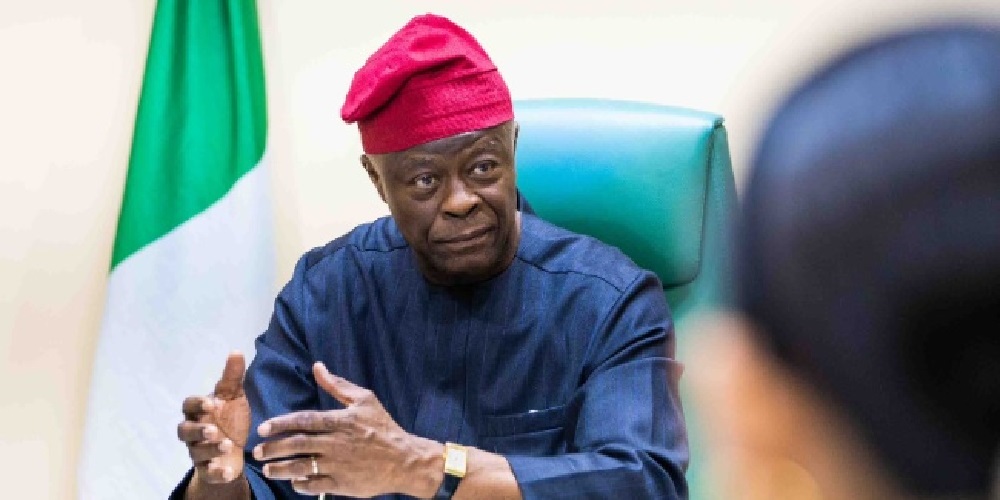
The Minister of Finance and Coordinating Minister of the Economy, Wale Edun, hs said that the Federal Government recorded a significant revenue shortfall in the 2025 fiscal year.
The Minister disclosed this during an interactive session on the 2026–2028 Medium Term Expenditure Framework (MTEF) and Fiscal Strategy Paper (FSP) with the House of Representatives Committees on Finance and National Planning on Tuesday in Abuja. 
According to Edun, the sum of N40.8 trillion was initially projected as revenue for 2025 to fund the N54.9 trillion “budget of restoration” which is aimed at securing peace and rebuilding prosperity.
However, the current performance indicates that total revenue for the year is likely to end at about N10.7 trillion.
He blamed the shortfall mainly to weak oil and gas revenues, particularly Petroleum Profit Tax (PPT) and Company Income Tax (CIT) from oil and gas companies, as well as underperforming subheads.
“The current trajectory indicates that federal revenues for the full year will likely end at around N10.7 trillion, compared to the ₦40.8 trillion projection,” Edun said.
He added that while the government had also borrowed about N14.1 trillion, the combined inflows remained far below what was required to fully fund the 2025 budget.
Despite the shortfall, Edun said the government had met key obligations through what he described as prudent treasury management.
He noted that salaries, statutory transfers, and domestic and foreign debt service had been paid as and when due through “skillful, imaginative and creative handling” of available resources.
Providing an update on expenditure performance, the minister said capital releases to Ministries, Departments and Agencies (MDAs) in 2024 stood at N5.2 trillion out of a budgeted N7.1 trillion, representing 73 per cent performance, while total capital expenditure, including multilateral and bilateral projects, reached N11.1 trillion out of N13.7 trillion, or 84 per cent.
Edun urged that expenditure plans tied to oil revenues should remain flexible, this is as he warned against committing government to obligations based on projections that had repeatedly failed to materialise.
“We must be ambitious, but given the experience of the past two years, spending linked to these revenues must depend on the funds actually coming in,” he said.
Minister of Budget and National Planning, Atiku Bagudu, said the MTEF and FSP were developed through extensive consultations with government agencies, the private sector, civil society and development partners.
Bagudu acknowledged the debate within the Economic Management Team over revenue assumptions, noting that while some advocated conservative projections based on past performance, others argued for ambitious targets to compel revenue agencies to improve performance.
He explained that for the 2026 budget, the government retained a target oil production of 2.06 million barrels per day but adopted a more cautious production assumption of 1.84 million barrels per day for revenue calculations.
Bagudu urged that more be done to drive revenue generating agencies to do more.
Earlier Chairman of the Committee, Rep. James Faleke, said at this critical time of the country’s economy, there should be a critical analysis to guide against bloated budgets and to help take the proper decisions to move the country forward.