Connect with us

Politics

PDP, SDP Missing as INEC Unveils Final List for Ekiti Governorship Election

Published

on

ADVERTISEMENT
Zoom Ad
ADVERTISEMENT
Zoom Ad

The Independent National Electoral Commission (INEC) on Monday released the final list of candidates for the June 20 governorship election in Ekiti State, excluding the Peoples Democratic Party (PDP) and the Social Democratic Party (SDP).


The document obtained by reporters showed that the names of the PDP candidate, Dr. Wole Oluyede, and the SDP candidate, David Bankole, were omitted from the final list. Sources within the commission disclosed that both parties were excluded due to unresolved court cases bordering on disputes over their leadership structures.

Following the exclusion of the PDP and SDP, INEC cleared 12 political parties to participate in the governorship contest.

According to the final list, the All Progressives Congress (APC) will field the incumbent governor, Biodun Oyebanji, 58, with Monisade Afuye, 67, as his running mate. Other candidates cleared include Opeyemi Falegan, 41, of the Accord Party with Omoyeni Bayode, 48, as deputy; Akande Oluwasegun, 36, of the African Action Congress alongside Oluwasanmi Fajuyigbe; and Ayodeji Ojo, 42, of the Action Democratic Party, with Itunu Ibitoye, 35.

Advertisement

The African Democratic Congress is represented by Oluwadare Bejide, 66, and Babatola Ayodeji, 65. Also listed are Bidemi Awogbemi, 36, and Akinyemi Adewumi, 53, of the Action People’s Party; Joseph Anifowose, 65, and Margaret Ilesanmi, 68, of the Allied People’s Movement; and the Labour Party candidates, Oyebanji Olajuyin, 67, and Ayokunle Okumade, 45.

Others cleared include Blessing Abegunde, 35, of the New Nigeria People’s Party, with Francis Ajayi, 65; Olaniyi Ayodele, 49, and Modupe Adebiyi, 35, of the People’s Redemption Party; Osinkolu Olusegun and Arowolo Olusesan of the Young Progressive Party; and Victor Adetunji, 38, with Adesina Oyeniyi, 35, of the Zenith Labour Party.

INEC’s document further revealed that none of the cleared parties is fielding a female governorship candidate, although four women are listed as deputy governorship candidates. There were also no persons living with disabilities among the candidates. The commission displayed the academic qualifications of all candidates and their running mates.

Reacting to its omission, the PDP rejected INEC’s final list, insisting it remains a participant in the June 20 election. In a statement signed by Gani Salau, Special Adviser on Media to Oluyede, the party said the matter is already before a Federal High Court in Abuja, where its candidate is seeking an order of mandamus to compel INEC to publish his name.

Advertisement

The PDP added that it has appealed the judgment of a Federal High Court in Ado Ekiti which ordered a fresh governorship primary and has filed a stay of execution. The party expressed confidence that the courts would rule in its favour and urged its supporters across the state’s 16 local government areas to remain calm.

Similarly, the Ekiti State Chairman of the SDP, Bamikole Ayodele, expressed shock at the non-inclusion of the party’s candidate, describing the development as unexpected. He maintained that the SDP complied with all electoral guidelines and said the party was consulting its legal team to explore lawful options to address the omission, while urging supporters to remain calm as the matter is pursued in court.

Continue Reading
Advertisement

Politics

Our democracy is in serious crisis, Peter Obi laments, says even professors aid rigging

Published

on

ADVERTISEMENT
Zoom Ad
ADVERTISEMENT
Zoom Ad


The presidential candidate of the Nigeria Democratic Congress (NDC) in the 2027 election, Peter Obi, has lamented that Nigerian democracy is in serious crisis.

He decried what he described as the erosion of democratic principles in Nigeria, saying the country is facing a crisis.

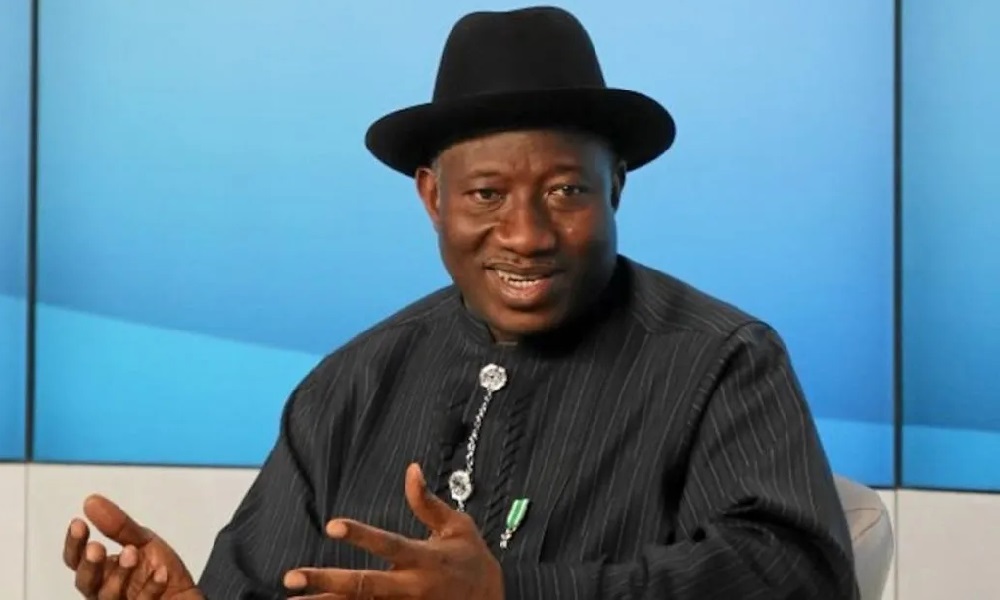
The ex- Anambra State governor spoke on Tuesday at the 2026 Goodluck Jonathan Foundation Democracy Dialogue in Bauchi, the Bauchi State capital, where he reflected on the state of democracy and governance in the country.

Advertisement

Obi recalled spending three years in court challenging his election as Anambra State governor, noting that judges he had never met previously delivered judgments in his favour.

He said such an experience would be difficult to replicate in Nigeria today.

I was in court for three years challenging my election, five judges that I never met for one day gave judgement in my favour, it cannot happen in Nigeria of today. I went to Court of Appeal, five judges I never met gave judgement in my favour.

“So, if you look at that and look at what is happening today in Nigeria where professors are now aiding illiterates to rig elections, where our lawmakers have removed forgery as an offence in electoral matters, and Senior Advocates of Nigeria are defending forgery. Our religious leaders are now praying for criminal politicians for blessings. We have a crisis. And above all, our judges are now singing on your mandate,” Obi said.

Advertisement

He urged Nigerians to examine the direction of the country and question the state of its democratic institutions.

Obi said Nigerians must reject the normalisation of practices that undermine democracy, warning that their consequences could be inherited by future generations.

According to him, “We need to reverse this because the abuse we are allowing today will take its revenge on our children.”

Advertisement
This year’s GJF Democracy Dialogue is anchored on the question: “Beyond elections, can political parties and the judiciary save African democracy?”

Advertisement

The event was chaired by former President Olusegun Obasanjo and attended by former President Goodluck Ebele Jonathan and former Vice President Namadi Sambo.

Bauchi State Governor Bala Mohammed hosted the event, which also brought together constitutional experts and civil society voices from across the continent.

Continue Reading

Politics

K!ll Accord members: Pre-election acidic comment ignites anger over viral video of Osun Senator, Fadahunsi ordering attack

Published

on

ADVERTISEMENT
Zoom Ad
ADVERTISEMENT
Zoom Ad


Anger and fierce condemnation has swept across the nation following the emergence of a viral video in which the Senator representing Osun East Senatorial District, Francis Ade Fadahunsi, allegedly issued a direct order inciting violent attacks and voter suppression against members of the rival Accord party.

​The controversial video footage, which was brought to widespread public attention after being shared on X (formerly Twitter) by international Afrobeats star David Adeleke, popularly known as Davido, captures the sitting lawmaker addressing a crowd with inflammatory and hostile statements.

In the recorded footage, the lawmaker can be heard making explicit calls to violence and disenfranchisement aimed at members of the Accord party ahead of an upcoming electoral contest.

Advertisement

“From now on, whenever you see Accord members, kill them. I authorise you to kill them. They have wives and children too,” the Senator stated in the video clip. He went on to assert control over the electoral process, adding, “This is a Federal Government election. On election day, even if they come with voters card, we won’t allow them to vote.”

The broadcast of the video by Davido—who possesses a massive global following and is a prominent native of Osun State—amplified the footage rapidly across social media platforms, sparking immediate fury from civil society organizations, political analysts, and concerned citizens who have categorized the statements as open treason against democratic tenets and an explicit threat to life.

The inciting comments come against the backdrop of heightened political rivalry and volatile partisan friction within Osun State.

Senator Francis Ade Fadahunsi, a retired Assistant Comptroller-General of the Nigerian Customs Service, serves as the representative for the Osun East Senatorial District in the National Assembly.

Advertisement

Osun State’s political landscape has grown increasingly fragile following intense inter-party clashes, particularly between dominant political forces and emerging strongholds of the Accord party.

Continue Reading

Politics

Osun guber: 72hours to polls, APC in confusion mode as 76 leaders seek inclusion as defection mount

Published

on

ADVERTISEMENT
Zoom Ad
ADVERTISEMENT
Zoom Ad


The All Progressives Congress (APC) in Osun State has battled internal fractures for years, but by August 2026, those cracks had widened into deep fault lines.

What should have been a straightforward campaign season became a crisis of loyalty, defections and mounting grievances, forcing the Presidency itself to intervene.

Five days before the governorship election, 76 APC leaders from Osun State were summoned to Abuja for a late-night meeting with President Bola Ahmed Tinubu. The meeting followed a call from the National Security Adviser (NSA), who had alerted the Presidency to the growing discontent within the Osun APC. The warning was political, not about violence. The NSA reportedly told the Presidency that the grievances among party leaders had reached a level capable of undermining the APC’s campaign machinery in the state.

Advertisement

The delegation that arrived at Aso Rock included Olubunmi Ete, former Speaker of the House of Representatives; Mojeed Alabi, Adejare Bello and Wale Afolabi, all former Speakers of the Osun State House of Assembly; as well as senior party chieftains such as Alhaji Shuaib Oyedokun, Poju Odusola and Bode Olanipekun. Others included Babajide Omoworare, a former presidential aide, and APC National Secretary Ajibola Basiru, who coordinated the meeting.

These were not fringe figures. They were leaders who had carried the party’s banner for years, commanded constituencies and influenced legislation. Their grievance was straightforward: exclusion.
For three years, federal appointments and patronage from Osun were said to have flowed largely through former governor and current Minister of Marine and Blue Economy, Adegboyega Oyetola, and his IleriOluwa faction. Other party leaders felt sidelined, humiliated before their supporters and stripped of political relevance.
At the Villa, the 76 leaders demanded recognition. They sought a share of federal appointments, contracts and political influence.

They wanted assurances that the APC was not simply Oyetola’s personal political empire.
Some also expressed doubts about Bola Oyebamiji, the APC governorship candidate and former commissioner under Oyetola, questioning whether he would operate differently if elected.
President Tinubu’s assurance that there would be room for everyone at the federal level if state positions were exhausted offered some reassurance, but it did not fully address the grievances. Instead, the meeting appeared to postpone rather than resolve the deeper crisis.
Beyond the 76 leaders seeking inclusion were others whose grievances had gone much further—those who felt completely discarded by the party.

In December 2025, the APC screening committee disqualified seven of the nine governorship aspirants ahead of the party’s primary. The official reason was their failure to provide proof of sponsorship from registered party members across the required local government areas. However, to many party members, the development appeared to be a deliberate purge intended to clear the way for Oyetola’s preferred candidate.
Among those disqualified were Senator Iyiola Omisore, former deputy governor and immediate past APC National Secretary; Babajide Omoworare; Benedict Alabi; Akin Ogunbiyi; Dotun Babayemi; Babatunde Oralusi; and Adegoke Rasheed.
Bola Oyebamiji, regarded as an Oyetola loyalist, eventually emerged as the party’s candidate.
Omisore, in particular, felt betrayed.

Advertisement
Continue Reading

Trending

Copyright © 2024 Naija Blitz News