Economy
Central Bank Sends Strong Warning Against Naira Abuse
- /home/naijuinz/public_html/wp-content/plugins/mvp-social-buttons/mvp-social-buttons.php on line 27
https://naijablitznews.com/wp-content/uploads/2024/10/CBN.jpg&description=Central Bank Sends Strong Warning Against Naira Abuse', 'pinterestShare', 'width=750,height=350'); return false;" title="Pin This Post">
- Share
- Tweet /home/naijuinz/public_html/wp-content/plugins/mvp-social-buttons/mvp-social-buttons.php on line 72
https://naijablitznews.com/wp-content/uploads/2024/10/CBN.jpg&description=Central Bank Sends Strong Warning Against Naira Abuse', 'pinterestShare', 'width=750,height=350'); return false;" title="Pin This Post">
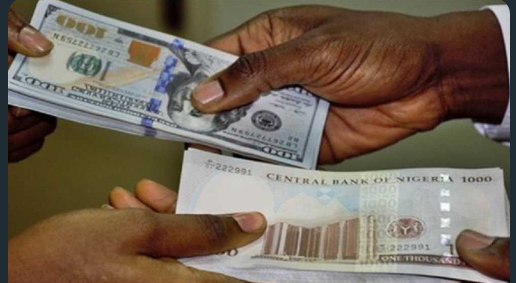
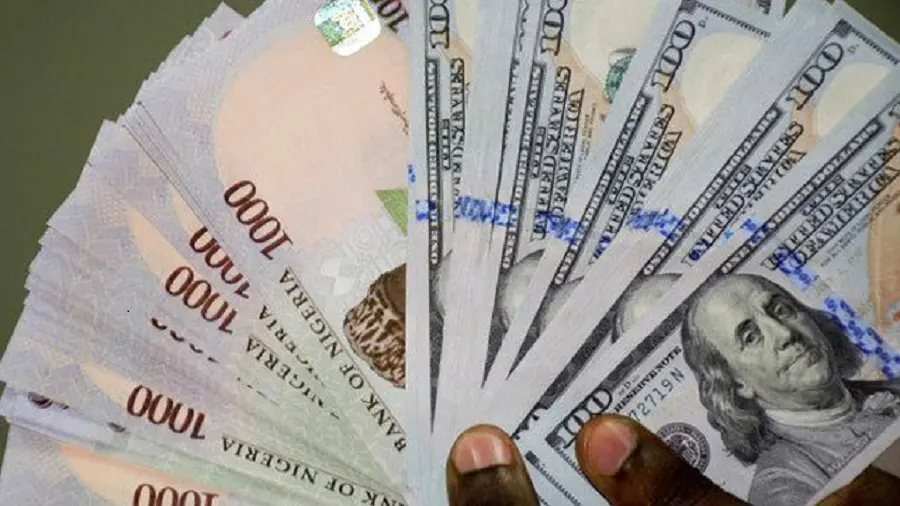
The Central Bank of Nigeria (CBN) has issued a strong warning against the mutilation and abuse of the Naira, urging Nigerians to respect the national currency and desist from practices such as spraying, counterfeiting, defacing, and hawking banknotes.

The call was made on Thursday during the CBN Special Day at the 47th Kaduna International Trade Fair, where Mrs Sidi Hakama, Deputy Director of Corporate Communications and Investor Relations, reaffirmed the bank’s commitment to ensuring a steady supply of clean currency notes in appropriate denominations.
She was represented at the event by Abbas Ahmed, a Deputy Director at the CBN Headquarters, Abuja.

Hakama said, “The Naira is a crucial symbol of our national identity. Please respect it keep it clean. Do not spray, counterfeit, mutilate, or hawk the Naira.”
She assured the stakeholders of the apex bank’s dedication to maintaining economic stability and strengthening structural reforms.
The event, organised by the Kaduna Chamber of Commerce, Industry, Mines and Agriculture (KADCCIMA), was themed ‘From Reforms to Results: Economic Transformation through Sustained Local Content Development’.
The theme, Hakama said, aligned with the CBN’s domestic reform agenda focused on sustainable growth, financial inclusion, and resilience against external shocks.
According to her, under the leadership of CBN Governor, Mr Olayemi Cardoso, the bank had introduced wide-ranging reforms aimed at repositioning Nigeria’s economy.
She said, “These include the unification of the foreign exchange rate, ongoing bank recapitalisation to support the vision of a $1 trillion economy by 2030.
“There was also the introduction of the Non Resident Bank Verification Number (BVN) to connect Nigerians in the diaspora, and the B Match system for foreign exchange trading.”
Other key initiatives highlighted included the Nigerian Payments System Vision 2028, a 75 per cent Cash Reserve Ratio on non Treasury Single Account public-sector deposits to enhance liquidity management, and regulatory clarity in emerging areas such as stablecoins and virtual assets.
According to the CBN, these reforms have improved transparency, strengthened monetary policy transmission, and reinforced macroeconomic stability, particularly following the discontinuation of deficit monetisation.
Hakama disclosed that Nigeria now ranks among Africa’s most advanced digital payments markets, with leading fintech applications recording between 10 and 50 million downloads and more than 12 million contactless cards currently in circulation.
Economy
SEE Dollar to Naira exchange rate today, June 23, 2026
The Nigerian naira traded at relatively stable levels against the United States dollar on Tuesday, June 23, 2026, across both the official and parallel foreign exchange markets, as market participants continued to monitor liquidity conditions and foreign exchange demand.
Latest data from the Nigerian Foreign Exchange Market (NFEM) showed that the naira exchanged at approximately ₦1,366.41 per dollar at the official market. The NFEM rate, which is published by the Central Bank of Nigeria, represents the volume-weighted average exchange rate for the day.
The official exchange rate has remained within the ₦1,350-₦1,370 range in recent weeks, supported by improved liquidity and sustained foreign portfolio inflows into local assets.
In the parallel market, also known as the black market, the dollar traded at around ₦1,400 for buying and between ₦1,410 and ₦1,420 for selling, depending on location and dealer quotations.
The spread between the official and parallel market rates remained relatively narrow compared with previous years, reflecting ongoing reforms aimed at improving transparency and efficiency in Nigeria’s foreign exchange market.
Currency traders said demand for dollars from importers, travellers and businesses remained steady, although the naira has benefited from increased confidence in the foreign exchange market and improved dollar supply.
Analysts noted that exchange rates could continue to fluctuate in response to changes in foreign exchange inflows, global oil prices and domestic economic conditions.
As of the prevailing rates, $100 would exchange for about ₦136,641 at the official NFEM window, while the same amount could fetch between ₦141,000 and ₦142,000 in the parallel market.
Foreign exchange rates remain subject to intraday movements and may vary across banks, bureaux de change operators and other market participants.
Economy
FAAC: FG, States, LGCs share N2.3tn as May revenue
A total sum of N2.300 trillion, being the May 2026 Federation Account Revenue, has been shared between the federal government, states, and the local government councils.
In a statement on Wednesday by the spokesperson of the Office of the Accountant General of the Federation, Bawa Mokwa, the revenue was shared at the June 2026 Federation Account Allocation Committee FAAC meeting held in Abuja.
The N2.300 trillion total distributable revenue comprised distributable statutory revenue of N1.611 trillion and distributable Value Added Tax (VAT) revenue of N688.785 billion.
A communiqué issued by the Federation Account Allocation Committee (FAAC) indicated that the total gross revenue of N3.395 trillion was available in the month of May 2026. Total deduction for cost of collection was N123.546 billion, while total transfers and refunds were N971.610 billion.
According to the communiqué, gross statutory revenue of N2.651 trillion was received for the month of May 2026. This was higher than the sum of N2.378 trillion received in the preceding month by N273.623 billion.
Gross revenue of N743.668 billion was available from the Value Added Tax (VAT) in May 2026. This was lower than the N806.617 billion available in the month of April 2026 by N62.949 billion.
The communiqué stated that from the N2.300 trillion total distributable revenue, the federal government received a total sum of N818.680 billion, and the state governments received a total sum of N759.141 billion.
The local government council received N534.277 billion, while the sum of N188.132 billion (13% of mineral revenue) was shared with the benefiting state as derivation revenue.
On the N1.611 trillion distributable statutory revenue, the communiqué stated that the federal government received N749.801 billion and the state governments received N380.309 billion.
The local government councils received N293.202 billion, and the sum of N188.132 billion (13% of mineral revenue) was shared with the benefiting states as derivation revenue.
From the N688.785 billion distributable Value Added Tax (VAT) revenue, the federal government received N68.879 billion, the state governments received N378.832 billion, and the local government councils received N241.075 billion.
In May 2026, Companies Income Tax (CIT), CGT, SDT, Petroleum Profit Tax (PPT), Hydrocarbon Tax (HT), and Oil and Gas Royalty increased significantly, while Import Duty, Value Added Tax (VAT), Excise Duty, and CET Levies decreased considerably.
Economy
FAAC: FG, states, LGs share N2.257tn April revenue
The Federal Government, states and local government councils shared a total sum of N2.257 trillion from the Federation Account in April.
Director, Press and Public Relations, Office of the Accountant General of the Federation, Bawa Mokwa, disclosed this in a statement on Monday.
The revenue was shared at the May 2026 Federation Account Allocation Committee, FAAC, meeting held in Abuja.
The N2.257 trillion total distributable revenue comprised distributable statutory revenue of N1.260 trillion , distributable Value Added Tax, VAT, revenue of N747.088 billion, and augmentation of N250.000 billion.
This indicated that total gross revenue of N3.184 trillion was available in the month of April 2026. The total deduction for cost of collection was N113.756 billion, while total transfers, refunds, and savings were N813.839 billion.
According to the statement, gross statutory revenue of N2.378 trillion was received for the month of April 2026. This was higher than the sum of N1.699 trillion received in the preceding month by N678.224 billion.
Gross revenue of N806.617 billion was available from VAT in April 2026. This was higher than the N664.425 billion available in the month of March 2026 by N142.192 billion.
The communiqué stated that from the N2.257 trillion total distributable revenue, the Federal Government received a total sum of N787.351 billion, and the state governments received a total sum of N772.360 billion.
The local government councils received N540.152 billion, while the sum of N157.254 billion (13% of mineral revenue) was shared with the benefiting states as derivation revenue.
On the N1.260 trillion distributable statutory revenue, the statement stated that the Federal Government received N580.942 billion and the state governments received N294.661 billion.
The local government councils received N227.172 billion, and the sum of N157.254 billion (13% of mineral revenue) was shared with the benefiting states as derivation revenue.
From the N747.088 billion distributable VAT revenue, the Federal Government received N74.709 billion, the state governments received N410.898 billion, and the local government councils received N261.481 billion.
The Federal Government received N131.700 billion of the N250.000 billion, the state governments received N66.800 billion, and the local governments received N51.500 billion.
In April 2026, Companies Income Tax, CIT, CGT, SDT, import duty, oil and gas royalty, and VAT increased significantly, while Petroleum Profit Tax, PPT, and hydrocarbon tax, HT, decreased considerably.
Excise duty and CET levies decreased marginally.
-
News23 hours agoOGTV broadcaster: Police recover stolen Lexus RX300 as CP vows “no stone unturned” in murder probe
-
News17 hours agoSouthern Parkway Service Lanes to End Gridlock, Transform Abuja’s Southern Corridor, Tinubu Assures
-
News24 hours agoSenator Abba Moro hails Olaka Nwogu on electoral victory
-
News23 hours agoTinubu set to Flag-Off Construction of Service Carriageways of the Southern Parkway, from Arterial Road S20 (Oladipo Diya way) to Ring Road II, today
-
News22 hours agoTeenage girl allegedly stabbed parents to de@th, stabbed family dog, sent crime scene photos to friends
-
Metro5 hours agoAlleged Drug Trafficking: Billionaire, Two Others Face Trial in Lagos
-
Foreign5 hours agoUS Targets Alleged ISIS Funding Network, Names Nigerian
-
Economy23 hours agoSEE Dollar to Naira exchange rate today, June 23, 2026