News
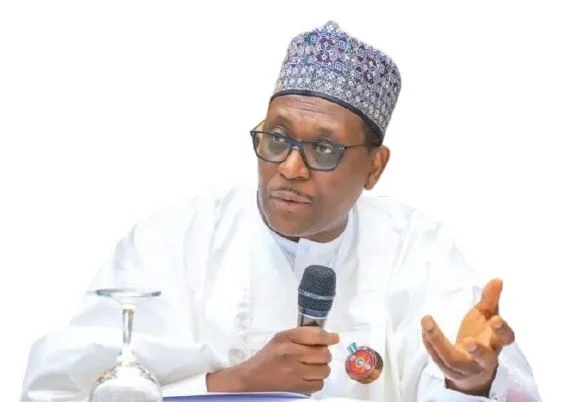
Health ministry orders immediate disengagement of long-standing directors
The Federal Ministry of Health has ordered an immediate disengagement of Directors who have spent at least eight years in the directorate cadre with immediate effect.

The directors affected include those in the ministry, federal hospitals, agencies, among others, according to a memo sighted by our correspondent in Abuja on Tuesday morning.
On Monday, The PUNCH exclusively reported that the Federal Government directed all Ministries, Departments, and Agencies to enforce the eight-year tenure limit for directors and permanent secretaries, following a new deadline set through the Office of the Head of Civil Service of the Federation.

The memo announcing the enforcement of the order at the FMOH signed by the Director overseeing the Office of the Permanent Secretary at the Federal Ministry of Health, Tetshoma Dafeta, reads, “Further to the Eight (8)-Year Tenure Policy of the Federal Public Service, which mandates the compulsory retirement of Directors after eight years in that rank, as provided in the Revised Public Service Rules 2021(PSR 020909) copy attached, I am directed to remind you to take necessary action to ensure that all affected officers who have spent eight years as Directors, effective 31st December, 2025, are disengaged from Service immediately.
Accordingly, all Heads of Agencies and Parastatals are by this circular, to ensure that the affected staff hand over all official documents/possessions with immediate effect, their salaries are stopped by the IPPIS Unit and mandate the officers to refund to the treasury all emoluments paid after their effective date of disengagement.
This is reiterated in a circular recently issued by the Office of the Head of the Civil Service of the Federation, Ref. No. HSCF/3065/Vol.I/225, dated 10″ February 2026. A copy is herewith attached for guidance, please.
“In addition, you are to forward the nominal roll of all directorate officers.
CONMESS 07/CONHESS 15/CONRAISS 15) In your institution, send to [email protected] and [email protected]. You may please note that officials from the Office of the Head of the Civil Service of the Federation and the Ministry will conduct a monitoring exercise to ensure compliance.
“Failure to adhere to paragraph 2 above shall be met with stiff sanctions.”
Recall that in July 2023, the former Head of Civil Service of the Federation, Folasade Yemi-Esan, announced the commencement of the revised Public Service Rules.
Speaking at a lecture at the State House, Abuja, to mark the 2023 Civil Service Week, Yemi-Esan stated that the revised PSR took effect from July 27, 2023.
The Head of Service issued a circular addressed to Permanent Secretaries, the Accountant-General of the Federation, the Auditor-General for the Federation, and heads of extra-ministerial departments, informing them of the revised rules.
“Following the approval of the revised Public Service Rules (PSR) by the Federal Executive Council (FEC) on September 27, 2021, and its subsequent unveiling during the public service lecture in commemoration of the 2023 Civil Service Week, the PSR has become operational with effect from July 27, 2023,” the circular read.
According to Section 020909 of the revised PSR, the tenure limit for permanent secretaries is four years, with a possible renewal based only on satisfactory performance.
The rules also stipulate that a director (GL 17) or their equivalent shall compulsorily retire after eight years in that position. (PUNCH)

News
Nigeria-EU Push to Seal Long-delayed Readmission Deal
By Gloria Ikibah
Nigeria and the European Union have renewed efforts to conclude the long-pending EU-Nigeria Re-Admission Agreement as both sides seek to deepen cooperation on migration, legal mobility and security.
The issue featured prominently during a meeting between the Minister of Foreign Affairs, Ambassador Bianca Odumegwu-Ojukwu, and the EU Commissioner for Internal Affairs and Migration, Magnus Brunner, on the sidelines of the 81st United Nations General Assembly in New York. The .
In a statement by the Nigerian Foreign Ministry the proposed agreement which was initiated in 2016, was also extensively discussed during the eighth Nigeria-EU Ministerial Dialogue in March 2026.
Brunner stressed the importance of concluding the agreement, saying its finalisation would provide a basis for broader cooperation between Nigeria and the EU on migration.
Odumegwu-Ojukwu, however, emphasised that any migration partnership should address Nigeria’s development interests, including support for the reintegration of returnees, infrastructure development and expanded legal pathways for Nigerians seeking opportunities abroad.
She also stressed the need for structured and lawful mobility opportunities for Nigeria’s large and youthful population.
The EU delegation indicated that Nigeria’s concerns had been incorporated into a proposed broader migration and security cooperation framework.
The framework is expected to cover strategic dialogue on talent partnerships, legal migration pathways, reintegration of returnees, border management and support from the European Border and Coast Guard Agency, Frontex.
The proposed cooperation will also explore an arrangement for information exchange with Europol to strengthen Nigeria’s capacity to combat transnational organised crime.
Brunner said the EU was interested in developing legal migration pathways through talent partnerships, which could help address skills shortages in Europe while creating opportunities for Nigerian professionals.
The initiative is also expected to address concerns surrounding brain drain by creating more structured opportunities for Nigerians to work abroad while maintaining links with their home country.
The two sides further discussed cooperation against irregular migration, with Brunner indicating that progress in tackling irregular migration could help create greater opportunities for legal migration.
The European commissioner expressed interest in continuing discussions during a proposed visit to Abuja in November 2026, although the specific date is yet to be agreed by both sides.
The renewed engagement comes as the EU continues work towards formalising the readmission agreement. EU Council documents published in July 2026 also showed proposals for the signing and conclusion of an agreement with Nigeria covering the return and readmission of people who no longer meet the conditions for entry, presence or residence in the territories of either party.
The Nigeria-EU discussions therefore seek to address irregular migration and return while also expanding legal mobility, reintegration assistance, border management, security cooperation and opportunities for Nigerian professionals and young people.
News
Foreign Policy Begins at Grassroots, Enikanolaiye Tells LG, Traditional Rulers
By Gloria Ikibah
Minister of State for Foreign Affairs, Ambassador Sola Enikanolaiye, has said Nigeria’s grassroots development and mobilisation are central to the country’s foreign policy projection and international image.
The Minister stated this on Tuesday in Abuja while delivering a goodwill message at the 2026 maiden National Conference of the 774 Local Government Chairmen and Chairmen of Traditional Rulers’ Councils at the State House Banquet Hall.
The conference, convened by the Federal Ministry of Special Duties and Inter-Governmental Affairs, was themed, “Cascading President Bola Ahmed Tinubu’s Renewed Hope Agenda to the Grassroots.”
Enikanolaiye said policies implemented at the local level could have implications for Nigeria’s image and relations with other countries.
He said: “For us in the Ministry of Foreign Affairs, we believe that every aspect of our government policy at home has implications for foreign policy and Nigeria’s international relations. Which is why we are interested in everything that goes on domestically because foreign policy is also a projection of domestic policy. And in this context, grassroots mobilization and development is critical to what we do abroad”.
He argued that inclusive governance should be built from the grassroots upwards, rather than imposed from the top, while describing traditional rulers as an important component of Nigeria’s governance structure.
Enikanolaiye commended President Bola Ahmed Tinubu for approving the conference and for recognising the roles of local governments and traditional rulers in the ongoing constitutional amendment process.
Linking his remarks to President Tinubu’s four-D foreign policy doctrine of demography, development, democracy and diaspora, the minister said the success of the Renewed Hope Agenda would ultimately depend on its impact at the grassroots.
On demography, he said Nigeria’s youthful population across the 774 local government areas represented a major asset that could strengthen the country’s position globally if properly empowered.
“On Demography, Nigeria’s youth in the 774 LGAs is our greatest global asset – empower the LGAs, convert numbers to power,” he said.
On development, Enikanolaiye said productive local governments were essential to achieving Nigeria’s economic ambitions, citing agriculture, mineral resources and major infrastructure projects as areas with potential to attract foreign investment.
“On Development, a $1 trillion economy is impossible without productive LGAs. With agriculture booming, 44+ minerals across 500 sites, and massive infrastructure like the Lagos-Calabar and Sokoto-Badagry highways, grassroots stability is what attracts FDI,” he stated.
The minister also linked stronger local governance to democracy, saying empowered local governments and traditional institutions would demonstrate the practice of participatory governance.
“Speaking On Democracy, empowering LGAs and traditional rulers proves Nigeria practises real, bottom-up democracy,” he said.
On the diaspora component of the doctrine, Enikanolaiye said improved conditions at home could encourage Nigerians living abroad to invest in the country and promote a positive image of Nigeria internationally.
“On Diaspora, when home is secure and working, the Diaspora will invest and sell the Nigerian story with confidence,” he noted.
He said the Ministry of Foreign Affairs would support the foreign policy component of grassroots development through investment matchmaking via Nigeria’s 110 diplomatic missions abroad and partnerships with Nigeria’s international partners.
The ministry, he added, would also leverage the community-level knowledge of traditional rulers in support of national security.
In a separate goodwill message, the Head of the Civil Service of the Federation, Mr Olumuyiwa Enitan Abel, represented by Dr Vitalis Obi, said local governments remained the closest tier of government to the people and were central to service delivery.
He also described traditional rulers as important actors in peacebuilding and reaffirmed the commitment of the civil service to accountability and measurable results.
Earlier, the Permanent Secretary, Special Duties and Inter-Governmental Affairs, Dr Onwusoro Maduka Ihemelandu, said the government lacked timely and verifiable data on interventions at the local government level.
He said the ministry had consequently developed an E-Tracking Framework to monitor projects, including their locations, values, timelines and verification status.
News
*PIGD Calls For United Response To Plateau Violence*
The National Coordinator of the Plateau Initiative for Growth and Development (PIGD), Nengak David, has appealed to residents to remain vigilant and help prevent further violence following renewed attacks in the state.
David urged people with credible information about threats, armed movements or plans for reprisals to alert the police or trusted community leaders promptly, without putting themselves in danger.
“Vigilance means recognising a threat and reporting it early. Tell the authorities where and when you saw it, and give only what you know firsthand. Do not approach armed people or attempt to confront them,” he said.
The appeal follows attacks in Barkin Ladi and Mangu. Plateau police confirmed the deaths of a senior officer and three civilians in separate incidents in Barkin Ladi, while a community group reported the killing of three men in Mangu.
David called on residents to reject reprisals and resist attempts to blame entire ethnic or religious communities for crimes committed by individuals.
“Every killing must be investigated, and those responsible must answer for it. Another innocent family must not suffer because someone chooses revenge or blames a whole community,” he said.
He urged traditional rulers, religious leaders, women and youth representatives to bring emerging disputes to trusted mediators before tensions escalate. The United Nations Development Programme has identified local mediation and early warning as ways communities can help prevent conflict.
The PIGD coordinator also cautioned against circulating old videos, unverified casualty figures and inflammatory claims. “Before forwarding a frightening message, check when and where it was recorded. A false claim can spread fear and provoke harm long after the truth catches up,” he said.
David asked residents of Barkin Ladi, Bokkos and Mangu to observe the state’s 6 p.m. to 6 a.m. curfew and motorcycle ban, announced to remain in effect until further notice. He also appealed for food, shelter and other assistance to reach affected neighbours through trusted local groups, regardless of their background.
“Residents can share information and refuse provocation. Government, in turn, must act on credible reports, protect those who come forward and investigate every killing fairly,” David said.
-
News19 hours agoEFCC declares Abdulrashhed Maina wanted
-
News10 hours agoVideo: Apo-Karshi road getting required finishing touches
-
Entertainment19 hours agoHow I manage Davido’s wealth, limit his luxury spending – Sister
-
News10 hours agoSAD! Four Teenage Girls Die As Boat Carrying Eight Capsizes In Jigawa
-
News19 hours agoCCB probes 20 ministers, 30 perm secs
-
News10 hours agoUS firm declares America won’t allow Tinubu rig 2027 polls in Nigeria