

News
Attorney General Opposes Human Rights Defenders Bill, Backs NHRC Reform With Reservations
- /home/naijuinz/public_html/wp-content/plugins/mvp-social-buttons/mvp-social-buttons.php on line 27
https://naijablitznews.com/wp-content/uploads/2026/03/IMG-20260304-WA00221-1000x598.jpg&description=Attorney General Opposes Human Rights Defenders Bill, Backs NHRC Reform With Reservations', 'pinterestShare', 'width=750,height=350'); return false;" title="Pin This Post">
- Share
- Tweet /home/naijuinz/public_html/wp-content/plugins/mvp-social-buttons/mvp-social-buttons.php on line 72
https://naijablitznews.com/wp-content/uploads/2026/03/IMG-20260304-WA00221-1000x598.jpg&description=Attorney General Opposes Human Rights Defenders Bill, Backs NHRC Reform With Reservations', 'pinterestShare', 'width=750,height=350'); return false;" title="Pin This Post">
By Gloria Ikibah
The Attorney General of the Federation and Minister of Justice, Prince Lateef Fagbemi (SAN), has opposed the proposed Human Rights Defenders Protection Bill, as he argued that Nigeria already has sufficient legal frameworks to safeguard human rights.
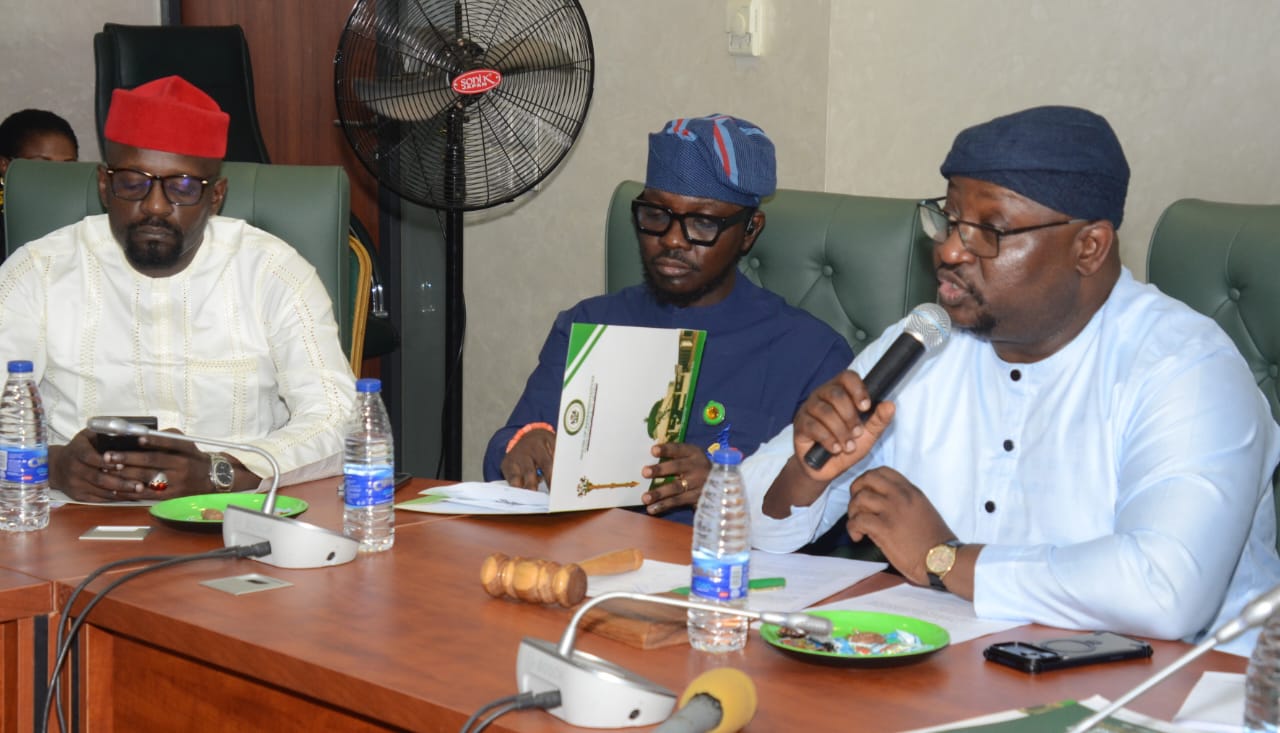
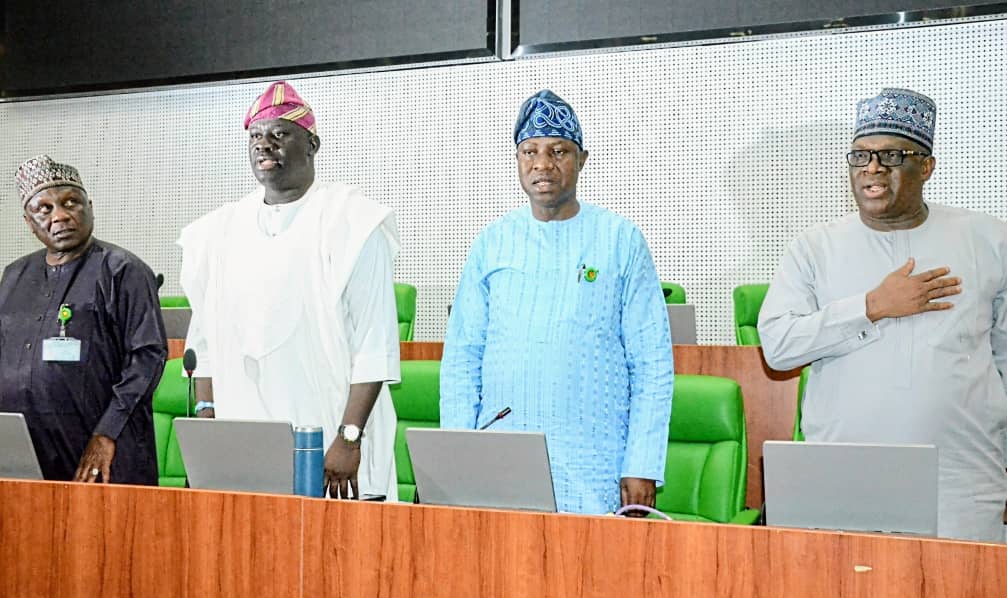
Fagbemi made the ministry’s position known at a public hearing convened by the House of Representatives Committee on Human Rights on Wednesday in Abuja.

The hearing considered two separate proposals: the Human Rights Defenders Protection Bill and a Bill seeking to repeal the existing National Human Rights Commission Act and its 2010 amendment in order to enact a new National Human Rights Commission Bill, 2025.
The proposed amendment to the National Human Rights Commission law is designed to strengthen the Commission’s investigative powers, enhance its day-to-day operational capacity and provide sustainable funding for human rights activities in line with the Paris Principles. The Human Rights Defenders Protection Bill, on the other hand, seeks to provide formal legal backing and protection for civil society actors, journalists, lawyers, community leaders, whistleblowers, faith-based actors and other citizens who advocate peacefully for constitutional and internationally recognised rights.
Represented by the Chief State Counsel, Mr Reuben Imarha, the Attorney General maintained that introducing a separate law specifically for human rights defenders would create unnecessary duplication. He argued that additional legislation could lead to institutional overlap and confusion among government agencies already mandated to handle human rights issues.
While acknowledging that gaps exist in the protection of rights across the country, he advised lawmakers to focus on strengthening existing institutions and improving their implementation capacity rather than creating new statutory layers. The ministry, he said, does not support the Human Rights Defenders Protection Bill and urged the House to reconsider the proposal.
However, the Attorney General expressed support for the bill seeking to repeal and re-enact the National Human Rights Commission Act, although he highlighted areas that require review.
He pointed to Clause 5(2b), which proposes making it mandatory for business owners to obtain an annual human rights compliance certificate. Although he recognised that human rights breaches by some business operators remain a concern, he warned that such a provision could undermine ongoing efforts to improve the ease of doing business in Nigeria and should therefore be reconsidered.
He also raised concerns about Clause 15, which would empower the Commission to borrow funds in pursuit of human rights cases. In his view, any borrowing by the Commission should be subject to oversight or approval by the ministry or the National Assembly to guard against potential abuse.
Another contentious provision, Clause 16(2b), proposes that multinationals as well as public and private companies operating in the financial and oil sectors contribute 0.3 per cent of their annual profits to support the Commission’s human rights work. The Attorney General described the measure as akin to a quasi-tax and recommended that it be harmonised with the Federal Government’s ongoing tax reform programme to prevent duplication within the national tax framework.
Earlier at the hearing, Programme Director of Development Dynamics, Jude Ohanele, a non-governmental organisation, urged lawmakers to pass the Human Rights Defenders Protection Bill. He argued that the legislation would strengthen democratic institutions, improve Nigeria’s international human rights standing and enhance transparency and good governance.
According to him, formal protection for human rights defenders would also boost investor confidence by reinforcing rule-of-law assurances and provide lawful channels for the expression of grievances, thereby reducing conflict. He maintained that the bill is not adversarial to the state but rather a reinforcement of constitutional order and responsible governance.
He saig: “We strongly support the bill in its entirety. The Human Rights Defenders Protection Bill, 2024 (HB.1867) is a landmark legislative initiative that reflects Nigeria’s preference for democracy and commitment to constitutional governance.
“We respectfully urge the honourable members of the House of Representatives to give this Bill accelerated consideration and passage in the national interest.
“By passing this Bill, Nigeria will send a powerful message that it stands firmly for justice, accountability, civic participation, and the protection of those who courageously defend the rights and freedoms guaranteed under our Constitution”.
News
Human Trafficking: Remi Tinubu calls for vigilance, support for survivors
The First Lady, Oluremi Tinubu, on Thursday called on Nigerians to be more vigilant in the protection of vulnerable persons from human trafficking and traffickers.
Tinubu, in a statement she personally signed as part of the celebration of the “World Day Against Trafficking in Persons”, appealed to the global community to strengthen commitment to ending human trafficking in all its forms and protecting the dignity, freedom, and rights of every individual.
She noted that this year’s theme, “Trapped Behind the Scam,” draws attention to the growing threat of human trafficking.
Human trafficking now forms part of modern-day slavery, which is usually perpetrated through online scams, forced criminality, and transnational organised crime.
According to her, the theme also highlights the need to increase public awareness, prevention, enforcement of our laws, and support for survivors.
“Let us remain vigilant, protect the vulnerable, and ensure that no one falls victim to exploitation. Through collective action, we can build a safer society where every person can live in freedom, dignity, and hope.
“We say “No” to human trafficking today”
Also as part of the International Day of Friendship, the First Lady also drew global attention to the power of friendship to unite people, strengthen communities, foster peace, understanding, and mutual respect.
She noted that no matter how far technology advances, man was never created to be alone, adding that ” As we become more connected digitally, human isolation is increasing by the day. We are emotional beings, and we should never underestimate the power of genuine human connection.
“Friendship reminds us to be our brother’s keeper, to show kindness, and to reject unhealthy behaviours that divide us. A simple act of kindness can heal a broken heart and help in making our world a better place”.
She therefore charged Nigerians to ” Go out there, give someone a smile, reach out with compassion, and be a friend”.
News
Oriire: Makinde sets up judicial panel to probe children, teachers’ abduction
Governor Seyi Makinde of Oyo State has set up a Judicial Commission of Inquiry to investigate the abduction of pupils and teachers from Esinele and Yawota communities in Oriire Local Government Area.
Dotun Oyelade, the Commissioner for Information and Civic Orientation, made this known in a statement on Thursday in Ibadan.
Mr Oyelade said that the commission was expected to determine the circumstances surrounding the abduction and identify the factors that led to the security breach.
He said that the panel, which would be inaugurated on Friday, was also tasked with making recommendations to prevent a recurrence.
“The commission will examine the events leading to the kidnapping, assess the response of relevant authorities, and recommend measures to improve security and safeguard schools and communities across the state,” Mr Oyelade said.
He further explained that the setting up of the panel was in line with the governor’s commitment to ensuring a thorough and independent investigation into the incident.
The abduction occurred on May 15, while the abducted pupils and teachers were rescued after 56 days in captivity.
(NAN)
News
‘Security threats record sixfold rise in Nigeria, others in two years’
The United States has warned that Nigeria and other African countries are facing a more than sixfold rise in security threats in the last two years, citing a dramatic surge in illegal narcotics trafficking and human trafficking on the continent.
This is even as it listed Nigeria, Kenya and Côte d’Ivoire as key partners for its new technical assistance programme for bankable infrastructure in Africa, which would help the countries develop projects that attract U.S. participation.
Brigadier General Paul G. Filcek, Director of Logistics at U.S. AFRICOM, disclosed this during a digital press conference with African journalists on the ongoing 2026 Africa Logistics and Communications Symposium, co-hosted with the Ethiopian Ministry of Defence.
The 4-day symposium brought together delegates from 39 African nations and 27 private-sector partners under the theme “Forging Partnerships, Driving Innovation, and Enhancing Collective Readiness”.
“Across the African continent, we face growing and converging threats on our mutual security, safety and prosperity, human trafficking and a dramatic rise in illegal narcotics trafficking, now more than six times what it was just two years ago,” Gen. Filcek said.
He stressed that defeating the threats would require cooperation, coordination, reliable and effective communications as well as the ability to move personnel, equipment and supplies quickly across difficult terrain, often over great distances and challenging conditions.
For the first time, the symposium deliberately combined logistics and communications into a single conference, which Flicek described as a decisive edge in modern military operations.
Also speaking, U.S. Deputy Assistant Secretary of Commerce for Middle East and Africa, Mark Mitchell, disclosed that the Departments of Commerce and State were working together on a project termed Technical Assistance for Bankable Infrastructure in Africa that supports African governments to develop bankable projects that can attract U.S. participation and deliver local value. “It’s a model designed to empower African partners rather than create dependency,” he said.
He cited U.S. investment partnerships with Nigeria, Kenya and Cote d’Ivoire as examples of Washington’s commitment to open, competitive and transparent markets that protect sovereignty and unlock innovation.
“Our work on commercial diplomacy, data governance and investment partnerships with countries such as Kenya, Nigeria and Cote d’Ivoire reflect a commitment to fair regulatory environments that unlock innovation and protect sovereignty,” he said.
On what sets the U.S. apart from other global partners, Mitchell said Washington brings high-quality finance, trusted standards, risk mitigation tools that help move projects from concept to bankable reality.
He added that the U.S. partnership was rooted in long-term, enterprise-driven, not one-off transactions, with U.S. companies bringing world-class technology in logistics and communications that could help African nations build the security and stability needed for growth.
Mitchell also highlighted the Strategic Infrastructure Investment Working Group launched earlier this year by the U.S. State Department and the African Union, adding that the Department of Commerce was well-positioned to support it.
Addressing questions on technology, Mitchell said Artificial Intelligence could transform African logistics through route optimisation, predictive fleet maintenance and faster customs processing.
He stressed that real AI sovereignty for African countries means “owning and using best-in-class technology for the benefit of your people and nation,” rather than trying to build entire systems in isolation.
“Keep your data yours. American companies can build large, independent AI infrastructure with secure and robust supply chains that minimise backdoor risk, plus cryptographically protect confidentiality, and world-leading security to keep sensitive logistics and trade data within your borders and under your control,” he said.
Gen. Filcek said U.S. AFRICOM was assessing partner readiness through its A3I programme, which provides targeted military engagement to address urgent operational needs and expand capacity for independence and regional interoperability.
“The most significant advances will come through the acceleration of modular expeditionary capabilities… Investments in local supply chains, infrastructure and secure trade corridors will provide the most profound impact,” he added.
-
News21 hours agoPhotos: Over 10 Houses Swallowed By Erosion, Scores Dislodged In Bende, Abia State, as Deputy Speaker, Ecological Funds Officials Assess Sites
-
News21 hours agoVideo: Six months from now Abuja residents can now link Lugbe from Nile varsity
-
News20 hours agoVarsity don slams Alaafin over three-hour delay, lack of apology at event
-
News23 hours agoDeregistration order: Judge Lifu’s conduct is a serious breach of judicial hierarchy-ADC Legal Adviser, Osunbor
-
News21 hours agoKaduna Attack: How I pleaded with my slain dad to flee but he refused – Survivor narrates ordeal
-
News19 hours agoPhotos: All Ongoing FCT Projects Will Be Completed by Year-End-Wike
-
News19 hours agoOsun Guber: Read CCLCA pre-election observation and pilot survey findings
-
News18 hours agoJust in: Osun SSG finally regains freedom