Foreign
North Korean leader’s teenage daughter drives tank in latest public appearance
North Korean leader Kim Jong Un’s teenage daughter has been seen driving a military tank in new images released by state media, fuelling speculation about her future role in the country’s leadership.

The girl, widely believed to be Kim Ju Ae and thought to be around 13 years old, appeared alongside her father during a military drill in Pyongyang.
In the photos, she is seen looking out from the driver’s hatch of a tank with a focused expression, while Kim Jong Un stood nearby, smiling during the exercise.

She has been making increasingly frequent public appearances with her father in recent months, including earlier sightings at a firing range where she was seen handling firearms.
Although North Korea has not officially confirmed her identity or age, analysts believe her growing visibility could indicate preparations for a future leadership role.
The latest appearance came during a military drill involving a new type of tank, which state media said demonstrated improved offensive and defensive capabilities, particularly against drones and anti-tank weapons.
In recent years, Kim Jong Un has continued efforts to modernise North Korea’s military, advancing both conventional weapons systems and strategic capabilities, including long-range ballistic missiles and nuclear weapons.
Foreign
Trump Extends Ceasefire To Give Iran More Time To Negotiate
President Donald Trump on Tuesday said he was extending a ceasefire with Iran to give more time for negotiations but would maintain a US naval blockade of the country’s ports.
Trump posted on social media that he would “extend the ceasefire” until Iran came up with a proposal to end the conflict. However, he “directed our military to continue the blockade.”
Trump’s ceasefire extension came hours before it was believed to be set to expire.
It also came as the White House said Vice President JD Vance would not be going to Pakistan for what had been expected to be a second round of peace talks.
“The trip to Pakistan will not be happening today. Any further updates on in-person meetings will be announced by the White House,” a White House official said in a statement.
The US president cast the breakdown in more talks as resulting from Iranian infighting, adding that Pakistan’s leaders had asked him to extend the truce.
“Based on the fact that the government of Iran is seriously fractured, not unexpectedly so and, upon the request of Field Marshal Asim Munir, and Prime Minister Shehbaz Sharif, of Pakistan, we have been asked to hold our attack on the country of Iran until their leaders and representatives can come up with a unified proposal,” Trump posted on his Truth Social site.
But the blockade of ports on Iran’s coast in the Strait of Hormuz will remain in place, Trump said, while the US military will “in all other respects, remain ready and able.”
The ceasefire, he said, will be extended “until such time as their proposal is submitted, and discussions are concluded, one way or the other.”
Foreign
Iranian arrested in US for trafficking drones, bombs to Sudan
US federal prosecutors said Sunday an Iranian national was arrested at Los Angeles International Airport for allegedly trafficking arms to Sudan on behalf of Tehran.
Shamim Mafi, 44, is charged with “brokering the sale of drones, bombs, bomb fuses and millions of rounds of ammunition manufactured by Iran and sold to Sudan,” US Attorney Bill Essayli wrote in an X post.
A resident of the Los Angeles suburb of Woodland Hills, Mafi “is an Iranian national who became a lawful permanent resident of the United States in 2016,” the prosecutor said.
Mafi was arrested Saturday and faces a maximum sentence of 20 years in federal prison if convicted.
The post was accompanied by images of a woman presumed to be Mafi surrounded by federal agents at the airport, a large drone on a tarmac, a woman’s ID image and bundles of cash.
The United Nations recently warned that Sudan is at risk of slipping into “full-scale famine and collapse,” as the war between the army and the paramilitary Rapid Support Forces (RSF) enters its fourth year.
The UN Sudan chief, Denise Brown, told AFP Thursday that Sudan is facing the world’s largest humanitarian crisis, and weapons from outside sources deserve part of the blame.
The UN has repeatedly called on foreign powers to stop fueling the war, but has not accused specific states.
On one side, the Sudanese army has been backed by Egypt and Saudi Arabia, and deployed Turkish and Iranian-made drones.
However, most of the blame has been pointed at the United Arab Emirates, which denies evidence that it has funnelled arms to the RSF, who have been accused of genocide.
AFP
Foreign
Trump Says Iran Agrees To Hand Over Nuclear Dust Amid Strait of Hormuz Blockade
United States President Donald Trump has claimed that Iran has agreed to hand over its remaining stockpile of enriched uranium and abandon ambitions for a nuclear weapon, describing negotiations as being on the verge of a major breakthrough.
Speaking to reporters at the White House on Thursday before departing for Las Vegas, Trump said: “We’re very close to making a deal with Iran. We had to make sure that Iran never gets a nuclear weapon… They’ve totally agreed to that. They’ve agreed to almost everything.”
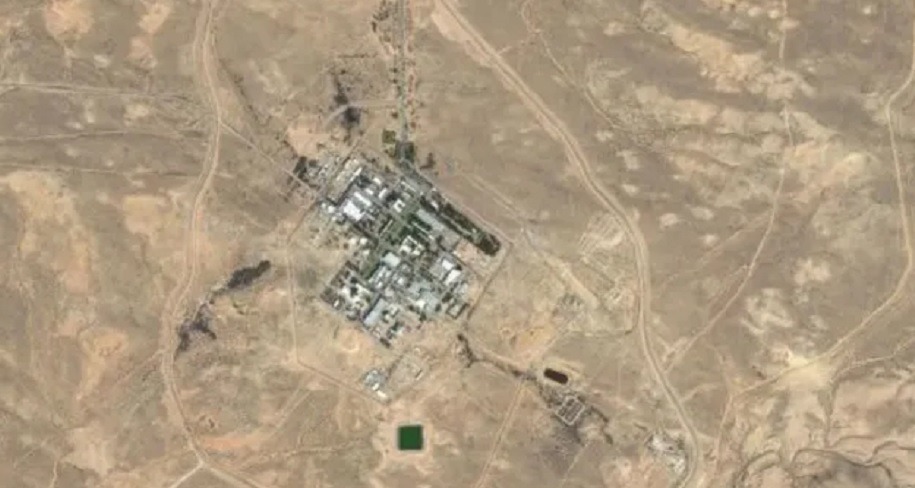
He added that Iran had consented to return its enriched uranium, which he has repeatedly called “nuclear dust”, material believed to be buried deep underground following earlier U.S. and Israeli strikes on Iranian nuclear facilities.
“They’ve agreed to give us back the nuclear dust,” Trump stated. He also suggested that the next round of talks could take place over the weekend and expressed uncertainty about whether the current fragile ceasefire would need extension.
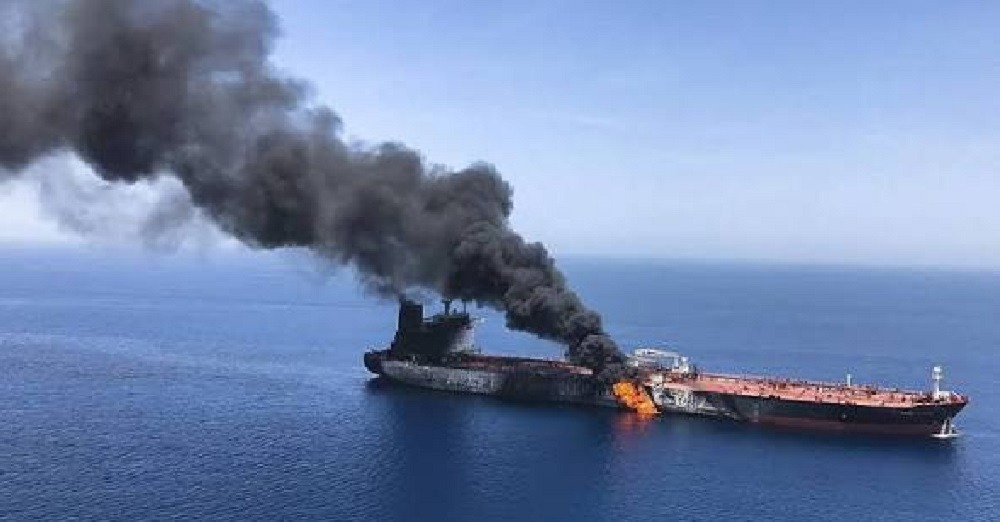
The comments come amid efforts to end six weeks of conflict in the Middle East that has disrupted global energy supplies and raised fears over the Strait of Hormuz, a vital chokepoint for oil exports.
However, Iran has not publicly confirmed Trump’s assertions. Multiple reports indicate that Tehran has previously pushed back against similar claims, describing them as exaggerated.
Recent direct talks in Islamabad on April 11-12 collapsed without agreement, with core disputes remaining over the future of uranium enrichment inside Iran and the removal of existing stockpiles.
The White House has been discussing a possible second round of negotiations in Pakistan, with officials expressing optimism.
A U.S. naval blockade of Iranian ports remains in place, adding pressure on Tehran.
Analysts caution that any final deal would require strict verification mechanisms, especially given the deeply buried nature of the material in question.
For Nigeria and other oil-producing nations, progress toward de-escalation could help stabilise crude prices, which have spiked due to fears of prolonged disruption in the Strait of Hormuz.
A lasting agreement might also open the door for sanctions relief on Iran, potentially shifting global energy dynamics.
Trump has maintained that preventing Iran from acquiring nuclear weapons is a non-negotiable red line, while offering the prospect of broader regional stability in return for Iranian concessions.
No immediate reaction from Iranian officials was available as of press time. Further developments are expected in the coming days as diplomatic channels continue.
-
News21 hours agoHow Tinubu Sacked Finance Minister Wale Edun Weeks After Hon. Alex Mascot Exposed ‘Missing’ N1.15tr
-
News21 hours agoYul Edochie Under Attack Over Disparaging Post Against Peter Obi
-
Health21 hours agoCross River reports outbreak of Covid-19, activates response centre
-
News21 hours agoOkowa Accuses Ned Nwoko of Misleading Anioma People Over State Creation Proposal
-
Entertainment21 hours agoDavido Bags Political Appointment
-
Foreign21 hours agoTrump Extends Ceasefire To Give Iran More Time To Negotiate
-
News21 hours agoDangiwa Reacts To His Sack As Minister By Tinubu
-
News16 hours agoAdelabu ready to quit as Power Minister after meeting with Tinubu