There are fresh fears in the country of higher petrol price as crude hit $114 per barrel, yesterday, following dangerous escalation in the United State and Israel war on Iran. Already, petrol is sold for between N1200 and N1400 per litre in parts of the country.


The Middle East conflict escalated on Wednesday following Israeli strikes on Iran’s South Pars gas field, the world’s largest natural gas deposit, prompting Iranian retaliatory attacks on energy facilities in Qatar and Saudi Arabia, a development that is viewed as a major escalation in the war.
Following the attacks, the US President, Donald Trump, threatened to ‘entirely’ blow up the South Pars if the country continues to attack energy facilities in Qatar. 
Consequently, energy prices soared, rising from $66 pb to $114pb by as much as five per cent across markets.
Vanguard checks, yesterday, showed that Brent crude oil price rose by 6.24 per cent to $114.08 per barrel, the highest since May 2022, while the United States West Texas Intermediate crude rose by 0.97 per cent to $96.33 a barrel.
However, the price of liquified petroleum gas, otherwise known as cooking gas, remained stable as at yesterday in the domestic market.
In Abuja and Lagos, checks by Vanguard revealed that the price of cooking gas remained stable despite volatility in the interntional market. Checks at two major retail outlets – NIPCO Gas and Shore Gas – showed that rates remained at N1,100 per kilogram and N1,150 per kilogram respectively. But in the South-East and South-South, gas went up to N1500 to N1800 per kg.
Recall that the supply disruption, triggered by the Middle East war, had affected petrol prices in Nigeria with prices ranging between N1,267 and N1,300 per litre depending on the fuel station and location as against N730-N880 per litre at the start of the war on February 28.
Similarly, Dangote Refinery Plc on March 13, raised the ex-gantry price of its petrol to N1,175 per litre, arguing that it is not immune to the global development as it secures its crude on international benchmarks.
Following the increase in gantry price of petrol by Dangote Refinery, retail outlets in Abuja raised petrol pump on March 3, 2025 with NNPC Retail dispensing at N975 from N875 per litre, while AYM Shafa sold at N960 from N880 per litre.
The marketers adjusted the pump price upwards three days later with NNPC selling at N1,068, while AYM Shafa sold at N1,098 per litre.
A further increase in gantry price by Dangote Refinery triggered a double hike by the marketers on Monday March 9, 2025.
While NNPC raised its pump price to N1,161 per litre in the morning, a further increase was implemented later in the day with rates at N1,267 per litre. Also, AYM Shafa increased its pump price to N1,230 in morning and closed the day N1,300 per litre.
Petrol price, however, dropped two days later with NNPC selling at N1,161 per litre and AYM Shafa dispensing at N1,230 per litre. However, three days later, pump price went up again with rates back at N1,267 per litre at NNPC Retail and N1,300 at AYM Shafa.
Iran threatens to destroy region’s energy facilities if attacked
Amidst the surging prices, Iran’s military renewed its threat to destroy the region’s energy infrastructure were its facilities to be attacked again during the US-Israel war with the Islamic republic, further fueling uncertainty in the market.
“We warn the enemy that you made a major mistake in attacking the energy infrastructure of the Islamic Republic of Iran, and the response is underway and not yet finished,” the military’s operational command Khatam Al-Anbiya said in a statement carried by Fars news agency.
“If it is repeated, subsequent attacks against your energy infrastructure and that of your allies will not stop until their complete destruction, and our response will be far more severe than last night’s attacks.
Meanwhile, in a bid to ease the impact of surging energy prices, the US Treasury Secretary, Scott Bessent, said that Washington might “unsanction” Iranian oil that is already being shipped.
Bessent added in the interview that the US government could also release more oil from its strategic reserves. US President Trump’s administration has been scrambling to rein in rocketing energy costs after US-Israeli strikes on Iran on February 28.
On Wednesday, Trump temporarily waived a century-old maritime shipping law in an attempt to help ease energy prices.
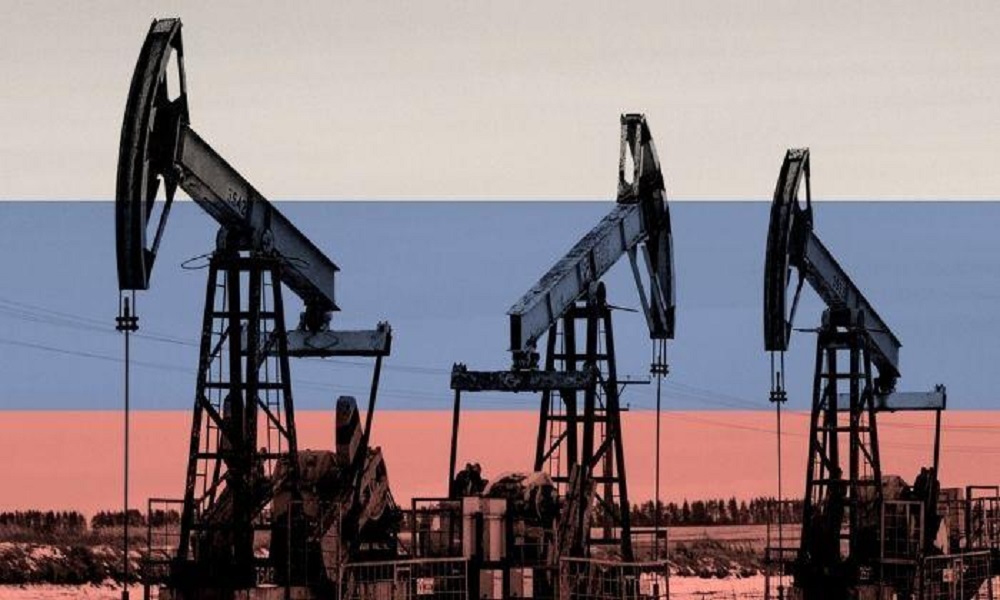
Recently, the US also temporarily allowed the sale of sanctioned Russian oil that is at sea.
US mulls deploying thousands of troops in Iran in next phase of war
Reuters, meanwhile, reported that the Trump administration was weighing the option of deploying thousands of American troops to bolster its war against Iran in what could be a new phase of the conflict.
Citing sources familiar with the development, including US officials, Reuters reported that the deployment would help secure safe passage for oil tankers through the Straits of Hormuz, a mission that would be accomplished primarily through air and naval forces. Iranian navy ships and navy submarines have been among the primary targets of US strikes.
However, securing the Straits could also mean deploying US troops to Iran’s shoreline and ground forces to the country’s Kharg Island, the hub for 90 percent of Iran’s oil exports, the sources were quoted to have said.
One of the officials said such an operation would be very risky as Iran has the ability to reach the island with missiles and drones.
The sources added that Trump’s administration officials have also discussed the possibility of deploying US forces to secure Iran’s stocks of highly enriched uranium.
Trump has said his goals go beyond degrading Iran’s military capabilities and could include securing safe passage through the Strait and preventing Iran from developing a nuclear weapon.
No timeframe for war on Iran as Pentagon asks for $200bn – Hegseth
In line with its plan to scale up its military campaign, the Pentagon is seeking an additional $200 billion from Congress to fund the war, a conflict Defense Secretary, Pete Hegseth, warned had no “timeframe” for ending.
Asked about the figure, yesterday, Hegseth did not directly confirm the amount but said that it could change.
“As far as $200 billion, I think that number could move. Obviously, it takes money to kill bad guys. We’re going back to Congress and folks there to ensure that we’re properly funded for what’s been done, for what we may have to do in the future,” he said.
Hegseth, said that Washington was on track to achieving the objectives of th war. He, however, declined to set a timeline for ending the war.
“We wouldn’t want to set a definitive timeframe,” Hegseth told a news conference, adding “we’re very much on track” and that Trump will be the one to decide when to stop.
“It will be at the president’s choosing, ultimately, where we say, ‘Hey, we’ve achieved what we need to.”
12 Arab, Islamic states call on Iran to stop strikes
In what marked a deviation from their cautious stance since the war started, the foreign ministers of 12 Arab and Islamic states called on Iran to immediately halt its attacks on the Gulf states and respect international law, even as Saudi Arabia warned that “trust in Tehran has completely collapsed” and that it will consider military action if necessary after Tehran fired missiles during the Gulf ministers’ meeting.
This is even as the European leaders have urged the US and Iran to engage in ceasefire negotiations amid growing concern about the long-term, global impact of the war in the Middle East.
Meanwhile, rising from their meeting, yesterday, the Arab foreign ministers also warned that attacks on energy facilities threaten global security.
In the statement on behalf of ministers representing Azerbaijan, Bahrain, Egypt, Jordan, Kuwait, Lebanon, Pakistan, Qatar, Saudi Arabia, Syria, Turkey and the United Arab Emirates, they denounced Iran’s attacks on the Gulf states, Jordan, Azerbaijan and Turkey, which they said had targeted “residential areas, civilian infrastructure, including oil facilities, desalination plants, airports, residential buildings and diplomatic premises.” The ministers also condemned Israel’s attacks on Lebanon and “reaffirmed support for the security, stability and territorial integrity of Lebanon.”
Saudi Arabia warns of military action
Reacting to the attack, the Saudi Defence Ministry said that four ballistic missiles targeting Riyadh were intercepted, with debris landing near a refinery south of the city.
Faisal bin Farhan Al Saud, Saudi Arabia’s foreign minister, said shortly after the meeting said that targeting Riyadh while diplomats were in session is the clearest signal of how Iran views diplomacy. “What little trust remained in Iran has now collapsed. Iran’s pressure will backfire politically and morally. We reserve the right to take military action if deemed necessary.”
He added, “The Kingdom and neighbouring states possess strong military capabilities ready for immediate deployment. Our patience is not infinite. We won’t reveal our cards in advance—whether Iran has a day, two, or a week. “We hope Iran judges the situation wisely and stops attacking neighboring countries. Whether they possess such wisdom is questionable,” he said.
Also, reacting, Sultan Al Jaber, UAE’s Minister of Industry and Advanced Technology, stated: “This is not a military confrontation but an attack on a peaceful nation that has tirelessly pursued diplomacy. A long-term political agreement must address all threats: Iran’s nuclear programme, ballistic missile capabilities, and its regional proxy networks.”
He emphasised the need to negotiate restrictions on Iran-backed groups like Yemen’s Houthis, Lebanon’s Hezbollah, and Iraqi militias. A senior Gulf official added, “The only acceptable war outcome is to weaken Iran so it can never endanger neighbours again.”
Some Gulf officials believe the only way to reopen the Straits of Hormuz is for the US to occupy Kharg Island, which handles 90 per cent of Iran’s oil exports.
European leaders urge US-Iran ceasefire talks
French President Emmanuel Macron told journalists Wednesday’s exchange of fire was a reckless escalation as he arrived for EU talks at the EU headquarters in Brussels, Belgium, yesterday.
He added that if Middle Eastern energy “production capacities themselves are destroyed, this war will have a much more lasting impact.”
Macron called for direct US-Iran talks, expressing a wish for everyone to “come to their senses.”
European Commission Vice President Kaja Kallas, also in Brussels, described Iran’s attacks on Qatar as causing further chaos.
“It’s clear that we need an exit from this war, not escalation.”
Kallas emphasised the connection between the conflicts in both the Middle East and Ukraine, saying that “Russia is gaining from the war in the Middle East.”
Ahead of the EU summit, German Chancellor, Friedrich ‘ Merz, suggested his private correspondence with Donald Trump indicated the US president was ready to halt the military action.
Merz told reporters he is “expressly grateful” for what he called Trump’s signal he is prepared to “bring the fighting to an end.”
NATO Secretary-General, Mark Rutte, said ongoing discussions between the US and NATO allies are prioritising the security issue in the Strait of Hormuz.
“I’m confident that allies, as always, will do everything in support of our shared interests, as we always do,” Rutte said.
Until we are independent
in all spheres, this cycle continues. We possess abundant raw materials for innovation, yet lack forward-thinking leadership to harness these resources independently. To ease our people’s lives without reliance on international programs or “colonized” systems, we must establish a localized economic structure that directly impacts every citizen and fosters true continental self-sufficiency.
—Oyetola Olawale, Entrepreneur
Predicting the U.S.Israel–Iran conflict’s duration is difficult, so Nigeria must act proactively. The government should prioritize capital expenditure for fiscal discipline and save surplus oil revenue to buffer future shocks. Diversifying into agriculture is essential to reduce oil reliance, while targeted support for vulnerable households will mitigate the rising costs of fuel and transportation for all citizens.
—Chizoba Akunne, NEC Topple
High commodity prices and petrol hikes exceeding ¦ 200 per litre have made life unbearable for Nigerians. The Federal Government must provide transportation palliatives to cushion this impact. Additionally, reducing crude oil exports will ensure local refineries receive adequate supply, lowering petrol prices for citizens. Nigeria must survive by prioritizing domestic needs over international markets to achieve economic stability.
—Peter Ige, Entrepreneur
To mitigate the US Israel–Iran conflict’s impact, Nigeria must stabilize food prices and protect vulnerable citizens, mirroring COVID-era interventions. Fiscal discipline is vital to manage oil price volatility. Long-term, Nigeria must diversify by investing in agriculture, manufacturing, and its burgeoning tech sector. Incentivizing local production and startups will reduce oil dependence, fostering sustainable growth and economic independence.
—Oluwatoyin N. Taiwo-Ojo,Legal practitioner
To cushion the US–Israel–Iran conflict’s impact, Nigeria must proactively strengthen domestic resilience. Key strategies include diversifying energy, increasing local production, and building strategic fuel reserves. Enhanced fiscal policies, targeted subsidies, and SME support will stabilize prices. Furthermore, engaging in international diplomacy and investing in agriculture, technology, and renewables will shield the Naira and ensure long-term economic stability.
—Romoke Olisa, Entrepreneur
Nigeria must urgently address the US-Iran conflict’s economic impact by reactivating local refineries to boost petroleum production. This critical step will reduce transportation costs for goods and commuters. This war serves as a vital lesson for Nigeria and Africa to scale up local production, ensuring economic stability and reducing the vulnerability caused by global geopolitical volatility.