




Opinion
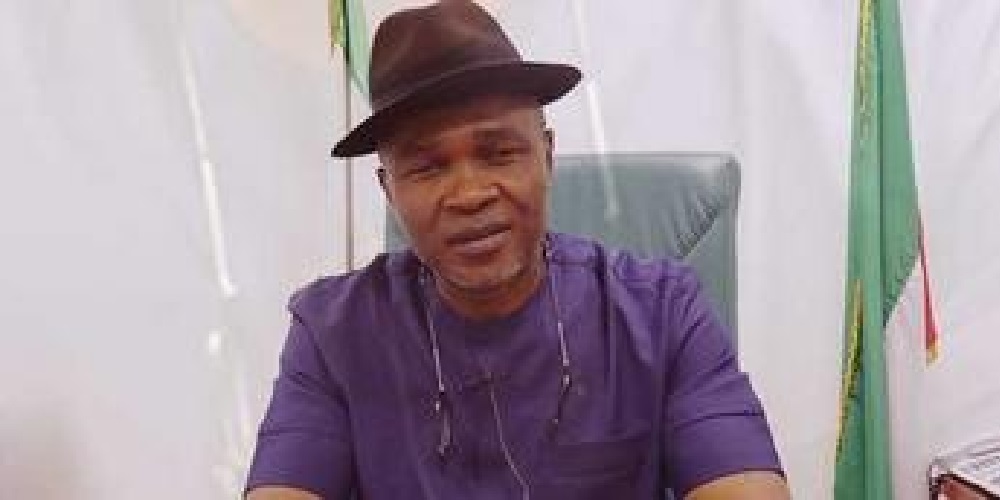
KINGSLEY CHINDA AT 60: CELEBRATING SPUNK, INTEGRITY, AND MODESTY
BY BOLAJI AFOLABI
For over two years, the Peoples Democratic Party, (PDP), has gone through different stages of crisis and contestations. In the process, the party has lost members to the ruling All Progressives Congress, (APC), and a few others. With the Court of Appeal giving judicial recognition to the Abdulrahman Mohammed-led Caretaker National Working Committee, (CNWC),
many members of the party described it as the silver lining needed to revive it from the near-prostrate state. Determined to meet the guidelines of the Independent National Electoral Commission, (INEC), for next year’s General Elections, the CNWC constituted the Central, and other Committees for the party’s national convention scheduled to hold this weekend, in Abuja. For many members of the party, the quality and calibre of those that made the list was inspiring. Others believe that the pedigree and antecedents of the over 500 members that will midwife the party’s national convention evidenced that the PDP remains relevant in Nigeria’s political development.
So, last Saturday, hours to the commencement of the Inauguration of the national convention committees, activities and movements in and around a major facility in the Utako District of Abuja was huge. Vehicular and mass movement of people more than doubled. The atmosphere within the hall was electrifying and convivial, as members engaged in serial hand-slaps, back-slaps, hugging, and spontaneous embrace. Former Governors, past Ministers, Legislators, and many others moved around to serenade the evening, and, perhaps, the opportunity to reboot the party. The collection of songs perfectly dished by the Disc Jockey added the necessary verve, gusto, and excitement among members; who have not had an opportunity of being together in a long while.
In the midst of the vociferous atmosphere, Kingsley Chinda, the subject of this Tribute emerged. The Rivers State-born politician and lawyer, who is the Leader of the Minority Caucus in Nigeria’s House of Representatives walked in quietly, and took a seat at the rear of the crowded but lively hall. With no retinue of aides, escorts, and security details, his arrival was barely noticed and innocuous. That is vintage Chinda, who prefers to operate in the background, and avoids undue attention. Indeed, it took the prodding and persistence of Hon. Jones Onyeriri; a former colleague, and PDP’s Deputy Governorship candidate in Imo State for Chinda to leave the “back seat” when informed a few of his friends including Hons. TeeJay Yusuf, and Rimamnde Shawulu were somewhere further within the hall.
Perhaps, as a result of his demeanor and carriage which looked ordinary, many people didn’t have an idea that their party’s number two person in the Legislative arm of government was around. Literally, the cat was left out of the bag when the MC, Ms. Chinwe Nnorom, PDP’s Director of Publicity invited Chinda for a goodwill message. Surprised, with this shocking discovery, the reactions of the “back-benchers” through applause and cheeres were palpable. Chief Davidson Ndubuisi exclaimed, “I never knew the man who sat beside me, and even greeted me firstly was an important person in Nigeria.” Hajiya Fatima Usman confessed that, “I’m not happy about missing the opportunity of having interaction with someone I have long desired to meet; this is painful.” Princess Anita Olateru sounded spiritual, “this confirms the saying that Angels, in human form comes around but one may not know. The man greeted me, sat a few seats away, and yet I didn’t know he was such a powerful person in government.”
This is an encapsulation of who Chinda is. Either naturally or deliberately, he, regularly plays down his position, influence, and personality. According to those close to him, he lives a non-complicated and well-cultured life, anchored on hard work, sincerity, and moderation. His commitment to friendship, relationship, and group interest remains unequivocal. Described as gentle and genial, Chinda is a perfect specimen of humility and humanity. In an interaction with the writer, Chinda declared that, “life and living is better when you remain true, real to yourself and conscience; avoid complications by being simple because whatever position you occupy, and wherever you are is ephemeral.”
Chinda, a former Commissioner for Environment in Rivers State has emerged as a trailblazer in Nigeria’s Legislature. He achieved unprecedented milestones by being elected in 2023 – the fourth consecutive time – to represent the Obio-Akpor federal constituency. That his constituents have consistently invested their respective electoral franchise in him as their representative is an eloquent statement of recognition, acceptance, and performances. True to his burning passion and unapologetic commitment to development, Chinda, in diverse ways has continued to impact on his constituents. His strides in infrastructural development, roads construction, medical and healthcare services, and education are evident across the entire 17 Wards in the Obio-Akpor federal constituency. Not forgetting agriculture, power, skill development, sports, financial support, and other numerous empowerment programmes for personal growth of the constituents and community development.
Aware of his contributions to national development, particularly, the deepening of legislative actions in the 7th to 9th Assembly where he was at various times Deputy Chairman, Committee on Customs; Chairman, Public Accounts Committee; and Leader of the PDP Caucus, he was unanimously elected as the Minority Leader of the 10th Assembly of the House of Representatives. In this capacity, Chinda, who remains limpid in matters of good governance, general well-being of the people, and legislative resourcefulness, prefers collegiate leadership. This novel, and unique style, which is a clear departure from what existed before is an all-embracing, all-inclusive leadership model in managing the affairs of the Minority Caucus.
As a fourth-termer in the House of Representatives; famously called “House of the Nigerian people” Chinda’s profound understanding of legislative ethos, nuances, issues, and practices has impacted contributions to national development. No doubt, his character, capacity, and competence have made him an invaluable asset to the Legislature, just as his insightful advocacy and robust commentaries have solidified his status as one of the most respected members of the National Assembly. A strong advocate for transparent and accountable governance, Chinda has been forthright and consistent in every cause that will improve the general well-being of all Nigerians; particularly those in the lower rungs.
On the Diamond Jubilee anniversary of a legislative colossus whose life and politics exemplifies service; in its entirety, the writer prays that his trajectories will continue to inspire and impact the people. As he climbs the 6th Floor, may he continue to leave indelible marks on
the path towards the resolve of Nigerians to have a progressive, prosperous, and fruitful nation.
* BOLAJI AFOLABI; a Development Communications specialist was with the Office of Public Affairs, The Presidency, Abuja.
Opinion
Why PDP Should Pick Dr Olotu Akpodiete as Candidate for Ughelli North, South and Udu Federal Constituency
By Comrade. Amb Emmanuel Kpoharor_
To secure victory in Ughelli North, South and Udu Federal Constituency, the Peoples Democratic Party (PDP) needs a tested, grassroots-oriented candidate who has demonstrated real capacity for mobilization, loyalty, and community impact.
As the PDP prepares for the forthcoming House of Representatives election, stakeholders across the three local government areas are calling on the party to field Hon. Dr. Olotu Akpodiete JP as its candidate.
Dr. Akpodiete is widely credited with reviving the PDP in the constituency at a time when mass defections had left the party’s structure severely weakened. He reactivated dormant ward executives, bankrolled logistics for meetings, financed mobilization drives, and spearheaded reconciliation efforts that brought back aggrieved members while attracting new ones across Ughelli North, South and Udu. According to party chieftains, his swift intervention restored stability and re-established the PDP as the dominant political force in the area.
His influence goes beyond party administration. Dr. Akpodiete initiated and personally sponsored the U3 Youth, Women, and Executive Empowerment programme. The initiative has provided startup grants, vocational training, and business support to hundreds of beneficiaries in the constituency. It has been commended for reducing unemployment and boosting household incomes across the three LGAs.
To strengthen political engagement, he also floated two strategic pressure groups: the U3 Media Ambassadors and the U3 Legislators Forum. The Media Ambassadors have expanded the PDP’s message and improved voter education at the grassroots. The Legislators Forum brings together past and present PDP-aligned legislators in U3 to mentor emerging politicians, harmonize party positions, and drive community consultations. Together, the two groups have created a permanent, community-rooted campaign structure for the party.
Dr. Akpodiete’s humanitarian record through the Olotu and Ekuogbe Rowland Akpodiete Foundation also sets him apart. Since its establishment, the Foundation has focused on sustainable development, education, healthcare, security support, charity, social welfare, and empowerment.
Key activities of the Foundation since 2018 include:
– Annual Empowerment Programs: The Foundation conducts yearly outreach for vulnerable groups. On April 9, 2026, it held a widow empowerment program at Iwhreko Community Town Hall, Ughelli, where over 100 widows from Ughelli North, South and Udu received cash, gifts, and wrappers during the 31st remembrance of Late Chief Ekuogbe Rowland Akpodiete. Dr. Akpodiete has pledged to sustain the program annually and extend it to other segments of society.
– Education Support: The Foundation awards scholarships and provides learning materials and school support to indigent students across the constituency to improve access to quality education.
– Healthcare Interventions: It runs medical outreaches and supports community health initiatives for underserved populations in the three LGAs. The Foundation has registered over 500 Deltans for health insurance across Delta State.
– Youth and Sports Development: The Foundation hosts an annual novelty football match in honor of Late Chief Ekuogbe Rowland Akpodiete at Clifford Cassidy Play Ground, General Field, to discover and nurture young football talents. The 2026 second edition ended 1-1 between children and grandchildren of the late chief, with cash gifts presented to team captains. The Foundation has also trained over 700 youths in vocational and digital skills.
– Community Development and Security: The Foundation supports community projects such as water boreholes across Delta and backs security initiatives including conflict resolution capacity building and donation of security gadgets to various communities to improve safety and social cohesion.
– Recognition of Service: Through Life Achievement Awards, the Foundation celebrates individuals for outstanding service to humanity. In 2026, recipients included Olorogun Miller Uloho and Chief Morrison Obaseki Olori.
Party faithfuls maintain that Dr. Akpodiete combines loyalty, proven mobilization strength, and a verifiable humanitarian record. His work in rebuilding the PDP, empowering constituents, building enduring political structures, and sustaining philanthropy through his Foundation makes him the most electable and prepared aspirant to represent Ughelli North, South and Udu in the House of Representatives come 2027.
Opinion
DESPITE JUDICIAL FINALITY, SCIENTIFIC EVIDENCE SETS THE PATHWAY FOR THE FUTURE OF JUSTICE AND PEACE FOR WESTERN BAKASSI
Maritime Law and Continental shelf entitlements are entirely reliant on the Interpretation of Scientific Processes.
And where any Body of Law is dependent on Scientific Processes, then emerging scientific findings will naturally reshape the Law
In what may become one of the most consequential developments in Nigeria’s oil and gas sector in recent years, new scientific, hydrographic, and geospatial evidence is reshaping long-standing assumptions about maritime boundaries, resource ownership, and national economic security in the Gulf of Guinea..
At the center of this unfolding narrative is Cross River State, which, following years of exclusion from oil derivation revenues, is now poised for a historic re-entry into Nigeria’s league of oil-producing states.
A Turning Point Beyond the Courts:
For over two decades, the status of Cross River State as a non-oil-producing state has been largely anchored on the 2002 International Court of Justice (ICJ) judgment, which ceded parts of the Bakassi Peninsula to Cameroon.
This was further compounded by the 2008 oil wells dichotomy implementation map, which ultimately reassigned 76 oil wells to Akwa Ibom State in 2012.
While these legal outcomes remain binding, emerging scientific findings suggest that judicial finality does not necessarily equate to geological finality.
Governor Senator Prince Bassey Edet Otu of Cross River State, drawing from a detailed problem statement and situation analysis, initiated a bold and comprehensive investigation aimed at re-examining the subsurface realities beneath the disputed maritime terrain.
Science Steps In Where Law Stopped
The Cross River Economic Intelligence Team (CREIT), under the Governor’s directive, conducted a multi-layered validation survey—incorporating subsurface geology, geodesy, hydrography, and advanced geospatial mapping—across the Nigeria–Cameroon maritime corridor.
The study extended from the Cross River Estuary through the Akwayefe River Estuary into Cameroon waters, reaching as far as the G-Point and the strategic tripartite boundary with Equatorial Guinea and São Tomé and Príncipe.
What emerged is a compelling body of evidence pointing to continuous sedimentary and hydrocarbon systems stretching from Nigeria’s inland rivers into the deep offshore continental shelf.
The Cross River Estuary system—fed by the Cross River, Calabar River, and Great Kwa River—discharges over 800 million cubic litres of water into the Atlantic Ocean, transporting sediments across a span of approximately 280 nautical miles.
These sediments have formed rich hydrocarbon-bearing structures across the extended continental shelf.
Strategic Geography, Renewed Advantage
Geographically, the estuary’s proximity to the Atlantic Ocean—just 4.8 nautical miles—combined with a natural draft depth exceeding 22 meters and access to 200-meter isobath zones, places Nigeria in a strategically advantageous position to assert extended continental shelf rights under international law.
Crucially, the findings indicate that significant portions of the western Bakassi maritime corridor were never ceded, and remain within Nigeria’s legitimate economic and geological domain.
New Discoveries, New Possibilities:
The implications of the CREIT investigation are profound:
Over 186 oil wells identified for potential recovery
238 newly mapped oil well coordinates
49 transboundary reservoirs straddling Nigeria and Cameroon
Recovery of approximately 780 hectares of maritime territory
Within OML 114 (Abana Field) and adjoining offshore zones, these reservoirs represent a significant untapped energy resource.
Additionally, the broader Cross River maritime axis—covering Akpabuyo and Odukpani—is now estimated to hold:
4.1 trillion cubic feet of natural gas
45 million barrels of crude oil
These figures signal the emergence of a new energy frontier capable of transforming Cross River State into a major hub within Nigeria’s oil and gas ecosystem.
National Security and Strategic Imperatives
This development is not merely economic—it is deeply strategic.
As far back as 2006, former President Olusegun Obasanjo had warned, in a national security policy brief, of the risks associated with losing control over unceded territories within western Bakassi and the Cross River Estuary.
Today, those warnings appear prescient.
CREIT now frames the issue as an urgent national security intelligence risk, emphasizing the need to safeguard Nigeria’s maritime corridors, protect offshore infrastructure, and assert sovereign economic rights.
A Window for Diplomatic Innovation
For President Bola Ahmed Tinubu, the findings present a rare opportunity for strategic leadership.
Rather than reopening settled legal disputes, experts advocate a forward-looking approach anchored on:
Joint development and production sharing agreements with Cameroon
Cooperative exploitation of transboundary reservoirs
Strengthening Nigeria’s claim to its extended continental shelf
Such arrangements could unlock production levels of up to 300,000 barrels per day, while reinforcing regional stability and economic cooperation.
From Rivalry to Partnership
Perhaps most significantly, the new evidence offers a pathway to resolve the long-standing tensions between Cross River and Akwa Ibom States.
Both states stand to benefit immensely from the newly identified resources. Federal guidance encouraging collaborative frameworks for derivation sharing has been widely welcomed as a pragmatic solution.
Under the leadership of Senate President Godswill Akpabio, calls for unity and mutual benefit are gaining traction.
The emerging consensus is clear: the future lies not in contest, but in cooperation.
No Victor, No Vanquished.
While the Supreme Court’s decisions remain legally binding, science has introduced a new dimension—one that transcends boundaries drawn on maps and speaks to the realities beneath them.
In this evolving context, justice is no longer defined solely by legal verdicts, but also by equity, evidence, and shared national interest.
As CREIT succinctly puts it:
“This is not about reversing history, but about redefining the future. Science has provided the bridge—what remains is the will to cross it together.”
Conclusion.
Nigeria stands at the threshold of a transformative moment.
The convergence of science, policy, and diplomacy offers a unique opportunity to reclaim economic value, strengthen national security, and foster regional harmony.
For Cross River State, it signals a long-awaited restoration of status and dignity. For Nigeria, it represents a bold step toward maximizing its natural endowments in a complex geopolitical landscape.
And for both Cross River and Akwa Ibom States, it marks the beginning of a new chapter—one defined not by division, but by a shared vision of justice, peace, and prosperity.
No victor. No vanquished. Only a nation moving forward.
By CREIT- March 2026.
Cross River Economic Intelligence Team
Opinion
Uncertainties over debts and the future of NigComSat 1R
By Sonny Aragba-Akpore
Nigeria’s only communications satellite, NigComSat 1R,is troubled and appears to be in a wheelchair, practically struggling for survival. Its troubles began on February 14, 2014, immediately after the removal of its pioneer Chief Executive, Timasaniyu Ahmed Rufai, in alleged questionable circumstances. His removal was ordered by the then Communications Minister, Mrs Omobola Johnson, who later appointed a team to carry out a forensic examination of the company’s books since the launch of NigComSat 1R on December 19, 2011. Johnson named Ms Abimbola Alale as Ahmed-Rufai’s replacement. Before her appointment, Alale was Executive Director (Marketing).
But not much came out of the forensic examination to date, except that the company appears to have seen better days and is swimming against the tide. With a bucket of troubles and an incorrigible wage bill, which is believed to be unsustainable, the Nigerian satellite is now being managed from Kashi, China, contrary to global standards, where communications satellites are usually managed locally by their operators from domestic ground stations. Strangely, the Nigerian satellite has not been a commercial success since its launch. Low patronage, very little confidence by local customers and a lack of investment by its owners, the government, may have accounted for this. But the Chinese who built it say NigComSat 1R has immense capacity for broadcasting and telecommunication services, with special potential for broadband connectivity, but local patronage is very poor.
“There is no problem with the market,” because countries like Bolivia, with TKSat-1, the country’s first communications satellite, built at an estimated cost of around $300 million, similar to NIGCOMSAT-1R, generate between $10 million and $20 million yearly. By 2020, it had earned more than $80 million over its first four years, averaging roughly $20 million yearly.
In South Africa, the South African National Space Agency (SANSA) and local partners such as CubeSpace, Simera Sense, and Astrofica generate revenue from satellite-based Earth-observation data, hardware components, and downstream applications. In 2023, these companies were part of Africa’s broader commercial space sector, which included 327 firms collectively earning US$309 million. So, what is the problem with the Nigerian satellite that has not recorded any commercial success since its launch 15 years ago? Despite denials by officials of NigComSat 1R that it was not indebted to its partners, China Great Wall Industry Corporation (CGWIC), there is growing uncertainty that the satellite is swimming in troubled waters. Reports have it that managers of the satellite, Nigerian Communications Satellite Limited, are busy defending an $11.4 million debt owed to CGWIC for services rendered in hosting the satellite in the Kashi ground station in Xichang, China, since the ground station of NigComsat was damaged in 2019. Although NigComSat Limited denied this debt, CGWIC insists there is indeed a debt, even when no official statement says whether or not a debt was outstanding. Media reports say the debt is real.
Following the damage of the ground station in Abuja in 2019, the Kashi station in China became the main controlling station instead of playing the backup role it was initially designed forCGWIC built and launched the Satellite in Kashi on December 19, 2011 and has been working closely with its Nigerian partner, NigComsat Limited to maintain the satellite from the Karshi ground station to save the satellite from premature collapse. This help came at a cost as the NigComSat Limited entered into a management contract with CGWIC for the primary control of the satellite from Kashi in China. According to the terms of the contract, the Nigerian company was expected to pay CGWIC about $1.6m yearly for maintenance.
But as of December 2025, the Nigerian company allegedly failed to remit any payment and thus accumulated a debt of $11.4m. Several strategies adopted to recover the debt have failed to yield any meaningful results, including a letter of demand for payment and a threat to abort hosting the satellite if the debt was not paid. In a letter signed by the Director, Marketing, Africa at CGWIC, Liu Lan, the Chinese company asked the management of NigComSat Limited to inform its customers of the development because it wouldn’t guarantee the performance of the satellite should it fail to pay up the debt in 30 days.
The letter reads, “As of December 31, 2025, the total net outstanding debt owed by NIGCOMSAT to CGWIC stood at USD11,442,335.89. This figure accounts for deductions for services NIGCOMSAT has been provided by us, yet the balance remains substantially unresolved.” “Regrettably, despite our continuous provision of essential Telemetry, Tracking, and Command (TT&C) services from Kashi China, no payments have been received from NIGCOMSAT Ltd. since 2019. “For the past seven years, CGWIC has deliberately delayed standard debt collection actions out of goodwill and a desire to ensure the continuity of Nigeria’s satellite operations.
“Furthermore, despite negotiations in 2023 and early 2025, in which CGWIC agreed in principle to reduce the debt, NIGCOMSAT has repeatedly failed to meet the agreed-upon conditions to make partial payments.” Therefore, CGWIC is hereby issuing a final thirty (30) day ultimatum. NIGCOMSAT is required to either make the payment of USD11,442,335.89 orprovide a formal, legally binding guarantee of payment within thirty (30) days of the date of this letter.
“If full payment or an acceptable guarantee is not provided within this 30-day window, CGWIC will suspend service on the active transponders of the NIGCOMSAT 1R”. But officials of Nigcomsat Limited denied any debt to CGWIC or any friction in that regard. These debts have been hanging since 2019 when Nigeria’s ground control infrastructure located in Obasanjo Space Centre, Lugbe, Abuja, malfunctioned due to lightning. In satellite operations, control is maintained through Telemetry, Tracking, and Command (TT&C) systems that monitor the spacecraft’s health, determine its position in orbit, and send commands to adjust its orientation and orbital slot.
If the TT&C link is lost, a geostationary satellite can quickly drift out of its designated position due to gravitational and solar forces. When that happens, services such as broadcasting, internet connectivity, and military communications can be disrupted. Nigeria’s primary TT&C facility was located at the ground station in Lugbe, Abuja. CGWIC said the facility was severely damaged by lightning in 2019. “Lightning destroyed the Abuja ground station,” Liu said. “After that, they could not control the satellite, so the control was transferred to our station in Kashgar.”
The Kashgar Ground Station, also known as the Kashi Ground Station, is located in Xinchang, China. “We have controlled the satellite from 2019 until today,” Liu was quoted as explaining that the arrangement was originally allowed under a 2014 technical support agreement that established China’s ground station as a backup control facility.
But once the Abuja system stopped functioning, CGWIC became the primary maintenance provider.
Under the 2014 agreement, Nigeria was required to pay CGWIC for both backup services and full operational control, according to Liu. Although NIGCOMSAT declined to confirm the agreement, it admitted it had a support contract in place with the vendor but gave no details.
CGWIC officials were quoted as saying that the Primary control service alone costs more than $1 million yearly, while additional charges apply for backup operations and other technical services like equipment repair and purchase. The officials said that since 2019, the company has received no payment. “For over seven years, the unpaid fees accumulated into the $11.4 million debt now at the centre of the dispute. Despite the growing arrears, CGWIC continued providing services to avoid jeopardising the satellite. But how long this continues remains unclear, especially as the satellite gets to its terminal date.
NIGCOMSAT plans to launch two satellites in the next four years. They have named them as Nigcomsat 2A and 2B according to the Chief Executive, Jane Egerton-Idehen.
“For 2A and 2B, we have started the process. We have closed the tender and are now back into the financing and implementation stage. 2A is built to come up in 2028, and 2B for 2029.
“When they are up and running, they are expected to provide security within the borders and neighbouring countries. They will support the security agencies because data collection and intelligence in real time is important. Satellites like communication satellites allow that, irrespective of where they are,” she said.
NIGCOMSAT has been embroiled in controversy since Nigeria’s quest into space.
When it first launched into space in 2007, with NigComsat 1 and the failure that occurred just after 18 months in space, in 2008, and the replacement satellite christened Nigcomsat 1R in December 2011, Nigerians have cast doubts on the satellite. Although it has survived nearly 15 years since its return, so much mistrust has followed the company. Poor infrastructure management, fuelled by low investment and apathy in marketing the services have left the place in a near comatose. It is, however, not clear whether the company will survive when this satellite’s lifespan elapses, since there is no backup.
And the debt overhang has further diminished the status of the future of the wobbling venture. But while dismissing the story as fake news, Head, Corporate Communications at NigComsat Limited, Stephen Kwande, said:
“It is unclear where this misleading information is coming from. “We have been in touch with our business partners, the executives and representatives of CGWIC in Nigeria, and they have made it clear they are not the ones giving out such information.” According to him, the Chinese firm also expressed concern about the spread of what it described as inaccurate reports regarding the partnership. “Our relationship with our business partners, CGWIC, is not in any crisis as reported, and we continue to remain strong in our business relationship and partnership. adding that both parties recently held discussions to reaffirm their collaboration. Despite the denials, the situation of the satellite looks precarious, as any threat to the fragile existence of the satellite spells discomfort for its few patrons.
With a lifespan of 15 years since launch on December 19, 2011, by December 2026 it would elapse, and there is no backup. This makes things more complicated. So, what happens to customers using its links is a big dilemma. Denials of Nigcomsat officials appear to be tongue in cheek, as information available further shows the debt exists and remains unpaid. In a February 28, 2026, email to Jane Egerton-Idehen, the managing director of NIGCOMSAT, CGWIC noted that the outstanding debt had reached $11,442,335.89 as of December 31, 2025. “I wrote about the outstanding payment in December 2025 and did not get any feedback from NIGCOMSAT,” stated Liu Lan, CGWIC’s Head, Africa Operations, who has worked on the project since its inception. The debt, the email noted, rose from technical control services that CGWIC continues to provide for years without payment. The denial of Nigcomsat is a clear manifest contradiction, especially when the Chief Executive is being quoted as saying she would not want to throw figures in the open space, a veiled admission of the debts.
-
News24 hours agoIran slams US blockade as ‘grave violation of sovereignty’
-
News22 hours agoEdun Urges Developing Countries to Adopt Measures to Cushion Global Shocks
-
News24 hours agoEl-Rufai distances self from comments on political aspirations attributed to associate
-
News19 hours agoJune Deadline Non-Negotiable, Wike Warns Contractors as FCT Targets Tinubu’s Anniversary For Projects Commissioning(Photos)
-
Opinion6 hours agoWhy PDP Should Pick Dr Olotu Akpodiete as Candidate for Ughelli North, South and Udu Federal Constituency
-
News17 hours agoInsecurity: Nine feared killed in Benue attack
-
News18 hours agoFinally, NAF releases list of successful candidates
-
Foreign6 hours agoSecond Tragedy in Two Days: Student Gunman Kills Four at Middle School