
Economy
Naira continues to fluctuate against the US Dollar




The value of the United States dollar against the Nigerian naira continues to fluctuate across different segments of the foreign exchange market, particularly within the parallel market commonly referred to as the black market.
As of Thursday, April 2, 2026, checks from currency traders operating in the Lagos parallel market indicate that the dollar is being sold at approximately ₦1,425, while the buying rate stands around ₦1,412. These figures are based on information gathered from operators within the Bureau De Change (BDC) space, who serve as key players in Nigeria’s informal forex market.
Despite the widespread reliance on the black market for foreign exchange transactions, the Central Bank of Nigeria (CBN) has consistently maintained that it does not recognise this segment of the market.
The apex bank has repeatedly advised individuals and businesses seeking foreign currency to conduct their transactions through official channels, particularly commercial banks and other authorized financial institutions.
Black Market Dollar to Naira Rate Today
Transaction Type Rate
Buying Rate ₦1,412
Selling Rate ₦1,425
Official Dollar to Naira Exchange Rate (CBN)
In the official market regulated by the Central Bank, the naira trades at relatively lower rates compared to the parallel market. Current data shows:
Important Notice
It is important to note that foreign exchange rates are highly volatile and may vary depending on location, demand, and transaction volume. As a result, the actual rate at which individuals buy or sell dollars may differ slightly from the figures published here.



The Manufacturers Association of Nigeria (MAN) has warned that the unfolding geopolitical tensions in the Middle East poses immediate, severe and multifaceted risks to Nigeria’s manufacturing sector, while outlining urgent pathways to safeguard industry operators.
Director General of MAN, Segun Ajayi-Kadir, in a statement, said the sector is already grappling with the ripple effects of the global energy shock triggered by the conflict, warning that the sector’s projected 3.1 per cent real growth target for 2026 is now under serious threat.
According to him, manufacturers’ heavy reliance on gas and Automotive Gas Oil (diesel) for production has exposed them to spiraling energy costs, as rising global crude oil prices continue to push domestic pump and depot prices upward, eroding operating margins.
“Energy cost escalation is biting hard. Many manufacturers are seeing their margins wiped out almost overnight,” Ajayi-Kadir stated.
He further noted that imported inflation and escalating freight costs are compounding the crisis. Extended transit times and higher shipping expenses and logistics expenses, he explained, have made the importation of critical raw materials increasingly prohibitive.
“The implication is clear – production costs are rising sharply, while consumer purchasing power is weakening. This has created a dangerous situation where manufacturers are battling both high costs and unsold inventories.
“Manufacturers are now confronted with the dual threat of skyrocketing production costs and unsold inventories, a development that could derail the sector’s projected 3.1 per cent growth in 2026,” he said.
To mitigate the looming crisis, MAN called on the Federal Government to urgently implement targeted interventions. These include fast-tracking the Presidential Compressed Natural Gas (CNG) initiative for industrial clusters to reduce dependence on diesel, and establishing a dedicated foreign exchange window through the Central Bank of Nigeria for the importation of critical inputs.
The association also advocated for the domestication of petroleum supply chains by ensuring that local refineries prioritise supply to domestic manufacturers at competitive rates, alongside a temporary suspension of logistics levies and multiple taxation on haulage.
“The current crisis is a stark reminder of Nigeria’s vulnerability to external shocks due to our dependence on imported inputs,” Ajayi-Kadir said. “While we cannot control global geopolitics, we can control our domestic response.”
He stressed that the situation presents a critical opportunity for Nigeria to pivot towards genuine manufacturing self-sufficiency, warning that failure to act decisively could result in widespread factory closures and job losses across the country.
To cushion logistics pressures, MAN recommended an immediate six-month suspension of multiple haulage levies, highway taxes and transit tolls imposed on manufacturers.
“We cannot control global geopolitics, but we can control our domestic response,” Ajayi-Kadir stated. “This crisis must serve as a catalyst for building a more resilient and self-sufficient manufacturing sector, rather than repeating the mistakes of the past.”
He warned that failure to act decisively could lead to widespread factory closures, job losses and a significant setback to Nigeria’s industrialisation drive.
The Central Bank of Nigeria (CBN) has concluded the banking sector recapitalisation scheme initiated in March 2024, with banks raising ₦4.65 trillion in new capital, strengthening the resilience of the financial system and enhancing its capacity to support the economy.
The apex bank said the recapitalisation scheme recorded strong participation from both domestic and international investors, with 72.55% of capital sourced locally and 27.45% from international markets.
CBN Governor, Yemi Cardoso said the success reflects the
sustained confidence in the Nigerian banking sector.
This was contained in a statement jointly signed by Olubukola A. Akinwunmi, director banking supervision and Hakama Sidi Ali, acting director, corporate communications.
Cardoso said the “recapitalisation programme has strengthened the capital base of Nigerian banks, reinforcing the resilience of the financial system and
ensuring it is well-positioned to support economic growth and withstand domestic and
external shocks.”
Furthermore, the CBN confirmed that 33 banks met the revised minimum capital requirements
established under the programme.
However, it revealed that a limited number of institutions remain subject to ongoing regulatory and judicial processes, which are being addressed through established supervisory and legal frameworks.
The statement said all banks remain fully operational, ensuring continued access to banking services for
customers.
The apex bank added that the programme has strengthened capital adequacy ratios, with the sector maintaining
levels above international Basel benchmarks.
Minimum capital adequacy ratio thresholds, it explained, remain at 10% for regional and national banks and 15% for banks with international authorization.
“The recapitalisation, implemented alongside an orderly exit from regulatory forbearance, has improved asset quality, reinforcing balance sheet transparency and overall financial system.
“To safeguard these gains, the CBN has strengthened its risk-based capital adequacy framework, requiring banks to conduct regular stress testing across defined scenarios and
maintain appropriate capital buffers,” the statement said.
It disclosed that key regulatory measures, including prudential guidelines and the supervisory framework, are
subject to periodic review to support ongoing strengthening of governance, risk management, and sector resilience.
The CBN explained that the recapitalisation programme was carried out without disruption to banking services,
ensuring continuous access for individuals and businesses throughout the process.
“The successful completion of the programme establishes a stronger and more resilient
banking system, better positioned to support lending, mobilise savings, and withstand domestic and global shocks.
“The Central Bank of Nigeria remains committed to maintaining a stable, transparent, and resilient financial system that inspires confidence among depositors, investors, and the broader public, and to advancing the sustainability of the nation’s financial architecture,” the bank assured.
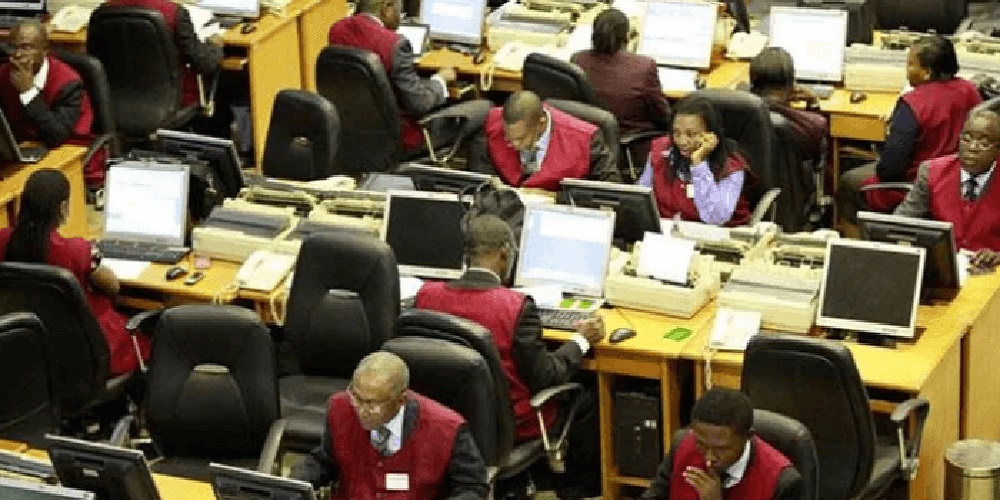
The Nigerian equities market has ended March, 2026 on a positive note, with a N516 billion gain, as investors showed renewed confidence in the market, particularly in large-cap stocks.
The All Share Index (ASI) gained by 803.35 points, representing a growth of 0.40 per cent to close at 201,287.78 points. Also, market capitalisation gained N516 billion to close at N129.210 trillion.
The upturn was impacted by gains recorded in medium and large capitalised stocks, amongst which are; MTN Nigeria Communications (MTNN), PZ Cussons Nigeria, Lafarge Africa, Nigerian Aviation Handling Company (NAHCO) and Cadbury Nigeria.
On market outlook, Imperial Asset Managers Limited said, “looking ahead, we expect the market to remain mixed in the short term, with investor attention increasingly pivoting to first quarter 2026 earnings releases and dividend declarations as the corporate reporting season gathers momentum. Sector rotationinto Oil & Gas already visible in today’s session may persist, alongside selective interest in insurance and growth-oriented counters that have underperformed the broader market year-to-date.
“We maintain our selective investment stance and advise investors to focus on fundamentally sound, dividend-paying stocks with strong earnings visibility, while leveraging any near-term price pullbacks as accumulation opportunities for medium- to long-term value creation.”
Investor sentiment remained broadly negative, as market breadth closed at 20 gainers against 49 decliners. Multiverse Mining & Exploration recorded the highest price gain of 9.88 per cent to close at N18.35, per share. International Energy Insurance followed with a gain of 9.49 per cent to close at N3.23, while Chams Holding Company rose by 8.40 per cent to close at N4.39, per share.
MTNN appreciated by 5.85 per cent to close at N760.00, while PZ Cussons Nigeria up by 4.59 per cent to close at N82.00, per share.
On the other hand, NPF Microfinance Bank led the losers’ chart by 10 per cent to close at N6.30, per share. Skyway Aviation Handling Company followed with a decline of 9.97 per cent to close at N143.10, while Zichis Agro Allied Industries declined by 9.96 per cent to close at N13.65, per share.
Mutual Benefits Assurance depreciated by 9.91 per cent to close at N4.09, while RT Briscoe declined by 9.90 per cent to close at N9.65, per share.
Meanwhile, the total volume traded increased by 49.63 per cent to 887.683 million units, valued at N35.560 billion, and exchanged in 53,436 deals. Transactions in the shares of Wema Bank topped the activity chart with 184.133 million shares valued at N4.788 billion. VFD Group followed with 103.560 million shares worth N1.191 billion, while Secure Electronic Technology traded 59.331 million shares valued at N63.755 million.
Chams Holdings traded 38.558 million shares valued at N151.971 million, while Access Holdings sold 27.768 million shares worth N720.086 million.

Iran snubs 45-day ceasefire proposal, wants permanent stop to hostilities

Iran: Angry Trump says “I don’t care about commiting war crimes”

Israel hits Iran’s largest petrochemical plant




-

 News23 hours ago
TV, Radio Stations Owners Disown IBAN Over Threat To Boycott Wike’s Media Engagements
-

 Metro8 hours ago
Troops Kill Five Terrorists, Arrest Suspected Kidnapper In Plateau
-

 News23 hours ago
General Bande rtd, formally resigns from PDP
-

 News8 hours ago
Netanyahu Sacks Chief Of Staff Over Racist Remarks
-

 Entertainment8 hours ago
Seun Kuti narrates how father contracted HIV from one of his wives
-

 News22 hours ago
Kaduna Community Denies Rescue Of Abducted Worshippers
-
 News20 hours ago
Sad: Death toll hits 11 in Benue Easter attack – Community leader reveals
-

 Foreign8 hours ago
Trump cautions entire Iran can be sunk today