Connect with us

News

FG cuts import duties on cars, rice, others in 2026 policy

Published

on

ADVERTISEMENT
Zoom Ad
ADVERTISEMENT
Zoom Ad

The Federal Government of Nigeria has approved a wide-ranging set of fiscal policy measures for 2026, cutting import duties on key goods such as vehicles, rice, palm oil and sugar, while introducing new taxes and protections aimed at supporting local industries and economic growth.


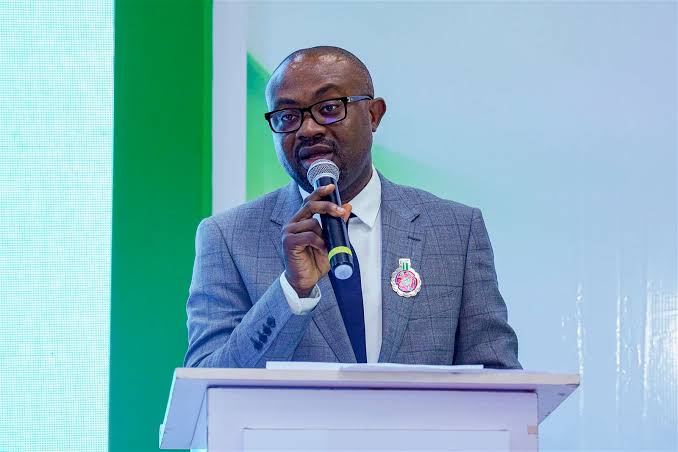
The new policy, contained in a circular signed by the Minister of Finance and Coordinating Minister of the Economy, Wale Edun, replaces the 2023 fiscal guidelines and takes immediate effect from April 1, 2026.

According to the document, the measures are part of Nigeria’s alignment with the ECOWAS Common External Tariff and are designed to “promote and stimulate growth in critical sectors of the economy.”

At the centre of the reform is a revised national tariff schedule covering 127 items, many of which now attract lower import duties. One of the most notable changes is the reduction in tariffs on fully built passenger vehicles, including four-wheel drives and station wagons, which have been cut to 40 per cent from the previous 70 per cent rate.

Advertisement

Food imports also saw significant adjustments. Bulk rice now attracts a duty of 47.5 per cent, down from 70 per cent, while broken rice has been reduced to 30 per cent. Crude palm oil imports are now pegged at an effective rate of 28.75 per cent, while raw sugar tariffs range between 55 and 57.5 per cent, also lower than previous levels. Refined salt for human consumption has been adjusted to 55 per cent.

The government also reduced duties on several industrial and household items. Envelopes now attract 40 per cent duty, down from 50 per cent, while notebooks are set at 30 per cent. Ceramic tiles have also been adjusted, with unglazed tiles at 35 per cent and glazed tiles at 46.25 per cent.

In the steel sector, key materials such as zinc-coated sheets, steel coils and rods now attract about 35 per cent duty, reduced from earlier rates of up to 45 per cent. Cold-rolled steel with low carbon content is set at a lower rate of 15 per cent.

Other reductions affect electrical and construction-related equipment. Automatic circuit breakers now attract 10 per cent duty, down from 20 per cent, while modular surgical operating theatres have been reduced sharply to 5 per cent from 20 per cent. Air compressors and similar equipment are now set at 5 per cent.

Advertisement

In a move aimed at boosting industrialisation, the government approved zero import duty on a number of critical assets. These include agricultural and manufacturing machinery, railway and tramway locomotives, cargo ships above 500 tonnes, as well as breathing equipment such as gas masks.

The policy also introduces Supplementary Protection Measures, including an Import Adjustment Tax on 192 tariff lines and an import prohibition list covering 17 items from countries outside the ECOWAS region. Items on the prohibition list include certain agricultural products and hazardous materials.

Edun said the Import Adjustment Tax would not be permanent, noting that “with effect from January 2027, all Import Adjustment Taxes, except for products on the African Continental Free Trade Area 3 per cent list, shall be gradually reduced on an annual basis until full elimination to zero per cent by 2036, in line with Nigeria’s commitments.”

As part of the changes, new excise duties will apply to non-alcoholic and alcoholic beverages, cigarettes and tobacco products. A green tax surcharge will also be introduced, both taking effect from July 1, 2026.

Advertisement

However, the government provided exemptions under the green tax policy. Vehicles with engine capacity below 2000cc, mass transit buses, electric vehicles and locally manufactured auto components will not be subject to the surcharge, a move seen as encouraging cleaner transportation and local production.

To ease the transition, the government granted a 90-day grace period for importers who had initiated transactions before April 1, 2026. Such importers will be allowed to clear their goods under the old duty rates, provided they have existing Form ‘M’ and irrevocable trade agreements.

“A grace period of ninety days commencing from the date of this circular is hereby granted to all importers, manufacturers, and service providers,” the minister said, adding that the new excise duty rates would begin from July, while subsequent rates for 2027 and 2028 would take effect from January of each year.

The measures also include environmental controls, with waste polyethylene terephthalate added to the export prohibition list.

Advertisement

Edun said the full details of the fiscal policy measures would be published in the official government gazette and urged stakeholders to comply with the new framework.

“These Fiscal Policy Measures, which supersede the 2023 Fiscal Policy Measures, shall be published in the Official Federal Government Gazette,” he said.

The new policy signals a shift in Nigeria’s trade and fiscal strategy, combining lower tariffs on key imports with targeted protections and incentives aimed at strengthening domestic industries while meeting regional and continental trade commitments.
Advertisement
Continue Reading
Advertisement

News

Photos: We’re building infrastructure for a knowledge-driven economy – Tinubu

Published

on

ADVERTISEMENT
Zoom Ad
ADVERTISEMENT
Zoom Ad

President Bola Tinubu has said that his administration was building road infrastructure to lay the needed physical foundation for a knowledge-driven economy, stressing that education, justice, and innovation need roads to thrive.

Tinubu stated this in Abuja on Tuesday, while flagging off the construction of Collector Road CO1 in the Institutional Research District, from Nile University to Ring Road III.

Represented by the National Chairman of the All Progressives Congress, Prof Nentawe Yilwatda, the President said that the project included dualisation of the road from Baze University roundabout to Nile University, that is the Base University.

He noted that three years into his administration, the results were speaking out.

“From the Southern Parkway to the Institution and Research District, we are laying the physical foundation for a knowledge-driven economy.

“Today, we provide those roads that are needed to provide justice, education, and innovation to our people.

“To the university community, this road is more than a route. It is a connection between learning, law, and the future of our capital,” he said.

He pointed out that the Institution and Research District was designed to be the intellectual heart of Abuja, adding that universities, law chambers, research centers, and innovation hubs were growing in the area.

Advertisement

He, however, stressed that ideas could not move if roads do not move and connect the heart and people together.

Tinubu further said: “Under the Renewed Hope Agenda, we made a choice to finish what was started and to start what we must finish.

“The first phase of this corridor connecting the Body of Benchers, Nile, and Base University is done and ready for commissioning. Today, we begin the next phase to Ring Road III to complete the loop.

“That is how we build a city—with a plan. Not a city of abandoned pieces. Infrastructure must be continuous, and it must also be useful to the people within the environment”.

He commended FCT Minister Nyesom Wike for turning FCT into a delivery agency, stressing that the transformation of Abuja under the minister’s watch is bold, visible and worthy of commendation.

He said, “Wike, your energy is unmatched. You took over a capital with many stalled projects and turned the FCTA into a delivery agency. ‘Mr. Projects’ is not a slogan, it is a record. You have revived sleeping roads, built new interchanges, and brought development to satellite towns. You have domesticated the Renewed Hope Agenda; street by street, district by district. The transformation of Abuja under your watch is bold, visible, and worthy of commendation. Well done, Minister Wike.”

Advertisement

In his remarks, Wike explained that the project was considered following a plea by the Body of Benchers to provide access roads to ease the movement of people in and out of the area.

He assured FCT residents that the Tinubu administration would fulfill all the promises made to the people of FCT, adding that the project would be completed by January 2027.

The minister said that he would continue to deliver life-impacting projects to FCT residents as directed by Tinubu, stressing that the delivery would not be affected by 2027 political activities.

Earlier, acting Executive Secretary, Federal Capital Development Authority, Mr Richard Dauda, said that the Institutional Research District of the FCT is located in Phase III of the city.

Advertisement

Dauda said that the area was planned to accommodate educational institutions like universities, research institutions, and other government institutions as provided in the Abuja master plan.

He added that the district was being developed in stages, with this project being a major intervention in the opening of this district.

He explained that the scope of the current stage involved the construction of Collector Road CO1, from the Nile University to Ring Road III with a total length of about six kilometres.

He added that the project also included the dualisation of the section from the Base University Junction to Nile University.

Advertisement
Continue Reading

News

Just in: Kidnapped APC Chairman, Another Victim Die in Abductors hideout

Published

on

ADVERTISEMENT
Zoom Ad
ADVERTISEMENT
Zoom Ad

Tragedy struck in northern Nigeria following reports that two abducted victims, including a former chairman of the All Progressives Congress (APC) in Koko/Besse Local Government Area of Kebbi State, have died while in captivity.

The deceased, Alhaji Muhammadu Mai Barga Besse, who previously served as APC chairman in the local government area, was reportedly held hostage by armed kidnappers for an extended period before his death. Another victim who was abducted alongside him was also confirmed dead, although his identity had not been officially disclosed at the time of filing this report.

The sad development comes months after disturbing videos emerged online showing the victims in dire conditions while being held captive in the notorious Birnin Gwari forest.

The footage sparked widespread concern among family members, political associates and members of the public who called for urgent intervention to secure their release.

Advertisement

Despite efforts made during their captivity, both men were reportedly never reunited with their families before their deaths.

The incident has once again drawn attention to the persistent security challenges facing communities across northern Nigeria.

The Birnin Gwari axis, located along the Kaduna-Niger corridor, has become one of the country’s most dangerous regions, with criminal gangs and armed bandits frequently carrying out kidnappings, attacks on villages and other violent crimes.

Residents and stakeholders have repeatedly called on security agencies to intensify operations in the area and dismantle criminal hideouts within the vast forest, which has long served as a sanctuary for armed groups.

Advertisement

News of the deaths has generated an outpouring of grief on social media, with many Nigerians expressing sadness over the fate of the victims and urging authorities to strengthen efforts against kidnapping and banditry.

Popular social media personality Denglishalhajii also shared the development on Instagram, mourning the victims and drawing attention to the growing insecurity affecting many parts of the region.

The deaths of the former APC chairman and his fellow captive have further underscored the human cost of the country’s security crisis, leaving families, friends and political associates in mourning while raising renewed concerns about the safety of citizens in vulnerable communities.

Advertisement
Continue Reading

News

Tinubu Seeks Constitutional Backing For State Police, Writes Senate

Published

on

ADVERTISEMENT
Zoom Ad
ADVERTISEMENT
Zoom Ad

President Bola Tinubu has asked the senate to approve a constitutional amendment bill seeking to establish state police across Nigeria as part of efforts to strengthen the country’s security architecture.

The request was contained in a letter dated June 15, 2026, and read on the floor of the senate on Tuesday by Godswill Akpabio.

In the correspondence, Tinubu said the proposed Constitution of the Federal Republic of Nigeria (Alteration) State Police Bill, 2026, seeks to amend the 1999 constitution to provide a legal framework for the creation of state police services.

The president said the bill is designed to address Nigeria’s evolving security challenges by introducing a dual policing structure that would allow both federal and state policing systems to operate within a constitutional framework.

Advertisement

According to him, the proposal builds on previous legislative efforts by both chambers of the national assembly and contains additional safeguards to ensure effective implementation.

“This bill builds on the significant work already done in this regard by the House of Representatives and the Senate, and incorporates additional safeguards to ensure that the creation of a dual policing structure to address our nation’s evolving national security challenges, will be achieved quickly and effectively to the benefit of all Nigerians,” Tinubu said.

The president described the proposed legislation as a key component of his administration’s broader plan to reform Nigeria’s security system and improve the protection of lives and property.

“The proposed legislation is a critical component of our administration’s strategy to reorganize Nigeria’s security architecture to better protect our citizens, and I’m confident that the Senate will act quickly to consider and pass this bill,” he added.

Advertisement

Read Also: Amnesty International Demands Immediate Release of Omoyele Sowore, Condemns Detention

Tinubu urged lawmakers to give the proposal expeditious consideration.

Following the reading of the letter, Akpabio referred the bill to the senate committee on constitution review for further legislative action.

The committee was directed to report back to the chamber on the next legislative day.

Advertisement
Continue Reading

Trending

Copyright © 2024 Naija Blitz News