..Bagudu insists planning is a shared constitutional duty


…as lawmakers pledge closer alignment with presidency
By Gloria Ikibah 
The National Assembly and the Executive have signalled a renewed push for cooperation, pledging to bridge persistent gaps between Nigeria’s budgeting process and its national development plans.
The commitment was outlined during the second day of the National Policy Dialogue in Abuja, where key government figures emphasised the need for stronger coordination to ensure that policy goals translate into measurable development outcomes.
Minister of Budget and Economic Planning, Senator Atiku Bagudu, alongside lawmakers leading committees on national planning, underscored the urgency of aligning budget implementation with long-term national objectives.
The dialogue, themed around strengthening the link between development planning and effective budgeting, brought together top policymakers in a bid to address long-standing disconnects in the system.
Participants stressed that meaningful progress depends on seamless collaboration between the legislature and the executive, particularly in ensuring that approved budgets reflect and support broader economic strategies.
Bagudu highlighted the role of the National Assembly in driving reforms, noting that legislative backing has been critical to the administration’s efforts so far. He stressed the shared responsibility of leadership in shaping the country’s development trajectory, stating, “Planning is a constitutional responsibility for all those in authority.”
Lawmakers also restated their readiness to work closely with the presidency, signalling that the current Assembly is prepared to strengthen cooperation in order to deliver sustainable growth.
The renewed alignment is seen as a step towards addressing inefficiencies in the system and ensuring that national development plans are effectively implemented through a more responsive and coordinated budgeting framework.

The Minister however stated that planning is a constitutional responsibility of every person in authority in Nigeria which must not toyed with if the country is to make a meaningful development.
He said, “Let me appreciate the support that the committees and also the National Assembly as a body has given to the reforms that have taken place in the last three years, because by every stretch of imagination, they are bold, they are courageous, they are difficult choices and as those whose daily function involves interaction with these constituencies and having to explain, having to defend, one has to appreciate.
“National planning in Nigeria is mandated and obligated by the constitution. The further ingredients of the national plan is a whole chapter in our constitution, chapter two of our constitution, fundamental objectives and directive principles of state. It clearly stated that Nigeria is a constitutional federation.
“Section 13, which is the first section of another fundamental objectives and directive principles of state, is a command to all those in authority to work together, observe, and seek to conform to the fundamental objectives or directive principles of state.
“The constitution clearly stated that all those in authority, including legislative, judicial, and executive, have to work together. Equally, the president, vice president, national assembly members, the governance, state assembly members, the office they swore to, the wordings are dictated by the constitution.
“And the wordings include expressly, not just upholding the constitution, but the seven elements of the wardens are to uphold and seek the achievement of governance of the fundamental objectives and directive principles of state. So one can see in those elements that the obligation to work for the achievement of the irreducible minimum of consensus, which is the fundamental objectives, is sanctioned by the constitution. And so what we are doing in national planning which leads to effective budgeting in order to generate sustainable growth is in tandem with our constitution”.
The minister also pointed out that, as a market-driven economy, Nigeria’s Constitution sets out clear economic, social and governance priorities that the country is expected to pursue. These include security, environmental sustainability, education and broader social objectives, alongside the responsibilities of citizens.
He emphasised that the federal structure of the country makes it essential for all tiers of government to work in close coordination.
Providing an overview of the discussions, Chairman of the House of Representatives Committee on National Planning and Economic Development, Rep. Gboyega Isiaka, highlighted the shared responsibility across government and stakeholders in addressing persistent gaps in budgeting and national planning.
He noted that the current National Assembly remains committed to working closely with the presidency and the executive arm, signalling readiness for sustained collaboration aimed at improving policy outcomes and driving national development.
He said, “Therefore, the committees follow the same pattern. The Senate and the House Committee on Economic Planning have been following, and some of the ministers have said, the beautiful work being done by the ministry, the coordination and all of that. We feel that we need to collaborate more beyond oversighting and working sessions.
“We are aware, for example, that following the… the fact that the 2026-2030 plan is still taking itself from the prospective plan, the 30-year prospective plan, we know that a lot of work will need to be going into this. I want to be practical in putting that together. We are also aware of the $1 trillion objective economy that the federal government is working on.
“We have had sessions with various MDAs, and we are aware of some of the questions that have been raised about the envelope system of projects. The various reforms that we have going on in the nation, physical regime, monetary regime, and all of that, we are aware of also a number of questions that have been raised about that.
“And in all of this, therefore, we feel that beyond asking questions during oversight, we feel that all of these, and more, that I don’t want to assume begin to go into, is enough for us to bring, to come together, and, you know, the renewable, you know, plan for 2026-2030 is also being put together, and we also want to, you know, be practical in that, so that we can start all from the beginning”.
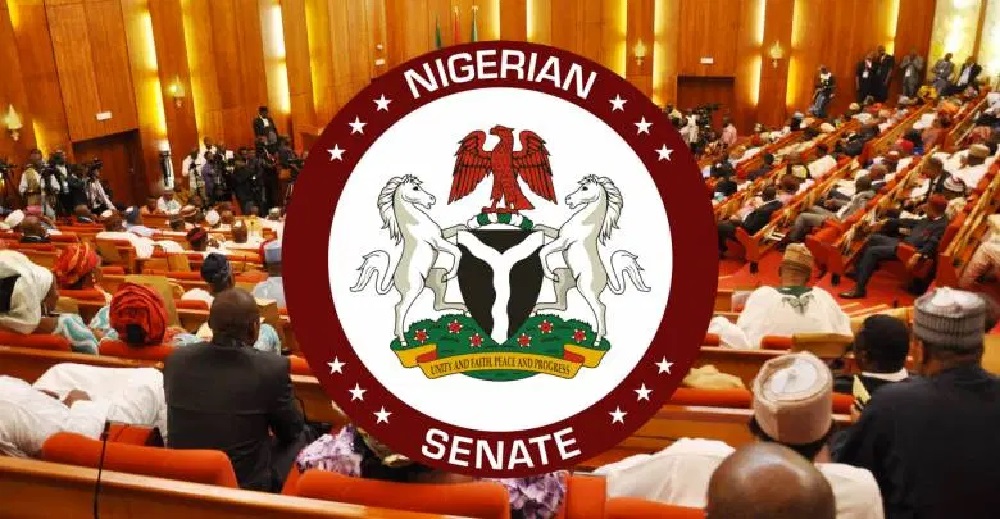
Also Chairman, Senate Committee on National Planning and Economic Affairs, Senator Musa Mustapha said, it is imperative to address the fundamental pillar of national progress which is to align National Development Plans with the budgeting system to drive sustainable economic growth.
“Our National Development Plan requires meticulous, aligned, and disciplined budgetary support to achieve its set objectives. However, the persistent disconnect between ambitious development plans and actual annual budgetary allocations has historically hindered our growth trajectory.
“As Chairman of the Senate Committee on National Planning and Economie Affairs, I maintain that our developmental aspirations cannot be achieved through disjointed fiscal actions. We must stop treating the budget as merely a document for expenses, but rather as the primary engine for implementing our national development agenda.
“An efficient budget is often regarded as the cornerstone of comprehensive national progress. It allows the government to allocate resources wisely, prioritise development initiatives, and boost economic activity.
“Too often, however, our national planning and budgeting have operated in isolation, leading to inefficient resource distribution and projects that fail to fully benefit Nigerians. We aim to address this gap. Indeed, the goal of this administration is to foster a performance-driven culture in which public resources are used efficiently to support meaningful, sustainable development.
“Our planning process is no longer driven by short-term political expediency but by a clear, strategic roadmap towards a $1 trillion economy by 2030—anchored in grassroots empowerment initiatives such as the Renewed Hope Ward Development Programme and targeted support for our MSMEs.
“This presidential vision is fully reflected in our 2026 Budget of Consolidation, Renewed Resilience and Shared Prosperity, which is grounded in realism, prudence, and strict fiscal discipline. By removing wasteful subsidies, unifying the foreign exchange market, and expanding our non-oi!l revenue base through fair and efficient tax administration, President Tinubu’s reforms have secured a seven-year high in our external reserves and unlocked substantial capital to fund the nation’s real priorities.
“Today, under his guidance, we are spending with purpose—investing trillions in critical infrastructure, food security, student loans, and the modernisation of our security architecture. This is not a budget of mere promises but a powerful statement of national intent. The transformative policies of President Bola Ahmed Tinubu are yielding measurable results, ensuring that the economic recovery already engineered translates directly into a better quality of life for every Nigerian household.
“It is heartening to note that the President is already leading from the front. Under the visionary leadership of His Excellency, President Bola Ahmed Tinubu, our national journey over the past few years has been defined by bold, necessary, and sometimes painful choices that are now yielding visible, undeniable results across the federation. Guided by the Renewed Hope Agenda, Mr President has courageously confronted long-standing structural weaknesses, stabilised our economy, rebuilt investor confidence, and laid a durable foundation for an inclusive and dynamic Nigeria”, he said.